




Every parent faces the challenge of finding a recreational vehicle that matches their child’s skill, age, and growing independence. Go-karts offer more than just thrill—they can build coordination and confidence while ensuring safe fun for families across the United States. This guide brings clarity to choosing the right go-kart, emphasizing age-appropriate options, smart budgeting, reliable safety features, and quality performance so parents can feel secure in their investment.
Table of Contents
- Step 1: Assess Your Child’s Age And Experience
- Step 2: Set A Realistic Budget And Compare Deals
- Step 3: Evaluate Safety Features And Build Quality
- Step 4: Review Engine Performance And Size Options
- Step 5: Verify Reviews, Warranty, And Customer Support
Quick Summary
| Key Insight | Explanation |
|---|---|
| 1. Assess Child’s Age and Experience | Evaluate your child’s physical coordination and maturity to determine go-kart suitability, ensuring safety and enjoyment. |
| 2. Establish a Realistic Budget | Balance quality and affordability by researching and comparing go-kart prices and features before making a purchase. |
| 3. Prioritize Safety Features | Examine go-kart construction, including stability, braking systems, and harnesses, to reduce risks and ensure safe rides. |
| 4. Match Engine Type to Skill Level | Choose engine power and size that aligns with your child’s abilities, ensuring an engaging yet safe experience. |
| 5. Research Reviews and Warranty Options | Look into customer reviews, warranty coverage, and manufacturer reputation for peace of mind before buying a go-kart. |
Step 1: Assess your child’s age and experience
Choosing the right go-kart starts with understanding your child’s developmental stage and previous experience with motorized vehicles. Age-appropriate go-karts are crucial for both safety and enjoyment.
Children’s go-kart readiness varies widely, which means parents need to evaluate several key factors:
- Physical coordination: Can your child confidently steer and control a small vehicle?
- Maturity level: Do they follow instructions and understand basic safety rules?
- Previous experience: Have they ridden bikes, scooters, or other small vehicles?
Typically, go-karts are suitable for children between 6 and 15 years old. Younger children around 6-8 might start with electric models that have lower speeds and simpler controls, while older kids aged 10-15 could handle more advanced gas-powered karts with higher performance capabilities.
Safety always comes first when introducing children to motorized recreational vehicles.
Spend time observing your child’s motor skills and ability to concentrate. Some 8-year-olds might be ready for more complex vehicles, while others might need additional time to develop the necessary coordination and attention span.
Here’s a comparison of go-kart types and their suitability across different age groups:
| Go-Kart Type | Ideal Age Range | Performance Level | Recommended Environment |
|---|---|---|---|
| Pedal-powered | 3-6 years | Very low, manual | Indoor or smooth outdoor paths |
| Electric | 6-8 years | Moderate, controlled speed | Residential neighborhoods |
| Gas-powered | 10-15 years | High, robust engine | Outdoor tracks, open fields |
| Four-stroke engine | 12-15 years | Smooth, reliable | All-terrain outdoor spaces |
Pro tip: Consider starting with a supervised test drive to assess your child’s comfort and competence with a go-kart before making a final purchase.
Step 2: Set a realistic budget and compare deals
Budgeting for a go-kart requires balancing quality, safety, and affordability. Kids’ go-kart options vary widely in price and features, making smart comparison shopping essential for parents.
Go-kart prices typically range from $100 to $1,000 depending on several key factors:
- Type of go-kart: Electric, gas-powered, or pedal models
- Age range: Karts designed for younger or older children
- Performance capabilities: Speed, durability, and additional features
Start by determining a comfortable spending range that matches your child’s age and skill level. Younger children might require less expensive models, while older kids could benefit from more advanced karts with enhanced performance.
Smart budgeting means finding the right balance between cost and quality.
Research different retailers and online platforms to compare prices, read customer reviews, and look for seasonal sales or promotional discounts. Some manufacturers offer package deals that include safety gear or additional accessories, potentially providing better overall value.
Pro tip: Consider purchasing from retailers with flexible return policies and comprehensive warranties to protect your investment.
Step 3: Evaluate safety features and build quality
Prioritizing your child’s safety means carefully examining the go-kart’s construction and protective features. Go-kart safety specifications are critical for preventing accidents and ensuring a secure riding experience.
When assessing safety, focus on these essential elements:
- Stability: Low center of gravity and wide wheel base
- Braking system: Responsive and easy-to-operate brake mechanisms
- Seat design: Adjustable seats with secure harnesses
- Frame durability: Sturdy metal construction versus cheap plastic models
Weight limits and structural integrity play crucial roles in determining a go-kart’s overall safety. Cheaper models often compromise on critical safety components, so invest time in thoroughly examining the manufacturer’s specifications and user reviews.
A well-constructed go-kart is your first line of defense against potential accidents.
Look for additional safety features like padded seats, protective bumpers, and adjustable speed controls that can help minimize risks for young riders. Some advanced models include safety flags, reflective strips, and ergonomic design elements that enhance overall protection.
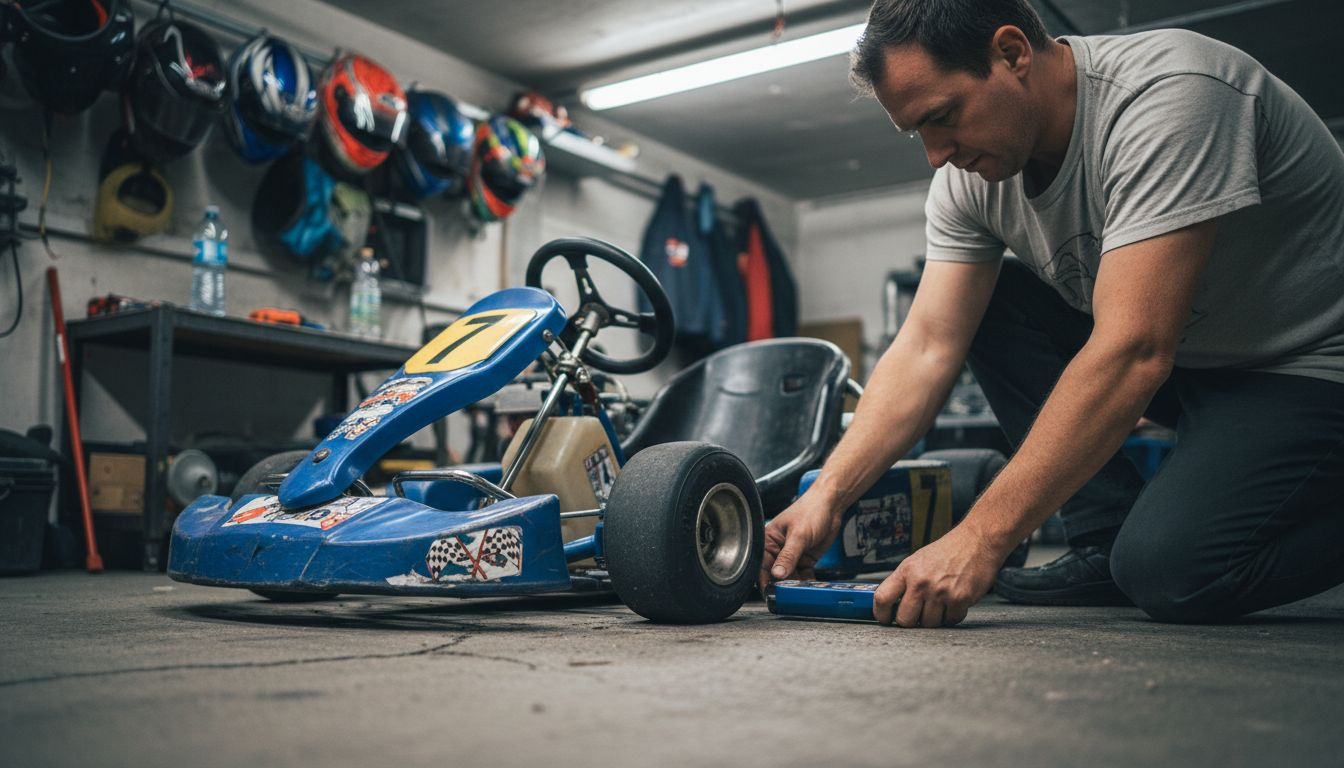
Use this quick reference to understand what various go-kart safety features help achieve:
| Safety Feature | Purpose | Impact on Child Safety |
|---|---|---|
| Low center of gravity | Prevents tipping | Reduces roll-over risk |
| Adjustable harness | Secures child in seat | Minimizes injury during impact |
| Safety flag | Improves visibility | Alerts others to child’s presence |
| Reflective strips | Enhances night visibility | Makes go-kart easier to spot |
Pro tip: Always inspect the go-kart’s physical condition in person and request detailed safety certification documentation before making a purchase.
Step 4: Review engine performance and size options
Choosing the right engine is critical for matching your child’s skill level and riding experience. Go-kart engine specifications can dramatically impact performance and enjoyment.
Go-kart engines come in several configurations that cater to different age groups and skill levels:
- Pedal-powered: Best for ages 3-6, zero motor requirements
- Electric models: Ideal for younger children, controlled speed settings
- Gas-powered: Recommended for older kids with 6.5 to 15 horsepower ranges
- Four-stroke engines: Provide smoother, more reliable performance
Engine power and size options should align with your child’s physical capabilities and riding environment. Younger riders need more controlled, lower-powered options, while experienced older children can handle more robust engines with higher performance potential.
Matching the right engine to your child’s skills ensures both safety and excitement.
Consider factors like weight limits, terrain type, and intended use when selecting an engine. Some models offer adjustable features that can grow with your child, providing long-term value and adaptability.
Pro tip: Consult with experienced go-kart retailers who can provide personalized recommendations based on your child’s specific age and skill level.
Step 5: Verify reviews, warranty, and customer support
Before finalizing your go-kart purchase, dive deep into comprehensive product reviews to ensure you’re making an informed decision. Understanding other parents’ experiences can reveal crucial insights about reliability and performance.
When evaluating reviews and support options, focus on these critical areas:
- Manufacturer reputation: Track record of quality and customer satisfaction
- Warranty coverage: Length and comprehensiveness of protection
- Return policy: Flexibility and terms of potential exchanges
- Customer service: Responsiveness and problem-solving approach
User testimonials provide invaluable real-world perspectives that go beyond manufacturer marketing. Look for patterns in feedback about durability, safety features, and long-term performance rather than isolated individual experiences.
Thorough research today prevents disappointment tomorrow.
Pay special attention to warranty details and customer support channels. A robust warranty demonstrates the manufacturer’s confidence in their product and provides peace of mind. Check for comprehensive coverage that includes parts, potential manufacturing defects, and reasonable repair or replacement terms.
Pro tip: Screenshot and save all communication and review details during your research process to support potential future warranty claims.
Discover the Perfect Go-Kart for Your Child with Confidence
Choosing a safe and suitable go-kart for your child involves carefully balancing age-appropriate engine power, durability, and essential safety features. We understand how important it is to find a reliable vehicle that grows with your child while providing peace of mind for parents who want the best for their young riders. From controlled speed electric models to robust gas-powered options, the challenge is real, but you do not have to face it alone.
At GokartsUSA.biz, we offer a wide selection of kids’ go-karts that emphasize safety, performance, and value. Whether you are exploring low-speed electric options or looking for sturdy frames with adjustable harnesses and braking systems, our detailed product pages and customer reviews help you make an informed decision. Plus, enjoy special promotions like free shipping and complimentary helmets to keep your child protected from the start.
Ready to find the perfect go-kart that matches your child’s age and skill level?

Explore our exclusive range at GokartsUSA.biz today. Act now to take advantage of our spring sales and gear up your child for endless fun and safety on the track.
Frequently Asked Questions
How do I determine if my child is ready for a go-kart?
Assess your child’s age, physical coordination, maturity level, and previous experience with motorized vehicles. Generally, children aged 6-15 are suitable for go-karts, so observe their skills and maturity before making a choice.
What age is appropriate for different types of go-karts?
Go-karts vary by type and are suitable for different age ranges. Pedal-powered models work for ages 3-6, electric go-karts for ages 6-8, and gas-powered karts for kids aged 10-15, ensuring safety and enjoyment at each level.
What are the essential safety features to look for in a go-kart?
Prioritize safety features like a low center of gravity, responsive braking systems, secure harnesses, and durable frame construction. Evaluate models based on their stability and additional safety options like padded seats and safety flags.
How can I assess the quality and performance of a go-kart engine?
Review the engine type and performance specifications to match your child’s experience. Electric models are best for younger children, while gas-powered engines with 6.5 to 15 horsepower suit older kids, ensuring both safety and excitement.
What should I consider when evaluating warranties and customer support for a go-kart?
Focus on manufacturer reputation, warranty coverage, and customer service responsiveness. Seek warranties that cover parts and defects comprehensively, enabling you to feel secure in your purchase.
How do I establish a budget for purchasing a go-kart?
Set a budget that balances quality and safety while considering your child’s age and skill level. Prices typically range from $100 to $1,000; therefore, starting with a clear spending range will help guide your purchasing decision.
Recommended
- 7 Reasons Why You Should Choose an Electric Kids Go Kart – GoKarts USA®
- How to Inspect a Go-Kart After the First Hour of Operation: Checking N – GoKarts USA®
- TrailMaster Cheetah 3 Kids Mini Go Kart, 80cc gas engine, seat belt, K – GoKarts USA®
- TrailMaster MINI-XRS+ Kids Go Kart, Gas Engine, Adjustable Pedals – GoKarts USA®