




Every parent faces tricky choices when searching for outdoor activities that keep kids safe and active. With so many options, finding an affordable, beginner-friendly go-kart that balances top safety features and true driving fun can feel overwhelming. American families often discover that go-karts come in more varieties than expected, offering everything from simple pedal-powered rides to advanced electric models. This guide helps you make smart, confident decisions about go-karts designed for children ages 6 to 12, so your family can enjoy worry-free adventures together.
Table of Contents
- Defining Go-Karts And Common Misconceptions
- Popular Types Of Go-Karts For Children
- Essential Safety Features And Controls
- How Go-Karts Work: Key Design Elements
- Mistakes To Avoid When Buying For Kids
Key Takeaways
| Point | Details |
|---|---|
| Variety of Go-Karts | Go-karts come in different types including recreational, racing, children’s, electric, and gasoline-powered models, each catering to various skill levels and purposes. |
| Safety Features are Crucial | When selecting go-karts for children, it’s essential to prioritize safety features such as robust design, adjustable speed limiters, and secure restraints. |
| Avoid Common Buying Mistakes | Parents should be cautious about age and size mismatches, neglecting safety features, and not considering the intended usage context when purchasing a go-kart. |
| Engagement in Selection Process | Involving children in the go-kart selection process and ensuring a demonstration can enhance enjoyment and promote safety awareness. |
Defining Go-Karts and Common Misconceptions
A go-kart is a small, lightweight recreational vehicle designed for racing or leisure activities, offering an accessible entry point into motorsports for enthusiasts of all ages. Compact racing vehicles typically feature an open-wheel design with four wheels and a low-profile chassis, distinguishing them from other motorized vehicles.
Go-karts come in several distinct varieties, each serving different purposes and skill levels:
- Recreational karts: Designed for casual fun, often found in entertainment centers
- Racing karts: High-performance models built for competitive motorsport
- Children’s karts: Specially engineered with safety features for younger drivers
- Electric karts: Modern versions powered by battery technology
- Gasoline-powered karts: Traditional models using internal combustion engines
Despite their popularity, go-karts are frequently misunderstood. Many people assume they are merely children’s toys or limited to amusement park experiences. However, go-kart racing spans a broad spectrum from amateur hobbyist events to professional international competitions where vehicles can reach impressive speeds up to 160 mph.
Here’s how different go-kart types compare by target user and performance:
| Go-Kart Type | Target User | Typical Speed Range | Key Safety Focus |
|---|---|---|---|
| Recreational | All ages | Up to 40 mph | General protection |
| Racing | Teens/adults | Up to 160 mph | Advanced engineering |
| Children’s | Young kids | Up to 20 mph | Enhanced restraint |
| Electric | Children/adults | 10-50 mph | Battery safety |
| Gasoline-powered | Teens/adults | Variable, often higher | Engine containment |
Racing go-karts represent a serious motorsport with complex engineering and professional-grade components. These precision machines serve as critical training platforms for aspiring race car drivers, helping develop fundamental driving skills and racing techniques.
Pro tip: Always inspect safety equipment and understand basic vehicle controls before operating any go-kart, regardless of your experience level.
Popular Types of Go-Karts for Children
Children’s go-karts offer an exciting way for young enthusiasts to experience motorsports safely, with designs tailored to different age groups and skill levels. Motorized vehicle safety standards play a crucial role in determining appropriate go-kart options for children, ensuring both fun and protection.
Go-karts for children typically fall into three primary categories:
-
Pedal-powered karts: Ideal for younger children (ages 2-8)
- Require no motor or fuel
- Provide excellent physical exercise
- Develop coordination and motor skills
-
Electric go-karts: Suitable for children 8-12 years old
- Battery-powered with variable speed controls
- Quieter and more environmentally friendly
- Often feature adjustable speed limiters
-
Gas-powered go-karts: Designed for older children and teens
- More powerful performance
- Requires more advanced driving skills
- Typically used for more serious racing experiences
Pedal-powered models like the Berg Buddy represent an excellent starting point for young drivers. These karts feature adjustable steering wheels, forward and reverse pedaling capabilities, and pneumatic tires that provide enhanced control and stability. Parents should carefully consider factors such as the child’s age, intended terrain, and potential multi-child usage when selecting the most appropriate go-kart.
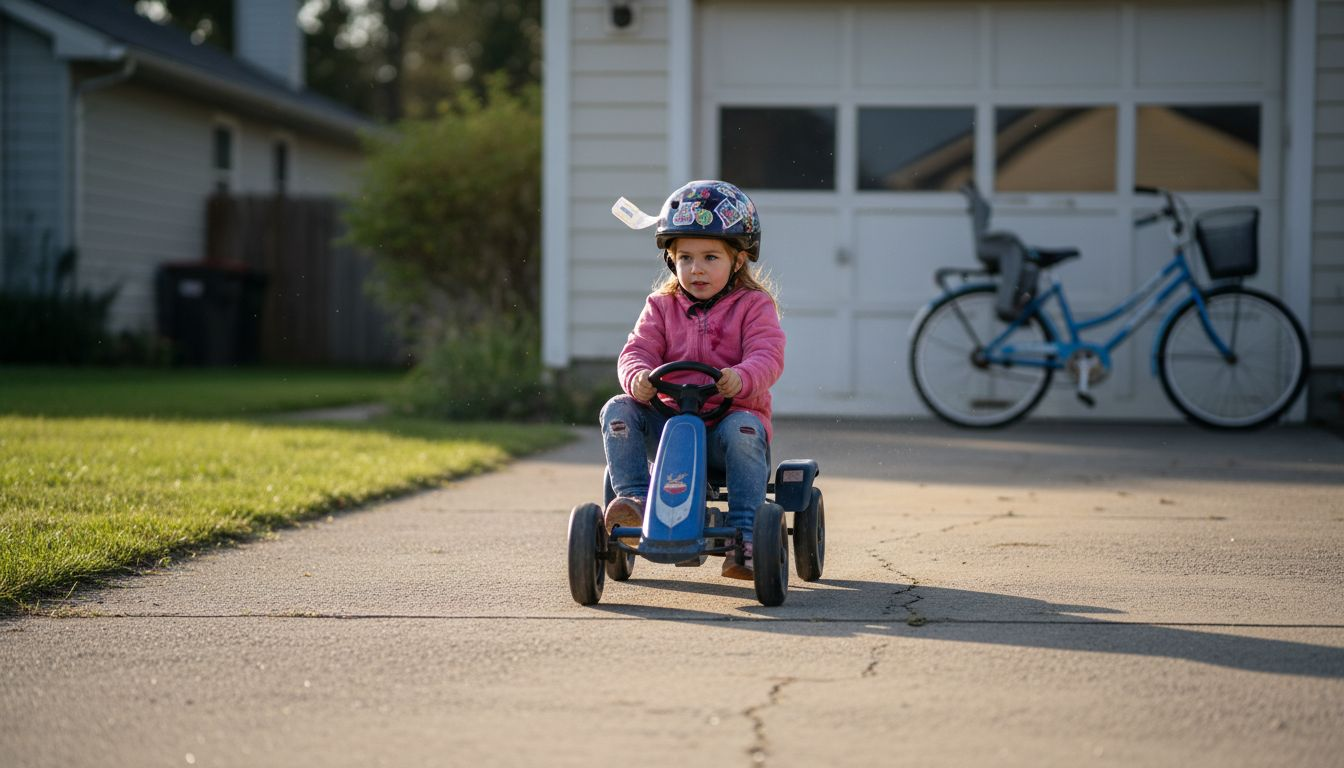
Safety remains paramount when choosing a go-kart for children. Modern designs incorporate multiple protective features, including robust frame construction, adjustable seat positions, and integrated safety mechanisms that help prevent accidents and ensure a controlled riding experience.
Pro tip: Always match the go-kart’s power and complexity to your child’s age, skill level, and physical capabilities to ensure a safe and enjoyable experience.
Essential Safety Features and Controls
Go-kart safety represents a critical consideration for parents and young drivers, with comprehensive design standards ensuring maximum protection during recreational activities. Modern go-karts incorporate multiple sophisticated safety mechanisms designed to minimize potential risks and provide a secure driving experience.
Key safety features for go-karts include:
-
Chassis Design
- Robust frame construction
- Low center of gravity
- Impact-resistant materials
-
Control Mechanisms
- Adjustable speed limiters
- Responsive emergency brake systems
- Precise throttle control
-
Protective Components
- Full perimeter safety guards
- Padded steering wheels
- Secure seat belts or harness systems
Safety operation standards specify critical design requirements that manufacturers must follow. These include maintaining maximum speed limits, typically below 40 mph for recreational models, and incorporating reliable braking mechanisms that allow immediate vehicle stopping. Protective guards are essential to prevent contact with mechanical components, significantly reducing potential injury risks.
Parents should carefully inspect go-kart safety features before purchase, paying close attention to age-appropriate design elements. Younger children require more restrictive control systems, while older teens might need more advanced performance features that still maintain comprehensive safety protocols.
Pro tip: Always require protective gear like helmets, closed-toe shoes, and long pants when operating a go-kart, regardless of the vehicle’s built-in safety features.
How Go-Karts Work: Key Design Elements
Go-kart engineering represents a unique approach to vehicle design, emphasizing simplicity and performance through innovative chassis construction. Unlike traditional vehicles, go-karts utilize a lightweight, flexible framework that serves multiple critical functions simultaneously.
The core components of go-kart design include:
-
Chassis Structure
- Chromoly steel tubular frame
- Lightweight and flexible design
- Acts as primary suspension mechanism
-
Propulsion Systems
- Two-stroke gasoline engines
- Electric motor configurations
- Small displacement power units
-
Mechanical Control Systems
- Direct rack-and-pinion steering
- Mechanical brake linkages
- Simple, responsive control mechanisms
Chassis engineering techniques reveal that go-karts deliberately avoid traditional suspension systems. Instead, the frame’s inherent flexibility allows the vehicle to absorb track irregularities, creating a unique handling characteristic that demands skilled driver input. The solid rear axle requires precise driving techniques, particularly during cornering, where driver skill directly influences vehicle performance.
Modern go-kart designs continue to evolve, balancing performance, safety, and accessibility. Manufacturers focus on creating vehicles that provide an engaging driving experience while maintaining robust safety standards through intelligent design choices and strategic engineering approaches.
Pro tip: Practice understanding your go-kart’s mechanical limitations and unique handling characteristics before attempting advanced driving maneuvers.
Mistakes to Avoid When Buying for Kids
Selecting the right go-kart requires careful consideration to ensure both safety and enjoyment for young drivers. Crucial buying mistakes can compromise a child’s recreational experience and potentially create unnecessary safety risks.
Common pitfalls parents should avoid include:
-
Age and Size Mismatch
- Selecting a kart too large or powerful
- Ignoring recommended age ranges
- Overlooking physical capability requirements
-
Safety Feature Negligence
- Skipping detailed safety mechanism review
- Disregarding brake system quality
- Avoiding adjustable control assessments
-
Usage Context Errors
- Purchasing without considering terrain
- Failing to match kart to intended environment
- Underestimating maintenance requirements
Consumer safety guidelines emphasize the importance of understanding manufacturer recommendations and safety standards. Parents frequently make mistakes by underestimating speed capabilities, overlooking proper protective gear, and failing to provide adequate driver supervision. Each go-kart model comes with specific operational guidelines that directly impact child safety.
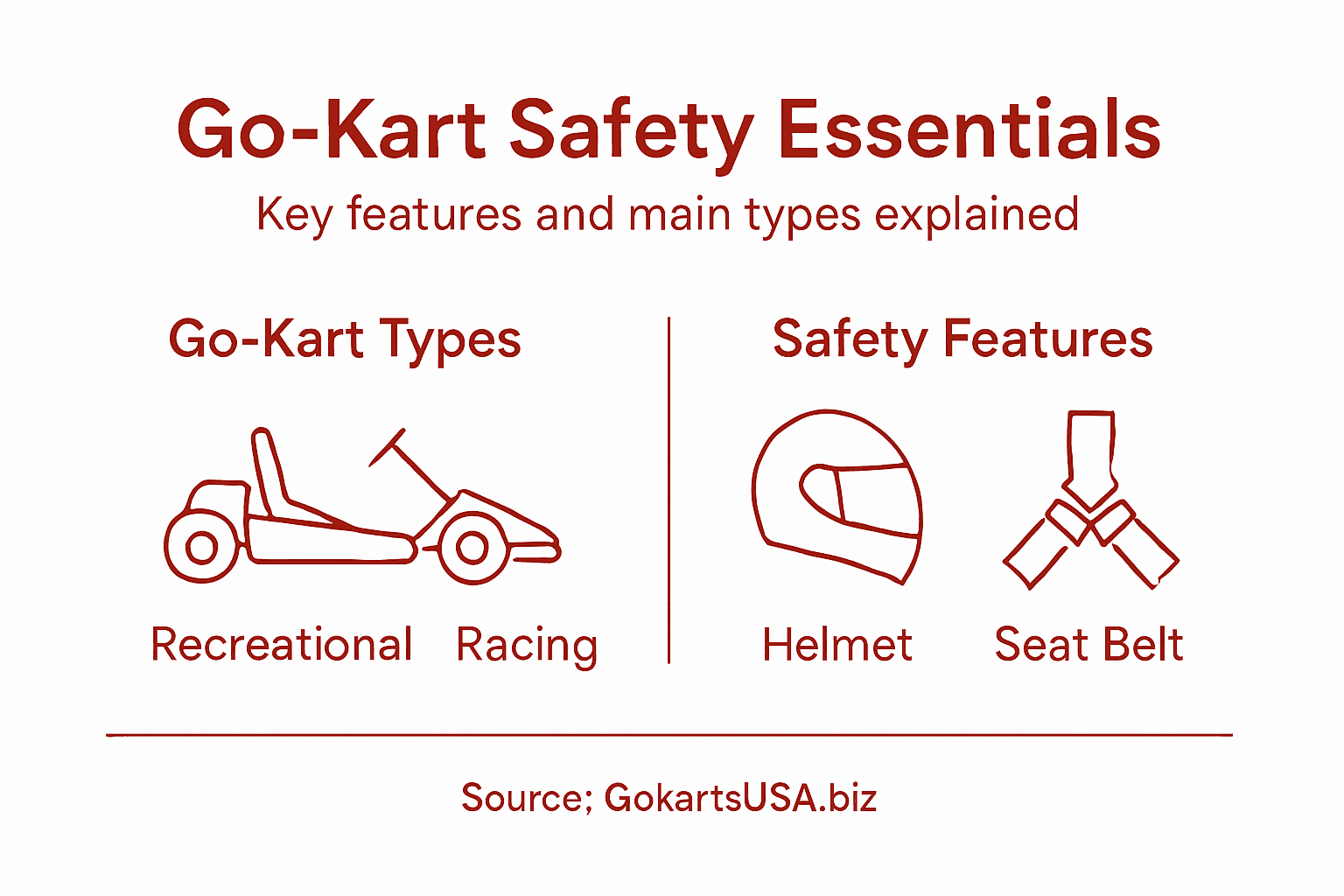
Beyond technical specifications, parents must consider the child’s skill level, maturity, and interest in motorsports. A well-chosen go-kart can provide an exciting learning experience, while a poorly selected vehicle might lead to frustration or potential safety concerns.
This table summarizes common buying missteps and their potential consequences:
| Mistake Type | Example Action | Likely Consequence |
|---|---|---|
| Age/size mismatch | Too large kart | Difficulty handling, unsafe |
| Safety oversight | Ignore brakes review | Increased accident risk |
| Usage context error | Wrong terrain choice | Faster wear, lower enjoyment |
| Lack of supervision | Little adult input | Poor skills, higher injury risk |
Pro tip: Always test drive or request a detailed demonstration before purchasing, and involve your child in the selection process to ensure both safety and enthusiasm.
Discover Safe and Exciting Go-Karts Perfect for Your Family
Choosing the right go-kart that balances fun and safety is a common challenge for parents and hobbyists alike. This article highlights how understanding critical safety features and matching go-kart types to age and skill levels can prevent accidents and maximize enjoyment. You want a vehicle that offers strong chassis design, reliable control mechanisms, and protective components while fitting your child’s or your own recreational needs.
At GokartsUSA.biz, we specialize in delivering affordable and carefully selected go-karts designed with these safety considerations in mind. Whether you need a beginner-friendly model for younger kids or a higher-performance kart with advanced safety controls, our diverse catalog supports your goals to provide fun with peace of mind.

Explore our collection now to find the ideal go-kart equipped with essential safety features. Take advantage of our special deals including free shipping and complimentary helmets that make starting this exciting journey easier and safer. Visit GokartsUSA.biz today and empower your family’s outdoor adventures with vehicles engineered for safety and fun.
Frequently Asked Questions
What is a go-kart?
A go-kart is a small, lightweight recreational vehicle designed for racing or leisure activities, featuring an open-wheel design and available in various types to suit different skill levels and purposes.
What are the different types of go-karts?
Go-karts can be categorized into several types: recreational karts for casual fun, racing karts for competitive motorsport, children’s karts designed for safety, electric karts powered by batteries, and gasoline-powered karts with internal combustion engines.
Why is safety important when using a go-kart?
Safety is crucial in go-karting because it minimizes risks and prevents accidents. Modern go-karts incorporate features such as robust chassis designs, adjustable speed limiters, and secure seat belts to ensure a safe driving experience.
What should parents consider when choosing a go-kart for their children?
Parents should consider factors like age, size, and skill level when selecting a go-kart. It’s important to ensure that the go-kart’s power and complexity match the child’s abilities, and to always verify the safety features of the selected model.
Recommended
- 7 Reasons Why You Should Choose an Electric Kids Go Kart – GoKarts USA®
- How to Inspect a Go-Kart After the First Hour of Operation: Checking N – GoKarts USA®
- What does 95% or 98% Assembly Mean? What do I need to assemble if ship – GoKarts USA®
- Tips for Starting a New Engine – GoKarts USA®
- Orlando Car Service with Car Seats: Safety First