




Finding the perfect balance between fun and affordability often leads adult riders to the unique world of mini bikes. These compact machines are built for adventure, offering a distinct escape from the daily routine without the complexity or price tag of full-sized motorcycles. If you are searching for a reliable guide to understand the core features of adult mini bikes, you will soon discover what sets them apart and how they deliver pure leisure on two wheels.
Table of Contents
- Defining An Adult Mini Bike: Core Concepts
- Popular Types And Key Design Differences
- Essential Features And Performance Factors
- Legal, Safety, And Age Regulations Explained
- Costs, Maintenance, And Common Pitfalls
Key Takeaways
| Point | Details |
|---|---|
| Understanding Mini Bikes | Adult mini bikes are compact motorized vehicles designed for recreational use, differing from traditional motorcycles in purpose and design. |
| Types and Power Sources | Mini bikes come in various types, powered by either gas or electric, catering to different skill levels and riding environments. |
| Safety and Legal Compliance | Riders must be aware of local regulations, including age restrictions and safety gear requirements, to ensure a lawful and safe riding experience. |
| Maintenance and Costs | Owners should budget for initial costs and ongoing maintenance, with proactive care to prevent issues and enhance bike longevity. |
Defining an Adult Mini Bike: Core Concepts
An adult mini bike is a compact, two-wheeled motorized vehicle designed specifically for recreational enjoyment. Unlike full-sized motorcycles, these miniature machines offer a unique riding experience tailored for adventure enthusiasts seeking affordable and accessible powersports fun.
Originally popularized in the 1960s, small motorized recreational vehicles have evolved significantly. Adult mini bikes typically feature:
- Low-slung frame design
- Small wheels (10-12 inches in diameter)
- Four-stroke engine (usually under 200cc)
- Elevated handlebars for comfortable positioning
- Simple mechanical construction
The core distinction between adult mini bikes and traditional motorcycles lies in their purpose and design. While motorcycles are engineered for transportation and long-distance travel, mini bikes focus exclusively on leisure and off-road recreational experiences. These compact vehicles provide an accessible entry point for riders wanting to explore powersports without investing in larger, more expensive machines.
Mini bikes represent a perfect blend of affordability, simplicity, and pure riding excitement for enthusiasts of all skill levels.
Recreational Purpose: Adult mini bikes are not street legal and are primarily designed for controlled environments like trails, private tracks, and designated off-road areas. Their smaller size and lower power output make them ideal for riders wanting to develop skills, enjoy short-distance adventures, or simply experience the thrill of motorized two-wheel riding.
Pro tip: Always check local regulations and wear appropriate safety gear before riding your mini bike to ensure a safe and enjoyable experience.
Popular Types and Key Design Differences
Adult mini bikes come in several distinct types with unique design characteristics, each catering to different riding preferences and skill levels. Understanding these variations helps riders choose the perfect mini bike for their specific needs.
The primary categories of adult mini bikes include:
- Recreational Mini Bikes: Basic off-road models designed for casual riding
- Pit Bikes: More advanced bikes with enhanced suspension and manual transmission
- Pocket Bikes: Compact, high-performance models ideal for experienced riders
- Electric Mini Bikes: Quieter alternatives with lower maintenance requirements
- Gas-Powered Mini Bikes: Traditional models with more robust engine performance
Power sources play a critical role in mini bike design. Adult mini bike options range from gas to electric with significant differences in performance, maintenance, and environmental impact. Gas-powered models typically offer more raw power and longer riding ranges, while electric versions provide quieter operation and simpler maintenance.
Design variations in mini bikes reflect the diverse needs of riders, from casual enthusiasts to performance-oriented adventurers.
Key design considerations include frame geometry, wheel size, engine displacement, and intended usage environment. Some mini bikes are optimized for off-road trails, while others focus on controlled track environments. Suspension systems, tire configurations, and handling characteristics vary widely depending on the specific model and intended riding style.
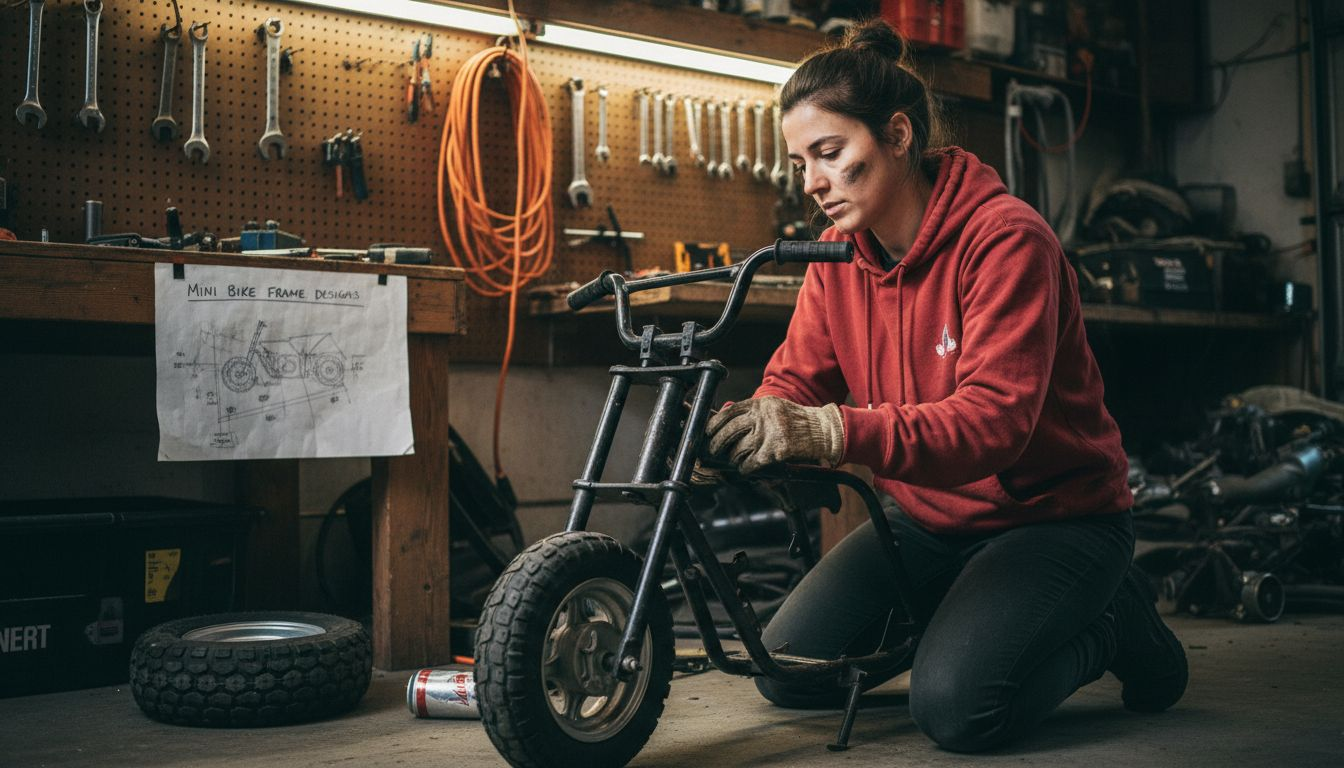
Pro tip: Test ride multiple mini bike types to understand which design best matches your riding skills and personal preferences.
Here is a summary of how different types of adult mini bikes compare across key characteristics:
| Type of Mini Bike | Typical Power Source | Main Riding Environment | Skill Level Suited |
|---|---|---|---|
| Recreational | Gas or Electric | Trails, private tracks | Beginners |
| Pit Bike | Gas | Off-road tracks, pits | Intermediate |
| Pocket Bike | Gas or Electric | Closed circuits, tracks | Experienced |
| Electric Mini Bike | Electric | Urban, parks, quiet areas | All levels |
| Gas-Powered Mini Bike | Gas | Off-road, rural locations | All levels |
Essential Features and Performance Factors
Understanding the core performance criteria for adult mini bikes requires a comprehensive look at their essential technical and functional characteristics. These vehicles are more than just small motorcycles - they represent a sophisticated blend of engineering and recreational design.
Key performance features to consider include:
-
Engine Specifications: - Displacement range (typically 50-200cc)
- Power output
- Fuel efficiency
-
Braking Systems:
- Disc brakes
- Drum brakes
- Hydraulic vs. mechanical configurations
-
Frame Construction:
- Steel tubular frames
- Aluminum lightweight designs
- Suspension quality
-
Tire Configuration:
- Off-road treads
- Street-compatible designs
- Wheel diameter (10-12 inches typical)
Power sources dramatically impact mini bike performance. Gas-powered models deliver raw acceleration and longer range, while electric variants provide smooth, quiet operation with minimal maintenance requirements. The choice between these power systems depends on individual riding preferences, terrain, and intended usage.
Performance in mini bikes is not just about speed - it’s about matching the machine to the rider’s specific needs and skill level.
Additional critical performance factors include weight capacity, ground clearance, and handling characteristics. Riders should evaluate these elements based on their specific riding environment - whether navigating urban landscapes, exploring off-road trails, or practicing technical riding skills.
Pro tip: Always test ride multiple mini bike models to understand how different performance features translate into real-world riding experience.
Legal, Safety, and Age Regulations Explained
Navigating the complex landscape of legal requirements for mini bike riders demands careful attention to regional regulations and safety standards. These rules vary significantly across different jurisdictions, making it crucial for riders to understand their local legal framework before operating a mini bike.
Key legal and safety considerations include:
-
Age Restrictions:
- Minimum age requirements (typically 16-18 years)
- Parental consent for younger riders
- Different rules for gas vs. electric models
-
Safety Equipment:
- DOT-approved helmets
- Protective gear (gloves, knee/elbow pads)
- Reflective clothing for visibility
-
Operational Regulations:
- Off-road vs. street legal classifications
- Speed limit restrictions
- Required vehicle registrations
-
Insurance Requirements:
- Liability coverage
- Personal injury protection
- Vehicle damage insurance
Electric mini bikes often face more complex regulations, with some jurisdictions classifying high-speed models similarly to mopeds. This classification can trigger additional licensing, registration, and insurance requirements. Riders must carefully verify their specific local laws to ensure full compliance and avoid potential legal complications.
Safety isn’t just a recommendation - it’s a critical responsibility for every mini bike rider.
Most regions mandate comprehensive safety training for mini bike operators, especially younger riders. These programs typically cover essential skills like proper handling, emergency maneuvers, protective gear usage, and understanding local traffic regulations. Some areas require completion of certified safety courses before obtaining operational permissions.
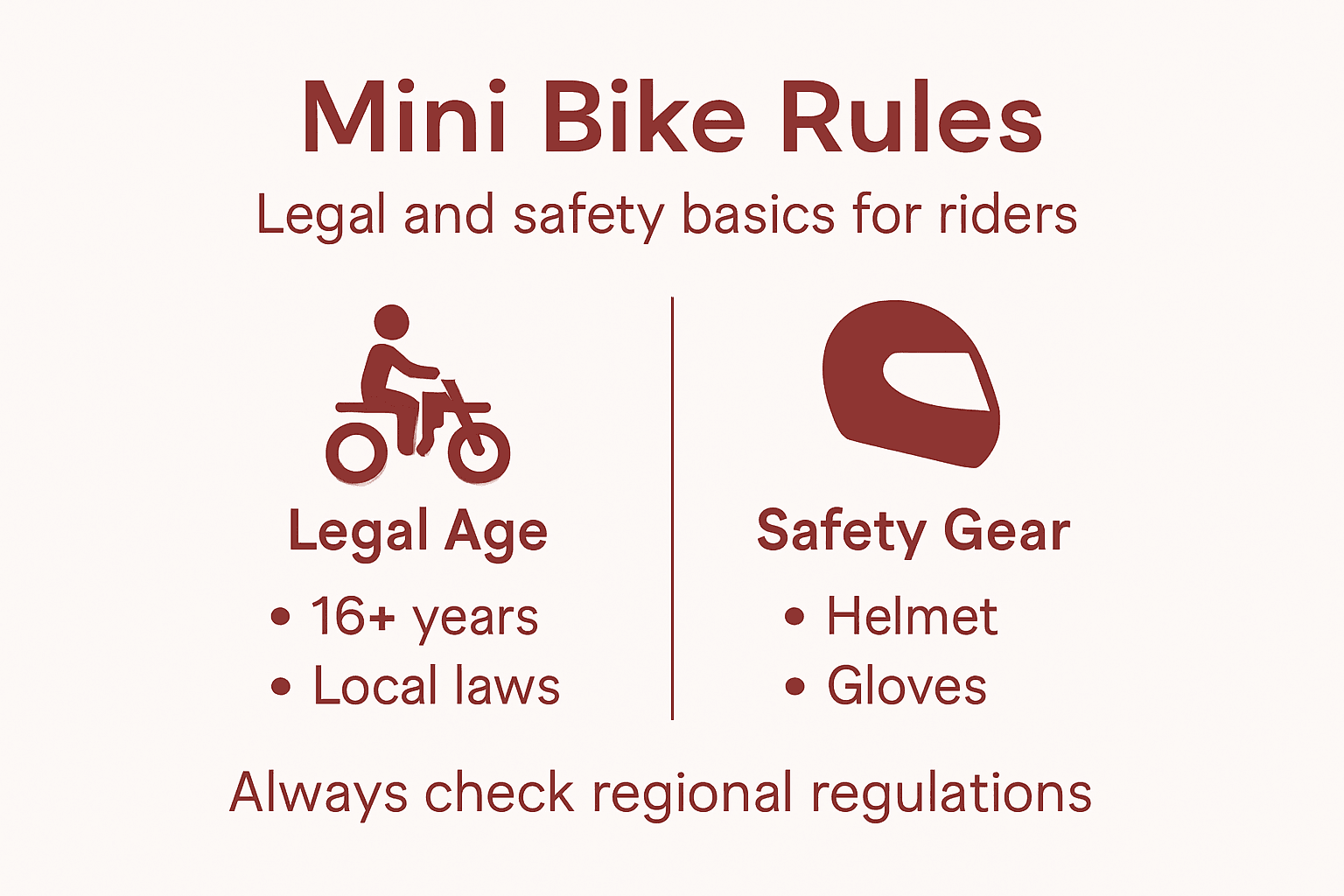
Pro tip: Consult local motor vehicle authorities and take a certified safety course to fully understand the legal requirements specific to your region and mini bike type.
Costs, Maintenance, and Common Pitfalls
Understanding the financial and maintenance landscape of adult mini bikes requires a comprehensive approach to budgeting and long-term care. Owners must anticipate both initial investment and ongoing expenses to ensure their vehicle remains reliable and performance-ready.
Typical cost breakdown includes:
-
Initial Purchase Costs:
- Entry-level models ($500-$1,500)
- Mid-range performance bikes ($1,500-$3,000)
- High-end specialized mini bikes ($3,000-$5,000)
-
Recurring Maintenance Expenses:
- Regular engine servicing
- Tire replacements
- Brake system checks
- Fuel/battery costs
-
Essential Replacement Parts:
- Spark plugs
- Air filters
- Chain and sprocket sets
- Brake pads
-
Safety Gear Investment:
- Helmets ($100-$300)
- Protective padding
- Riding gloves
- Specialized footwear
Most mini bike owners encounter several common maintenance challenges. Electric models require specialized battery care, while gas-powered variants demand consistent engine maintenance. Potential issues like carburetor problems, electrical system failures, and tire wear can significantly impact performance if not addressed proactively.
Preventative maintenance is always more cost-effective than reactive repairs - invest time in regular inspections.
Riders should budget approximately 10-15% of their initial purchase price annually for maintenance and potential replacements. This includes routine servicing, parts replacement, and unexpected repair costs. Understanding these financial implications helps riders make informed decisions and maintain their mini bikes in optimal condition.
Pro tip: Create a dedicated maintenance fund and keep detailed service records to track your mini bike’s health and anticipate potential repair needs.
The following table outlines the typical ongoing expenses and maintenance needs for adult mini bikes:
| Expense Type | Estimated Yearly Cost | Maintenance Consideration |
|---|---|---|
| Engine Servicing | $100-$300 | Oil changes, tuning, inspections |
| Tire Replacement | $60-$120 | Monitor tread, rotate as needed |
| Brake Maintenance | $40-$100 | Check pads, fluids regularly |
| Battery (Electric) | $120-$250 | Charge cycles, occasional replacement |
| Safety Gear Updates | $50-$150 | Replace worn helmets or pads |
Discover Your Perfect Adult Mini Bike at GokartsUSA
Finding the right adult mini bike means balancing performance, safety, and affordability. Whether you are a beginner eager to explore off-road trails or an experienced rider seeking a compact yet powerful machine, the challenges of choosing a mini bike with the right engine type, frame design, and safety features can feel overwhelming. At GokartsUSA, we understand the importance of matching your riding goals with quality, reliable vehicles that enhance your outdoor adventures.
Our extensive selection of adult mini bikes offers options for every rider. From gas-powered models that deliver raw power to quiet electric bikes ideal for urban or park environments, we provide detailed product descriptions, images, and accessory bundles to make your buying decision straightforward and satisfying.
Experience the freedom and excitement that comes with our trusted mini bikes today.
Explore the variety of adult mini bikes now at GokartsUSA. Take advantage of our spring sales, free shipping, and complimentary helmets to get started safely and affordably. Don’t wait to elevate your powersports experience—visit our store and find your ideal ride today.
Frequently Asked Questions
What is an adult mini bike?
An adult mini bike is a compact, motorized vehicle designed for recreational riding, typically featuring a low-slung frame, small wheels, and a four-stroke engine under 200cc.
What are the different types of adult mini bikes?
Adult mini bikes include several types such as recreational mini bikes, pit bikes, pocket bikes, electric mini bikes, and gas-powered mini bikes, each catering to different skill levels and riding environments.
Are adult mini bikes street legal?
No, adult mini bikes are not street legal and are primarily designed for off-road riding in controlled environments like trails or private tracks.
What maintenance do adult mini bikes require?
Maintenance for adult mini bikes includes regular engine servicing, tire replacements, brake system checks, and monitoring safety gear, with an estimated annual cost of 10-15% of the initial purchase price.