




Every parent faces the challenge of finding activities that combine excitement with genuine safety for their children. For families across North America, electric go-karts offer a new option that delivers both fun and peace of mind. With features like instant torque and precise speed control, these vehicles create an engaging outdoor experience while keeping the focus on safety and affordability for kids ages 6-12.
Table of Contents
- What Makes Electric Go-Karts Different
- Popular Types And Age Recommendations
- Key Safety Features For Young Riders
- Environmental Impact And Easy Maintenance
- Comparing Electric Vs Gas Go-Karts
Key Takeaways
| Point | Details |
|---|---|
| Electric Go-Karts Offer Advantages | They provide instant torque, quieter operation, and zero emissions, making them safer and more environmentally friendly than gas-powered models. |
| Diverse Options for Age Groups | Electric go-karts are available for various age ranges, ensuring a suitable choice for different skill levels and safety needs. |
| Safety Features Are Crucial | Parents must prioritize safety features like speed control and structural integrity when selecting go-karts for young riders. |
| Lower Environmental Impact and Maintenance | Electric go-karts require less maintenance and operate with a reduced carbon footprint compared to traditional gas go-karts. |
What Makes Electric Go-Karts Different
Electric go-karts represent a significant evolution in recreational motorsports technology, offering families a modern alternative to traditional gas-powered vehicles. Unlike their petroleum-based counterparts, these innovative machines leverage advanced electric motor designs to create a safer, cleaner, and more controlled riding experience.
Key differences between electric and traditional go-karts emerge in several critical areas:
- Instant Torque: Electric motors deliver immediate power, providing smoother acceleration
- Quieter Operation: Electric karts produce minimal noise compared to loud combustion engines
- Zero Emissions: No exhaust fumes make these vehicles environmentally friendly
- Precise Speed Control: Electronic speed management allows parents to set maximum velocity limits
The technological sophistication of electric go-karts is evident in their motor design standards, which prioritize safety and performance. Modern electric karts can generate between 10 to 67 kilowatts of power, making them suitable for various skill levels and age groups.
Power management represents another significant advantage. Electric go-karts utilize advanced lithium battery systems that provide consistent performance, allowing children to enjoy longer, more predictable riding sessions. The battery technology enables precise speed control, giving parents peace of mind while children explore their driving skills.
Pro tip: When selecting an electric go-kart, always prioritize models with adjustable speed settings and robust safety features to ensure an age-appropriate riding experience.
Popular Types and Age Recommendations
Electric go-karts are designed to accommodate a wide range of ages and skill levels, offering families diverse options for recreational motorsports. Fun kart categories typically range from beginner-friendly models for young children to more advanced vehicles for experienced young drivers.
The primary electric go-kart categories based on age and skill include:
-
Toddler/Preschool Karts (Ages 3-5)
- Low-powered electric models
- Maximum speeds under 5 mph
- Enhanced safety features
-
Junior Karts (Ages 6-9)
- Moderate power output
- Speeds ranging from 7-12 mph
- Adjustable seat configurations
-
Intermediate Karts (Ages 10-14)
- Higher power capabilities
- Speeds up to 20 mph
- More advanced control systems
-
Teen/Advanced Karts (Ages 15+)
- Professional-grade performance
- Speeds up to 40 mph
- Racing-style design
Safety remains paramount in electric go-kart design. Motorized vehicle standards ensure that each category includes specific safety mechanisms tailored to the rider’s age and skill level. These may include speed limiters, automatic braking systems, and protective frame designs.
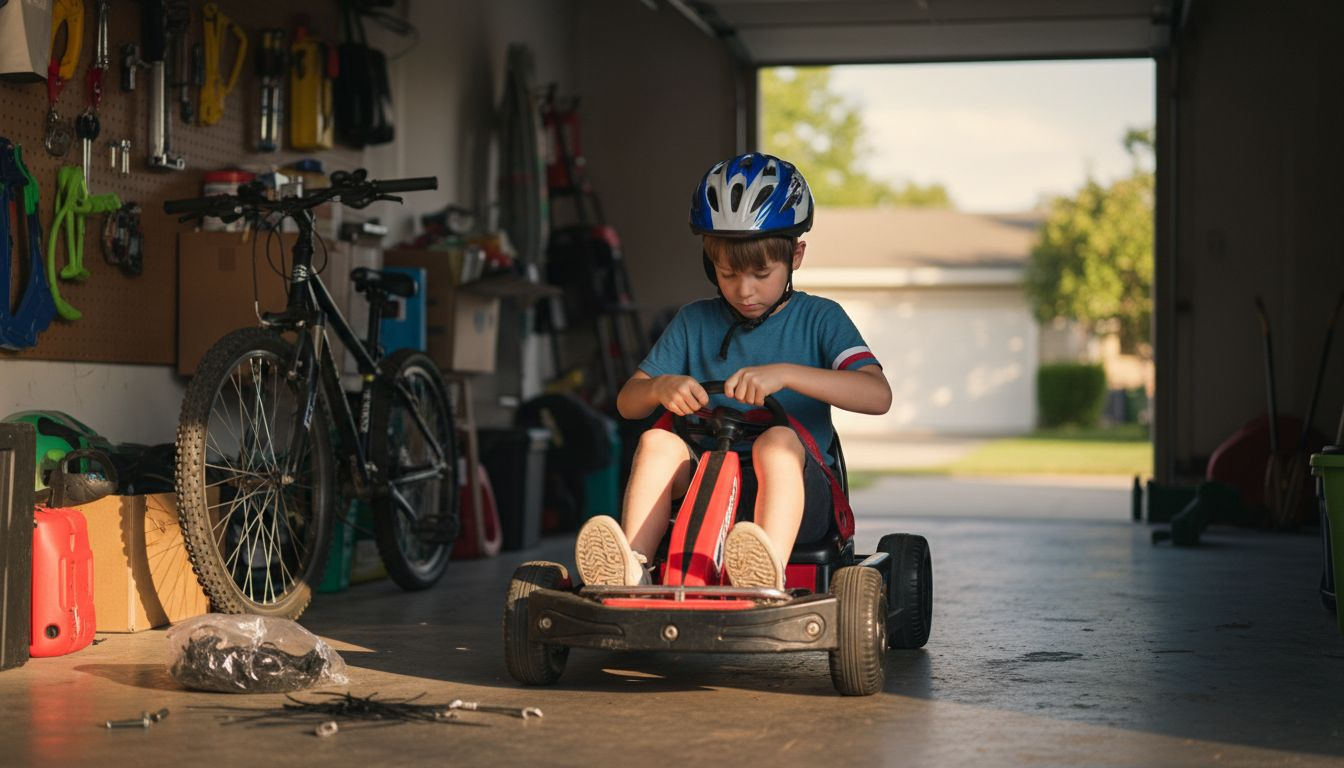
Parents should carefully consider their child’s maturity, physical coordination, and experience when selecting an appropriate electric go-kart. Factors like motor power, speed capabilities, and safety features should align with the individual child’s developmental stage and comfort level.
Here is a concise comparison of age categories for electric go-karts and key parental considerations for each group:
| Age Category | Main Focus Area | Recommended Supervision Level |
|---|---|---|
| Toddler/Preschool | Basic safety features | Continuous, hands-on supervision |
| Junior | Adjustable controls | Present for guidance and monitoring |
| Intermediate | Advanced handling skills | Occasional check-ins, active support |
| Teen/Advanced | Performance oversight | Remote supervision and spot checks |
Pro tip: Always supervise children while operating electric go-karts and invest in proper safety gear like helmets and protective padding, regardless of the kart’s age category.
Key Safety Features for Young Riders
Ensuring child safety is paramount when introducing young riders to electric go-karts. Safety design standards provide comprehensive guidelines that manufacturers must follow to protect young drivers during recreational activities.
Critical safety features for electric go-karts include:
-
Structural Integrity
- Reinforced chassis design
- High-tensile strength materials
- Impact-resistant frame construction
-
Speed Control Mechanisms
- Electronic speed limiters
- Adjustable maximum speed settings
- Parental control interfaces
-
Protective Design Elements
- Padded roll bars
- Low center of gravity
- Secure harness and seat belt systems
-
Advanced Braking Systems
- Responsive disk brake mechanisms
- Automatic emergency stopping features
- Precision brake calibration
Structural engineering principles play a crucial role in go-kart safety, utilizing advanced computer simulations to optimize chassis design and minimize potential impact risks. Modern electric go-karts incorporate sophisticated engineering techniques that balance performance with comprehensive safety protocols.
Additional safety considerations extend beyond physical design, encompassing rider training, protective gear, and appropriate supervision. Parents should actively engage in teaching proper driving techniques, understanding kart capabilities, and establishing clear safety boundaries for young riders.
Pro tip: Invest in a high-quality helmet, knee and elbow pads, and closed-toe shoes before allowing your child to operate an electric go-kart, regardless of its built-in safety features.
Environmental Impact and Easy Maintenance
Electric go-karts represent a significant advancement in sustainable recreational technology, offering families an environmentally conscious alternative to traditional gas-powered vehicles. Electric vehicle maintenance demonstrates substantial advantages in both operational efficiency and ecological responsibility.
Key environmental and maintenance benefits include:
-
Reduced Carbon Footprint
- Zero direct emissions
- Lower greenhouse gas production
- Minimal environmental impact
-
Simplified Maintenance Requirements
- Fewer moving mechanical parts
- Reduced fluid replacement needs
- Lower long-term maintenance costs
-
Battery and Energy Efficiency
- Advanced lithium-ion battery technologies
- Regenerative braking systems
- Extended operational lifespan
-
Cost-Effective Operation
- Lower energy consumption
- Reduced replacement part expenses
- Minimal scheduled maintenance
Global sustainability trends highlight the economic and environmental advantages of electric vehicles. Electric go-karts contribute to this broader movement by providing a clean, efficient alternative that minimizes environmental impact while delivering an engaging recreational experience.
Families can further enhance their electric go-kart’s sustainability by practicing responsible charging habits, using renewable energy sources, and properly maintaining battery health. Understanding the ecological benefits helps parents make informed decisions about recreational vehicle choices.
This table summarizes maintenance advantages of electric go-karts compared to gas-powered models:
| Maintenance Area | Electric Go-Kart Benefit | Gas Go-Kart Challenge |
|---|---|---|
| Engine Upkeep | Minimal moving parts | Regular tune-ups, oil changes |
| Fluid Changes | No fuel or oil needed | Frequent fluid replacements |
| Long-Term Cost | Lower service expenses | Higher part replacement cost |
| Downtime | Less frequent breakdowns | More repairs required |
Pro tip: Charge your electric go-kart during off-peak electricity hours and consider using solar charging stations to maximize environmental benefits and reduce overall energy consumption.
Comparing Electric vs Gas Go-Karts
The ongoing evolution of go-kart technology presents families with two distinct options: traditional gas-powered models and modern electric alternatives. Electric go-kart technologies have rapidly transformed the recreational vehicle landscape, offering compelling advantages over conventional gas-powered designs.
Key comparative aspects between electric and gas go-karts include:
-
Performance Characteristics
- Electric: Instant torque
- Gas: Gradual power delivery
- Electric: Smoother acceleration
- Gas: More established racing infrastructure
-
Environmental Impact
- Electric: Zero direct emissions
- Gas: Higher carbon footprint
- Electric: Lower noise pollution
- Gas: Higher greenhouse gas production
-
Operational Costs
- Electric: Lower long-term maintenance
- Gas: More frequent maintenance requirements
- Electric: Cheaper energy consumption
- Gas: Higher fuel expenses
-
Practical Considerations
- Electric: Limited battery duration
- Gas: Longer continuous run times
- Electric: Simpler mechanical design
- Gas: More complex engine systems
Global vehicle trends demonstrate a clear shift towards electric technologies, with go-karts representing a microcosm of this broader technological transformation. While gas-powered karts maintain certain performance advantages, electric models are rapidly closing the technological gap.
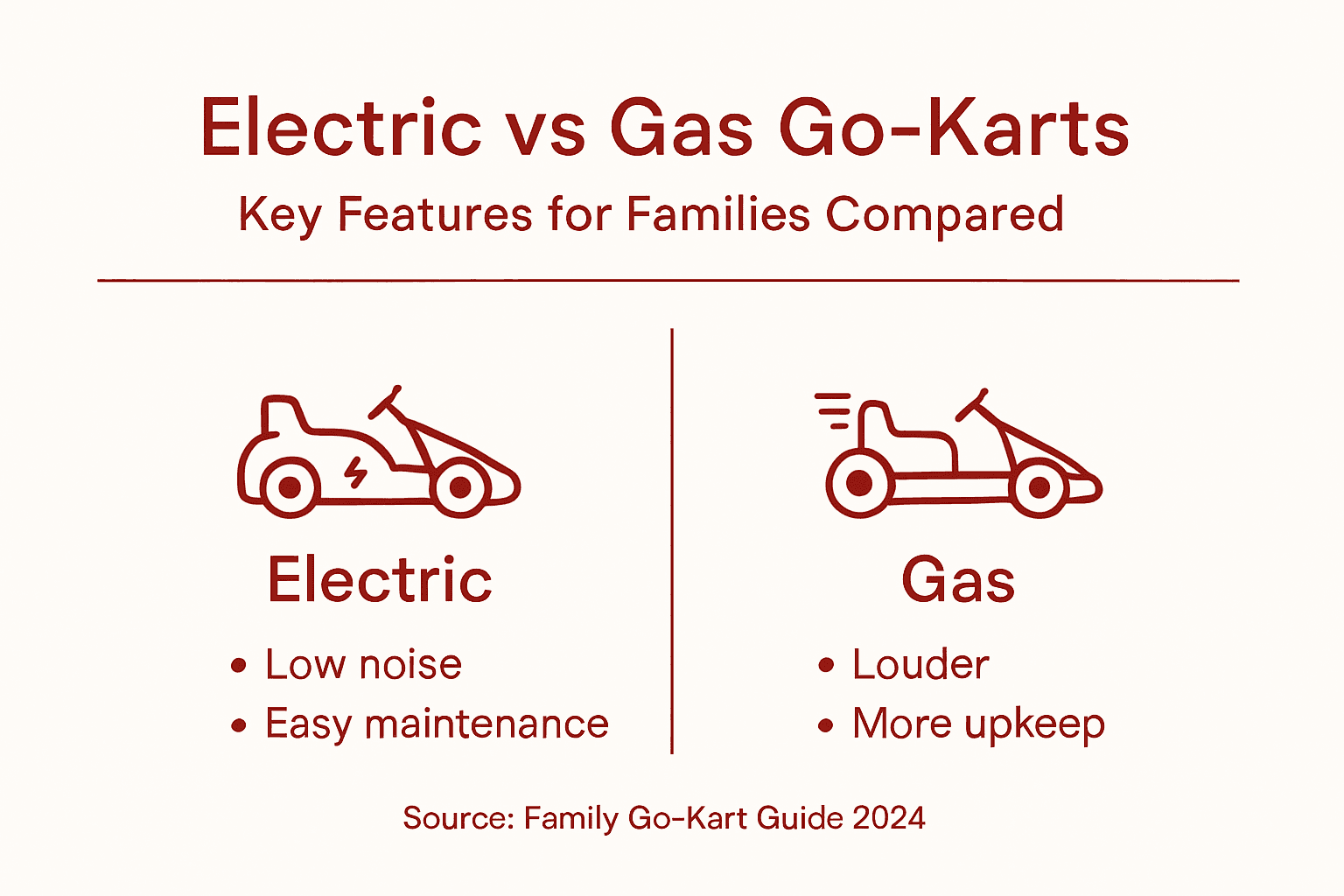
Families considering a go-kart purchase should evaluate their specific needs, weighing factors like intended use, budget, and environmental consciousness. Electric go-karts offer significant benefits for recreational use, particularly for younger riders seeking a safe, controlled, and eco-friendly experience.
Pro tip: Test drive both electric and gas go-kart models to understand their unique characteristics and determine which best suits your family’s specific recreational requirements.
Discover Safe and Fun Electric Go-Karts for Your Family
Choosing the perfect electric go-kart means balancing safety, performance, and environmental benefits for your child’s enjoyment. This article highlights challenges like speed control, age-appropriate features, and easy maintenance that parents face when selecting the right vehicle. At GokartsUSA.biz, we understand these concerns and offer a wide range of electric go-karts designed with advanced safety features, adjustable speed settings, and durable battery systems that ensure fun and peace of mind.

Explore our reliable selection to find go-karts that suit toddlers through teens, helping your family experience thrilling rides without sacrificing control or safety. Take advantage of our spring sales, free shipping offers, and complimentary safety accessories to get started today. Visit GokartsUSA.biz now and choose a model that matches your child’s skill level and your family’s values for cleaner, quieter recreation. Don’t wait to provide unforgettable outdoor fun with a trusted electric go-kart solution.
Frequently Asked Questions
What are the benefits of electric go-karts compared to gas-powered ones?
Electric go-karts offer advantages such as instant torque for smoother acceleration, reduced noise during operation, zero emissions for an environmentally friendly experience, and precise speed control for safety.
What age groups are electric go-karts suitable for?
Electric go-karts are designed for various age groups, including toddler/preschool karts for ages 3-5, junior karts for ages 6-9, intermediate karts for ages 10-14, and advanced karts for ages 15 and up, accommodating differing skill levels.
How can I ensure my child’s safety while using an electric go-kart?
Safety measures include selecting models with adjustable speed settings, ensuring robust safety features like harnesses and roll bars, providing proper supervision, and encouraging the use of protective gear such as helmets and pads.
What maintenance is required for electric go-karts?
Electric go-karts require less maintenance compared to gas-powered models due to fewer moving parts, eliminating the need for fluid changes, and typically incurring lower long-term service costs. Regularly check battery health and ensure proper charging practices.
Recommended
- 7 Reasons Why You Should Choose an Electric Kids Go Kart – GoKarts USA®
- TrailMaster MINI-XRS+ Kids Go Kart, Gas Engine, Adjustable Pedals – GoKarts USA®
- TrailMaster MINI-XRX+ Kids GoKart, Dual Seats, Gas Engine – GoKarts USA®
- TrailMaster MINI-XRX/R+ KIDS Go Kart, Gas engine, with Reverse – GoKarts USA®