




Every parent faces the challenge of finding safe and exciting activities that actually fit their child’s needs. When your child dreams of joining in on the fun of go-karting, the decision goes far beyond just picking out a model or checking their age. Taking the time to assess your child’s unique level of readiness and safety—while making sure you have the right space—lays a real foundation for years of enjoyable American family adventures.
Table of Contents
- Step 1: Assess Go-Kart Readiness And Space
- Step 2: Select An Entry-Level Go-Kart
- Step 3: Set Up Safety Gear And Accessories
- Step 4: Prepare The Go-Kart For Riding
- Step 5: Test Ride And Monitor Safety
Quick Summary
| Important Insight | Explanation |
|---|---|
| 1. Assess child’s physical readiness | Ensure your child meets height, coordination, and emotional maturity to safely drive a go-kart. |
| 2. Choose the right go-kart | Select an entry-level go-kart that matches your child’s skill level, prioritizing safety features like speed control. |
| 3. Invest in proper safety gear | Equip your child with essential protective gear, ensuring proper fit to minimize injury risks during go-karting. |
| 4. Perform pre-ride inspections | Conduct thorough checks on the go-kart’s brakes, tires, and steering before each ride to prevent mechanical failures. |
| 5. Supervise initial rides closely | Monitor your child during their first test rides in a controlled environment, providing guidance and ensuring safety at all times. |
Step 1: Assess Go-Kart Readiness and Space
Determining whether your child is ready for go-karting involves more than just checking their age. You need to evaluate multiple factors to ensure a safe and enjoyable experience.
Physical readiness is crucial for go-karting safety. Children must have sufficient height to reach pedals and steering controls comfortably. Comprehensive readiness assessment indicates that height, physical coordination, and cognitive maturity play significant roles in go-kart preparedness. Consider these key evaluation points:
- Height requirements: Child can reach pedals and steering wheel
- Motor skills: Good hand-eye coordination
- Comprehension: Ability to understand and follow safety instructions
- Emotional maturity: Can remain calm and focused
Space assessment is equally important. Go-karts require specific environments to operate safely. Ideal spaces include:
- Dedicated go-kart tracks
- Large, flat, open areas with minimal obstacles
- Smooth surfaces free from debris
- Areas with proper supervision and safety barriers
Parental supervision remains critical during initial go-karting experiences. Always monitor your child’s first attempts and provide guidance throughout the learning process.
Pro tip: Rent a go-kart for a trial session before making a significant investment to ensure your child genuinely enjoys and can safely handle the activity.
Step 2: Select an Entry-Level Go-Kart
Choosing the right go-kart for your child requires careful consideration of several crucial factors that ensure both safety and enjoyment. Your goal is to find a vehicle that matches your child’s physical abilities and skill level while providing a fun and controlled learning experience.
Entry-level go-karts for young drivers should prioritize safety and ease of use. Electric models are typically recommended for beginners because they offer better control and lower top speeds. When selecting a go-kart, focus on these essential features:
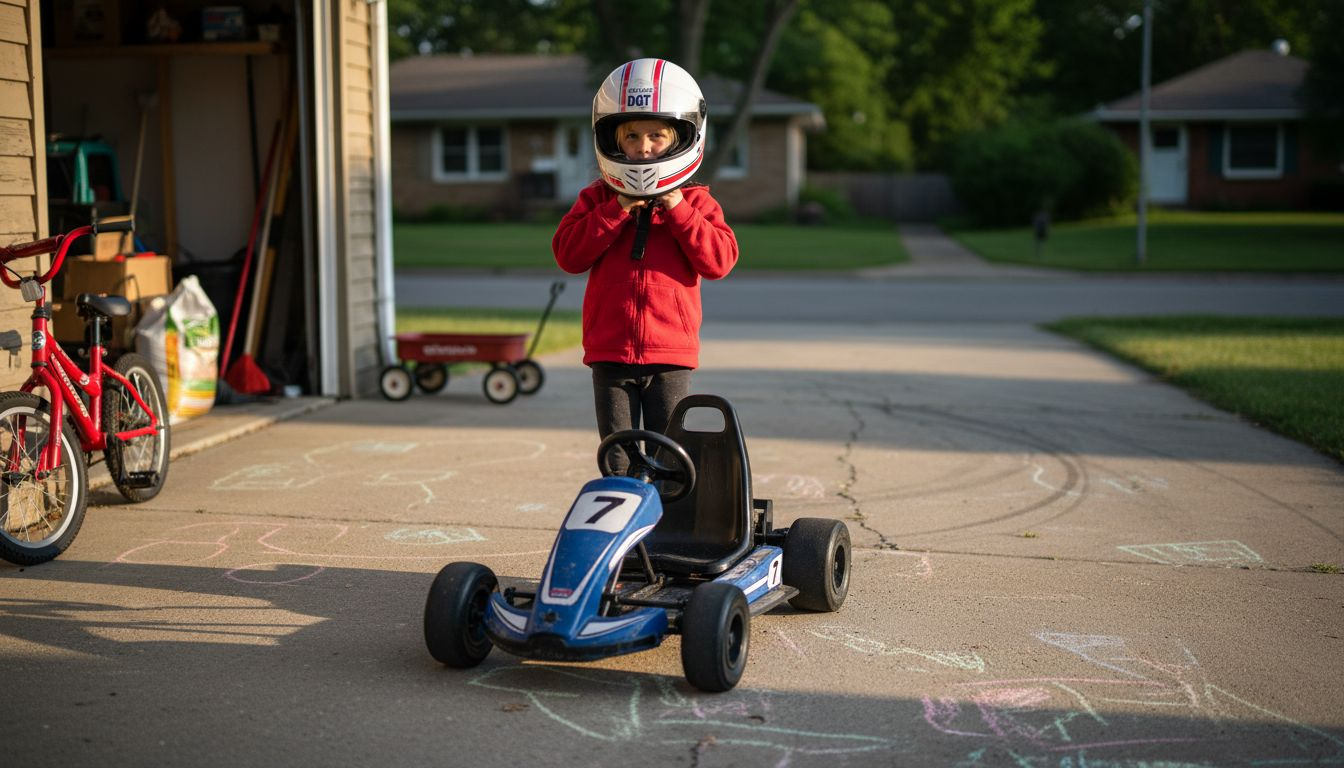
Here’s how go-kart types for beginners differ:
| Go-Kart Type | Power Source | Typical Speed Range | Ideal User Age |
|---|---|---|---|
| Electric | Battery powered | 5–15 mph | 5–12 years |
| Gasoline | Gas engine | 10–25 mph | 8+ years |
| Pedal | Child powered | 3–7 mph | 3–8 years |
- Safety equipment: Seat belts, padded bumpers, roll cage
- Speed control: Adjustable speed settings
- Power source: Electric models for easier handling
- Size: Appropriate for child’s height and weight
Safety should always be your primary consideration when selecting a go-kart for a young driver.
Consider these additional factors when making your selection:
- Check manufacturer recommended age ranges
- Verify maximum weight capacity
- Inspect build quality and durability
- Test drive if possible
Parental guidance is essential during the selection process. Involve your child in the decision while maintaining final oversight on safety and appropriateness.
Pro tip: Consider renting different go-kart models before purchasing to determine which style best suits your child’s skills and comfort level.
Step 3: Set Up Safety Gear and Accessories
Preparing the right safety gear is crucial for ensuring a secure and enjoyable go-karting experience for your child. This step involves selecting and fitting appropriate protective equipment that will minimize potential risks during racing or recreational activities.
Go-kart safety accessories are essential for protecting your young driver from potential accidents. A comprehensive safety setup includes:
- Protective helmet: Snug-fitting, DOT-approved racing helmet
- Racing gloves: Padded gloves for grip and hand protection
- Closed-toe shoes: Sturdy shoes with good ankle support
- Protective padding: Elbow and knee guards
- Long-sleeved clothing: Durable fabric to prevent skin abrasions
Safety gear is not optional - it’s a critical investment in your child’s protection.
When fitting safety equipment, pay attention to these key details:
- Ensure helmet fits correctly with no wiggle room
- Check that gloves allow full finger movement
- Verify shoes have non-slip soles
- Confirm padding fits snugly without restricting movement
Proper equipment fit is just as important as the gear itself. Always have your child try on safety gear before purchasing to ensure maximum comfort and protection.
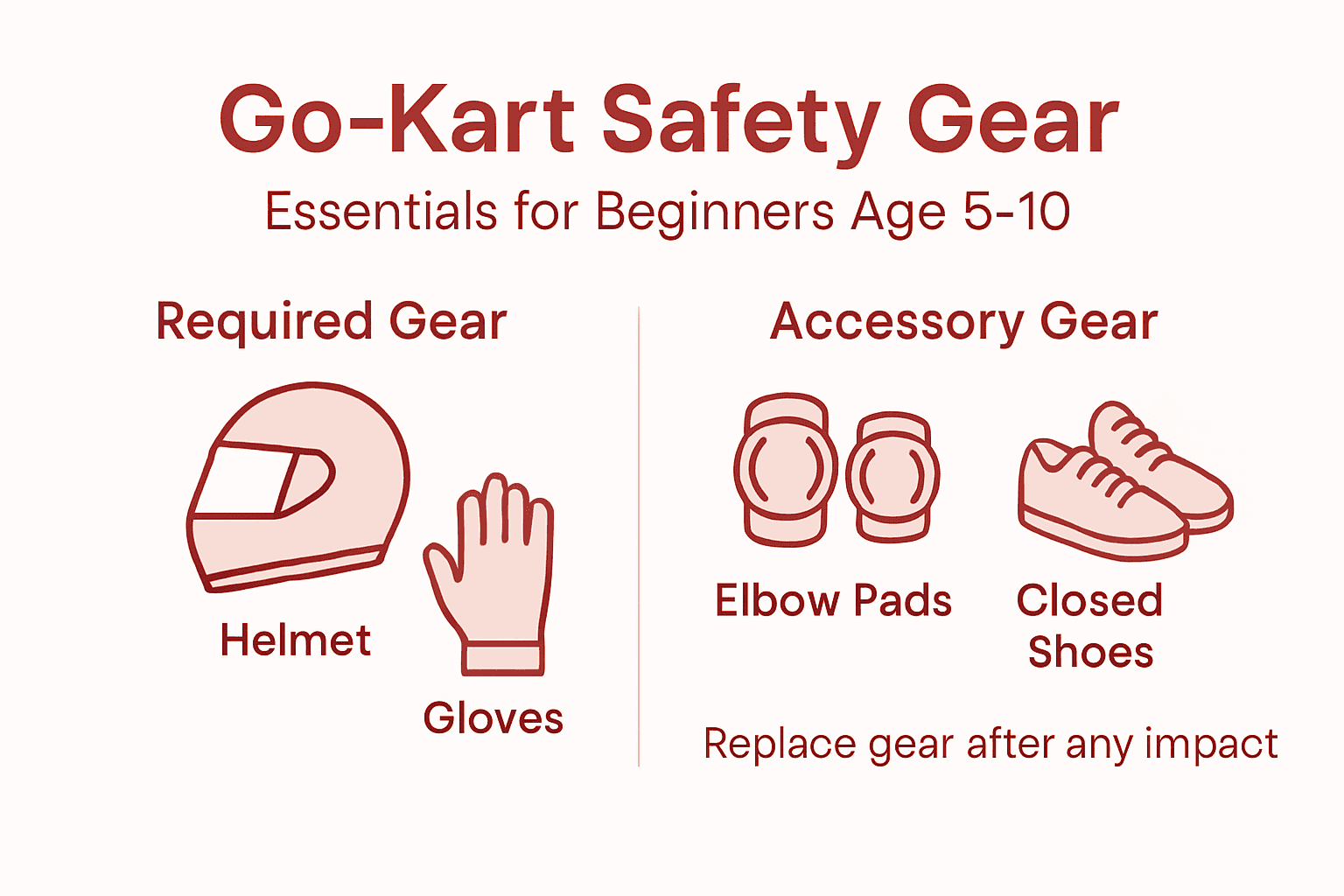
Use this quick safety gear checklist to ensure your child is fully protected:
| Safety Gear | Purpose | Key Fit Consideration |
|---|---|---|
| Helmet | Head protection | Snug, doesn’t move |
| Gloves | Hand and grip protection | Allows full finger motion |
| Closed-toe Shoes | Foot and ankle support | Non-slip soles |
| Elbow/Knee Guards | Joint and abrasion protection | Snug with easy movement |
| Long-sleeved Top | Skin abrasion prevention | Durable, covers arms |
Pro tip: Replace safety gear annually or after any significant impact to maintain optimal protection levels.
Step 4: Prepare the Go-Kart for Riding
Before your child takes their first ride, a thorough go-kart preparation is essential to ensure safety and optimal performance. This crucial step involves systematic checks and maintenance that will prevent potential mechanical issues and provide peace of mind.
Safety tips for go-kart preparation emphasize comprehensive mechanical inspections before each use. Focus on these critical pre-riding checks:
- Brake system: Test responsiveness and pad condition
- Tire inspection: Check pressure and tread depth
- Steering mechanism: Verify smooth and precise movement
- Engine oil levels: Confirm proper lubrication
- Fasteners and connections: Ensure all parts are securely tightened
Consistent pre-ride inspections are your first line of defense against potential mechanical failures.
Perform these detailed preparation steps:
- Check tire pressure using a reliable gauge
- Inspect brake pads for wear and proper alignment
- Verify all safety harnesses and seat belts
- Test accelerator and brake pedal functionality
- Listen for any unusual sounds during a brief test run
Visual and hands-on inspections are critical. If anything seems off, consult a professional before allowing your child to ride.
Pro tip: Create a simple pre-ride checklist and laminate it near the go-kart to ensure consistent, thorough safety checks.
Step 5: Test Ride and Monitor Safety
The first test ride represents a critical moment where theory transforms into practical experience for young go-kart drivers. Your primary goals are to assess your child’s driving skills, ensure comprehensive safety, and provide immediate guidance and support.
Children’s go-kart racing safety guide emphasizes conducting initial rides in controlled environments with constant adult supervision. Implement these key monitoring strategies:
- Controlled environment: Choose flat, obstacle-free areas
- Gradual speed introduction: Start with lowest speed settings
- Close supervision: Maintain visual contact at all times
- Communication: Establish clear hand signals and verbal commands
- Emergency preparedness: Keep safety kill switch within reach
Continuous observation is your most powerful safety tool during go-kart training.
Follow these structured test ride steps:
- Review safety rules before starting
- Demonstrate proper driving techniques
- Watch for proper control and reaction times
- Provide immediate feedback
- Stop and restart if any unsafe behaviors occur
Parental involvement remains crucial throughout the learning process. Your attentive guidance helps build confidence and safe driving habits.
Pro tip: Record the first few test rides on video to review driving techniques and identify areas needing improvement.
Gear Up for Safe and Exciting Entry-Level Go-Karting Fun
Helping your child safely start go-karting means addressing key challenges like finding the right go-kart model, ensuring proper safety gear, and preparing the vehicle for fun and secure rides. From confirming physical readiness to selecting an entry-level electric go-kart with adjustable speeds, every step requires care and quality equipment to build confidence and protect your young driver.

Explore a wide selection of kid-friendly go-karts and essential safety accessories at GokartsUSA.biz. Our affordable models prioritize safety features such as seat belts and speed controls to suit beginners perfectly. Get started today with reliable products backed by expert support so your child can enjoy their first rides safely. Don’t wait until spring sales end—visit our store now and equip your family with trusted go-kart gear designed for peace of mind and lasting fun.
Frequently Asked Questions
What age is appropriate for kids to start go-karting?
Children can typically start go-karting around the age of 5, but readiness depends on physical height, coordination, and emotional maturity. Assess your child’s height and ability to reach pedals before introducing them to go-karts.
How do I choose a safe go-kart for my child?
Select go-karts designed for beginners, focusing on features like adjustable speed settings and safety equipment. Electric models are a good starting point since they are easier to control and typically have lower top speeds.
What safety gear is necessary for go-karting?
Essential safety gear includes a DOT-approved helmet, padded gloves, closed-toe shoes, and protective padding for elbows and knees. Ensure that all gear fits properly to provide the best protection during rides.
How can I prepare a go-kart for my child’s first ride?
Perform pre-ride checks that include inspecting the brake system, tire pressure, and steering mechanism. Make sure all parts are securely tightened and functional before allowing your child to ride.
What are some tips for supervising my child’s go-karting?
Always supervise your child closely during rides, especially at the beginning. Establish clear communication signals, and start with low speed settings in a safe, controlled environment to help them gain confidence.
How can I ensure my child stays safe while go-karting?
Monitor your child’s driving closely and provide immediate feedback if unsafe behaviors arise. Prepare for emergencies by keeping the safety kill switch accessible and ensuring your child understands how to use it during their practice.