




TL;DR:
- A clutch system connects and disconnects an engine from the transmission to allow smooth gear changes and prevent stalling. It consists of key parts like the clutch disc, pressure plate, flywheel, release bearing, and linkage that work together in coordination. Proper maintenance and understanding of clutch operation help extend its lifespan and improve riding performance.
A clutch system is a mechanical device that connects and disconnects the engine from the transmission, controlling power flow on demand. Without it, you could not shift gears smoothly, stop at a light without stalling, or launch a go-kart from a standstill. The clutch system function applies equally to manual cars, motorcycles, ATVs, and recreational powersports machines. Understanding how clutch systems work gives you a real edge as an owner, whether you are diagnosing a problem or simply getting more out of your ride.
What is a clutch system and what does it do?
A clutch system is defined as the mechanical linkage between the engine and transmission that allows the driver to engage or disengage power transfer on demand. When the clutch is fully engaged, it transfers 100% of engine torque to the transmission. That complete connection is what moves the vehicle forward with authority.
The clutch sits between two spinning components: the engine’s flywheel and the transmission’s input shaft. Its job is to join them smoothly during acceleration and separate them cleanly during gear changes. Without that controlled separation, every gear shift would grind metal against metal.
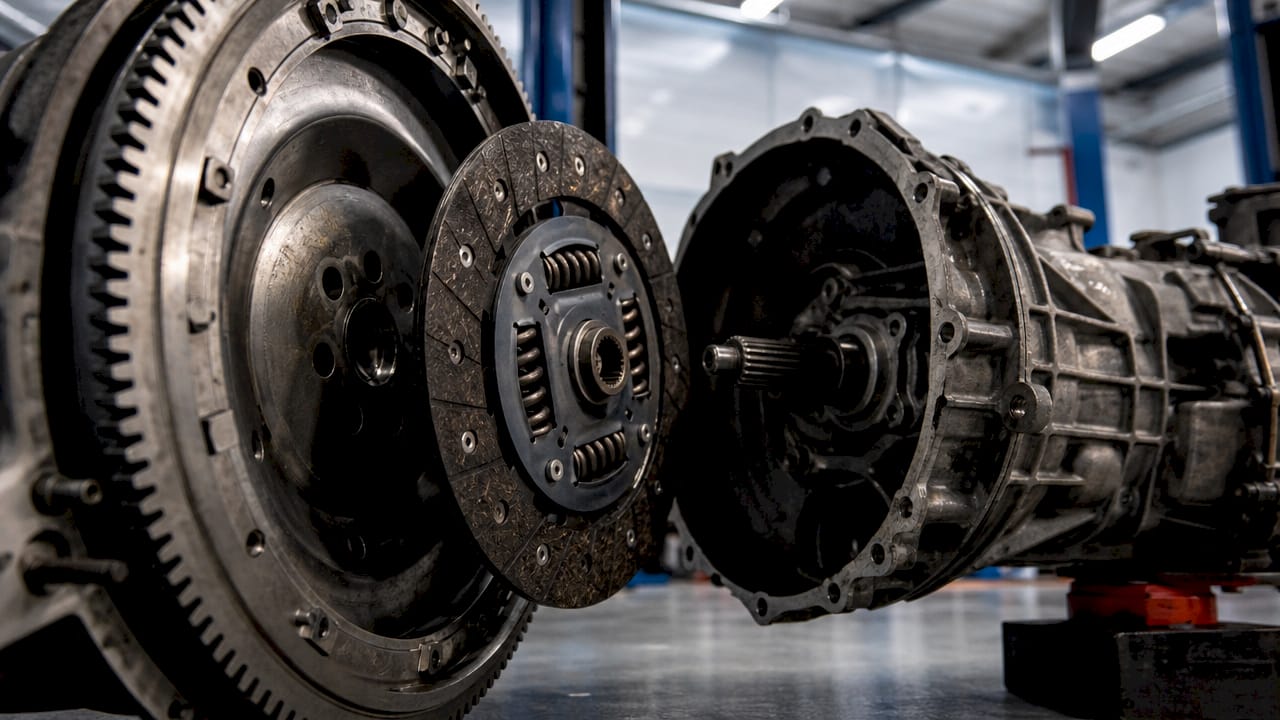
In recreational powersports equipment like go-karts, mini bikes, and ATVs, the clutch system function is equally critical. It lets the engine idle freely while the vehicle sits still, then transfers power progressively as the throttle opens. That smooth power delivery is what makes a machine feel controlled and confidence inspiring rather than jerky and unpredictable.
The core components of a standard clutch system are the clutch disc, pressure plate, flywheel, release bearing, and actuating linkage. Each part plays a specific role. Together, they form a system that handles thousands of engagement cycles over the life of a vehicle.
What are the main components and how do they work together?
Every clutch system relies on five parts working in tight coordination. Understanding each one makes the whole mechanism click into place.
- Clutch disc: The friction surface that presses against the flywheel to transfer torque. It is lined with friction material similar to brake pad compound, and it wears down with every engagement cycle.
- Pressure plate: A spring-loaded clamp that holds the clutch disc firmly against the flywheel during engagement. When you release the pedal, the pressure plate applies clamping force. When you press the pedal, it releases that force.
- Flywheel: A heavy rotating disc bolted to the engine’s crankshaft. It provides a flat, smooth surface for the clutch disc to grip and acts as a rotating mass that smooths out engine pulses.
- Release bearing (throw-out bearing): A bearing that slides along the transmission input shaft and pushes against the diaphragm spring when the clutch pedal is pressed. It is the part that physically initiates disengagement.
- Actuating linkage: The connection between the clutch pedal and the release bearing. This is either a mechanical cable or a hydraulic system that converts pedal force into hydraulic pressure to activate the release fork.
The coordination between these parts is what makes clutch operation feel smooth or rough. A worn release bearing creates noise. A weak pressure plate causes slipping. A scored flywheel causes vibration. Every symptom traces back to one of these five components.
Pro Tip: When replacing a clutch disc, always resurface or replace the flywheel at the same time. Installing a new disc on a worn flywheel wastes money because the uneven surface accelerates friction material wear immediately.
How does the clutch engage and disengage during operation?
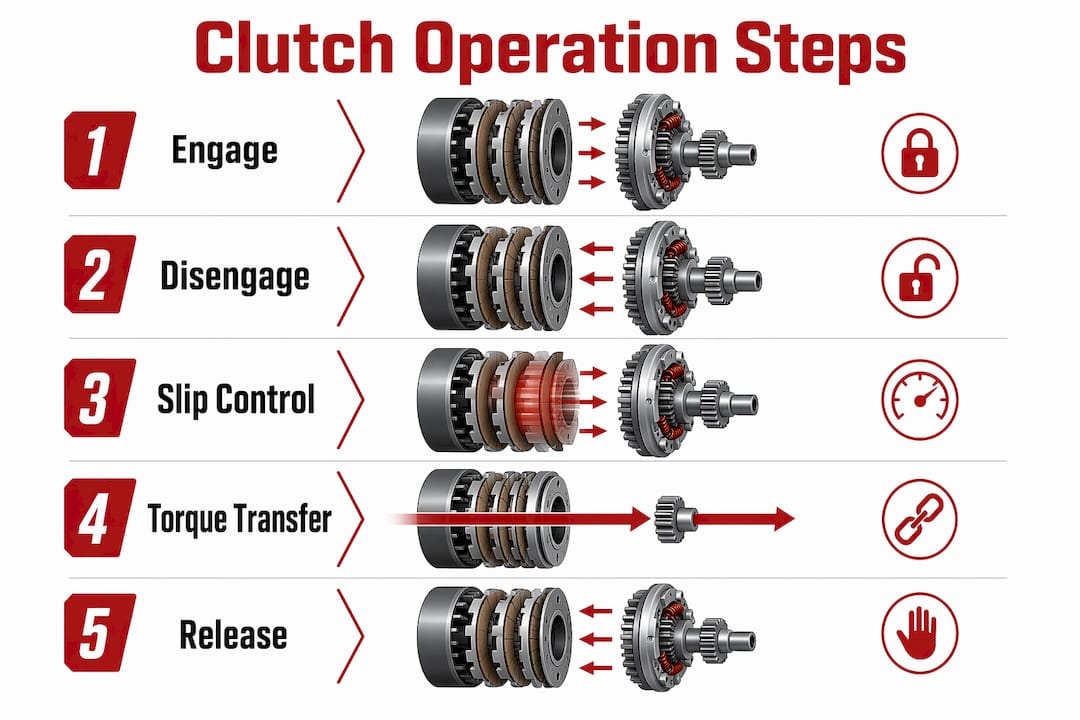
The clutch mechanism details become clearest when you walk through the two operating phases step by step.
- Clutch fully engaged (pedal released): The pressure plate clamps the clutch disc hard against the flywheel. Engine torque flows directly into the transmission input shaft. The vehicle moves with full power.
- Driver presses the clutch pedal: Pedal force travels through the cable or hydraulic line to the release fork. The fork pushes the release bearing toward the pressure plate.
- Diaphragm spring deflects: The release bearing pushes the diaphragm spring, which pivots and pulls the pressure plate away from the clutch disc. Clamping force drops to zero.
- Clutch disc spins freely: With no clamping force, the clutch disc separates from the flywheel. The engine runs but sends no torque to the transmission. The driver can now shift gears without grinding.
- Driver selects a new gear: The transmission’s synchronizers match gear speeds after disengagement. Incomplete pedal depression at this stage causes the synchronizer to grind because the input shaft is still partially driven.
- Driver releases the pedal gradually: The pressure plate re-engages the clutch disc progressively. Controlled slippage during this phase allows the engine and drivetrain speeds to match before full lock-up.
- Full engagement restored: The clutch disc locks to the flywheel again. Full torque transfer resumes and the vehicle accelerates cleanly.
That controlled slip during step six is intentional and necessary. The problem arises when drivers hold the clutch in partial engagement for too long, a habit called riding the clutch. That generates heat that degrades the friction lining and weakens the diaphragm spring over time.
What are the different types of clutch systems?
Dry clutches and wet clutches represent the two fundamental designs, and the differences between them affect everything from maintenance intervals to performance characteristics.
| Clutch type | How it works | Common application | Key advantage |
|---|---|---|---|
| Dry single-plate | Friction disc runs dry, no oil contact | Manual cars and trucks | Simple design, low cost, easy service |
| Wet multi-plate | Plates submerged in oil bath | Motorcycles, ATVs, automatics | Cooler operation, longer service life |
| Multi-plate dry | Multiple dry friction discs stacked | High-performance and heavy-duty vehicles | Higher torque capacity in compact size |
| Dual-clutch | Two clutch packs alternating odd/even gears | Modern performance cars | Near-instant gear changes with no power interruption |
Dry clutches are the standard in manual passenger cars. They run without lubrication, which means the friction material does all the work and wears accordingly. Wet clutches run submerged in oil, which carries heat away and dramatically extends friction material life. That is why motorcycles and ATVs with wet clutches can handle aggressive riding without burning through clutch components quickly.
Multi-plate designs stack multiple friction surfaces to multiply torque capacity without increasing the clutch diameter. Dual-clutch systems take a different approach entirely. They use two separate clutch packs, one for odd gears and one for even gears, so the next gear is always pre-selected and ready. The result is a shift time measured in milliseconds.
Pro Tip: Wet clutch systems require oil specifically rated for wet clutch use. Standard motor oil with friction modifiers will cause wet clutch slippage. Always check your owner’s manual for the correct oil specification before a fluid change.
How do you recognize clutch problems and maintain the system?
The clutch pedal feel is the most reliable early indicator of system health. A pedal that feels heavy, spongy, or engages very low to the floor signals hydraulic or mechanical linkage problems, or internal component wear. Catching these signs early prevents a minor repair from becoming a full clutch replacement.
Common warning signs include:
- Slipping clutch: Engine revs rise but vehicle speed does not increase. The friction material is worn and cannot maintain grip on the flywheel.
- Squealing or grinding noise: Heard when pressing the pedal. Squealing or grinding typically points to release bearing failure.
- Vibration during engagement: The clutch shudders as it takes up drive. This usually indicates a warped flywheel or pressure plate.
- Difficulty shifting: Gears grind or resist engagement even with the pedal fully depressed. The clutch is not fully disengaging.
- Burning smell: A sharp, acrid odor after heavy use signals overheated friction material from excessive slippage.
Maintenance best practices keep the clutch system healthy between replacements:
- Never rest your foot on the clutch pedal while driving. Constant partial pressure accelerates release bearing wear.
- Use the handbrake on hills instead of holding the vehicle with clutch slip.
- Check hydraulic clutch fluid at every oil change interval.
- Have the clutch inspected if any warning sign appears rather than waiting for complete failure.
- Replace the clutch disc, pressure plate, and release bearing as a set. Mixing old and new components creates uneven wear.
Pro Tip: For hydraulic clutch systems, flush the fluid every two years. Clutch fluid absorbs moisture over time, which lowers its boiling point and causes spongy pedal feel under hard use.
The clutch is a consumable friction device designed to wear out. Stop-and-go traffic and aggressive riding accelerate that wear significantly. Respecting the system’s limits and performing scheduled maintenance is the most cost-effective approach to clutch ownership.
Key Takeaways
A clutch system is a wear-based friction mechanism that connects the engine to the transmission, and its longevity depends entirely on how it is used and maintained.
| Point | Details |
|---|---|
| Core function | The clutch connects and disconnects engine torque from the transmission for smooth gear changes. |
| Five key components | Clutch disc, pressure plate, flywheel, release bearing, and linkage all work together as a system. |
| Types vary by application | Dry clutches suit manual cars; wet multi-plate clutches handle motorcycles, ATVs, and automatics. |
| Pedal feel signals health | A spongy, heavy, or low-engaging pedal is an early warning of hydraulic or mechanical wear. |
| Riding the clutch causes damage | Prolonged partial engagement generates heat that degrades friction material and the diaphragm spring. |
Why every powersports rider should understand their clutch
Most riders treat the clutch as a background system until it fails. That is the wrong approach, and I have seen it cost people far more than a timely inspection would have.
The clutch is the single most operator-influenced component on any manual or semi-automatic machine. Every time you slip it longer than necessary, you are burning friction material that cannot be recovered. Every time you ride the pedal on a long hill, you are loading the release bearing with heat it was not designed to absorb continuously.
What I find most interesting is how clutch design has evolved in powersports. Centrifugal clutches on entry-level go-karts engage automatically based on engine RPM, which removes operator error from the equation entirely. That is a genuinely clever solution for younger riders or beginners who have not yet developed clutch feel. The 4-stroke automatic clutch design used in many powersports vehicles takes this concept further, offering reliable automatic engagement without sacrificing durability.
Understanding how your clutch works changes how you ride. You stop fighting the machine and start working with it. You recognize the difference between normal clutch slip during a standing start and the abnormal slip of worn friction material. That knowledge alone can save you hundreds of dollars in unnecessary repairs and keep you on the trail longer.
The riders who get the most life from their clutch systems are not necessarily the most skilled. They are the most aware.
— Mario
Clutch parts and assemblies at Gokartsusa
Gokartsusa carries clutch components built for the powersports machines we know you love to ride.

Whether you need a complete 250cc clutch assembly for a go-kart rebuild or a semi-auto clutch kit for a mini bike upgrade, Gokartsusa stocks parts matched to the vehicles in our catalog. Every component is selected for compatibility and reliability, so you spend less time searching and more time riding. If you are shopping for a complete machine with a proven clutch system built in, the Mini Sport Kids ATV is a strong starting point for younger riders. Our team is here to help you find the right part the first time.
FAQ
What is a clutch system in simple terms?
A clutch system is a mechanical device that connects and disconnects the engine from the transmission. It allows the driver to shift gears smoothly and stop without stalling the engine.
How does a clutch system work in a go-kart or ATV?
Most go-karts use a centrifugal clutch that engages automatically when engine RPM rises above a set threshold. ATVs often use wet multi-plate clutches submerged in oil for cooler operation and longer service life.
What are the signs that a clutch system needs replacement?
Common signs include a slipping clutch where engine revs rise without vehicle acceleration, squealing or grinding noises when pressing the pedal, vibration during engagement, and a spongy or low-engaging pedal feel.
What is the difference between a dry and wet clutch?
Dry clutches use friction between a disc and flywheel with no lubrication, typical in manual cars. Wet clutches operate submerged in oil, which reduces heat and extends component life, making them common in motorcycles and ATVs.
How long does a clutch system last?
Clutch lifespan varies widely based on use and driving habits. The friction material degrades with every engagement cycle, and stop-and-go traffic or aggressive riding accelerates wear significantly. Avoiding riding the clutch and performing regular inspections extends service life considerably.