




Most new 50cc scooters in the U.S. sell for about $800–$3,000, with used examples typically landing between $500 and $2,000 depending on condition and age. Three price points tell the story quickly: a budget mass-market model like the Tao Motor Pony 50 runs $576–$639 at major retailers, a solid mid-range new scooter lands around $1,100–$2,000, and a premium-brand option like the KYMCO Agility 50 starts at $2,699 before destination charges.
Before you lock in a sticker price, keep these realities in mind:
- Sales tax, title, and registration fees add $100–$400 or more to your out-the-door total in most states.
- A helmet and basic riding gear are non-negotiable safety costs, typically $80–$250 for entry-level equipment.
- Online purchases often ship freight, which may require assembly or a dealer setup fee not shown in the listing price.
Key Takeaways
New 50cc scooters in the U.S.
| Point | Details |
|---|---|
| New price range | Budget models start near $576–$639; mid-range runs $1,000–$2,000; premium brands reach $2,000–$3,000+. |
| Used price range | Well-maintained used scooters typically sell for $800–$1,300; project bikes fall under $400. |
| First-year add-ons | Budget 15–25% above sticker for tax, title, registration, insurance ($60–$350/year), and gear. |
| Key price drivers | Engine type (2-stroke vs 4-stroke), braking system, wheel size, and warranty coverage all shift the price band. |
| Gokartsusa option | The TrailMaster Sorrento 50cc ships fully assembled with retailer support — a ready-to-ride choice with no private-party risk. |
Table of Contents
- What does a 50cc scooter price look like across budget, mid-range, and premium?
- Used 50cc scooters: what to expect on price and condition
- What factors push a 50cc scooter into a higher price band?
- What ongoing costs should you budget beyond the purchase price?
- Where should you buy a 50cc scooter, and when?
- How to pick the right 50cc scooter for your budget and use case
- How these price estimates were put together
- Our take on what buyers actually need to know
- Gokartsusa’s 50cc-style scooters: ready to ship, retailer-backed
- Sources
What does a 50cc scooter price look like across budget, mid-range, and premium?
New 50cc scooters split into three clear bands, and the gap between them is real. Knowing what each band actually buys you prevents overpaying for features you don’t need — or underpaying for a scooter that won’t hold up.
A price survey of U.S. listings shows new 50cc mopeds averaging about $1,650, with a typical range of $1,100–$2,000. That average sits squarely in the mid-range band, which is where most buyers land after weighing reliability against budget.
| Price Band | Typical New Price | What’s Usually Included |
|---|---|---|
| Budget | $576–$639 | Basic steel frame, drum brakes, 10" wheels, limited or no warranty, minimal electronics |
| Mid-Range | $1,000–$2,000 | Improved build quality, disc or combo brakes, 12" wheels, 1-year warranty, basic instrument cluster |
| Premium | $2,000–$3,000+ | Name-brand engine, dealer network support, multi-year warranty, better suspension, quality finish |
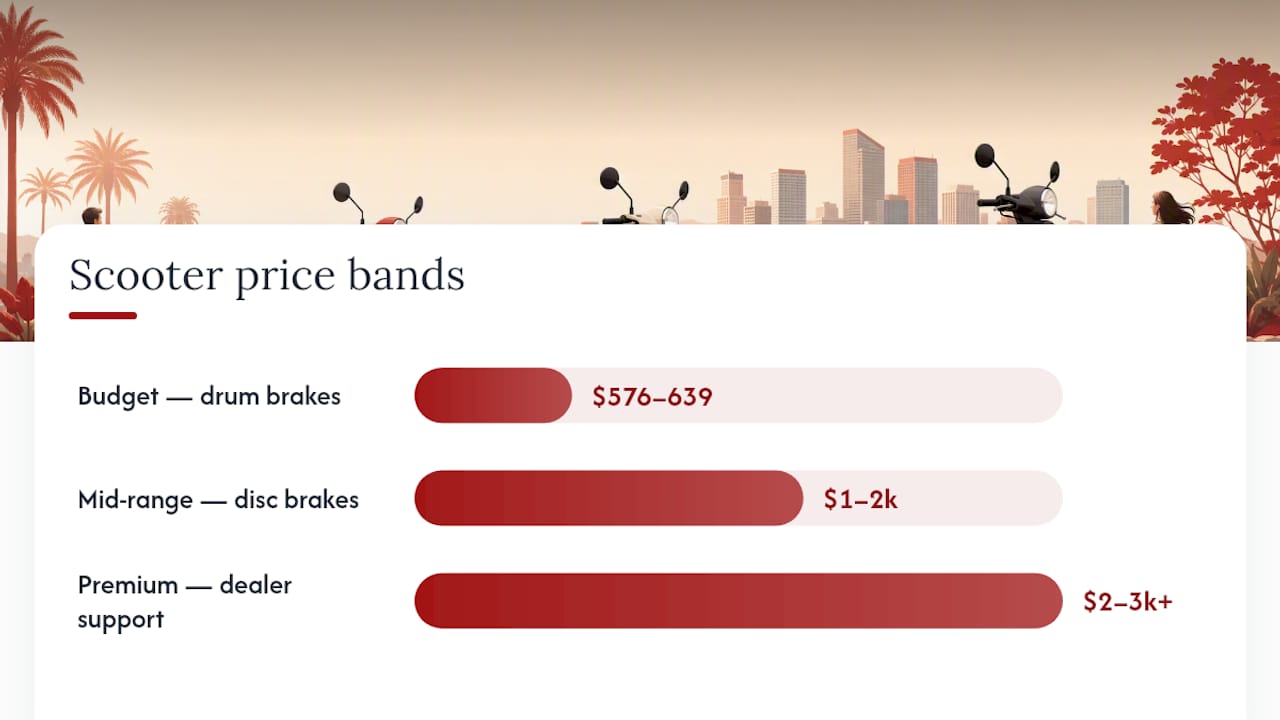
Budget scooters get you rolling. The Tao Motor Pony 50 at prices under $700 exemplifies this tier: basic transportation with drum brakes and a no-frills frame. Mid-range models add meaningful upgrades — larger wheels handle road imperfections better, disc brakes shorten stopping distances, and a one-year warranty gives you a safety net. Premium models like the KYMCO Agility 50 bring a dealer network behind them, which matters when you need parts or service two years from now.
Pro Tip: Always ask for the out-the-door price in writing before committing. Destination charges, dealer prep fees, and documentation fees can add $150–$400 on top of the advertised sticker, especially at brick-and-mortar dealers.
Used 50cc scooters: what to expect on price and condition
Used 50cc scooters typically sell for $500–$2,000, with the sweet spot for a well-maintained, low-mileage example sitting around $800–$1,200. Condition drives price more than age alone. A three-year-old scooter with documented maintenance and under 2,000 miles can retain a majority of its original value. A same-age machine with no service records, visible oil leaks, and worn tires is a project bike — worth $300–$500 at most, and only if you’re comfortable wrenching.
Three real-world scenarios illustrate how condition shifts value:
- Well-maintained, 3 years old, under 2,500 miles: Expect to pay $900–$1,300. Full service history, no visible damage, tires with life left. This is the used-market sweet spot.
- Average condition, 4–6 years old, 3,000–5,000 miles: $500–$800 is fair. Some wear, possibly a replaced belt or battery, but mechanically sound.
- Project bike or unknown history: Under $400. Missing title, heavy smoke on startup, or evidence of a tip-over. Budget for repairs before you budget for riding.
Before you hand over cash, run through this inspection checklist:
- Engine compression: Cold-start should be smooth, not labored. Rough idle or excessive cranking signals worn rings.
- Exhaust smoke: Blue smoke means burning oil; white smoke on a warm engine suggests coolant issues on liquid-cooled models.
- Oil and coolant leaks: Check under the engine and around gaskets. Any fresh puddle is a red flag.
- Drive belt condition: A cracked or frayed belt is a $30–$80 fix, but it tells you how the previous owner maintained the machine.
- Brake feel: Both levers should have firm, progressive resistance. Spongy or grabby brakes need immediate attention.
- Tire sidewalls: Look for cracking, not just tread depth. Old rubber fails suddenly, especially on small-diameter wheels.
What factors push a 50cc scooter into a higher price band?
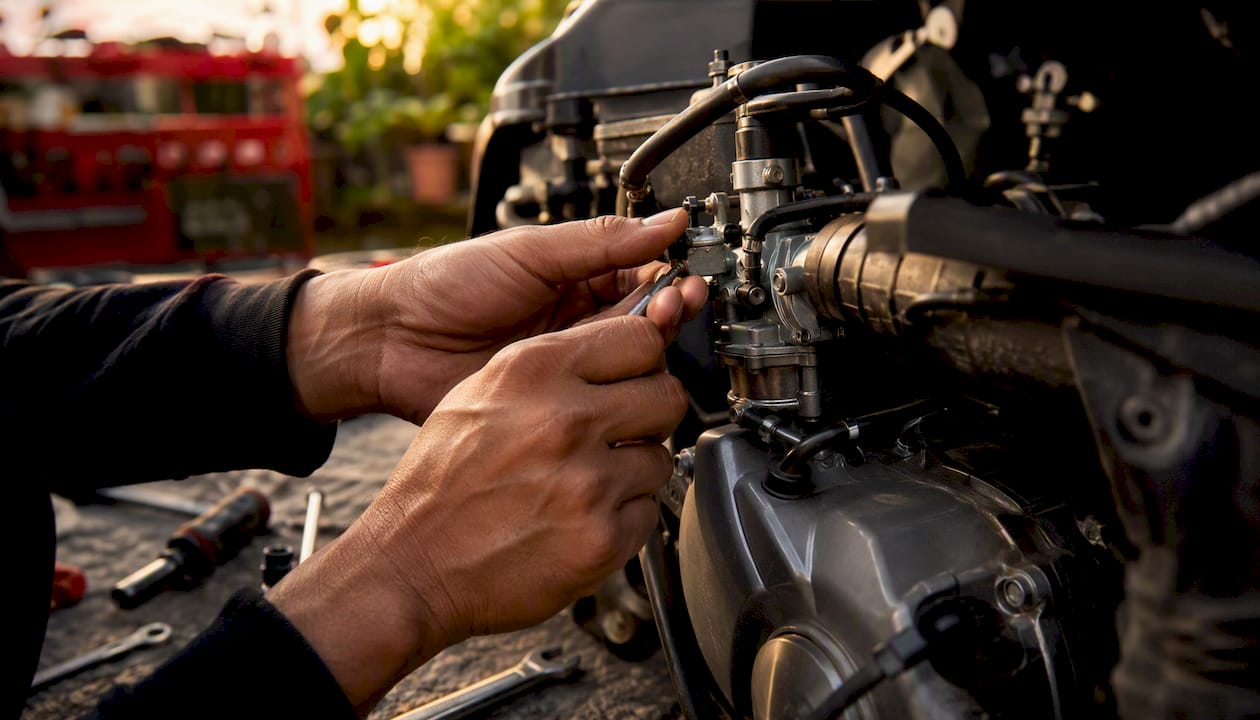
Engine type is the first lever. Two-stroke 50cc engines are simpler and lighter, which keeps cost down, but they require oil mixing and tend to have shorter service lives. Four-stroke engines cost more to produce, run cleaner, and are now the dominant choice for street-legal 50cc scooters in the U.S. — expect to pay a modest premium for four-stroke reliability.
Electric 50cc-class scooters carry a higher upfront price because of their battery packs and motor controllers, but a full charge often costs less than $0.50, making multi-year operating costs substantially lower than gas equivalents. A UL-certified battery alone can add $200–$400 to the purchase price compared to an uncertified pack — but that certification matters for insurance and safety.
Other factors that move the needle:
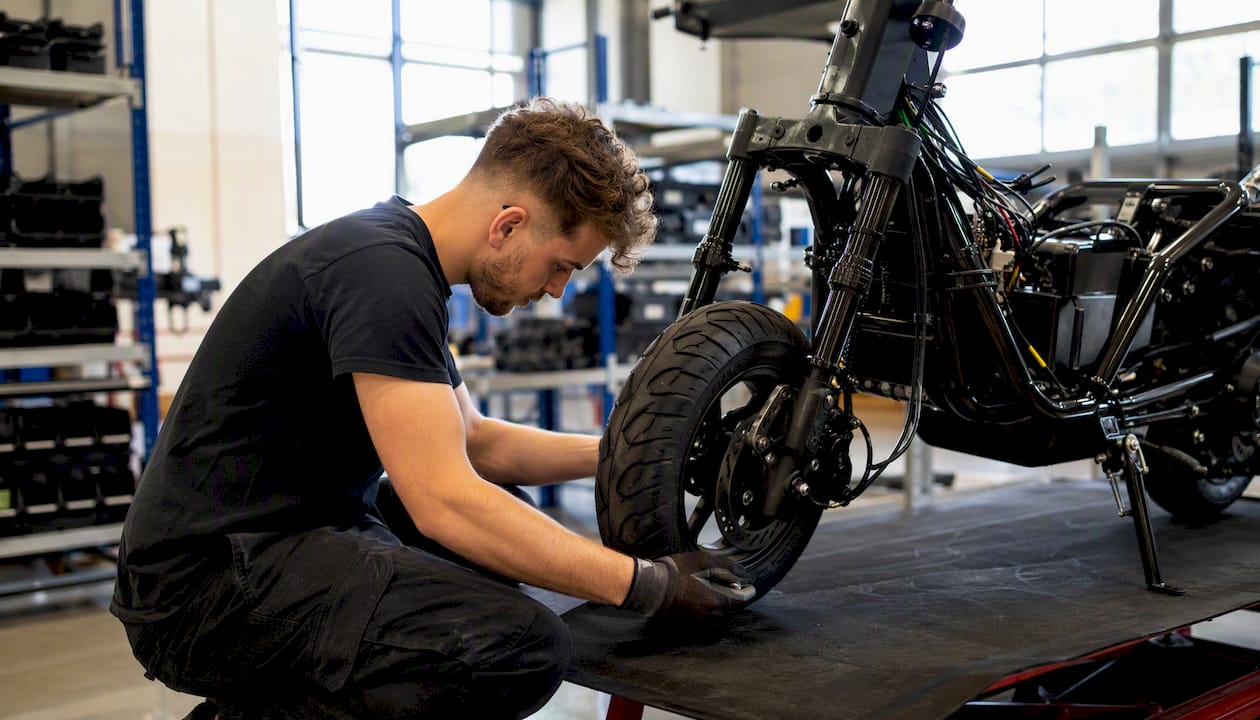
- Braking system: Drum brakes are standard at the budget tier. Dual disc brakes add $100–$300 to the price but meaningfully improve stopping power.
- Wheel size: 10" wheels are common on budget models; 12" wheels improve stability and ride comfort, and they’re a reliable signal of a better-built machine.
- Frame and build quality: Steel frames vary widely in gauge and weld quality. Heavier, better-welded frames cost more and last longer.
- Warranty and dealer support: A one-year parts-and-labor warranty from an authorized dealer is worth $150–$300 in real terms. No warranty means you absorb every repair cost from day one.
- Included accessories: Some listings bundle a helmet, phone mount, or cargo rack. These add perceived value but rarely justify a large price premium on their own — check aftermarket options like those at Wheel Light Express for accessories you can add later at lower cost.
What ongoing costs should you budget beyond the purchase price?
The sticker is just the beginning. First-year ownership costs for a 50cc scooter in the U.S. commonly run $300–$800 above the purchase price when you account for all mandatory and practical expenses.
Here’s what to plan for:
- Sales tax: Typically 5–10% of the purchase price depending on your state. On a $1,500 scooter, that’s $75–$150.
- Title and registration: Most states charge $25–$100 for initial title and registration. Some states require a moped-specific registration; others treat 50cc scooters as motorcycles.
- Insurance: Annual insurance for a 50cc scooter commonly runs $60–$350 depending on coverage level, your riding history, and your state. Liability-only coverage sits at the low end; comprehensive coverage with theft protection pushes toward $350.
- Helmet and gear: A DOT-certified helmet runs $80–$200 for a quality entry-level option. Add gloves and a jacket and budget $150–$300 total for your first season.
- First scheduled service: Most 50cc scooters need a break-in service at 300–500 miles. Budget $50–$100 at a shop, or do it yourself with a basic maintenance routine.
- Fuel (gas models): A 50cc gas scooter averages 80–100 miles per gallon. At typical U.S. fuel prices, annual fuel costs for a commuter riding 3,000 miles per year run roughly $90–$120.
- Electricity (electric models): At under $0.50 per full charge and a typical range of 30–50 miles per charge, annual electricity costs for similar usage stay well under $50.
State licensing note: Licensing requirements for 50cc scooters vary significantly by state. Some states require only a standard driver’s license; others require a motorcycle endorsement or a moped-specific permit. Check your state’s DMV website before you buy — riding without the right endorsement can void your insurance.
Where should you buy a 50cc scooter, and when?
Your buying channel shapes more than just price. It affects warranty coverage, assembly, return options, and how quickly you’re actually riding.
Authorized dealers offer the strongest support: test rides, on-site assembly, and warranty service. The tradeoff is price — dealers rarely discount below MSRP, and destination charges are standard. Best for buyers who prioritize peace of mind over the lowest sticker.
National e-commerce retailers (major marketplaces and powersports-specific online stores) often carry the widest selection and the most competitive prices. Budget models like the Tao Motor Pony 50 are frequently available here under $650. Watch for freight shipping costs and confirm whether assembly is included or extra.
Local classifieds and used marketplaces are where the deals live — and where the risks concentrate. No warranty, no returns, and condition is entirely on you to verify. Use the inspection checklist above before any private-party purchase.
Timing matters. The best new-scooter deals tend to appear in late September through November, when dealers clear current-year inventory ahead of model-year rollovers. Spring (March through May) is peak demand season — prices firm up and deals thin out.
Before buying by channel, verify:
- Dealer: Confirm warranty is transferable if buying a demo unit; ask about labor rates for warranty work.
- Online retailer: Read the return policy carefully — freight returns on a scooter are expensive. Confirm stock availability before paying.
- Private seller: Verify the title is clean and in the seller’s name. A missing or salvage title is a hard stop.
How to pick the right 50cc scooter for your budget and use case
Follow this ordered process to narrow your choice quickly:
- Define your primary use case. Daily commuter under 5 miles? Weekend recreational rider? College campus transport? Each use case has different durability and range requirements.
- Set a realistic out-the-door budget. Take your comfortable sticker price and add 15–25% for tax, registration, gear, and first service. A $1,000 sticker often means $1,200–$1,300 out the door.
- List your must-have features. Disc brakes? 12" wheels? Electric drivetrain? Rank them so you know which compromises are acceptable.
- Ask the seller these questions: What is the warranty, and who honors it? Is assembly included or extra? Are replacement parts readily available? When is the first scheduled service due?
- Watch for these red flags: No title or a salvage title; evidence of flooding (rust inside the frame, corroded connectors); odometer readings that don’t match wear on the seat and grips; heavy smoke on a warm engine.
- Compare out-the-door totals, not stickers. A $900 scooter with a $150 assembly fee and $80 freight charge costs more than a $1,050 scooter with free shipping and assembly included.
If you’re a first-time buyer weighing scooters against other entry-level powersports options, our guide to beginner mini bikes covers a useful comparison of what each category delivers for similar budgets.
How these price estimates were put together
The price ranges in this guide reflect a snapshot survey of U.S. retail and marketplace listings conducted in 2026. Here’s what was included:
- New dealer listings: MSRP and advertised prices from authorized U.S. dealers, including destination-charge disclosures where available.
- National e-commerce and marketplace listings: Current buy-now prices from major U.S. retail platforms for both budget and mid-range new models.
- Used marketplace listings: Active private-party and dealer-used listings filtered by condition category (good, fair, project).
- Published price guides: Aggregated cost data from independent pricing resources covering new and used 50cc moped averages.
Prices shift with fuel costs, import tariffs, and seasonal demand. Treat every range here as a starting point, then verify against live listings in your area before committing.
Our take on what buyers actually need to know
There’s a gap between what most 50cc scooter buyers ask about and what actually determines whether they’re happy six months after purchase. Most first-time buyers fixate on sticker price. The buyers who end up satisfied are the ones who asked about parts availability and dealer proximity before they signed anything.
A $600 scooter with no local service network and no parts supply is a liability, not a bargain. The thrill of a low price fades fast when you’re waiting six weeks for a carburetor jet. We’ve seen this pattern repeatedly: a buyer saves $300 upfront and spends $400 in downtime and shipping costs within the first year.
The other thing buyers consistently underestimate is the value of a warranty backed by an actual retailer — not just a manufacturer promise on a spec sheet. When something goes wrong at 400 miles (and on budget models, something often does), you want a phone number that answers and a policy that’s honored. That’s the real cost difference between a $650 scooter and a $1,200 one. The extra $550 often buys you a year of covered repairs, not just a shinier instrument cluster.
Our practical recommendation: set your out-the-door budget first, then work backward to the sticker. And if you’re choosing between a slightly better-built scooter with retailer support and a cheaper one without it, the support wins almost every time.
Gokartsusa’s 50cc-style scooters: ready to ship, retailer-backed
If you want a 50cc-style scooter without the guesswork of private-party buying or the wait of a dealer order, Gokartsusa has in-stock options that ship fully assembled. The TrailMaster Sorrento 50cc Street Scooter is one of our most popular picks for riders who want a reliable, street-ready machine with retailer support behind it — no hunting for parts, no wondering who to call.
Every scooter we sell comes with clear shipping details, product specifications, and our customer support team ready to answer questions before and after your purchase. We also carry the V2 49cc 2-stroke mini bike for riders who want a budget-friendly 49/50cc-class option in a different form factor. Browse our current 50cc-style inventory at Gokartsusa and check the product page for current pricing, availability, and what’s included with your order. Product availability and pricing are subject to change; confirm current details on the product page before purchasing.
Sources
These are the primary sources behind the price ranges and cost estimates in this guide:
- 50cc Scooter Price: A Complete Guide to Costs, Value, and Smart Alternatives – GYROOR
- 50cc Moped Cost and Price Guide 2026 – Cost Insider
- Agility 50 (New) - KYMCO USA
- Walmart