




Every parent faces the challenge of balancing adventure and safety when their child asks for their own ATV. As off-road fun grows in popularity across the United States, understanding what truly defines a safe and age-appropriate all-terrain vehicle becomes crucial. This guide cuts through confusion about ATV features and safety, highlighting what matters most for families who want secure, affordable access to the outdoors. For parents, it means making choices that keep the thrill alive without risking your child’s well-being.
Table of Contents
- ATVs Defined: Core Features And Misconceptions
- Main Types Of ATVs For Families
- Essential Safety Features For Kids’ ATVs
- Legal Age Limits And Parental Responsibilities
- Comparing ATVs To Other Off-Road Vehicles
Key Takeaways
| Point | Details |
|---|---|
| ATV Features | An ATV must have three or four wheels, a straddled seat, and handlebars for steering, designed for off-highway performance. |
| Safety Misconceptions | Parents should understand that ATVs are not toys, dirt bikes, or go-karts; they require training and supervision to operate safely. |
| Type Selection | Choose the right ATV type based on family size and the ages of children, as single-operator and tandem options cater to different needs. |
| Essential Safety Gear | Always use protective gear such as helmets and goggles, and ensure ATVs have safety features like speed limiters for younger riders. |
ATVs Defined: Core Features and Misconceptions
Think of an ATV as the adventure vehicle for families seeking outdoor fun. An all-terrain vehicle is a motorized off-highway machine designed to handle rough, unpaved terrain with ease and agility.
What Makes an ATV an ATV
According to the Consumer Product Safety Commission’s official definition, an ATV must have three or four wheels, a seat you straddle like a motorcycle, and handlebars for steering control. These features work together to create a vehicle that’s responsive and nimble.
Most ATVs you’ll encounter today are four-wheel models. They offer better stability than three-wheel designs, which is why three-wheelers have been restricted due to safety concerns. The American National Standards Institute defines ATVs by their low-pressure tires, straddled seating position, and handlebar controls.
Core Features You’ll Find
Every ATV comes equipped with certain standard elements:
- Low-pressure, wide tires that grip uneven surfaces and absorb shock
- Compact frame that fits narrow trails and tight spaces
- Manual or automatic transmission options for different riding styles
- Headlights and safety labels certifying compliance with safety standards
- Engine sizes ranging from 50cc for young riders to 1000cc for adults
Four-wheel ATVs dominate the market because they provide superior stability on technical terrain compared to three-wheel alternatives.
Common Misconceptions
Parents often confuse ATVs with other vehicles. Here’s what they’re not:
-
Not dirt bikes – ATVs have four wheels and seating for one or two riders; dirt bikes have two wheels and a different riding posture.
-
Not go-karts – While both are recreational, go-karts are track-focused with different safety considerations and handling characteristics.
-
Not toys – ATVs are motorized vehicles requiring training, adult supervision, and age-appropriate models for younger riders.
-
Not road vehicles – ATVs are designed exclusively for off-road use on private property, not highways or public streets.
Many parents think any small motorized vehicle counts as an ATV. That’s not how regulations work in real life. The specific design—four wheels, straddled seat, handlebars—matters because it determines how the vehicle handles and what safety standards apply.
Single Rider vs. Tandem Options
Some ATVs seat only the operator, while tandem models accommodate a driver and one passenger. For families with multiple children, tandem ATVs offer flexibility, though single-rider machines provide better control for younger or less experienced riders.
Pro tip: Verify that any ATV you purchase carries official safety certification labels and matches your child’s age and skill level—these factors directly impact their riding experience and injury risk.
Main Types of ATVs for Families
Not all ATVs are created equal. The type you choose depends heavily on your family’s size, your children’s ages, and how you plan to use the vehicle. Understanding the main categories helps you make the right choice for your specific situation.
Type I: Single-Operator ATVs
Type I ATVs are designed for one rider only—the operator. These machines are lighter, more maneuverable, and easier for younger or less experienced riders to control. They’re perfect if you have one child who wants their own vehicle or if you’re starting with a single-rider model before moving to larger machines.
Single-operator ATVs typically range from 50cc engines for kids as young as 8 years old to 250cc models for teenagers. The focused design means better handling on technical terrain and improved learning curves for beginners.
Type II: Two-Seater ATVs (Operator Plus Passenger)
Type II ATVs include designated seating for an operator and one passenger. This setup works beautifully for families where a parent wants to ride with a younger child or where older siblings can share one machine.
These models offer stability and comfort for two riders with proper weight distribution. They’re ideal when you want to keep kids within sight and control on the same vehicle. However, passenger seating requires specific safety considerations—your passenger must be old enough to hold on securely and follow riding instructions.
Side-by-Side Vehicles: The Family Option
Side-by-Side (SbS) vehicles represent a broader category designed for multiple riders and utility functions. Unlike traditional ATVs, SbS vehicles feature a steering wheel (like a car), separate seats, and sometimes additional seating for passengers.
These work wonderfully for families seeking a group riding experience. Multiple kids can ride together under adult supervision, making them excellent for family outings. SbS vehicles also handle heavier loads for camping or trail adventures.
Here’s a quick reference comparing main ATV types for families:
| ATV Type | Typical Seating | Best For | Controls |
|---|---|---|---|
| Single-Operator | 1 rider | Individual skill building | Handlebars |
| Two-Seater (Type II) | Operator + 1 child | Parent-child adventures | Handlebars |
| Side-by-Side (SbS) | 2-6 riders | Group/family outings | Steering wheel |
Key Differences at a Glance
- Single-Operator (Type I) – One rider, lightweight, agile handling, best for individual skill development
- Two-Seater (Type II) – Operator plus passenger, more stability, ideal for parent-child riding
- Side-by-Side – Multiple seats, car-like controls, excellent for family groups and utility tasks
Choosing the right type means matching the vehicle’s capacity and design to your family’s riding goals and your children’s ages and abilities.
Which Type Fits Your Family?
Start by asking: How many kids will ride? What’s their age range? Will you supervise closely? Single-operator models work best for older kids (12+) learning independently. Two-seater ATVs suit families wanting parent-child adventures. Side-by-Side vehicles excel when you have multiple children or want everyone riding together safely.
Models like the Mini Sport Kids ATV with parental remote start give parents additional control features, making Type II options even safer for younger riders.
Pro tip: Match the ATV type to your family’s current needs, but consider purchasing a slightly larger single-operator model that your child will grow into rather than constantly upgrading—this saves money while keeping your child engaged in the sport longer.
Essential Safety Features for Kids’ ATVs
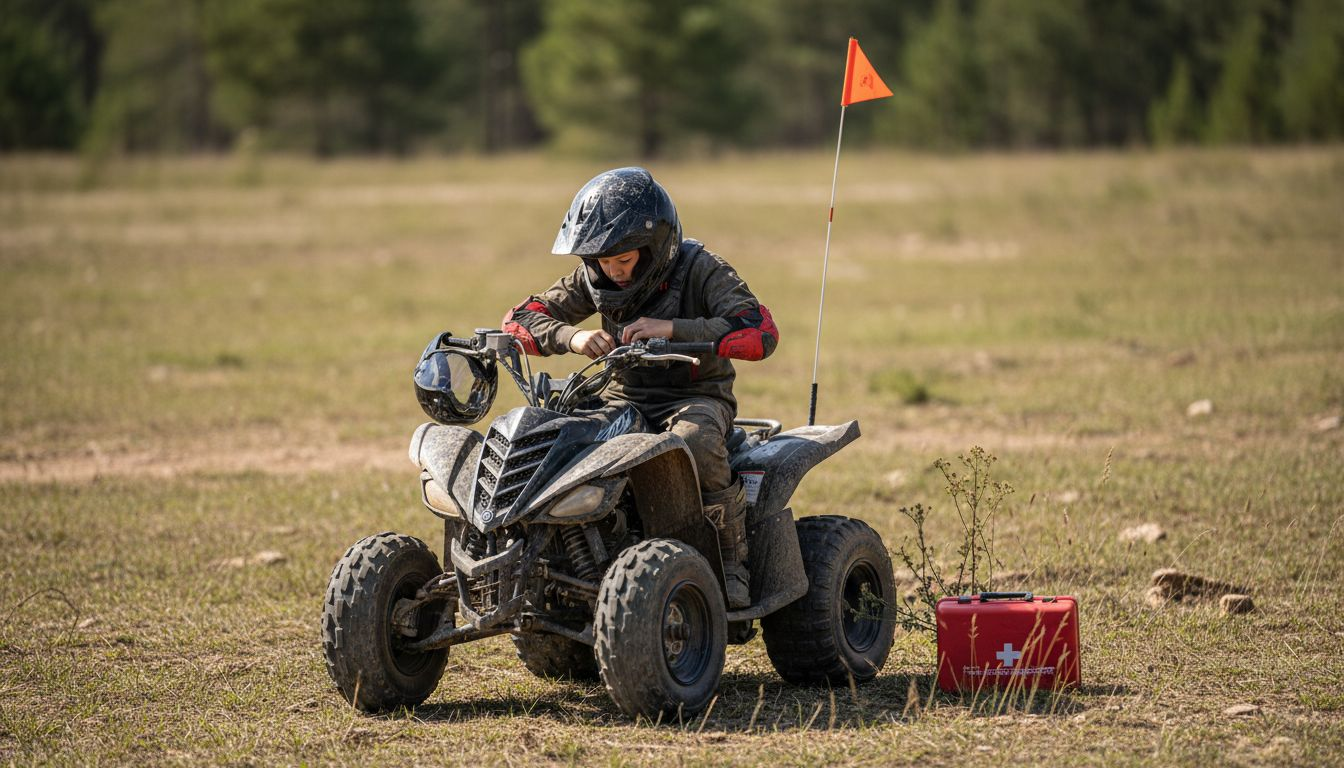
You wouldn’t send your child on a bicycle without brakes or a helmet. The same logic applies to ATVs—mechanical safety features combined with protective gear create the defense system that keeps kids safe. Understanding what to look for makes all the difference when choosing a vehicle.
Speed Limiters: Controlling Top Speed
Speed limiters are throttle governors that cap how fast an ATV can go. They’re essential for younger or inexperienced riders who might otherwise accelerate beyond their skill level. A 50cc ATV with a speed limiter might max out at 25 mph instead of 35 mph, giving your child room to develop skills safely.
This feature prevents accidents caused by excessive speed on unfamiliar terrain. It’s one of the most underrated safety tools available.
Remote Engine Shut-Off Systems
Imagine being able to stop your child’s ATV instantly if they fall off or lose control. Remote shut-off systems or tether switches allow you to do exactly that by killing the engine from a distance or when a cord is yanked.
Some systems use a wristband connected to the ATV—if your child falls, the cord pulls and the engine cuts off immediately. This prevents the machine from running riderless into trees, water, or other hazards.
Size-Appropriate Controls and Seating
Children under 16 should only operate youth-sized ATVs, never adult models. Youth ATVs have controls positioned for smaller hands and feet, making them easier to reach and operate safely.
Proper seating height matters too. Your child’s feet should touch the ground when seated, allowing them to maintain balance and control. Undersized controls plus proper seating equals confidence and accident prevention.
Mechanical Safety Features to Verify
Before purchasing any ATV, confirm these features are present:
- Working brakes with adequate stopping power
- Reliable steering with no play or looseness
- Functional lights for visibility in low-light conditions
- Secure handlebars that don’t wobble or twist
- Proper tire pressure and tread depth suitable for terrain
Speed limiters, remote shut-offs, and properly sized controls work together to prevent accidents—no single feature is a substitute for adult supervision or protective gear.
Protective Gear: The Second Layer of Defense
Mechanical features protect the machine. Protective gear protects your child. Both are non-negotiable. Always require:
- Helmets meeting safety standards (DOT, Snell, or ECE certified)
- Goggles or face shields protecting eyes from flying debris
- Gloves for grip and hand protection
- Long sleeves and pants made from durable material
- Closed-toe boots with ankle support
This gear reduces injury severity if accidents happen despite prevention efforts.
Adult Supervision and Training
No feature replaces your presence. Your child needs hands-on training from someone experienced in ATV operation. The Consumer Product Safety Commission emphasizes that qualified instruction from knowledgeable adults is critical for safe riding.
Be trackside. Teach proper techniques. Start on flat, open terrain. Progress gradually as skills improve.
Pro tip: Before your child’s first ride, perform a pre-ride safety check: verify brakes work, test the remote shut-off system, confirm the speed limiter is engaged, and ensure all protective gear fits properly and is worn correctly.
Legal Age Limits and Parental Responsibilities
Age matters when it comes to ATVs. Not because of arbitrary rules, but because younger children lack the physical strength, coordination, and judgment needed to operate these machines safely. Understanding legal requirements and your role as a parent protects your kids and keeps you out of legal trouble.
Age-Based ATV Recommendations
Safety agencies recommend matching ATV size to your child’s age and development. Children under six should not operate ATVs at all—they’re simply too young to handle the responsibility. The progression looks like this:
- Ages 6-11: 50cc or smaller ATVs with speed limiters
- Ages 12-15: 70-90cc machines with appropriate safety features
- Ages 16 and older: Larger engines under appropriate supervision
These aren’t suggestions. They’re based on years of accident data and child development research. A 50cc ATV feels slow to a teenager but matches a 10-year-old’s skill level perfectly.
Below is a summary of recommended ATV sizes by child age group:
| Age Range | Recommended Engine Size | Key Safety Feature |
|---|---|---|
| 6-11 years | 50cc or smaller | Speed limiter |
| 12-15 years | 70-90cc | Size-appropriate controls |
| 16+ years | Up to 1000cc | Adult supervision and training |
State Laws Vary Widely
ATV operation laws differ significantly across states. Some states permit unsupervised operation at 16, while others require adult supervision for anyone under 18. A few states have minimal restrictions. Your home state’s rules might differ from neighboring states or where you’re visiting.
Before your child rides anywhere, check local regulations. Call your state’s department of natural resources or motor vehicles. This ten-minute phone call prevents legal headaches and keeps your family informed.
Your Core Parental Responsibilities
Laws are just the baseline. Your actual job is broader and more important. Parental responsibilities include supervising rides, enforcing safety gear use, and ensuring young riders complete training before operating any machine.
You’re not just buying equipment. You’re becoming your child’s safety manager, trainer, and supervisor rolled into one.
Essential Parental Actions
Don’t just hand your child the keys. Take these concrete steps:
- Research your state’s laws and any local ordinances about ATV use
- Enroll your child in certified training through recognized safety organizations
- Supervise every ride, especially for children under 16
- Inspect equipment before each use for mechanical problems
- Enforce protective gear without exception—no exceptions means no excuses
- Teach proper techniques on flat, open terrain before attempting trails
- Know where your child rides and ensure it’s appropriate and legal
Parental supervision isn’t optional—it’s the most critical safety feature any ATV can have, regardless of engine size or speed limiters.
Training and Certification
Many states mandate or strongly recommend certified safety training. Organizations like the ATV Safety Institute offer courses that teach proper riding techniques, hazard awareness, and equipment maintenance. These courses aren’t bureaucratic hoop-jumping—they genuinely reduce accident rates.
Certification also demonstrates responsibility if you’re ever questioned about your parenting choices. It’s proof you took safety seriously.
Creating Your Family’s Safety Rules
Beyond what the law requires, establish household rules. Decide: Can your child ride unsupervised after age 16? What terrain is off-limits? How many hours per week? What happens if safety gear isn’t worn?
Write these down. Discuss them. Enforce them consistently. This structure gives your child clear expectations while protecting everyone involved.
Pro tip: Keep documentation of your child’s safety training certificates, equipment purchase receipts, and maintenance records—these prove you followed recommended safety practices if questions ever arise.
Comparing ATVs to Other Off-Road Vehicles
ATVs aren’t the only option for family off-road fun. Dirt bikes, go-karts, and side-by-side vehicles all offer different experiences and safety profiles. Knowing how ATVs stack up helps you choose the right vehicle for your family’s needs and skill level.
ATVs vs. Dirt Bikes
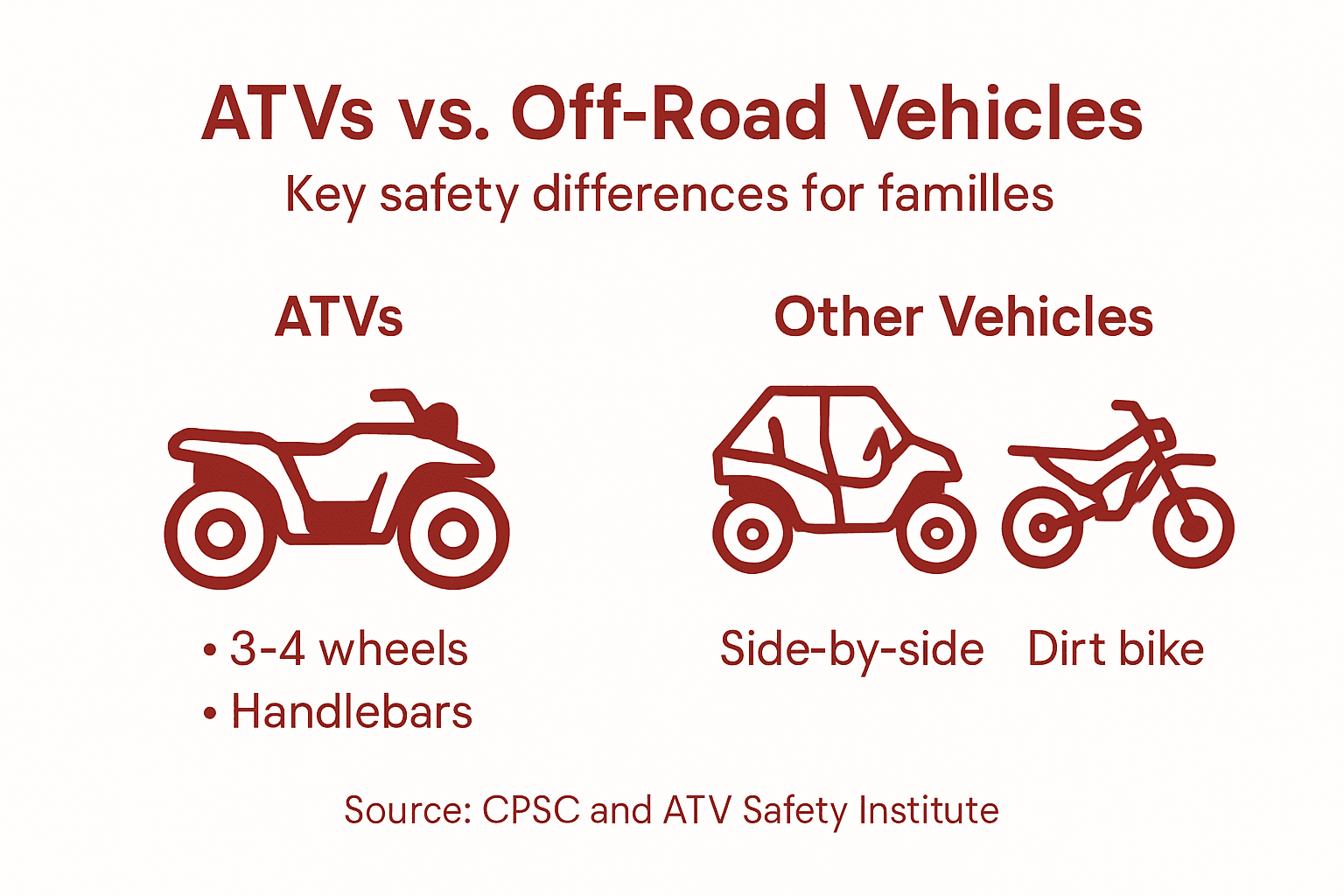
Dirt bikes and ATVs look completely different because they’re designed for different riders. Dirt bikes have two wheels, require standing on pegs, and demand significant balance and coordination. ATVs have four wheels and a straddled seat where you sit like on a motorcycle.
For younger or less confident riders, ATVs are more forgiving. The extra wheels provide stability that two-wheelers don’t offer. You’re less likely to tip over or lose control if you make a handling mistake.
ATVs vs. Go-Karts
Go-karts are track-focused machines with different design priorities than ATVs. Go-karts sit low to the ground with steering wheels (not handlebars), better suited for racing on flat surfaces. ATVs sit higher, feature handlebars, and handle rough, uneven terrain.
Go-karts excel on tracks. ATVs excel on trails. The machines aren’t interchangeable—they’re built for completely different environments and purposes.
ATVs vs. Side-by-Side Vehicles (UTVs)
This comparison matters most for families. Side-by-side vehicles (also called UTVs or recreational off-road vehicles) look like small dune buggies with a steering wheel, bench seating for multiple riders, and often more cargo space than ATVs.
ATVs are more prone to rollover accidents due to their high center of gravity and narrow wheelbase, while UTVs sit wider and lower, offering better stability. UTVs accommodate more passengers simultaneously—perfect if you have multiple kids wanting to ride together.
Key Design Differences
These distinctions matter for safety and capability:
- Handlebars vs. steering wheel – ATVs use handlebars like motorcycles; UTVs use car-like steering wheels
- Single vs. multiple seating – ATVs seat 1-2 riders; UTVs seat 3-6 people depending on model
- Narrow vs. wide wheelbase – ATVs are nimbler but less stable; UTVs provide solid stability
- Terrain versatility – ATVs navigate tight trails; UTVs handle rougher, wider terrain better
- Rollover risk – ATVs have different rollover characteristics than wider-stance UTVs
UTVs offer better stability for families wanting multiple riders, while ATVs provide agility and nimbleness for single-rider adventures on technical terrain.
Which Vehicle Suits Your Family?
Choose based on your actual needs. One child wanting to learn independently? An ATV works perfectly. Multiple kids or parent-child riding? A UTV keeps everyone together safely. Planning trail rides on tight, technical terrain? ATVs are more nimble.
Consider group size, terrain type, age ranges, and skill levels. The right vehicle matches your family’s specific situation, not what looks coolest.
Maintenance and Operating Costs
ATVs typically cost less to purchase and maintain than UTVs or comparable go-kart setups. Parts are affordable and widely available. However, larger UTVs use more fuel and require bigger storage space.
Balance purchase price, fuel costs, replacement parts, and insurance when comparing vehicles. A cheaper ATV that matches your child’s skill saves money long-term compared to oversized equipment gathering dust.
Pro tip: Test-ride or rent different vehicle types before purchasing—what feels right for one family might be completely wrong for another, and hands-on experience beats any comparison chart.
Discover Safe and Fun ATV Options Tailored to Your Family
Choosing the right ATV means protecting your child while encouraging their love for outdoor adventure. This article highlights crucial safety features like speed limiters and remote shut-off systems that every responsible parent should know about. At gokartsusa.biz, we understand the challenge of finding vehicles that combine performance, affordability, and essential safety components to match your child’s age and skill level.

Explore our carefully curated selection of youth and adult ATVs designed with safety at the forefront. From beginner-friendly single-operator models to versatile two-seater machines with parental controls, we have options that help you supervise while your child gains confidence. Don’t wait until the next ride—visit GokartsUSA.biz now to choose a safer and smarter ATV that fits your family’s needs. Your child’s next adventure can be thrilling and secure when you shop with us.
Learn more about safe riding and vehicle options by visiting GokartsUSA.biz and start your journey toward better outdoor fun today.
Frequently Asked Questions
What features define an ATV?
An ATV, or all-terrain vehicle, must have three or four wheels, a straddled seat, and handlebars for steering. These features allow the vehicle to navigate rough, unpaved terrain effectively.
What types of ATVs are suitable for children?
Types suitable for kids include youth ATVs with engine sizes of 50cc for ages 6-11 and 70-90cc for ages 12-15. It’s crucial to select models with safety features like speed limiters to match the rider’s skill level.
How do speed limiters enhance ATV safety for young riders?
Speed limiters control the maximum speed at which an ATV can operate, helping prevent younger or inexperienced riders from accelerating too quickly, which can lead to accidents.
What protective gear is recommended for ATV riders?
Riders should wear helmets, goggles, gloves, long sleeves and pants, and closed-toe boots. This gear significantly reduces the risk of injury in the event of an accident.
Recommended
- What Is a Go-Kart and Why Safety Matters Most – GoKarts USA®
- TrailMaster Mini Sport N110 Kids ATV, Gas engine with Reverse – GoKarts USA®
- Mini Sport Kids ATV, 110cc Gas Engine with Parental Remote Start/Kill – GoKarts USA®
- TrailMaster K125 125cc Sport ATV, Automatic with Reverse, 8-inch Wheel – GoKarts USA®