




Fresh unleaded gasoline at a minimum of 87 AKI octane, with up to 10% ethanol (E10), is the right call for nearly every mini bike on the trail today. Skip E15 and E85 entirely, since small engines aren’t built for them. If your bike sits for weeks between rides, run ethanol-free fuel or treat your tank with a stabilizer before you park it.
TL;DR:
- Most mini bikes run best on unleaded gasoline with at least 87 octane and up to 10% ethanol, according to manufacturer recommendations.
- Using E15 or higher ethanol blends can damage small engines, void warranties, and lead to carburetor gumming if stored long-term.
- Stale fuel breaks down after about 30 days, so using ethanol-free fuel or stabilizer-treated E10 significantly reduces carburetor issues during storage.
- Mixing octane levels, such as adding a splash of 93 with 87, won’t harm the engine but won’t improve performance in low-compression engines.
- Proper storage habits, including draining old fuel and adding stabilizer, help maintain engine reliability, especially during long periods without riding.
Table of Contents
- What Octane and Fuel Type Does Your Mini Bike Actually Need?
- Is E15 Gas Safe for a Mini Bike?
- How Long Does Gasoline Last in a Mini Bike, and How Should You Store It?
- Do 2-Stroke and 4-Stroke Mini Bikes Need Different Fuel?
- Can You Mix 87 and 93 Octane Gas in a Mini Bike?
- Why Won’t Your Mini Bike Start, and How Do You Fix Fuel Problems?
- What Does Your Owner’s Manual Say About Fuel?
- What I Tell New Owners
- Where to Find the Right Mini Bike and Parts
- Sources
- FAQ
What Octane and Fuel Type Does Your Mini Bike Actually Need?
Octane measures a fuel’s resistance to knock, that early, uneven combustion that rattles an engine and saps power over time. It has nothing to do with how much punch is packed into the tank. Most mini bikes run small, low-compression four-stroke engines that never get close to the compression ratios where knock becomes a real threat, so they don’t need anything fancy to run clean.
Briggs & Stratton, whose engines power a huge share of the small-engine world, recommends fresh unleaded gasoline with a minimum octane rating of 87 for this exact reason. That’s the same number you’ll see posted on regular-grade pumps nationwide.
Check your owner’s manual before you assume premium is optional, though. A handful of higher-compression sport models call for 91 or higher, and running them on 87 for the long haul can hurt performance and reliability. Riding above 5,000 feet in elevation changes the math too. Some small-engine guidance allows octane as low as 85 at altitude, but the better fix is usually a carburetor jetting adjustment, not a fuel swap.
Is E15 Gas Safe for a Mini Bike?
No. E10, gasoline blended with up to 10% ethanol, is fine for your mini bike’s fuel system and what most pump stations sell as standard “regular.” E15 and higher blends are a different story entirely.
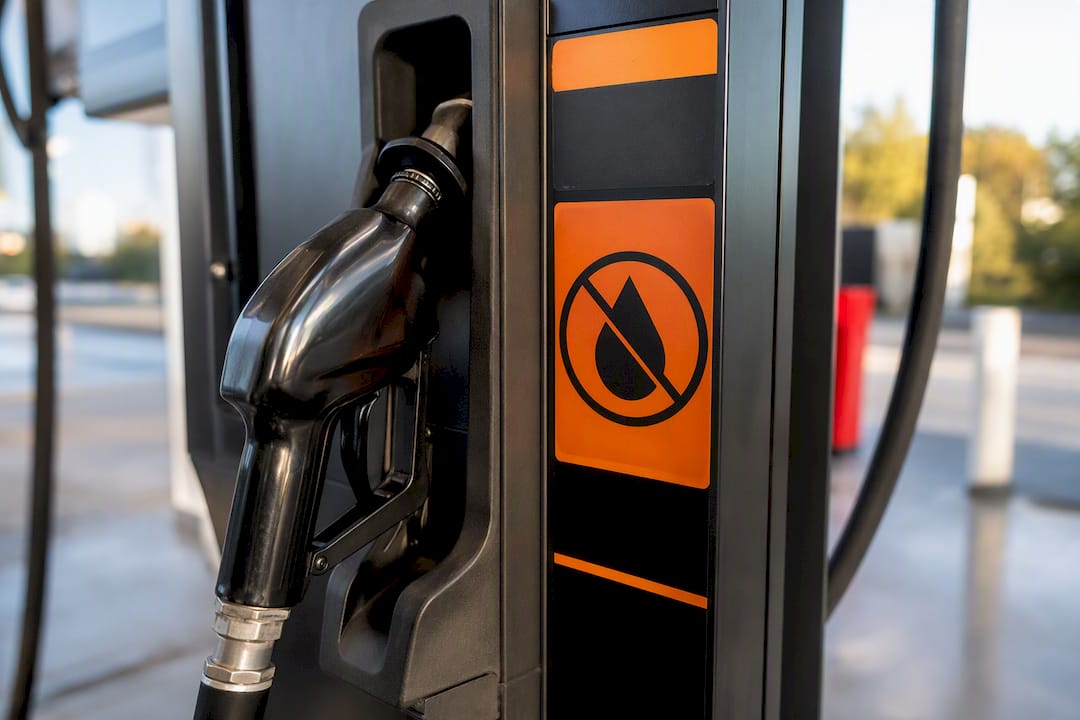
The EPA has never approved E15 for nonroad small engines, and pumping it into your mini bike can damage internal components while voiding your warranty outright. That moisture settles at the bottom of the tank during storage, a process called phase separation, and it’s a leading cause of gummed-up carburetors on bikes that sat all winter.
At the pump, look for the black-and-orange E15 warning label required at blender pumps, and stick to the hose marked “regular” or “unleaded 87” whenever you’re unsure.
How Long Does Gasoline Last in a Mini Bike, and How Should You Store It?
Gasoline starts breaking down in about 30 days, and that’s the real enemy of a healthy carburetor, not octane choice. Left alone, stale fuel forms varnish and gum deposits that clog tiny jets and turn a five-minute start into a frustrating pull-cord workout.
For a mini bike that sits for more than a few weeks at a stretch, ethanol-free gasoline is your best bet against phase separation, since it holds up better without ethanol pulling in moisture. If ethanol-free fuel isn’t available near you, E10 treated with a quality stabilizer is a solid second option.
A few habits keep fuel trouble off your plate entirely:
- Buy gas in small amounts so it turns over fast instead of aging in the can.
- Label storage containers with the purchase date so you’re not guessing later.
- Use only approved, sealed fuel cans rated for gasoline.
- Add stabilizer to fresh fuel and run the engine briefly so it circulates through the carburetor before storage.
- If you’d rather not store fuel at all, drain the tank and the carburetor bowl completely.
Pro Tip: Stabilizers like STA-BIL can keep stored gasoline usable for months instead of weeks, and a bottle costs far less than a carburetor rebuild.
For a broader seasonal checklist, our mini bike maintenance guide covers more than fuel care alone.
Do 2-Stroke and 4-Stroke Mini Bikes Need Different Fuel?
Yes, and mixing this up is one of the fastest ways to damage an engine. Four-stroke mini bikes run gasoline and oil separately, oil in the crankcase, fuel in the tank, so never add oil to the gas tank on a 4-stroke. Stick to fresh unleaded at the octane and ethanol limit your manual specifies.
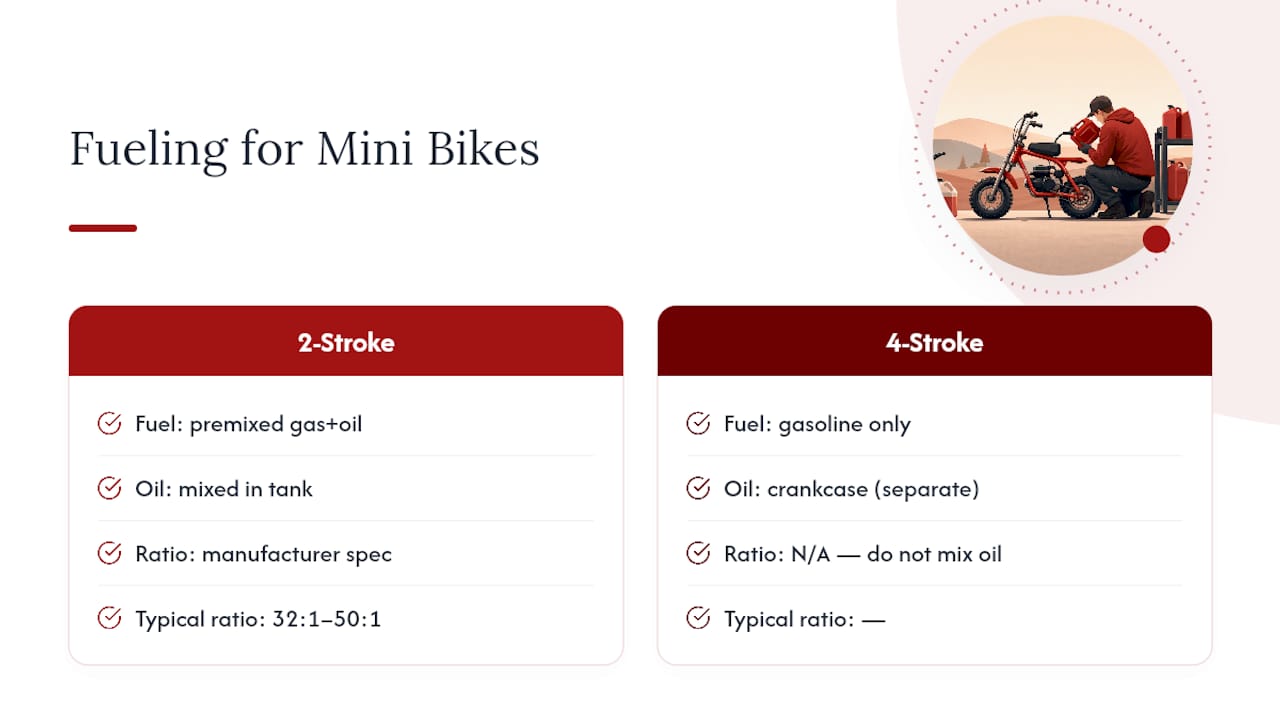
Two-stroke mini bikes are the opposite: oil and gas mix together in the tank, and the ratio matters enormously. Follow your manufacturer’s exact ratio, commonly somewhere between 32:1 and 50:1 depending on the engine, and don’t eyeball it. Both engine types still need to respect the same octane minimum and the E10 ethanol ceiling. Getting either wrong, oil in a 4-stroke tank or the wrong ratio in a 2-stroke, is a fast track to a voided warranty and a fouled engine.
Can You Mix 87 and 93 Octane Gas in a Mini Bike?
Topping off a tank of 87 with a splash of 93 won’t hurt anything, and the fuel blends fine. What it won’t do is make your low-compression mini bike faster or run cooler, since premium fuel offers no meaningful benefit for engines that weren’t designed to need it.
Higher octane exists to resist knock in high-compression engines, nothing more. A mini bike engine built for 87 simply doesn’t generate the compression to trigger knock, so there’s no power gain to unlock. If your manual calls for 91 or higher, though, don’t rely on 87 as a long-term stand-in. Occasional mixing during a fill-up is harmless; consistently underfueling a high-compression engine is not.
Why Won’t Your Mini Bike Start, and How Do You Fix Fuel Problems?
Stale or wrong fuel causes most no-start complaints. Watch for these telltale signs: hard starting after sitting, a rough or surging idle, or an engine that dies shortly after you fire it up.
- Drain the old fuel from the tank and the carburetor bowl completely.
- Refill with fresh E10 or ethanol-free gasoline, never fuel that’s been sitting more than a month or two.
- Add stabilizer if you’re not riding again within a couple weeks.
- Clean the carburetor float bowl and jets if gum or varnish is visible.
- Inspect fuel lines for swelling, cracking, or softness, all signs ethanol exposure has degraded the rubber.
If the bike still won’t run clean after fresh fuel and a cleaned carburetor, that usually points to a deeper issue: a stuck float, a bad spark plug, or carburetor internals that need replacing. Our troubleshooting guide walks through the next diagnostic steps in more detail.
What Does Your Owner’s Manual Say About Fuel?
Manufacturer manuals settle the octane debate better than any forum thread. The GokartsUSA owner’s manual specifies “unleaded 87 octane or higher” and permits ethanol blends up to E10, while flagging that anything above 10% ethanol can damage the engine and void your warranty.
That guidance mirrors what the EPA and Briggs & Stratton both publish for small engines generally. Following it protects both your warranty and your bike’s day-to-day reliability. Browse our gas-powered mini bike lineup for model-specific fuel tank and specification details.
What I Tell New Owners
Every new mini bike owner asks me about premium fuel before they ask about storage, and that’s backward. Octane rarely breaks an engine; stale fuel and the wrong ethanol blend do that job constantly. Get the ethanol limit right, keep your fuel fresh, and octane mostly takes care of itself.
— Mario
Where to Find the Right Mini Bike and Parts
An excellent place to start once your fuel questions are settled and you’re thinking about your next ride or replacement part. Unlike guessing your way through a generic auto parts aisle, you get model-specific fuel tank capacities, carburetor specs, and manual guidance built right into each product listing.

Our gas-powered mini bike runs a 3.5hp 4-stroke engine and fits riders 12 and up, with the same 87-octane, E10-friendly fuel requirements covered above. If a 2-stroke build fits your style better, the V2 BMX-style 49cc mini bike is worth a look, just remember its oil-mix ratio runs differently than a 4-stroke. Riders prepping a bike for long-term storage might also check out a 12V smart battery isolator to keep electrical systems healthy alongside the fuel-care steps in this guide. Seasonal free-shipping promotions may be available on select models, so check current offers before you check out. Head to the mini bike product page now to compare specs and find the right fit for your next ride.
Sources
- EPA — E15 fuel registration (guidance on E15 use)
- Briggs & Stratton — Fuel recommendations for small engines
FAQ
Can You Mix 87 and 93 Octane Gas in a Mini Bike?
Yes, mixing octane grades in the same tank is harmless. It just won’t boost performance in a low-compression engine designed to run on 87.
What Octane Gas Should You Use in a Small Engine?
Most small engines, including mini bikes, run best on fresh unleaded gasoline at a minimum of 87 octane with no more than 10% ethanol (E10), unless your manual specifies otherwise.
Is 40 MPH Fast for a Mini Bike?
Speed depends entirely on the model and engine size, but this article focuses on fuel and octane choice rather than top-speed specs, so check your specific bike’s listed performance details for that answer.
What Kind of Fuel Does a Mini Bike Take?
Avoid E15 and E85, since they aren’t approved for small engines and can void your warranty.