




Measure the widest part of your head about one inch above your eyebrows, wrap the tape over the fullest point at the back of your skull, and take the larger of two readings. Match that number, in centimeters, to the specific helmet model’s own size chart. A correct fit is snug everywhere, holds the cheek pads against your face, and doesn’t shift when you shake your head or try a roll-off test.
TL;DR:
- Measuring your head for helmet fit requires careful attention to maximum circumference at the widest point, with a snug but not tight wrap using a flexible tape measure.
- Differences in head shape and helmet type influence fit, making shell profiles and brand variations critical factors beyond simple circumference measurements.
- Size charts vary between brands and models, so always consult the specific model’s chart in centimeters rather than relying on generic or conversion numbers.
- Fit tests such as the roll-off, shake, and finger-gap checks are essential to confirm a helmet stays secure and comfortable in real riding conditions.
- When between sizes, sizing down typically yields a better fit as liners break in, but remeasurements are necessary after weight changes or head growth, especially for children.
Table of Contents
- How to Measure Your Head for a Proper Helmet Sizing Guide
- How Head Shape and Helmet Type Change the Fit
- Reading Size Charts: cm, Inches, and Sizing Labels
- What Fit Tests Confirm a Helmet Actually Works
- Stuck Between Two Sizes? Here’s What to Do
- When to Remeasure and When to Replace Your Helmet
- Mario’s Fitting Checklist From the Powersports Counter
- Why Snug and Tested Beats Comfortable and Loose
- Gear Up Right With Gokartsusa
- Fit Guides Worth Bookmarking
- Sources
- FAQ
How to Measure Your Head for a Proper Helmet Sizing Guide
Getting an accurate number takes about two minutes and requires one decent tool. Here’s the sequence Gokartsusa recommends whether you’re fitting a bicycle lid, a motocross helmet, or your kid’s first powersports gear.
- Grab a soft, flexible tape measure. A cloth sewing tape works best. No tape on hand? A non-stretchy piece of string and a ruler does the job just as well.
- Find your starting point. Rest the tape roughly 1 inch (2.5 cm) above your eyebrows, right at the middle of your forehead.
- Wrap around the widest point. Pull the tape around the back of your head, keeping it level and snug but not compressing your hair, then bring it above your ears on the sides.
- Read the number, twice. Check both centimeters and inches, and take a second measurement to confirm.
- Use the larger reading. If your two attempts differ slightly, Harley-Davidson’s fit guide recommends going with the bigger number rather than splitting the difference.
A mirror helps you keep the tape level in back. A second set of hands helps even more, especially when you’re measuring a kid who won’t sit still.
How Head Shape and Helmet Type Change the Fit
Circumference gets you in the right ballpark, but shape decides whether a helmet actually feels right once it’s on. Heads generally fall into three categories: intermediate oval (slightly longer front to back than side to side, and the most common shape), long oval (noticeably longer front to back), and round oval (close to equal in both directions). Most helmet shells on the market are built around intermediate oval heads, so if yours runs long or round, you may need a different brand rather than a different size, a pattern Fox Racing’s fit guide backs up directly.
Helmet category matters too. Motorcycle and motocross helmets use denser foam and deeper shells for high-speed impact protection. Bicycle helmets prioritize ventilation and lighter liners. Youth helmets often run shallower shells to match smaller, rounder head proportions.
- Pressure right at your temples or forehead, even when the circumference matches your chart, usually signals a shape mismatch.
- A helmet that feels tight at the sides but loose in front (or vice versa) is telling you to try a different shell, not a different size.
Reading Size Charts: cm, Inches, and Sizing Labels
Every brand builds its own chart, and the size labels don’t always line up between them. As a rough example only, some manufacturers map 55 to 56 cm to a Small and 57 to 58 cm to a Medium, but ranges shift from one brand to the next, so treat those numbers as a starting point, never a rule.
That’s why Bell Helmets and every other manufacturer post model-specific charts instead of one universal scale. A Medium in one line can measure differently than a Medium in another, even from the same company.
- Always pull up the exact model’s chart before you buy, not a general “motorcycle helmet” chart you found elsewhere.
- Match your measurement in centimeters first. Most brands build their charts around metric increments, and converting to inches introduces rounding errors.
- If your number lands exactly between two size labels, don’t guess. Check the section below on what to do between sizes.
What Fit Tests Confirm a Helmet Actually Works
A helmet can match your circumference on paper and still be wrong on your head. These checks catch that mismatch before you ride.
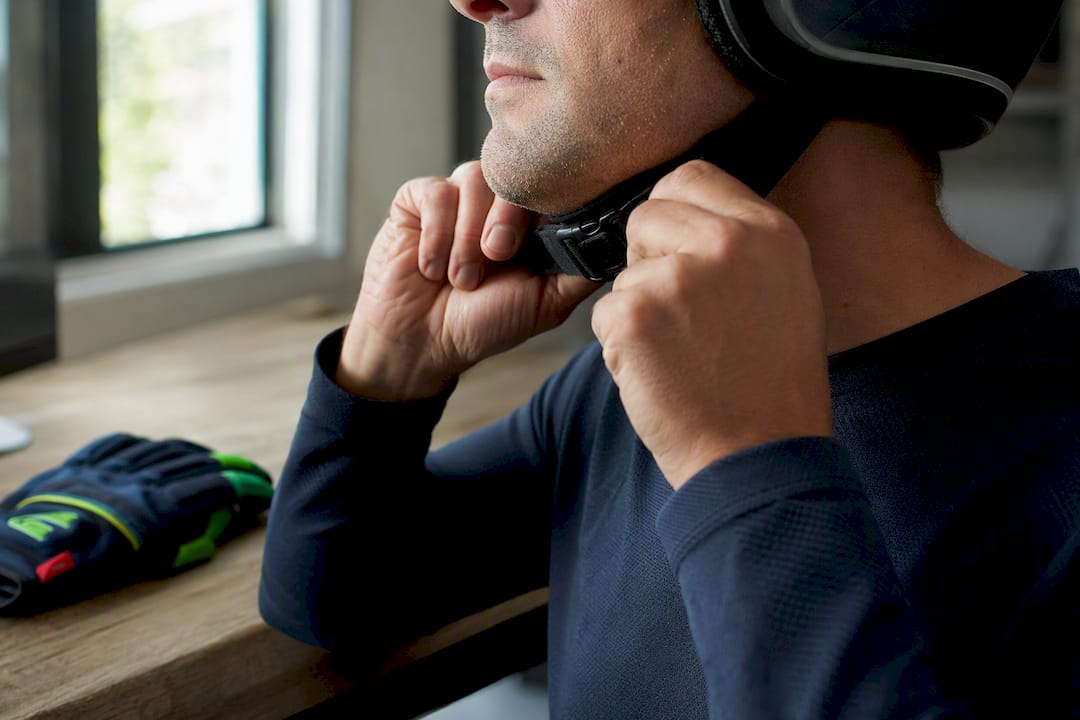
- The roll-off test. Buckle the chin strap, then try to roll the helmet forward off your head using both hands on the back edge. It should resist and stay put.
- The shake test. Buckle up and shake your head side to side and up and down. The helmet should move with your skin, not slide independently.
- The finger-gap check. You shouldn’t be able to slip more than a fingertip between the cheek pads and your face.
- Eye-port alignment. Your eyebrows should sit just below the top edge of the eye port, with a clear, centered line of sight. Too high or too low usually means the wrong size or shell shape.
- Glasses and goggles check. Put on whatever eyewear you’ll actually wear riding, then repeat the shake and roll-off tests. Extra bulk at your temples changes the fit fast.
Reject a helmet if you feel sharp pressure points anywhere, if it shifts more than slightly during the shake test, or if your eyes sit noticeably off-center in the eye port. Any one of those is a sign to try the next size or a different shell.
Pro Tip: Do the roll-off test with the chin strap buckled exactly the way you’d wear it riding. A loose strap makes even a well-fitted helmet feel like it’s about to come off.
Stuck Between Two Sizes? Here’s What to Do
Sizing down is usually the safer default. Padding compresses roughly 15 to 20% during the first several wears, so a helmet that feels snug now will loosen slightly as the liner breaks in.
- If between sizes on a motorcycle or motocross helmet, size down for the tighter break-in fit.
- If between sizes on a bicycle or youth helmet with adjustable dial fit, sizing up often gives you more room to dial in comfort.
- Try thinner or thicker cheek pads before assuming the whole helmet is wrong.
- Buying online? Order both sizes if the return policy allows it, and send back whichever doesn’t pass your fit tests.
- If circumference is right but shape still feels off, switch shells or brands rather than forcing a size that technically fits.
When to Remeasure and When to Replace Your Helmet
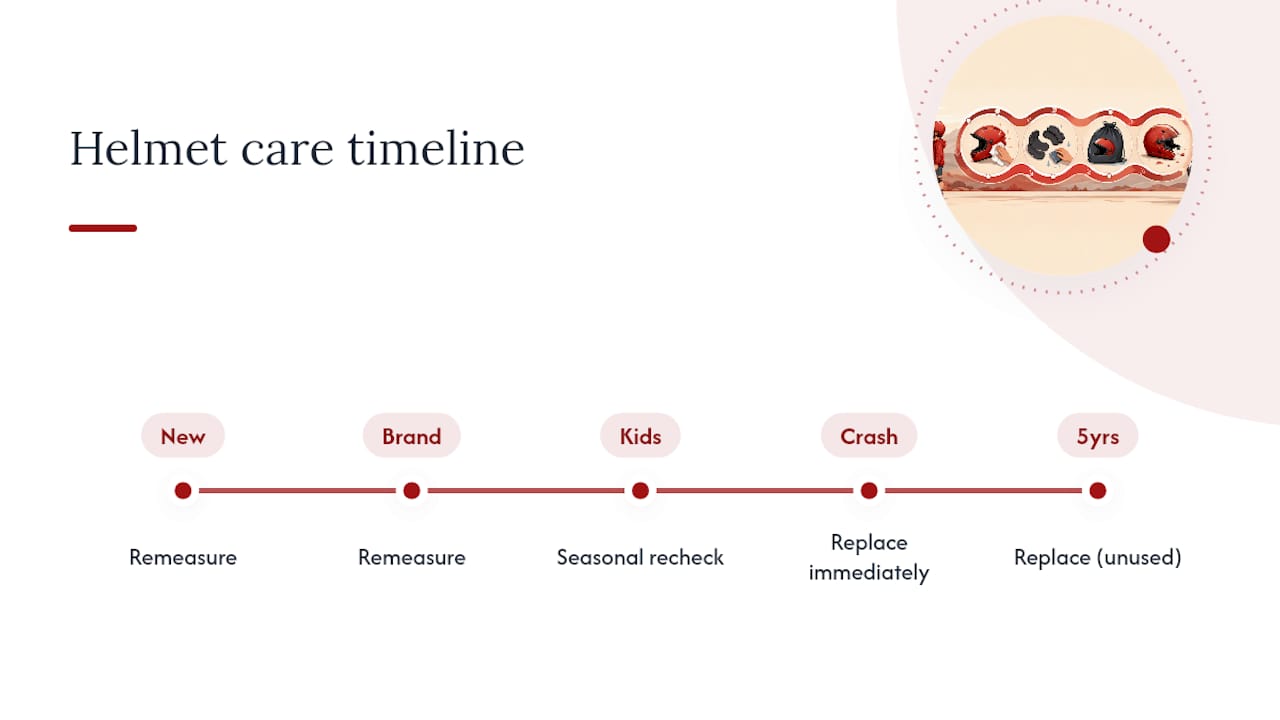
Remeasure any time you buy a new helmet, switch brands, or notice a real change in hairstyle or weight. Kids especially need rechecking every season as their heads grow.
Expect a new liner to feel firm at first. As for replacement, swap out any helmet after a crash immediately, and plan on replacing even an unused one roughly every five years, a timeline many manufacturers recommend as foam and straps age.
Mario’s Fitting Checklist From the Powersports Counter
Bring the gear you’ll actually wear: glasses, riding goggles, and your hair styled the way it’ll be on the road. Ask shop staff whether they swap cheek pads free of charge and how their warranty handles fit issues after a few rides. For home checks, keep three cheap tools on hand: a soft tape measure, a thin spare liner for testing tighter fits, and a marker to note measurement dates on a family sizing chart, especially useful when you’re tracking growing kids across multiple seasons of powersports gear.
Why Snug and Tested Beats Comfortable and Loose
Comfortable-but-loose is the most common fit mistake we see, and it’s the one that costs the most in a real impact. A helmet that passes the shake and roll-off tests will always outperform one that just feels nice walking around the shop. For motorcycle and motocross helmets especially, an in-person fitting beats an online guess almost every time, since shell geometry varies more than a spec sheet shows. Whatever you buy, make sure the seller’s return policy lets you send it back if it fails your tests at home.
— Mario
Gear Up Right With Gokartsusa
This catalog is built for parents and riders who want dependable powersports gear without hunting through a dozen sites for the right fit. Once you’ve nailed down your measurement, browse our safety gear and youth sizing resources to match a helmet to whatever you’re riding next.

Before you check out, confirm your measurement against the specific model’s chart and double-check the return policy, since even a careful at-home measurement can land between sizes. If you’re shopping for a young rider, our dirt bike sizing checklist walks through what to bring to a fitting alongside the helmet. Ready to get your rider set up on a machine that matches their skill level? Take a look at our gas-powered mini bikes built for ages 12 and up and get both the bike and the gear sorted in one stop.
Fit Guides Worth Bookmarking
- Harley-Davidson’s motorcycle helmet fit guide
- Bell Helmets’ official size chart
- Always check your specific model’s chart before ordering.
Sources
- Motorcycle Helmet Fit Guide | Harley-Davidson USA
- Motorcycle Helmet Size Charts – The Helmet Shop
- Helmet fit guide | Fox Racing
- Bell Helmets size chart
FAQ
What is the 2 2 2 rule for fitting a helmet?
There’s no single universal “2 2 2 rule” in official manufacturer guidance. If you’ve seen it referenced, treat it as informal shorthand rather than a standard, and rely instead on the roll-off, shake, and finger-gap tests covered above to confirm fit.
How do I figure out my helmet size?
Measure around your head about 1 inch (2.5 cm) above your eyebrows and above your ears, take the larger of two readings in centimeters, then match that number to the specific model’s own size chart rather than a generic one.
What size helmet should I get if my head measures 23 inches?
Twenty three inches is about 58 cm, which typically falls in the Medium to Large range depending on the brand, so check that model’s own chart to confirm the exact label.
What helmet size corresponds to 6 3/8 or 7 1/8?
Those numbers use the old hat-size system rather than head circumference in inches or centimeters, and helmet brands don’t map directly to it. Measure your head circumference directly and use the manufacturer’s chart instead of converting from hat size.
Why does my helmet feel tight even though the size matches my measurement?
A tight spot despite a correct circumference usually points to a head shape mismatch, most often a long oval or round oval head in a helmet built for intermediate oval, so trying a different brand or shell often solves it.