




TL;DR:
- Helmets significantly reduce head injuries and death risks in powersports. They must meet standards like FIM FRHPhe-02 for maximum protection, especially in racing. Riders should always wear certified helmets and replace them after crashes to ensure safety.
Helmets are defined as the single most effective piece of protective equipment a powersports rider can wear. The role of helmets in powersports goes far beyond legal compliance. Wearing a helmet reduces head injury risk by up to 69% and cuts death risk by 42%. Those numbers come from CDC and WHO data and represent real lives protected on trails, tracks, and open roads. Standards like DOT, ECE, and the new 2026 FIM FRHPhe-02 certification set the bar for what qualifies as genuine protection. Whether you ride a go-kart, ATV, dirt bike, or mini bike, the helmet on your head is your most important piece of powersport safety gear.
What safety benefits do helmets actually provide for powersports riders?
Helmets protect riders from traumatic brain injury, skull fractures, and fatal head wounds. That protection works through multiple layers: a hard outer shell that distributes impact force, an inner foam liner that absorbs energy, and a retention system that keeps the helmet in place during a crash. Each layer has a specific job, and together they dramatically reduce the energy that reaches your skull and brain.
One underappreciated benefit is protection from the riding environment itself. Helmets shield riders from windblast, debris, and insects, which reduces distraction and keeps your focus on the trail or track. A bug hitting your face at 40 mph is not a minor inconvenience. It is a genuine hazard that can cause a rider to flinch, swerve, or lose control.
The most serious threat helmets guard against is rotational brain injury. Crashes rarely happen at perfect perpendicular angles. Oblique impacts cause the head to rotate, and that rotation tears brain tissue in ways that linear force alone does not. Modern helmet technology specifically targets this mechanism. Racing helmets tested under the 2026 FIM FRHPhe-02 standard address rotational acceleration directly, which is a major advancement over older designs that only measured linear impact absorption.
- Helmets reduce traumatic brain injury risk by absorbing and distributing impact energy across the shell and liner.
- Windblast and debris protection improves rider focus and reduces crash-causing distractions.
- Rotational force management in advanced helmets targets the most damaging type of brain injury.
- Full-face designs protect the chin and jaw, where a significant portion of major impacts occur.
Pro Tip: If you ride with younger family members, check out the powersports accessories for family safety guide at Gokartsusa for gear recommendations that cover all ages.
What are the 2026 helmet safety standards powersports riders need to know?
The 2026 FIM FRHPhe-02 homologation standard is the most demanding helmet certification in motorsports today. It mandates testing at 8.2 m/s, including rotational acceleration assessments, which go well beyond what older certifications required. This standard is now mandatory for all FIM-sanctioned motorcycle racing events worldwide. If you compete, your helmet must carry this certification to be allowed on the grid.
Understanding how the major standards differ helps you choose the right protection for your activity.
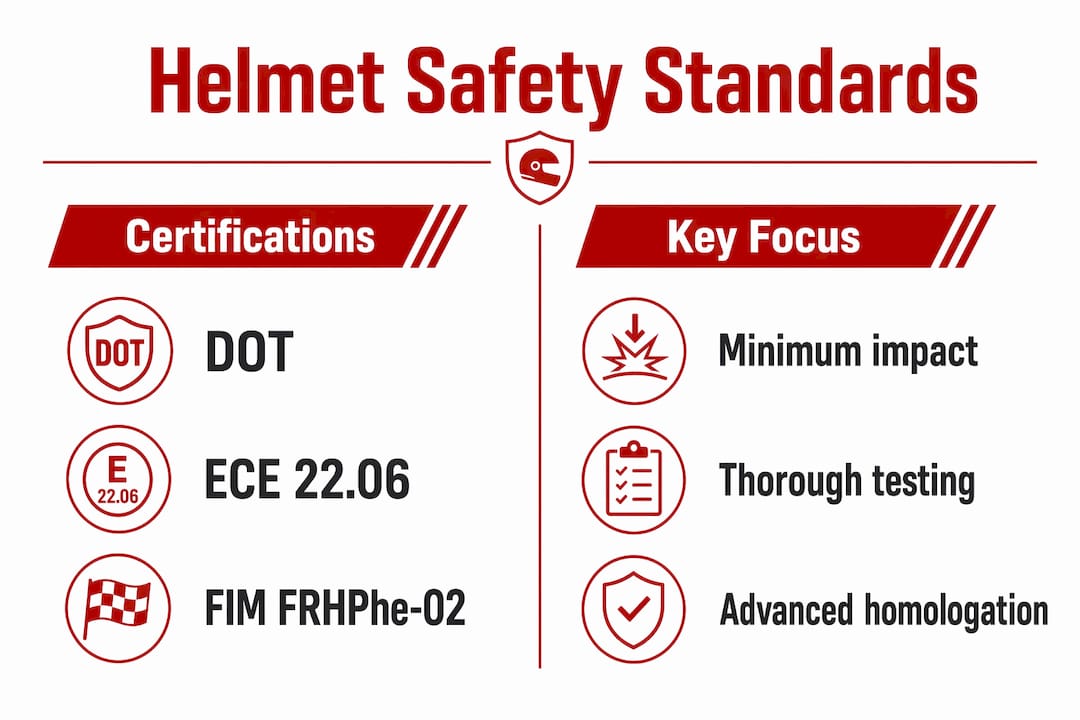
| Standard | Scope | Key Focus |
|---|---|---|
| DOT (FMVSS 218) | U.S. road and recreational use | Minimum impact absorption threshold |
| ECE 22.06 | European road use | Broader impact coverage, chin strap testing |
| FIM FRHPhe-02 | Competitive racing (2026) | Rotational force, high-speed impact at 8.2 m/s |
| FIA 8860 | Closed-cockpit motorsport | Extreme impact and fire resistance |
DOT certification is the legal minimum for road use in the United States. ECE 22.06 is widely regarded as a more thorough standard because it tests more impact zones. The FIM FRHPhe-02 goes further still, requiring rotational force management that directly reduces concussion risk at racing speeds. For recreational riders, DOT is the floor. For anyone competing, FIM or FIA certification is the standard that actually matches the risk.
One feature worth knowing about is the QR code track-and-trace system now embedded in FIM-certified helmets. This system ensures helmets involved in crashes are retired and never returned to service. Race officials can scan the code and instantly verify a helmet’s history. That is a meaningful safety advancement for competitive environments where damaged helmets could otherwise be reused unknowingly.
Pro Tip: Always check for the certification sticker inside the helmet before purchasing. A helmet without a visible DOT, ECE, or FIM label offers no verified protection, regardless of how it looks.
How do helmet laws vary by state and powersports vehicle type?
Helmet laws in the United States are a patchwork. Laws differ by vehicle type, rider age, and location, which means what is legal in one state may be illegal in the next. Most states require helmets for riders under 18 across all powersports vehicle categories. Adult requirements are far less consistent.
States like Arizona and Nevada do not mandate helmets for adults on OHV trails. That legal gap does not reduce the physical risk. A crash at trail speeds without a helmet carries the same injury potential regardless of what the law says. Riders who skip helmets because the law allows it are making a risk calculation that the injury statistics do not support.
Here is what every rider should know before heading out:
- Most states require helmets for all riders under 18, regardless of vehicle type.
- Adult helmet requirements vary by state and by whether you are on a public road, OHV trail, or private land.
- Rental operators and private trail systems often enforce their own helmet rules independent of state law.
- Assuming helmets are required is always the safer default when you are unfamiliar with local regulations.
The practical advice is simple. Wear a DOT-approved helmet every time you ride, regardless of what local law requires. The ATV safety checklist for riders and parents at Gokartsusa covers this and other compliance points worth reviewing before your next ride.
Pro Tip: Before riding in a new state or on a new trail system, check that state’s OHV regulations directly. Many state parks and trail systems post helmet requirements at the trailhead, but verifying ahead of time prevents surprises.
How should you choose the right helmet for your powersports activity?
Helmet selection starts with matching the helmet type to your activity’s risk level. The three main types are full-face, modular, and open-face, and they are not interchangeable.
-
Full-face helmets cover the entire head including the chin and jaw. The chin bar area absorbs 35% of major impacts, making full-face the safest option for most powersports activities. Dirt biking, go-karting, and trail riding all benefit from full-face protection.
-
Modular helmets feature a flip-up chin bar that offers convenience for commuters and touring riders. They must be ridden in the closed position to provide full protection and to comply with most certification standards. The hinge mechanism introduces a structural trade-off compared to a fixed full-face shell.
-
Open-face helmets leave the chin and jaw exposed. They provide less protection, especially to the jaw area, and are best suited for low-speed recreational use where full-face coverage is not practical.
Fit is as important as helmet type. A properly fitted helmet sits snug on your head without pressure points. The cheek pads should touch your cheeks firmly, and the helmet should not rock forward or backward when you push on it. A loose helmet shifts during a crash and reduces protection significantly.
Replacement timing is a point many riders get wrong. Helmets are single-impact devices. The foam liner compresses permanently on first impact, even when the outer shell shows no visible damage. Replace any helmet that has been in a crash, regardless of how minor it appeared. Most manufacturers also recommend replacement every five years due to material degradation from UV exposure, sweat, and general wear.
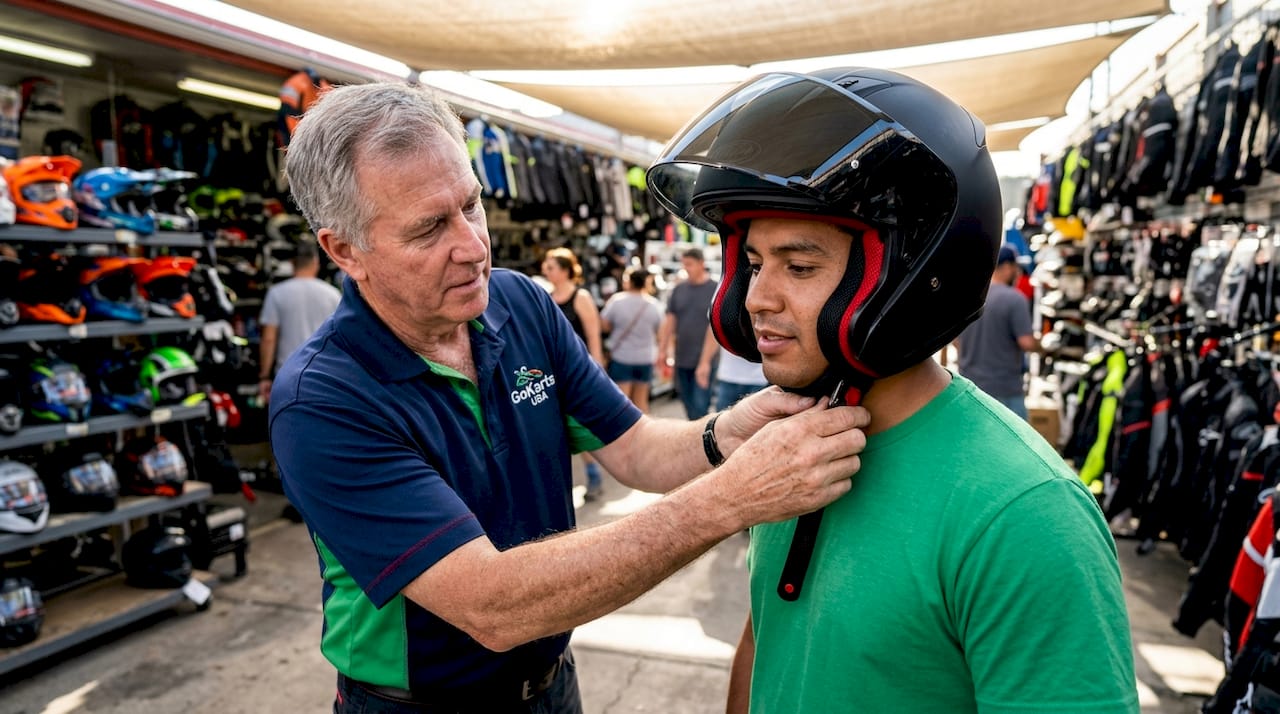
Pro Tip: When trying on a helmet, wear it for at least five minutes before buying. Pressure points that feel minor in the store become painful after an hour on the trail.
Key Takeaways
Helmets reduce head injury risk by up to 69% and death risk by 42%, making them the most critical piece of powersport safety gear a rider can own.
| Point | Details |
|---|---|
| Injury reduction is proven | Helmets cut head injury risk by up to 69% and fatality risk by 42%, per CDC and WHO data. |
| 2026 FIM standard raises the bar | The FIM FRHPhe-02 tests at 8.2 m/s with rotational force assessment, the strictest racing standard available. |
| State laws vary widely | Adult helmet requirements differ by state and vehicle type; always default to wearing a DOT-approved helmet. |
| Full-face offers the best protection | The chin bar absorbs 35% of major impacts, making full-face the recommended choice for most powersports activities. |
| Replace after every crash | Foam liner compression from a single impact renders a helmet ineffective, even without visible external damage. |
Why rotational injury is the threat most riders underestimate
Most riders think about helmets in terms of stopping a direct blow to the skull. That is the right instinct, but it misses the bigger danger. Rotational brain injury is what kills and disables riders at rates that linear impact data alone does not capture. When a helmet and head rotate together during an oblique crash, the brain twists inside the skull. That twisting tears axons, the fibers that connect brain cells, and the damage is often permanent.
I have spent years watching riders invest in expensive vehicles and then buy the cheapest helmet they can find. The logic seems to be that any certified helmet is good enough. For recreational trail riding at low speeds, a basic DOT helmet does its job. But for anyone pushing speed on a track or riding terrain with real fall risk, the gap between a legacy DOT helmet and a modern FIM FRHPhe-02 certified design is not cosmetic. It is the difference between a helmet that stops your skull from cracking and one that also manages the rotational forces that cause concussions and worse.
My honest advice for families introducing kids to powersports is to spend more on the helmet than you think you need to. Children’s brains are more vulnerable to rotational injury, and a well-fitted, properly certified helmet is the one piece of gear where cutting costs has direct consequences. The thrill of the ride is real. Protecting the rider who feels that thrill is the commitment that makes the adventure worth having.
— Mario
Gear up right with Gokartsusa
Riding is about freedom, and freedom deserves the right protection. At Gokartsusa, we believe every rider, whether a first-timer on a kids’ gas go-kart or an experienced trail rider on a full-size ATV, deserves certified safety gear that matches their machine.
Gokartsusa carries powersports vehicles designed with safety in mind for both kids and adults, and our team knows that a great ride starts with the right helmet on your head. From entry-level models built for ages 8 and up to performance-ready options for experienced riders, we pair every vehicle with the gear knowledge to keep you protected. Browse our full lineup and find the combination of vehicle and safety gear that fits your riding style.
FAQ
What does a helmet actually protect against in powersports?
A helmet protects against traumatic brain injury, skull fractures, and fatal head wounds by absorbing and distributing impact energy. It also shields riders from windblast, debris, and insects that cause dangerous distractions.
Is a DOT-certified helmet enough for competitive racing?
DOT certification meets the legal minimum for U.S. road use but does not satisfy the requirements for FIM-sanctioned racing events. Competitive riders need a helmet certified to the 2026 FIM FRHPhe-02 standard, which includes rotational force testing at 8.2 m/s.
How often should I replace my powersports helmet?
Replace any helmet immediately after a crash, even if it looks undamaged, because the foam liner compresses permanently on impact. Most manufacturers also recommend replacing helmets every five years due to material degradation.
Do helmet laws apply to go-kart and ATV riders, not just motorcyclists?
Helmet laws apply across powersports vehicle types, but requirements vary by state, vehicle class, and rider age. Most states require helmets for all riders under 18; adult requirements on OHV trails differ significantly by location.
What helmet type is best for most powersports activities?
Full-face helmets provide the best protection for most powersports activities because the chin bar covers an area that absorbs 35% of major impacts. Modular and open-face helmets offer less coverage and are better suited to lower-risk or low-speed riding.