




TL;DR:
- Wearing proper safety gear and conducting pre-ride inspections are essential to prevent preventable ATV accidents.
- Matching the rider’s size and skill level to the appropriate machine, along with safe behavior, reduces injury risk significantly.
Every year, families across America discover the thrill of ATV riding. And every year, preventable accidents steal that joy from far too many of them. A solid ATV safety checklist is not a formality. It is the difference between an epic day on the trails and a trip to the emergency room. ATV accidents have claimed roughly 10,000 lives over 25 years, with more than 25% of victims under the age of 16. The good news? Most of those accidents were preventable with proper preparation, the right gear, and smart riding habits.
Table of Contents
- Key takeaways
- Your ATV safety gear checklist
- ATV pre-ride inspection checklist
- Rider readiness and fit for youth and beginners
- Safe riding practices and behavioral guidelines
- My honest take on ATV safety preparation
- Ride safe with the right ATV from Gokartsusa
- FAQ
Key takeaways
| Point | Details |
|---|---|
| Gear up before every ride | Wearing a DOT-approved helmet with a secured chin strap is the single most critical step before mounting any ATV. |
| Inspect the machine first | A proper ATV pre-ride inspection catches brake, tire, and fluid issues before they become trail emergencies. |
| Match rider to machine | Children and beginners must ride ATVs sized for their age and physical ability, not the biggest machine available. |
| Behavioral rules save lives | Speeding, alcohol use, and carrying passengers on single-rider ATVs cause a disproportionate share of serious crashes. |
| Training is not optional | Formal safety education and supervised riding sessions reduce accident risk significantly, especially for youth under 16. |
Your ATV safety gear checklist
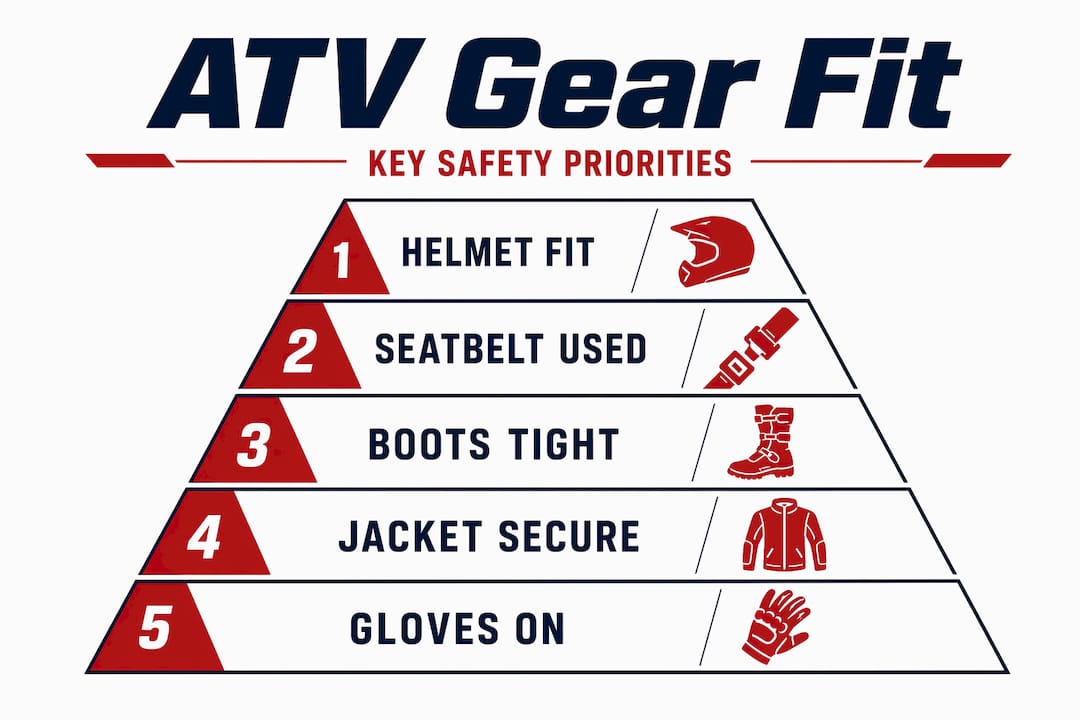
No piece of equipment matters more than what you are wearing when something goes wrong. Gear is your last line of defense, and it only works when you use it correctly.
Here is what every rider needs before heading out:
- DOT-approved helmet with secured chin strap. A helmet sitting loose on your head offers almost no protection in a crash. An unsecured chin strap renders even the best helmet nearly useless. Fit it snug, fasten the strap, and give it a firm tug to confirm it stays put.
- Protective goggles. Trail debris, dust, and branches move fast. Full-seal goggles keep your vision clear when it matters most. Sunglasses do not cut it off-road.
- Long sleeves and pants. Skin and gravel do not get along. Heavy denim or riding pants give you an extra layer of abrasion resistance.
- Over-the-ankle boots. Standard sneakers leave your ankles exposed. Motocross or work boots that cover the ankle joint protect against twists, impacts, and foot entrapment.
- Gloves. Gloves improve grip and protect your hands in a fall. Thin leather or motocross gloves work well without sacrificing feel on the controls.
- Optional but worth it: Chest protectors, knee and elbow pads, and neck braces add meaningful protection for aggressive riders, young children, and anyone hitting rougher terrain.
Pro Tip: Buy riding gear that fits the rider wearing it today, not a size or two “to grow into.” Oversized boots and loose helmets shift during a crash and reduce the protection they were designed to provide.
Fit is everything. Helmets and seatbelts used together significantly reduce the risk of injury and death. Owning the gear is not enough. Wearing it correctly, every single time, is what changes outcomes. Review kids’ ATV safety practices to see how gear selection applies specifically to younger riders.
ATV pre-ride inspection checklist
A mechanical failure on the trail is not just inconvenient. It can be genuinely dangerous. A quick ATV pre-ride inspection before every ride takes less than ten minutes and can prevent the majority of mechanical accidents.
Work through these steps in order:
- Check fluid levels. Engine oil, brake fluid, and coolant (if applicable) should all be at their recommended fill lines. Low brake fluid is a red flag that warrants attention before the ride, not after.
- Inspect tires. Check pressure against the manufacturer’s spec. Look for cuts, embedded debris, cracking on the sidewall, and visible tread wear. An underinflated or damaged tire handles unpredictably in loose terrain.
- Test the brakes. Squeeze the hand brake and press the foot brake. Both should feel firm and engage smoothly. Spongy or soft brakes need service before the ride begins.
- Verify lights and signals. Headlights, tail lights, and brake lights should all function. Riding in low-visibility conditions without working lights multiplies risk.
- Examine cables, belts, and chain tension. Look for fraying, cracking, or slack outside the manufacturer’s recommended range. Throttle cables especially should move freely and snap back without sticking.
- Check fasteners and look for leaks. Give the machine a visual walk-around. Loose bolts, dripping fluid, and fuel smells all indicate problems that need to be resolved before you ride.
The table below summarizes what to check and what to look for at a glance:
| Component | What to check | Warning sign |
|---|---|---|
| Engine oil | Level on dipstick | Below minimum mark or dark and gritty |
| Tires | Pressure and tread | Underinflated, cracked, or bald |
| Brakes | Feel and engagement | Spongy, slow to engage, or grinding |
| Lights | Function and aim | Flickering, dim, or non-functional |
| Cables and chain | Tension and condition | Frayed, cracked, or excessively loose |
| Fasteners | Tightness | Visible looseness or rattling under pressure |
Pro Tip: Set a recurring reminder on your phone once a month for a deeper mechanical check beyond the pre-ride basics. Catching worn brake pads or stretched chains on the driveway is far better than discovering them mid-trail.
Rider readiness and fit for youth and beginners
One of the most overlooked parts of any ATV safety gear checklist is the rider themselves. The right gear and a well-maintained machine will not save someone who is physically or mentally unprepared for the ride.
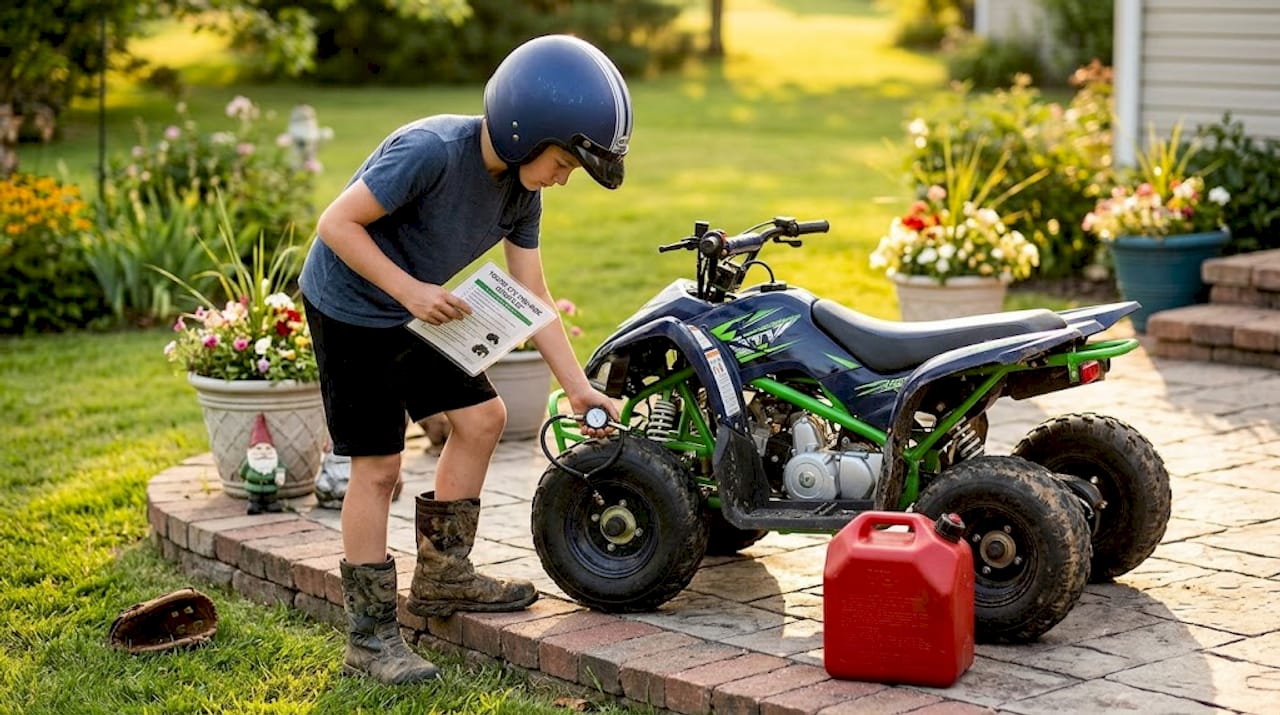
Physical fit is more critical than age when it comes to safe ATV operation. Many young riders do not meet rider fit standards even when they are technically old enough to ride. The physical requirements include the ability to bend the knee at least 45 degrees while seated and the ability to reach the brake lever with fingers fully extended. If a rider cannot meet those benchmarks on a specific machine, that machine is the wrong fit, regardless of what the marketing materials say.
Manufacturer age and size recommendations exist for a reason. Adult-sized ATVs can exceed 70 mph, and the power-to-control ratio on a full-size machine overwhelms younger and smaller riders. Youth ATVs with engine displacement matched to age and weight give beginners room to build skill without facing consequences beyond their ability to manage.
Training is the other non-negotiable. Oregon, for example, requires youth under 16 to complete a safety education card course plus hands-on training within six months of finishing the online program, with adult supervision from someone holding a validated ATV safety education card. Many states have similar requirements. Even in states without mandates, enrolling young riders in an ATV safety course before their first trail ride is one of the best decisions a parent can make. Review this parent’s guide to teaching kids ATV riding for structured, step-by-step guidance.
Here is a quick comparison to help parents choose the right setup:
| Rider profile | Recommended engine size | Key fit check | Training requirement |
|---|---|---|---|
| Child ages 6 to 11 | 50cc or under | Flat-footed seat reach | Adult supervision required |
| Youth ages 12 to 15 | 70cc to 110cc | Knee bend and brake reach | Safety course recommended or required |
| Teen ages 16 to 17 | 125cc to 250cc | Full physical fit assessment | State-dependent, course advised |
| Adult beginner | 250cc to 400cc | Brake reach and grip angle | Beginner riding course advised |
Safe riding practices and behavioral guidelines
Gear and machine prep get you ready to ride. Your behavior on the trail is what keeps you safe from start to finish. The following ATV riding guidelines cover the behaviors that cause and prevent the majority of serious incidents.
Never ride under the influence of alcohol or drugs. This is not a suggestion. Impaired reaction time on an ATV is lethal. The same goes for distractions. Headphones and ATVs do not mix.
Avoid stunt riding and excessive speed, especially on unfamiliar terrain. Trail difficulty ratings like Green, Blue, and Black exist for a reason. Riding a Black Diamond trail on your third outing is not an adventure story. It is a liability. Stay within your skill level and work up gradually.
Do not carry passengers on single-rider ATVs. The physics are unforgiving. Passenger riding on single-rider machines dramatically increases rollover risk, and that risk multiplies further when the passenger or operator is a youth rider. If your group includes children, everyone needs their own appropriately sized machine.
Avoid public roads whenever possible. In Wisconsin alone, 9 of 14 ATV fatalities in 2026 occurred on public roads. ATVs are built for trails, not for sharing lanes with trucks and cars. Cross roads only at designated crossings and at low speed.
Before heading out, always have a communication plan. Tell someone where you are going and when you expect to return. Carry a charged phone or a two-way radio on longer rides. Know the location of the nearest emergency services relative to your trail.
“The riders who get hurt most often are not necessarily reckless. They are unprepared. Preparation is the skill that makes all other skills possible.”
My honest take on ATV safety preparation
I have seen a lot of riders treat the pre-ride checklist like a suggestion box. They glance at the machine, strap on a helmet, and hit the throttle. And for a while, that works out fine. That near-miss streak is what worries me.
What I have learned after years around powersports is that complacency is the real hazard. Not inexperience. Inexperienced riders are usually cautious. It is the rider with two seasons of trail time who starts skipping the brake check and riding without gloves because “nothing bad has happened yet.” The checklist matters most precisely when you think you do not need it.
The youth riding conversation is one I feel strongly about. Parents get excited. Their kid is excited. Everyone wants to get out on the trails. But enthusiasm without preparation is how families end up with serious regrets. The physical fit check is not bureaucratic red tape. It is the difference between a child who can stop a machine and one who cannot. I would push every parent to do that assessment cold, before any gear gets purchased, and be honest about what they find.
The other thing most articles gloss over is that buying safety equipment is not the same as creating a safety culture. You can have a full closet of protective gear and still get hurt if you skip the beginner ATV safety steps or rush through the pre-ride inspection. The checklist is not a ritual. It is a practice. Do it every time, and it genuinely changes your outcomes.
— Mario
Ride safe with the right ATV from Gokartsusa

At Gokartsusa, we believe that the freedom of the trail starts with the right machine underneath you. The Mini Sport Kids ATV with 110cc Gas Engine is one of our top picks for young riders because it was built with parental oversight in mind. It features a remote start and kill switch that gives parents real-time control, so you can shut the machine down from a distance if something goes wrong. That is not just a feature. That is peace of mind. Pair it with the safety practices in this guide and check out our youth ATV guide for 2026 to find the right fit for your rider. Gokartsusa is your trail guide, your pit crew, and your partner in getting this right.
FAQ
What should be on every ATV safety checklist?
Every ATV safety checklist should include a protective gear review, a mechanical pre-ride inspection covering tires, brakes, and fluids, and a rider readiness assessment. Behavioral rules like avoiding passengers on single-rider ATVs and staying off public roads are also part of a complete checklist.
How do I know if an ATV fits my child correctly?
A properly fitted ATV allows the rider to bend their knee at least 45 degrees while seated and reach the brake lever with fingers fully extended. If your child cannot meet those physical benchmarks on a specific machine, that machine is too large for safe operation.
Is a helmet enough protection for ATV riding?
A helmet is the most critical piece of gear, but it works best as part of a full ATV safety gear checklist that includes goggles, gloves, long sleeves, pants, and over-the-ankle boots. A helmet with an unsecured chin strap provides almost no protection in a crash.
Do youth riders need formal ATV safety training?
Yes. Many states require youth under 16 to complete a certified safety education course, and adult supervision from a trained rider is required or strongly recommended in most jurisdictions. Even where laws do not mandate training, a formal course dramatically reduces accident risk.
Can ATVs be ridden on public roads?
ATVs are not designed for public road use, and riding on roads significantly increases fatality risk. In 2026, the majority of ATV fatalities in Wisconsin occurred on public roads. Use designated trail crossings only, and never travel along roadways on an ATV.