




TL;DR:
- Choosing the right ATV for children involves prioritizing safety guidelines, proper protective gear, and age-appropriate models. Experts advise against children under 16 operating adult-sized ATVs or riding as passengers on single-rider machines due to high injury risks. Consistent safety routines, supervision, and regular recall checks are essential for ensuring young riders’ well-being and a fun, responsible experience.
Picking the right ATV for your child is one of the most important decisions you’ll make as an outdoors-loving family. It’s tempting to focus on engine size, color options, and price tags, but the real work starts long before you hit the trail. Understanding why ATV safety matters for kids means recognizing that expert-backed criteria, proper gear, and the right machine working together are what make the difference between a thrilling afternoon and a devastating accident. We’re here to walk you through every layer of that decision.
Table of Contents
- How experts define safe ATV use for children
- Gear and checks: Must-have safety practices before every ride
- Youth vs. adult ATVs: What makes an ATV kid-safe?
- Situational decisions: Supervision, training, and recall checks
- The uncomfortable truth: Why safety rules are more important than fun
- Find the right youth ATV for your family
- Frequently asked questions
Key Takeaways
| Point | Details |
|---|---|
| Age and model matter | Children should only operate youth-specific ATVs and always follow age guidelines for maximum safety. |
| Safety gear is vital | Wearing DOT-approved helmets and protective clothing greatly reduces risk and is non-negotiable for every ride. |
| Regular recall checks | Check CPSC recall lists often since even youth models may be subject to hazards or recalls. |
| Supervised training required | Proper supervision and formal training are essential to keeping children safe on ATVs. |
| Never allow passengers | Single-rider ATVs should never have passengers, preventing dangerous and unnecessary risks. |
How experts define safe ATV use for children
Before you hand your child the keys to any powersports machine, it helps to understand exactly what medical and safety professionals recommend. These guidelines aren’t arbitrary. They’re built on years of injury data, pediatric research, and real-world outcomes that shape everything from product regulations to emergency room protocol.
The American Academy of Pediatrics (AAP) takes a firm position: children under 16 should not operate ATVs, especially adult-sized models. The AAP also makes clear that passengers should never ride on single-rider ATVs. That rule applies to kids and adults alike, but the consequences for children are far more severe when ignored.
The data backs this up with force. According to the Consumer Product Safety Commission (CPSC), from 2019 to 2023, an average of 27,900 emergency department visits per year involved children under 16 on ATVs. Children under 12 accounted for roughly 13,600 of those visits annually. More alarming still: over 90% of child ATV injuries involved adult-sized machines.
“Children are not small adults. Their physical development, reaction time, and ability to control an adult-sized ATV simply cannot match what the machine demands. The data doesn’t lie, and neither do the injuries.”
Here’s a clear breakdown of what the experts say every parent should know before allowing any child near an ATV:
- No under-16 operation of adult ATVs. The AAP’s position is firm, and CPSC injury data supports it completely.
- Single-rider rules are absolute. Adding a passenger to a youth ATV dramatically shifts its center of gravity, creating rollover risk that young riders cannot manage.
- Adult ATVs equal adult-level danger. More than 9 in 10 child ATV injuries happen on machines not designed for them.
- Age-appropriate models matter. Youth ATVs exist precisely because children’s bodies and reaction capabilities are different, and essential ATV safety tips consistently reinforce that distinction.
Understanding this framework isn’t about scaring families away from the sport. It’s about building the right foundation so the adventure can happen safely and joyfully for years to come.
Gear and checks: Must-have safety practices before every ride
Safety guidelines are the blueprint, but protective gear and pre-ride routines are where those guidelines become real. No piece of safety advice matters if your child is sitting on an ATV without the right protection. Think of gear as your child’s first line of defense when something unexpected happens on the trail.
Always wear DOT-approved helmets, goggles, gloves, boots, long pants, and long-sleeved shirts. Every single ride. Not just for new riders, not just on rough terrain, but every time. This is the standard that pediatric safety organizations and powersports experts agree on without exception.
Here’s a practical, numbered pre-ride checklist every parent should follow:
- Fit the helmet first. A DOT-approved helmet should sit level on the head, with the chin strap snug enough that you can only fit two fingers underneath. A loose helmet offers almost no real protection.
- Check the goggles. Goggles protect eyes from dust, debris, and branches. Make sure the seal sits flush against the face and the strap is secure.
- Inspect the gloves and boots. Full-finger gloves prevent abrasion and improve grip. Boots should cover the ankle and have a firm sole. Sneakers are not acceptable substitutes.
- Dress in layers of protection. Long sleeves and pants reduce road rash dramatically. Even a low-speed fall can cause significant skin abrasion without this coverage.
- Walk the ATV before starting it. Check tire pressure and tread condition, brake function, throttle response, fuel level, and any visible fluid leaks.
- Test the safety kill switch. This is often overlooked, but the kill switch is a critical backup. If your child loses control, that switch needs to work instantly.
- Review the terrain. Know where your child is riding before they go. Identify hazards like steep inclines, water crossings, and unstable ground.
Pro Tip: Before each season and before any new purchase, visit the CPSC’s official recall database to check whether your child’s ATV model has any open safety recalls. Reviewing our ATV buying checklist is also a great way to make sure you haven’t missed a safety consideration before committing to a machine.
Gear isn’t glamorous, but it is non-negotiable. Families who build these pre-ride routines into habit find that kids quickly internalize them too, which builds confidence, respect for the machine, and a safety-first mindset that carries forward. Our beginner ATV safety steps cover this in detail for new riders just getting started.
Youth vs. adult ATVs: What makes an ATV kid-safe?
One of the most important decisions you’ll face is the choice between a youth-designed ATV and a scaled-down adult model. These are not the same thing, and the difference is far more than engine displacement.
Youth ATVs are purpose-built machines. They’re designed with narrower frames that suit smaller body proportions, lower seat heights for better ground reach, and restricted top speeds that match the reaction capabilities of younger riders. Adult ATVs, even smaller-displacement ones, are engineered to different standards entirely.
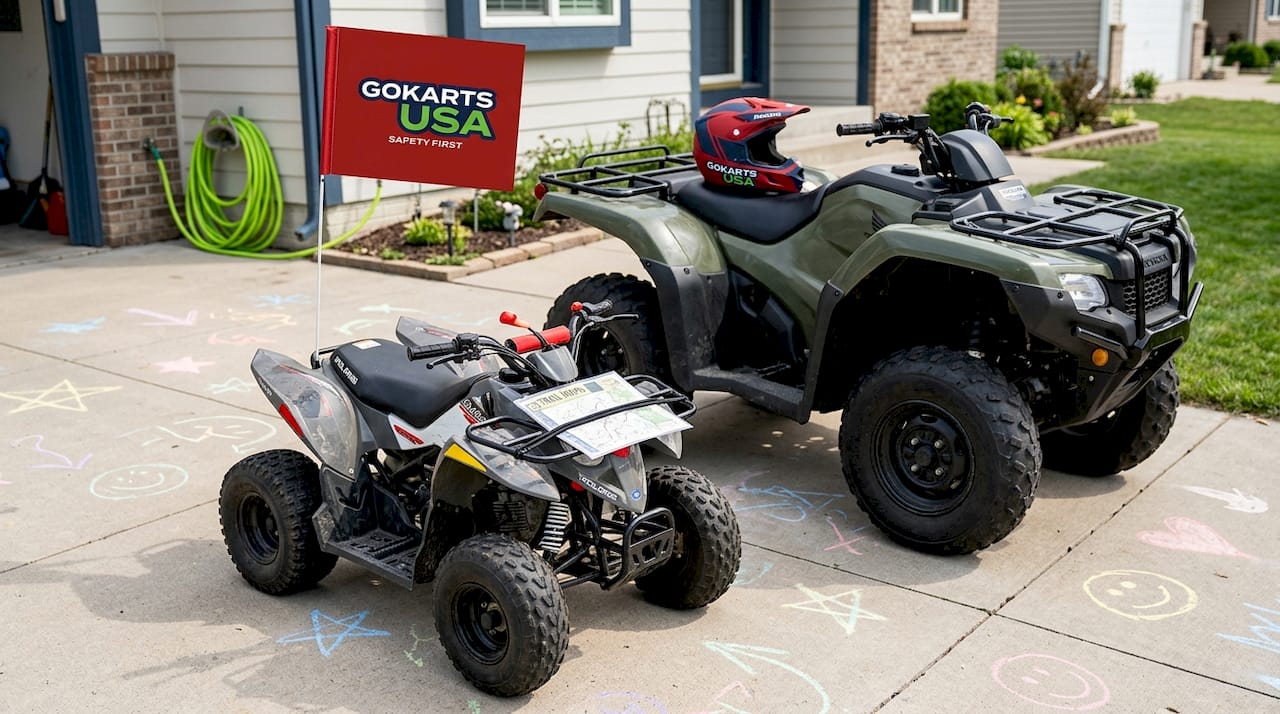
| Feature | Youth ATV | Adult ATV |
|---|---|---|
| Engine displacement | Typically 50cc to 125cc | 200cc and above |
| Top speed (governed) | 10 to 30 mph | 50+ mph |
| Frame size | Narrower, lower center of gravity | Wider, taller, heavier |
| Speed limiter/throttle restrictor | Standard feature | Rarely included |
| Remote shut-off capability | Often included | Not standard |
| Recommended rider age | 6 to 15 years (by model) | 16 and older |
The CPSC data confirms that over 90% of ATV injuries in children happen on adult machines. This single statistic should anchor every purchase decision you make. Youth ATVs with strict manufacturer guidelines and proper age-matching significantly reduce that risk.
So what features should parents specifically look for when shopping for a youth ATV?
- Remote shut-off switch. This allows a supervising adult to cut the engine instantly from a safe distance if something goes wrong.
- Speed restrictor or throttle limiter. This lets parents govern the machine’s top speed to match the child’s skill level and grow with them over time.
- Low seat height. Children need to feel the ground with their feet. Proper ground contact improves balance and control at stops and slow speeds.
- Automatic transmission. Manual clutch systems add cognitive load for young riders. Automatics let them focus on steering and terrain.
- Appropriate power output. A 50cc machine is right for a beginning 6- to 9-year-old. A 110cc machine suits older or more experienced riders in that 10 to 15 age range.
Exploring safe entry-level ATVs designed for kids is a smart starting point, and understanding youth ATV insurance tips can add another layer of financial and legal protection to your family’s riding experience.
Situational decisions: Supervision, training, and recall checks
Owning the right ATV and equipping your child with the right gear covers a lot of ground. But safe riding is also about the decisions you make every single time your child gets on that machine. Supervision, training, and ongoing recall awareness are the habits that keep young riders safe for the long haul.
Supervision needs change as children grow, but the need for it never fully disappears in the youth riding years. Here’s a practical framework:
| Age Group | Supervision Level | Recommended Training |
|---|---|---|
| 6 to 9 years | Direct, close supervision at all times | Structured beginner course required |
| 10 to 12 years | Active visual supervision, within shouting distance | Formal training plus refresher each season |
| 13 to 15 years | Supervisory presence on-site, periodic check-ins | Ongoing skills training, terrain-specific guidance |
Formal training programs, like those offered through the ATV Safety Institute (ASI), teach young riders terrain reading, emergency braking, body position, and hazard avoidance in a structured, controlled setting. These aren’t optional extras for the serious rider. They’re foundational experiences that build the muscle memory and judgment kids need before they encounter those situations for real.
“Even youth-designed ATVs can be recalled after fatal incidents. Never skip recall checks. Assuming your machine is safe just because it’s new is one of the most dangerous assumptions a parent can make.”
This warning is not hypothetical. Youth ATVs have been recalled after contributing to fatalities, including the Rex110 following a 6-year-old’s death. The machine was specifically marketed for children. The recall came only after tragedy. Parents who routinely check CPSC recall databases can catch these issues before they become personal ones.
It’s also worth understanding the contrasting positions within the safety community. Pediatric organizations like the AAP and SickKids advocate for no ATV operation under 16 based on injury data. The CPSC and manufacturers take a more permissive stance, allowing youth models with strict guidelines and training requirements. Both positions deserve serious consideration. We believe informed parents who follow manufacturer guidelines, provide proper supervision, and stick to youth-appropriate machines can create meaningful, safe riding experiences. Our entry-level ATV tips help you navigate that balance with confidence.
The uncomfortable truth: Why safety rules are more important than fun
Here’s the opinion that’s harder to say out loud: the most common reason kids get hurt on ATVs isn’t equipment failure or bad luck. It’s a parent who decided to bend the rules just this once.
We’ve heard the reasoning. “He’s mature for his age.” “She’s been watching for years, she knows what she’s doing.” “It’s just a short ride.” Every single one of those thoughts has preceded a tragedy that a family will spend the rest of their lives wishing they could undo. We say this not to judge, but because the data pattern is unmistakable and the lesson is hard-won by real families, not safety researchers.
The uncomfortable reality is that children’s brains are not yet wired for split-second risk assessment. A 10-year-old may look completely in control on flat terrain and become completely overwhelmed the moment something unexpected happens. Their reaction time, their physical strength, and their emotional regulation under stress are all genuinely different from an adult’s. Rules that feel overly strict in a calm backyard moment exist precisely because real riding rarely stays calm.
What we’ve seen time and again is that families who build safety culture into the adventure, not around it, actually create richer experiences. Kids who know the rules, gear up without being told, and understand why the throttle restrictor is there don’t feel constrained. They feel trusted. They feel part of a serious pursuit that respects both the thrill and the responsibility.
The top benefits of ATVs for outdoor fun are real and worth pursuing. We’re passionate believers in this sport and what it can mean for families. That passion is exactly why we refuse to let excitement override evidence. The rules aren’t the enemy of fun. Ignoring them is.
Find the right youth ATV for your family
All the knowledge in the world means more when it’s paired with the right machine. For families ready to put these best practices into action, we’ve built a catalog specifically designed with your child’s safety and your peace of mind at the center of every product decision.

Our Mini Sport Kids ATV 110cc is a standout choice for youth riders moving into more confident territory. It features an automatic transmission, speed restrictor, and remote kill switch so parents stay in control while kids build real skills. Every feature on this machine reflects the safety-first philosophy we’ve outlined throughout this article. For families who want versatility alongside adventure, the TrailMaster Taurus 200GX Golf Cart offers a safe, structured riding experience with comfort and reliability built in. Explore our full youth lineup and ride with confidence knowing we’ve done the safety homework alongside you.
Frequently asked questions
What age is appropriate for kids to start riding ATVs?
The AAP recommends no ATV operation under age 16, but manufacturer-designed youth models with appropriate engine sizes exist for riders around age 6 and up, provided there is strict supervision and formal training in place.
What safety gear is absolutely essential for children riding ATVs?
Children must wear a DOT-approved helmet, goggles, gloves, ankle-covering boots, long pants, and a long-sleeved shirt on every single ride without exception.
Are youth ATVs safer than adult models for kids?
Yes. Youth ATVs are purpose-built with lower power, speed restrictors, and better size proportions for children, and over 90% of child ATV injuries involve adult-sized machines rather than youth-specific models.
How often should parents check for ATV recalls?
Parents should check the CPSC recall database before every new purchase and at the start of each riding season, because even youth ATVs can be recalled following fatal incidents involving children.
Can a child ride with a passenger on a single-rider ATV?
No. Experts strongly advise against carrying passengers on single-rider ATVs because passengers on single-rider ATVs dramatically increase rollover risk and injury severity, especially for young riders.