




TL;DR:
- ATVs are accessible, stable, and easy to learn for beginners and young riders.
- They offer versatile outdoor fun across different terrains and ages within a balanced cost range.
- Safety depends on proper vehicle matching, protective gear, supervision, and adherence to family rules.
Finding the right outdoor vehicle for your family or adventure crew is genuinely exciting, but it’s also a real challenge. You want something thrilling, yet safe. Affordable, yet built to last. Accessible for a first-time rider, yet capable enough to keep growing riders engaged. ATVs (all-terrain vehicles) check more of those boxes than almost any other powersports option on the market today. In this article, we break down the true advantages of ATVs for recreational use, cover what families need to know about accessibility, versatility, cost, and safety, and help you make a confident, informed decision before your first ride.
Table of Contents
- Accessibility and ease of learning
- Versatility and outdoor fun for all ages
- Cost-effectiveness and affordability
- Safety considerations and family impact
- A realistic perspective: Why the safest ATV is the right one for your family
- Find the right family ATV for guaranteed fun and peace of mind
- Frequently asked questions
Key Takeaways
| Point | Details |
|---|---|
| Accessible for families | Youth-sized ATVs with adjustable controls make it easy for children and beginners to join in safely. |
| Versatile fun | ATVs provide exciting outdoor experiences for all ages across various terrains. |
| Cost-effective options | Families can find affordable ATVs that fit their recreational budgets without sacrificing safety. |
| Safety requires attention | Proper sizing, gear, and supervision are essential as ATVs have unique risks compared to other vehicles. |
Accessibility and ease of learning
One of the biggest reasons families and beginners gravitate toward ATVs is how approachable they are from the very first ride. Unlike motorcycles or full-sized off-road trucks, ATVs are designed to give new riders a stable, intuitive experience without requiring years of technical skill. Four wheels offer a natural balance point, and most modern youth-sized models come packed with features specifically built to ease the learning curve.
Manufacturers have done a remarkable job creating vehicles that grow with your riders. Youth ATVs typically feature adjustable speed governors, which are mechanical limiters that cap how fast the engine can push the vehicle. This means a parent can set a top speed of 10 mph for a nervous first-timer and gradually increase it to 25 mph or higher as confidence and skill develop. Many models also include safety guardrails or thumb throttle limiters, giving adults precise control over the riding experience from day one.
The controls themselves are refreshingly simple. Most ATVs use handlebar-mounted throttle and brake controls, with automatic or semi-automatic transmissions that eliminate the clutch work required on a dirt bike. Kids and adults alike tend to feel comfortable within a few sessions. The riding position is upright and natural, reducing fatigue on longer trail days.
Parents will appreciate that youth-sized ATVs give them real tools to supervise and manage the experience. You are not just watching from the sidelines. You are actively setting the parameters that keep your child safe while still delivering that genuine rush of outdoor adventure. As noted in family ATV adventure guidance, a key practical advantage for families is the accessibility to learning and lower barriers when choosing smaller, youth-sized ATVs with speed limiters and guardrails.
Here is what makes the accessibility picture so strong for new riders and families:
- Adjustable speed governors let parents dial in appropriate limits for any skill level
- Automatic transmissions remove the complexity of clutch and gear management
- Low seat heights on youth models make mounting and dismounting easy and confidence-building
- Four-wheel stability reduces the wobble anxiety that many beginners feel on two-wheelers
- Remote kill switches on many models let parents cut the engine instantly from a distance
For anyone looking at entry-level ATV options, it is worth comparing the safety feature sets of several models before committing. Not every youth ATV includes all of these controls, so knowing exactly what to look for matters.
Pro Tip: Always confirm that a youth ATV includes a speed limiter screw or governor before purchasing. This single feature can make the difference between a positive first experience and an overwhelming one.
Versatility and outdoor fun for all ages
With easier access comes the natural question: can one vehicle really deliver lasting fun for the whole family across different ages, terrains, and activities? The answer, when you pick the right ATV for each rider, is a confident yes. ATVs span an impressive range of sizes and power levels, from small electric or foot-assisted models designed for very young children, all the way to 400cc and 700cc performance machines that seasoned adult riders love on demanding trails.
This range means that a family of four can realistically invest in two or three ATVs at different power levels and enjoy group rides where everyone participates at their comfort level. A 10-year-old on a 110cc youth ATV, a teenager on a 200cc mid-range model, and two adults on full-sized machines can all share the same trail without anyone feeling left out or overwhelmed. That kind of shared experience is rare in outdoor recreation.
The terrain versatility is equally impressive. ATVs are genuinely built to tackle varied surfaces. Packed dirt trails, sandy dunes, gravel fire roads, muddy creek crossings, and grassy open fields all fall within the capability range of a well-maintained ATV. This makes them endlessly replayable. You are not limited to one type of environment, which means the adventure can look different every single weekend.
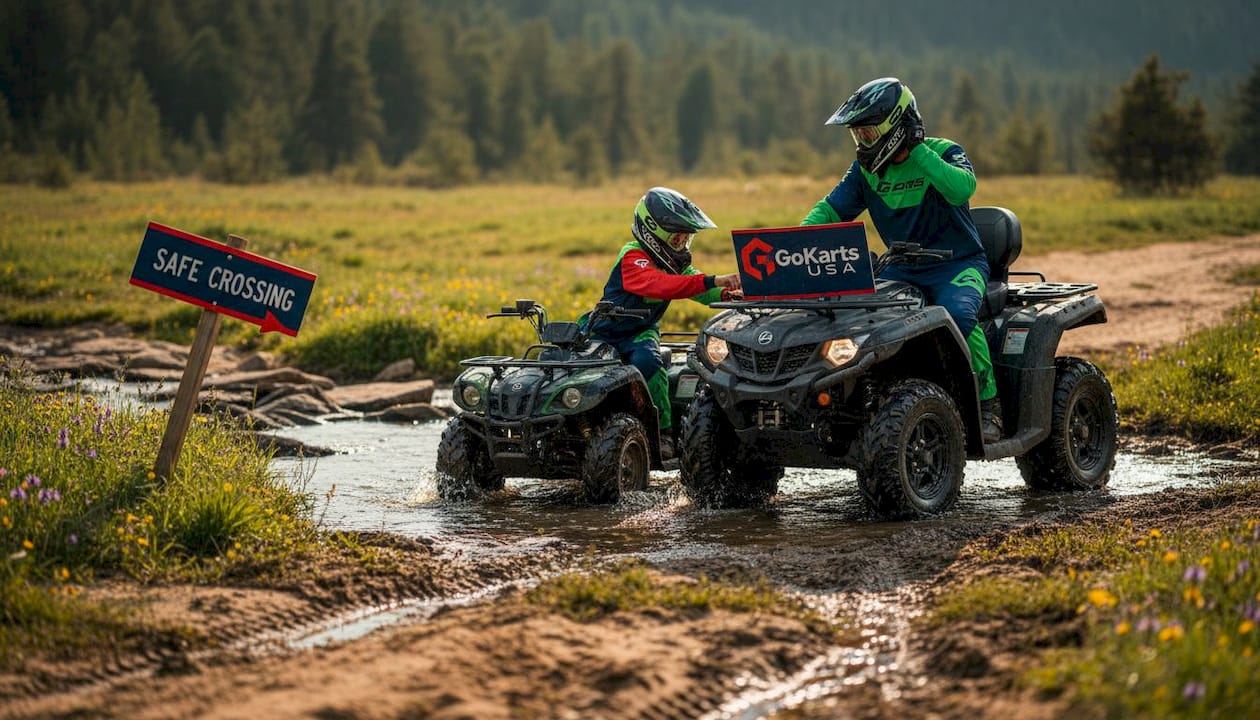
When paired with proper gear and supervision, ATVs become a rewarding, repeatable family tradition. The 2024 OHV Annual Report from the CPSC reinforces this, noting that ATVs can be a high-reward leisure activity when paired with correct vehicle sizing, protective gear, supervision, and appropriate terrain. Without those controls, the risk profile shifts dramatically.
Here are the core versatility advantages that make ATVs stand out for families and groups:
- Multiple engine sizes accommodate riders from ages 6 through adulthood on a single family outing
- All-terrain tires handle grass, sand, mud, and gravel with equal confidence
- Optional storage racks on adult models let you carry gear, snacks, or supplies for longer adventures
- Electric youth models offer quieter, lower-maintenance options for younger or more cautious families
- Group trail riding creates shared memories that keep families coming back season after season
For safe and engaging riding tips that help every rider get the most out of these features, it pays to prepare before hitting any new terrain. And before buying, reviewing a thorough ATV buying checklist ensures you match the right vehicle to the right rider every time.
Pro Tip: Rotate drivers throughout a group ride and try varying the terrain type each outing. It keeps the experience fresh and helps every rider build skills gradually rather than repeating the same easy loop.
Cost-effectiveness and affordability
Fun and versatility matter deeply, but for most families, budget shapes the final decision. Here is where ATVs deliver another strong advantage. Compared to UTVs (utility terrain vehicles, also called side-by-sides) and entry-level motorcycles, ATVs typically land at a friendlier price point for recreational buyers who are just building their outdoor vehicle collection.
Youth ATVs often start between $800 and $1,800 for reliable gas-powered entry-level models. Adult recreational ATVs generally range from $2,500 to $6,000 for quality machines suitable for trail riding and weekend adventures. Compare that to UTVs, which frequently start at $10,000 and can reach $20,000 or more for performance models, and the savings become obvious. Mini bikes offer a lower entry price, but they serve a different rider profile and terrain range.
| Vehicle type | Entry-level price range | Maintenance cost estimate | Rider age range |
|---|---|---|---|
| Youth ATV (110-125cc) | $800 to $1,800 | Low | Ages 6 to 14 |
| Adult ATV (200-400cc) | $2,500 to $6,000 | Moderate | Ages 16 and up |
| Mini bike | $400 to $1,200 | Low | Ages 7 and up |
| UTV/side-by-side | $10,000 to $25,000 | Higher | Ages 16 and up |
Lower maintenance costs also contribute to long-term affordability. An ATV engine is mechanically simpler than a car or UTV powertrain. Oil changes, air filter cleaning, tire pressure checks, and chain or belt inspections cover the majority of routine maintenance. Most mechanically inclined owners handle these themselves without paying shop labor rates.
Electric and mini ATV models bring prices down even further for families with younger children. Youth ATV insurance options are also generally affordable, and many families share one or two machines among multiple riders, which reduces the cost per person dramatically. As noted in family ATV guidance, family-friendly setups that emphasize youth-mode limiters and adjustable speed governors can make even entry-level models perform safely and reliably for growing riders, extending the useful life of your investment.
Shared family use is genuinely one of the smartest cost strategies in recreational vehicles. One adult ATV purchased this year can serve multiple riders across a decade of weekends.
Safety considerations and family impact
Affordability is compelling, but any honest conversation about ATVs for families must address safety directly and without sugarcoating. ATVs are genuinely more stable than two-wheelers thanks to their four-wheel design and wider stance. But stability is not the same as safety, and the research makes this distinction critically important for every family to understand before their first ride.
One sobering study published and cited by Science Daily found that ATV crash victims were 50% more likely to die, 55% more likely to require ICU admission, and 42% more likely to be placed on a ventilator compared with off-road motorcycle crash victims. That data challenges the assumption many parents carry that four wheels automatically means safer. Additionally, the 2024 OHV Annual Report confirms that ATVs account for a substantial share of OHV-related deaths, with collisions as a major hazard component in ATV fatalities.
These facts are not reasons to avoid ATVs. They are reasons to ride them correctly.
“Families should avoid relying on the four wheels equals safer intuition. The vehicle’s stability helps, but the rider’s preparation, gear, and supervision matter far more than wheel count.”
| Vehicle type | Stability rating | Learning curve | Crash severity risk | Supervision need |
|---|---|---|---|---|
| Youth ATV | High | Low to moderate | Moderate to high | High |
| Mini bike | Moderate | Moderate | Moderate | High |
| Motorcycle | Lower | High | Moderate | Moderate |
Here are the top safety practices every family should follow before and during every ATV ride:
- Match the ATV to the rider’s age and weight using the manufacturer’s recommended guidelines
- Require full gear every ride, including helmet, gloves, goggles, boots, and long pants
- Never allow passengers on single-rider ATVs, regardless of how short the trail seems
- Supervise young riders actively, not just from a distance
- Inspect the ATV before each outing for tire pressure, brakes, and fuel levels
- Choose terrain appropriate for the rider’s skill level and gradually increase challenge
- Keep speed limits in place using the governor until new riders earn increased freedom
Our detailed ATV safety guide walks through every one of these steps in depth, and if you are comparing your options, our ATV vs mini bike safety comparison breaks down exactly where each vehicle type excels and where extra caution is needed.
A realistic perspective: Why the safest ATV is the right one for your family
We have seen the excitement on a kid’s face when they take their first solo lap around a trail. That moment is real, and it is worth chasing. But we have also spent enough time in the powersports world to know that the biggest mistakes families make come from skipping the fundamentals in a rush to get to the fun.
The research showing that ATV crashes can be more severe than motorcycle crashes surprises nearly everyone. Most riders and parents assume that four wheels provide a built-in safety cushion. They do provide stability, but they can also create a false sense of security that leads to overconfidence and poor decision-making on unfamiliar terrain.
The real advantage of an ATV is not its wheel count. It is the combination of right-sized vehicle, proper protective gear, consistent supervision, and clear family rules that makes it a safe and extraordinary experience. Starting with an ATV safety basics resource is one of the smartest first steps any family can take before purchasing.
We always say: the best ATV you can own is the one your whole family knows how to use safely. That is where the real freedom lives.
Pro Tip: Never skip gear checks before rides with new guests or riders who haven’t been on the trail in a while. A quick two-minute walkthrough of rules and equipment refreshes habits that matter most when things get fast.
Find the right family ATV for guaranteed fun and peace of mind
Having sorted through the real advantages and the honest safety picture, you are now ready to find the ATV that fits your family’s adventure goals and budget.

At GokartsUSA.biz, we carry a handpicked selection of safety-conscious ATVs built for families and beginners who refuse to choose between fun and reliability. Our mini kids ATV with parental controls is a crowd favorite for younger riders, featuring remote engine kill and adjustable speed limits that keep parents in control while kids build confidence. For riders ready to step up, the TrailMaster Taurus 200GX delivers smooth, reliable performance with the quality your family deserves. We are your trail guides and pit crew, here to help every rider find their perfect match.
Frequently asked questions
What makes ATVs a good choice for family recreation?
ATVs offer accessible learning, adjustable safety controls like speed governors and kill switches, and genuine fun for riders of all ages, as highlighted in family ATV adventure guidance, making them a well-rounded option for outdoor family activities.
Are ATVs safer than dirt bikes or mini bikes?
ATVs provide four-wheel stability that helps beginners, but research from Science Daily shows that ATV crash victims face higher ICU and fatality risks than off-road motorcycle riders, so following safety guidelines is essential.
What safety steps should families take with ATVs?
Select a correctly sized ATV, always require full protective gear, supervise young riders actively, and stick to terrain that matches your rider’s skill level, as the 2024 OHV Annual Report emphasizes that proper vehicle sizing and supervision are non-negotiable for safe recreational ATV use.
How can families afford getting started with ATVs?
Youth models starting under $1,800, combined with lower maintenance costs and shared family use, make ATVs genuinely budget-friendly, and family-friendly setups with built-in speed governors and youth-mode limiters extend the usable life of any entry-level model for years.