




TL;DR:
- Minibikes require active balance and physical skill, offering an off-road riding experience.
- Go-karts provide stability with four wheels, steering wheel control, and safety features for beginners.
- Safety depends on matching the vehicle to the rider’s age, skill level, and riding environment.
Most parents shopping for their child’s first powersports vehicle assume a minibike and a go-kart are basically the same thing with different shapes. That assumption can lead to a purchase that doesn’t fit your yard, your child’s age, or your safety expectations. The truth is these two vehicles differ in fundamental ways, from how they’re controlled to how much protection they offer. We’re here to walk you through every meaningful difference so your family lands on the right ride, not just a popular one.
Table of Contents
- What is a minibike and what is a go-kart?
- Key differences: structure, controls, and ride experience
- Safety and family-friendly features: making the right choice
- Maintenance, accessories, and long-term value
- Why the right choice depends on more than just specs
- Find your perfect ride at GoKarts USA®
- Frequently asked questions
Key Takeaways
| Point | Details |
|---|---|
| Purpose-built for fun | Minibikes and go-karts offer distinct experiences, each suited for different ages and family uses. |
| Safety varies by design | Go-karts offer more protective features, while minibikes can be safer if chosen and used properly. |
| Maintenance and upgrades matter | Go-karts typically need more frequent maintenance and offer more accessory options for family customization. |
| Best fit is personal | Your ideal choice depends on where you’ll ride and what matters most to your family’s fun and safety. |
What is a minibike and what is a go-kart?
With that misconception addressed, it’s important to start at the basics: what exactly makes these vehicles unique?
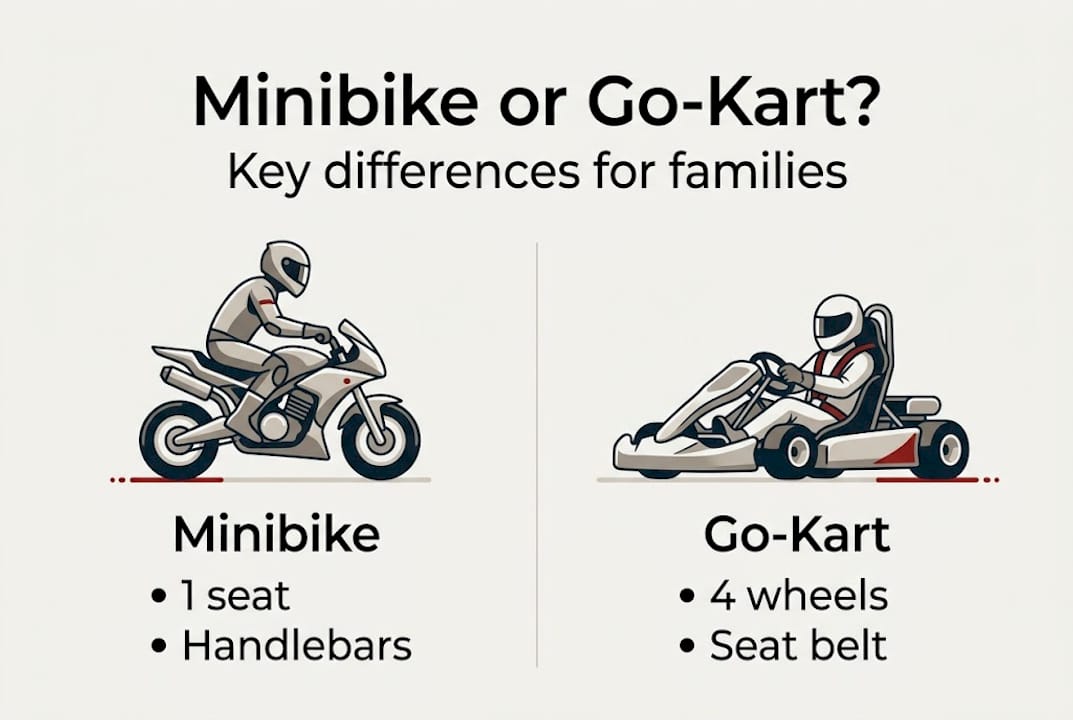
A minibike is a small, lightweight, simplified motorbike built for off-road fun and casual riding. It seats one rider, uses handlebar steering, and operates with hand-controlled throttle and brakes, much like a full-sized motorcycle but scaled down for younger or smaller riders. The frame is compact, the engine is typically small (ranging from 40cc to 125cc for youth models), and the riding position is upright and active. You’re balancing the bike as you ride, which adds a physical skill element that some kids love and others find challenging at first. According to minibike basics, minibikes are purpose-built for recreational riding across a range of terrains, from flat backyards to gentle trails.
A go-kart, by contrast, is a four-wheeled open-chassis vehicle. It uses a steering wheel, foot pedals for acceleration and braking, and a low-slung seat that keeps the rider close to the ground. Go-karts can be single or two-seat configurations, and many family-oriented models include safety features like roll cages, seat belts, and engine kill switches. Engine sizes vary widely, from small 50cc youth karts to 200cc adult models built for more spirited riding.
Here’s a quick look at how the two vehicles compare at a glance:
| Feature | Minibike | Go-kart |
|---|---|---|
| Wheels | 2 | 4 |
| Steering | Handlebars | Steering wheel |
| Controls | Hand throttle and brakes | Foot pedals |
| Seating | 1 rider | 1 or 2 riders |
| Typical engine size | 40cc to 125cc | 50cc to 200cc+ |
| Balance required | Yes | No |
| Best terrain | Trails, open fields | Flat tracks, open areas |
Families use these vehicles in a variety of settings, including:
- Backyards and open fields for casual weekend riding
- Off-road trails where minibikes tend to shine
- Dedicated go-kart tracks for competitive or recreational laps
- Campgrounds and rural properties where both types are popular
- Neighborhood events or family gatherings where go-karts often become crowd favorites
Pro Tip: For first-time riders under age 8, a go-kart is typically the better starting point. The four-wheel stability removes the balance challenge entirely, letting young riders focus on learning speed control and steering without the added complexity of keeping a two-wheeled vehicle upright.
Key differences: structure, controls, and ride experience
Now that definitions are clear, let’s explore exactly how these vehicles differ in design, controls, and the experience they offer.
The structural gap between a minibike and a go-kart is more significant than most people expect. A minibike demands active physical engagement. You lean into turns, shift your weight, and use your body to help guide the bike. It’s thrilling and builds real riding confidence, but it also means the learning curve is steeper. A go-kart, on the other hand, keeps you planted in a seat with a fixed chassis around you. As detailed in the go-kart structure differences breakdown, go-karts use steering wheels and foot pedals, making them feel more intuitive to kids who have watched adults drive cars.
Here’s a side-by-side comparison of the ride experience:
| Category | Minibike | Go-kart |
|---|---|---|
| Stability | Requires active balance | Stable by design |
| Maneuverability | Excellent on trails | Better on flat surfaces |
| Noise level | Moderate to loud | Moderate |
| Speed feel | Fast and exposed | Lower to ground, feels faster |
| Comfort | Active riding position | Seated and supported |
| Learning curve | Moderate to steep | Gentle to moderate |
Which riders benefit most from each design?
- Minibikes suit kids aged 7 and up who have some coordination, enjoy physical activity, and want a solo adventure experience
- Go-karts suit younger children (as young as 5 with the right model), beginners of any age, and families who want a two-seat option for shared rides
- Adults who want a nostalgia-driven solo ride often gravitate toward minibikes, while families looking for a shared experience tend to prefer go-karts
- Competitive-minded riders of all ages frequently start on go-karts because track racing culture is built around them
One common source of confusion is that both vehicles are often sold in the same size category and price range. A parent browsing online might see a 125cc minibike and a 125cc go-kart at similar price points and assume they offer a similar experience. They don’t. The engine size is just one variable. The entire riding philosophy is different, and that matters enormously when you’re shopping for a child who has never ridden either.
Safety and family-friendly features: making the right choice
Of course, safety is the first concern for most families, so let’s compare the protections each type of vehicle actually provides.
When it comes to raw physical protection, go-karts have a structural advantage. A roll cage, seat belt, and low center of gravity work together to keep a rider secure even in the event of a tip or collision. Many youth go-karts also include parental remote kill switches, speed limiters, and padded interiors. These must-have go-kart safety features are specifically designed to give parents peace of mind while kids build confidence.
Minibikes offer a different kind of safety advantage. Because they’re lighter and simpler, a well-designed youth minibike is easier to control at low speeds, and a child can more easily put their feet down if something goes wrong. Research shows that minibikes can be 30% safer for kids when the vehicle is matched to their age and skill level, and proper supervision is maintained. That statistic matters, but it comes with an important condition: the design has to be right for the rider.
“Safety in powersports is never just about the vehicle itself. It’s about matching the right machine to the right rider, in the right environment, with the right gear.” This principle guides every recommendation we make at GoKarts USA®.
Key safety features to look for in either vehicle:
- Seat belts and harnesses (go-karts): keep the rider secured during sharp turns or unexpected stops
- Roll cages (go-karts): protect against tip-overs and provide overhead coverage
- Engine kill switches: allow the rider or a parent to cut power immediately
- Parental remote controls: let adults limit speed or shut down the engine remotely
- Speed limiters: critical for young beginners who need gradual power exposure
- Helmets and protective gear: non-negotiable for both vehicle types
For family go-kart safety, the roll cage and seat belt combination is the most impactful feature you can prioritize. For minibike riders, proper fitting helmets, gloves, and knee pads close the gap significantly. Every parent should also review a solid parent’s go-kart safety guide before their child’s first ride, regardless of which vehicle they choose.
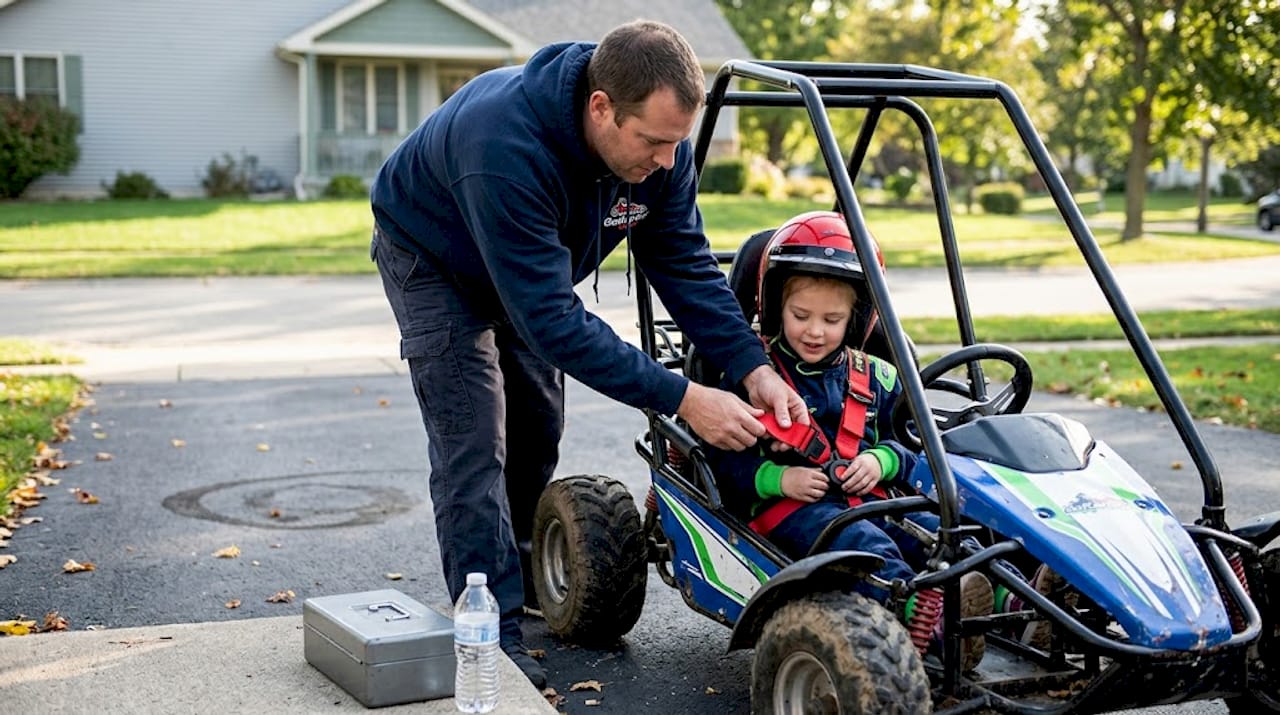
Pro Tip: Before buying, check whether the vehicle includes a speed limiter that you can adjust over time. Starting slow and increasing speed as your child’s skill grows is the single most effective way to prevent accidents in the first year of riding.
Age and skill recommendations at a glance:
- Ages 5 to 7: youth go-karts with speed limiters and parental remotes
- Ages 8 to 12: both options work well; match to the child’s confidence and coordination
- Ages 13 and up: most standard youth minibikes and mid-range go-karts are appropriate
- Beginners of any age: start with go-karts for the stability advantage, as outlined in our beginner go-kart safety guide
Maintenance, accessories, and long-term value
Beyond picking the safest option, families need practical guidance on ownership, so let’s focus on everyday care and value.
Neither vehicle is maintenance-free, and that’s something many first-time buyers underestimate. The good news is that both minibikes and go-karts are relatively straightforward to maintain compared to full-sized powersports vehicles. Staying on top of routine care keeps your ride safe and extends its life significantly. Consistent mini bike maintenance practices can cut mechanical risks by as much as 50%, which is a number worth taking seriously.
Typical maintenance tasks for both vehicle types include:
- Oil changes: every 20 to 25 hours of riding or at the start of each season
- Tire pressure checks: before every ride, especially for go-karts with four contact points
- Chain or belt inspection: look for wear, tension issues, or debris buildup
- Brake checks: test responsiveness before each session, replace pads when worn
- Air filter cleaning: monthly during active riding seasons
- Spark plug inspection: annually or when starting performance drops
Go-karts generally require slightly more attention because of their additional mechanical components, including the steering linkage, four tires, and (on two-seat models) the added frame complexity. Good go-kart maintenance essentials habits make a real difference in how long your kart performs at its best.
When it comes to upgrades, families consistently invest in a few popular additions:
- Engine guards and skid plates: protect the undercarriage during off-road use
- Safety harnesses and upgraded seat belts: especially valuable as kids grow and ride faster
- Lighting kits: essential for evening rides or low-visibility conditions
- Performance air filters and exhaust upgrades: for older kids ready for more power
Exploring upgrading go-kart performance options is a great way to extend the life of a vehicle your child has outgrown in terms of challenge but not in terms of size. The right best go-kart accessories can transform a basic model into a more capable and personalized machine without replacing the whole vehicle.
From a long-term value standpoint, minibikes tend to hold their resale value well because they’re simpler and have fewer components to wear out. Go-karts, especially two-seat family models, often see heavier use and may require more part replacements over time. That said, go-karts grow with your family in a way that a solo minibike simply cannot. If you have multiple kids at different ages, a two-seat go-kart may serve your family longer than a single minibike ever could.
Initial purchase prices for youth models typically range from $400 to $1,200 for minibikes and $600 to $2,000 for go-karts, depending on features and engine size. Factor in protective gear, replacement parts, and seasonal maintenance, and you’re looking at roughly $100 to $300 per year in ongoing costs for either type.
Why the right choice depends on more than just specs
After exploring all the objective differences, it’s time for a candid perspective on making the best personal choice.
We’ve seen families buy the “safer” vehicle on paper and barely use it because it didn’t match how they actually wanted to ride. A go-kart with every safety feature imaginable is only as good as the terrain you have access to. If your property is hilly and trail-heavy, a minibike might actually be the smarter, more practical choice even if the spec sheet makes a go-kart look superior.
Here’s what we believe after years of helping families find their perfect ride: the best vehicle is the one your family will actually use, maintain, and grow with. Think about where you’ll ride most often. Think about how much time you genuinely want to spend on upkeep. Think about whether the thrill of a trail or the fun of a flat track gets your kids more excited. Those answers matter more than engine size or wheel count.
One family’s perfect fit is another family’s underused toy sitting in the garage. A solo minibike might be exactly right for an adventurous 10-year-old who wants independence on the trails, while a two-seat go-kart might be the centerpiece of a family that loves riding together every weekend. Neither is wrong. Context is everything.
Building safer maintenance habits matters no matter which vehicle you choose. But before you even get to maintenance, get honest about your lifestyle. How you plan to ride matters as much as what you ride.
Find your perfect ride at GoKarts USA®
Once you know what matters most for your family, finding the right options is just a click away.
At GoKarts USA®, we’ve built our catalog around one simple idea: every family deserves a ride that fits their adventure. Whether you’re leaning toward a nimble minibike for your trail-loving kid or a feature-packed go-kart for weekend family sessions, we’ve got options that match your safety priorities and your budget.
Browse our full selection at GoKarts USA online shop, where you can filter by age range, safety features, and price. Looking for something rugged and ready for outdoor terrain? Check out the TrailMaster Panther 550 UTV for serious family adventure. For younger riders just getting started, our kids’ mini ATVs offer the perfect balance of safety and excitement. Free shipping, expert support, and a passion for the powersports lifestyle, that’s what we bring to every order.
Frequently asked questions
Which is safer for young kids: a minibike or a go-kart?
Go-karts with roll cages and seat belts generally provide more physical protection for young kids, but minibikes purpose-built for youth can also be very safe with proper supervision and matched skill levels.
What costs more to maintain: a minibike or a go-kart?
Go-karts usually require more frequent and costly maintenance than minibikes, especially as complexity and age increase with heavier family use.
Can adults use minibikes and go-karts designed for kids?
No. Vehicles built for kids are not safe or suitable for adults due to weight and size limitations, as explained in the adult vs. kids vehicle size breakdown.
Which is easier for beginners to learn: a minibike or a go-kart?
Most beginners find go-karts easier because of four-wheel stability and simpler foot pedal controls, while minibikes require active balance from the very first ride.