




TL;DR:
- Proper supervision, safety checks, and equipment are essential to prevent go-kart injuries.
- Youth go-karts with safety features like speed limiters and roll bars are recommended for children.
- Regular maintenance and active parental involvement significantly reduce the risk of accidents.
Not all go-karts are built equally, and not every child is ready for the same machine. If you’re a parent weighing the thrill of giving your kid the freedom of their own kart against the very real worry of injury, you’re asking exactly the right questions. Injuries among young children using go-karts are rising, with incidents reported in kids as young as four years old. That stat alone should make any parent pause and dig deeper. This guide is here to clear the confusion, explain what actually drives safety outcomes, and give you the confidence to make smart, informed choices for your family.
Table of Contents
- Understanding go-kart safety risks for kids
- Choosing the right go-kart: Safety features that matter
- Maintenance and pre-drive checks: Preventing avoidable accidents
- Supervision and training: Building safe drivers from day one
- What most parents get wrong about go-kart safety
- Get safe, kid-approved go-karts and accessories
- Frequently asked questions
Key Takeaways
| Point | Details |
|---|---|
| Know common risks | Accidents are most often caused by inexperience, speed, and mechanical failures. |
| Prioritize safety features | Choose karts with proper size, speed limits, and protective gear tailored to your child’s age. |
| Routine safety checks | A simple pre-ride maintenance habit prevents most mechanical accidents. |
| Supervision matters most | Active adult guidance and clear rules cut accident rates by half for young drivers. |
| Electric karts for beginners | Opt for electric go-karts for their controllability and built-in safety features. |
Understanding go-kart safety risks for kids
Go-karting is genuinely exciting. Watching your child light up behind the wheel for the first time is one of those memories that sticks. But understanding what makes go-karting unique also means understanding where things can go wrong, and why preparation matters so much.
The most common go-kart injuries for kids fall into three main categories:
- Collisions: Often caused by speeding or driver inexperience, these can result in blunt trauma when a child hits a barrier, another kart, or even the steering wheel on hard deceleration.
- Overturns: Lighter karts with a higher center of gravity can tip, especially on uneven terrain or during sharp turns at speed.
- Mechanical failures: Brake failures, loose chains, and steering problems are preventable with proper maintenance but remain a real risk when karts are neglected.
Here’s something that surprises a lot of parents: the setting matters enormously. Private karts used at home or on informal tracks carry significantly more risk than supervised commercial venues. Private karts are riskier than professional tracks for children, partly because the Consumer Product Safety Commission (CPSC) data shows high pediatric emergency room visits linked to recreational use outside supervised environments.
“There are no federal U.S. safety standards specifically governing youth recreational go-karts. That puts the responsibility squarely on parents to fill the gap.”
This isn’t meant to frighten you. It’s meant to empower you. When you know the risks and understand where they come from, you can address them head on. The adventure doesn’t have to come with unnecessary danger. It just requires informed, committed parenting.
With the risks in mind, it’s essential to know how go-kart features influence safety.
Choosing the right go-kart: Safety features that matter
Buying the right kart for your child is one of the most impactful safety decisions you’ll make. Not every kart on the market is designed with kids in mind, and even among youth models, there’s a wide range of safety quality.
For children aged 5 to 10, lower speed go-karts in the 10 to 15 mph range are strongly recommended, matched to your child’s size and skill level. Electric models are safer for beginners, and seat belts along with roll bars should be non-negotiable.
Here’s a quick comparison to help you decide between electric and gas models:
| Feature | Electric karts | Gas karts |
|---|---|---|
| Speed control | Easier to limit and adjust | Harder to restrict precisely |
| Noise level | Quiet, less startling | Louder, more sensory input |
| Maintenance | Simpler, fewer moving parts | More complex, regular upkeep |
| Best for | Beginners, younger children | Older, more experienced riders |
| Emissions | None | Exhaust present |
| Startup | Instant, no priming | Requires pull-start or key |
Beyond the power source, there are specific must-have safety features every parent should verify before buying:
- Seat belts: A proper harness keeps your child secure during sudden stops or turns.
- Roll bars or cages: These protect your child’s head and body if the kart tips.
- Speed limiters: Many youth karts allow parents to cap the top speed electronically or mechanically.
- Proper sizing: A kart that’s too large gives children poor control. Feet should reach the pedals comfortably.
- Chain guards: Exposed chains are a serious pinch and cut hazard. Guards are essential.
Pro Tip: If you’re choosing a kids go-kart for the first time, strongly consider starting with an electric model. The reduced speed variability and simpler operation give young drivers more time to develop awareness and control before graduating to gas-powered karts.
Once you understand which features matter most in a purchase, keeping your go-kart in top condition is the next priority for safety.
Maintenance and pre-drive checks: Preventing avoidable accidents
A safe go-kart on day one can become a hazard by day thirty if it isn’t maintained. Mechanical failures are almost entirely preventable with consistent, simple checks. Think of this as your pre-flight routine, every single ride.
Here are the steps you should complete before every session:
- Inspect the tires. Check for proper inflation and look for cuts or uneven wear. Underinflated tires affect handling significantly.
- Test the brakes. Press firmly before the ride starts. Any sponginess, delay, or grinding sound is a reason to stop and investigate.
- Check steering. Turn the wheel fully left and right while stationary. It should move smoothly without resistance or play.
- Confirm the chain guard is in place. A missing or cracked guard exposes a moving chain that can catch clothing or skin.
- Look for loose bolts or fasteners. A quick visual scan of the frame, seat, and pedal assembly takes less than two minutes and could prevent a serious incident.
- Verify the fuel or battery level. Running out of power mid-ride in an unsafe area is more than just inconvenient.
Regular maintenance on tires, brakes, steering, and chain guards is critical to preventing accidents. Use this table to separate your daily checks from monthly servicing tasks:
| Task | Before every ride | Monthly |
|---|---|---|
| Tire pressure and condition | ✓ | ✓ |
| Brake test | ✓ | ✓ |
| Steering check | ✓ | |
| Chain guard inspection | ✓ | ✓ |
| Chain lubrication | ✓ | |
| Full bolt and frame inspection | ✓ | |
| Battery or fuel system check | ✓ | ✓ |
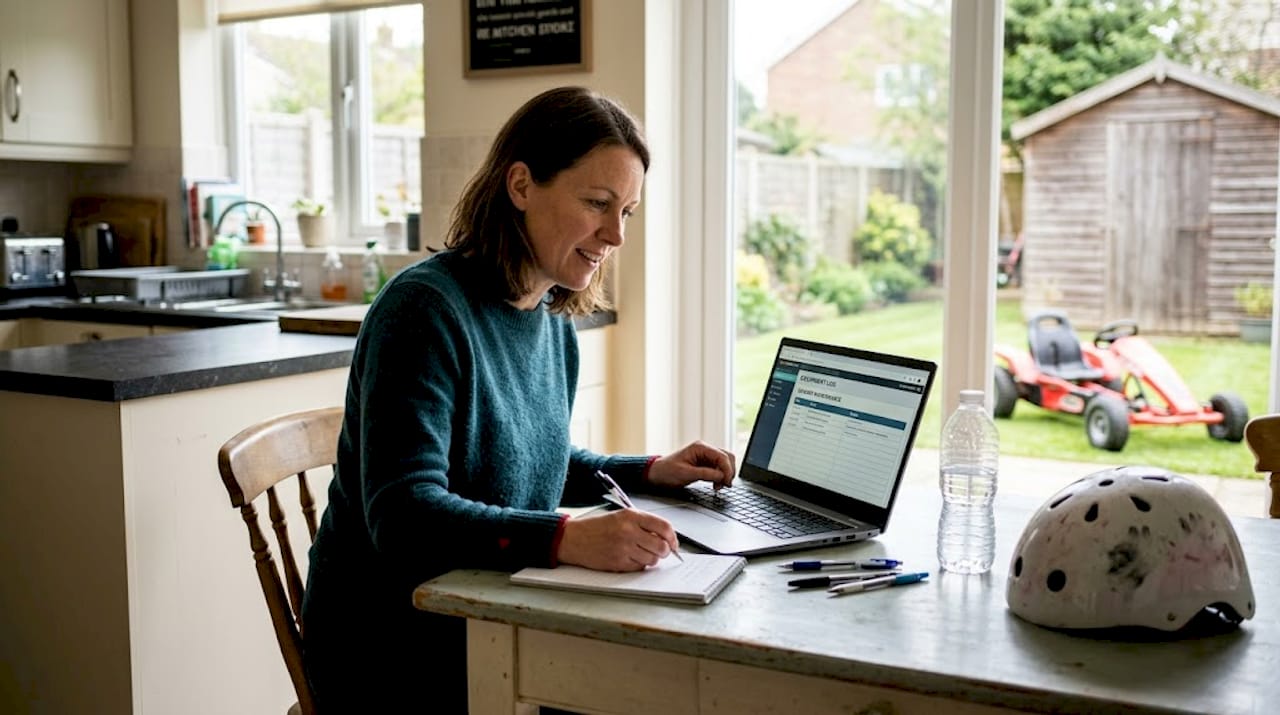
Pro Tip: Keep a simple maintenance log in a notebook or phone app. Record each check with a date. Patterns emerge quickly, and you’ll catch recurring issues like slow tire deflation or soft brakes before they become genuine hazards. This habit is one of the smartest, lowest-cost safety tips for family fun you can adopt.
Safety doesn’t end with the machine. How you supervise and set ground rules is just as important.
Supervision and training: Building safe drivers from day one
Gear and maintenance set the foundation. But the single greatest variable in your child’s go-karting safety is you. Active parental supervision combined with structured training is where the real protection happens.
Effective supervision and training looks like this in practice:
- Always be present during your child’s ride sessions, especially in the early months. Watching from a distance while checking your phone is not supervision.
- Start on flat, open terrain before introducing turns, inclines, or obstacles. Let your child build confidence in a controlled space.
- Teach braking first. Many kids instinctively focus on acceleration. Make stopping the first skill they master.
- Set clear track boundaries and enforce them consistently. Know exactly where your child is allowed to ride.
- Use a helmet and full gear every single ride, no exceptions. The habit established early carries forward for years.
- Debrief after each session. Ask your child what felt hard, what felt good, and what they want to work on next.
Parental supervision and training reduce inexperience-related incidents by 52%. That number is remarkable. More than half of avoidable accidents simply don’t happen when an informed adult is actively involved. That’s not a minor improvement. That’s transformative.
Formal youth karting organizations reinforce this view. Safety rules in organized racing emphasize the spirit of fairness, proper preparation, liability waivers, and specific supervision flags for new drivers. Even at the recreational level, these principles apply directly to backyard and neighborhood riding.
Review our beginner driving tips if your child is just getting started, and explore how youth go-kart safety technology is giving parents more peace of mind than ever before. The tools exist. Using them consistently is what separates a great experience from a preventable one.
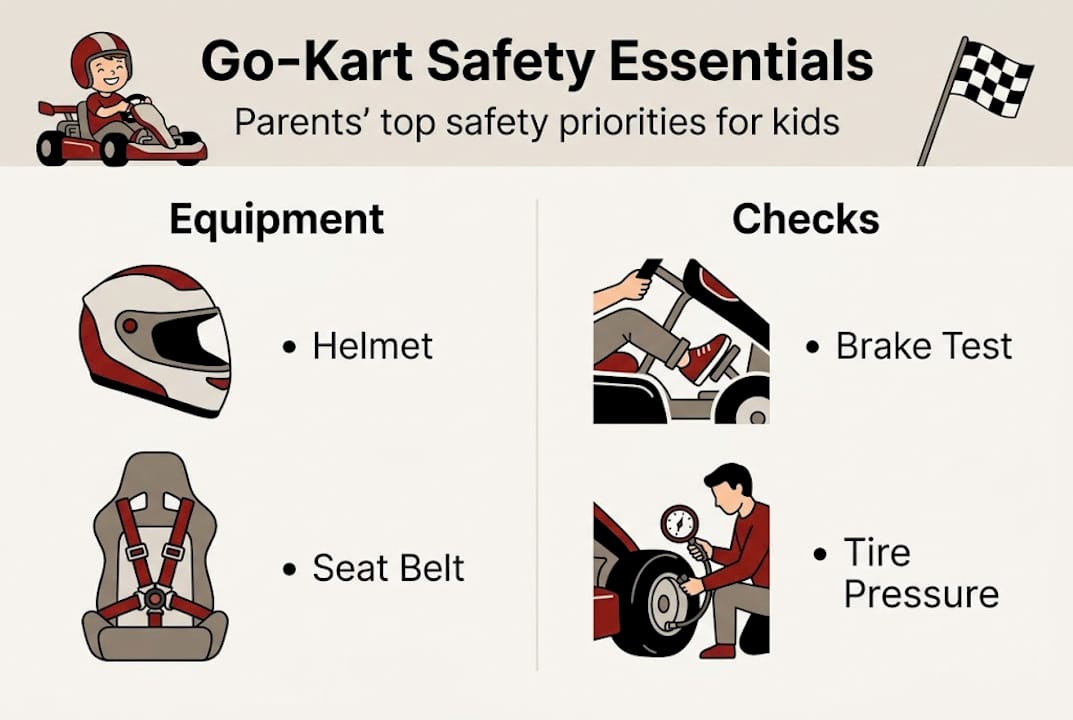
These habits keep your kids safe whether at home or on the track. Let’s pull this all together with a practical outlook.
What most parents get wrong about go-kart safety
Here’s an honest truth we’ve seen play out time and again: most parents buy the gear, suit up their kid, and assume the hard work is done. A quality helmet, a kart with roll bars, the right shoe size on the pedals. Check, check, check. And then they pull out their phone.
Gear matters. We’d never say otherwise. But gear is a passive safeguard. It reduces harm when something goes wrong. It doesn’t prevent the conditions that lead to accidents in the first place. That’s where supervision, attitude, and routine come in.
The uncomfortable truth is that most avoidable accidents happen not because a roll bar was missing, but because an adult was distracted at a critical moment. Kids test limits. They speed up when they think no one is watching. They try that sharp turn they were told to avoid.
Our best advice: involve your child in the pre-ride safety checks. Let them do the brake test. Let them verify the chain guard. When kids own the routine, they respect it. That’s how you build a safe family bonding experience that lasts for years, not just one exciting afternoon.
Get safe, kid-approved go-karts and accessories
If this guide has you ready to take the next step, we’re here to help you find exactly what your family needs. At GoKarts USA, we’ve built our catalog around reliability, safety features, and the kind of quality that lets parents breathe easy while kids have the time of their lives.

From youth-sized karts with built-in speed limiters to fully geared options for older riders, GoKarts USA carries the models we’d recommend to our own families. If you’re exploring options beyond karts, the Mini Sport Kids ATV is a fan favorite that pairs adventure with thoughtful safety engineering. Browse with confidence knowing every product in our lineup is chosen with your child’s protection in mind.
Frequently asked questions
What is the safest age for my child to start go-karting?
Most experts recommend a minimum age of 6-8 for home recreational go-karting, with consistent adult supervision required at all sessions. Starting younger increases injury risk significantly, particularly in unsupervised or uncontrolled environments.
Are electric or gas go-karts safer for kids?
Electric karts are safer for children, especially beginners, because they offer better speed control and simpler handling than gas-powered models. They remove the complexity of engine management, letting young drivers focus entirely on steering and braking.
What maintenance should I do before each ride?
Before every session, check tires, brakes, and steering and confirm the chain guard is securely in place. These five minutes of inspection prevent the majority of mechanical failures that lead to accidents.
Is it safer to use private go-karts at home or attend a professional track?
Professional tracks are generally safer because they provide supervised environments, enforced speed rules, and trained staff on site. Private karts are riskier for children due to the absence of oversight, consistent track conditions, and emergency protocols.
Recommended
- Top Go-Kart Safety Features for Worry-Free Family Fun – GoKarts USA®
- Beginner’s Guide Go Karting: Safe Entry-Level Fun for Kids – GoKarts USA®
- Safe go-kart features for kids: 7 must-haves in 2026 – GoKarts USA®
- What Is a Go-Kart and Why Safety Matters Most – GoKarts USA®
- Få styr på køreteknik: Din guide til praktisk kørekort