




Finding the right go-kart for your child feels overwhelming when safety and sizing dominate your concerns. 25% of kids go-kart returns stem from size or safety mismatches, proving parents need clearer guidance. This guide walks you through sizing, safety features, power options, budgeting, protective gear, purchase steps, common mistakes, and success metrics so you can confidently choose a go-kart balancing safety, size, power, and budget.
Table of Contents
- Introduction And Prerequisites
- Choosing The Right Size And Fit
- Essential Safety Features To Look For
- Power Source Options: Electric Vs Gas
- Budgeting And Value Assessment
- Necessary Protective Gear
- Step-By-Step Purchase And Setup Process
- Common Mistakes And How To Avoid Them
- Expected Outcomes And Success Metrics
- Explore Safe And Durable Kids Go-Karts At Gokarts Usa
- Frequently Asked Questions
Key takeaways
| Point | Details |
|---|---|
| Safety and sizing come first | Proper fit and features like seat belts and roll cages prevent injuries and returns. |
| Electric vs gas affects maintenance | Electric karts suit residential areas with lower upkeep; gas offers longer run times. |
| Budget beyond purchase price | Factor in protective gear, maintenance, and fuel costs for true ownership expenses. |
| Protective gear is mandatory | Helmets, gloves, and pads reduce injury severity and are required before first use. |
Introduction and prerequisites
Before browsing models, measure your child’s height and weight accurately. Go-karts designed for specific ranges ensure safe handling and control. Basic safety features matter from day one: seat belts anchor riders during turns, roll cages protect against rollovers, and speed limiters prevent runaway acceleration.
Set a realistic budget covering the kart, protective gear, and ongoing maintenance. Electric karts fit smaller yards and quiet neighborhoods, while gas models need ventilation and open spaces. Plan storage space for the kart and regular servicing intervals.
Acquire protective gear before delivery:
- Certified helmets meeting DOT or Snell standards
- Padded gloves for grip and impact protection
- Elbow and knee pads to cushion falls
- Closed-toe shoes with ankle support
Having gear ready ensures your child can ride safely the moment the kart arrives.
Choosing the right size and fit
Age recommendations provide starting points, but height and weight determine actual fit. Kids aged 5 to 8 typically ride karts supporting 50 to 80 pounds and speeds under 10 mph. Ages 9 to 12 handle models for 80 to 120 pounds with speeds reaching 15 to 20 mph. Mismatched sizing compromises control: oversized karts strain small hands reaching pedals, while undersized models cramp growing legs.
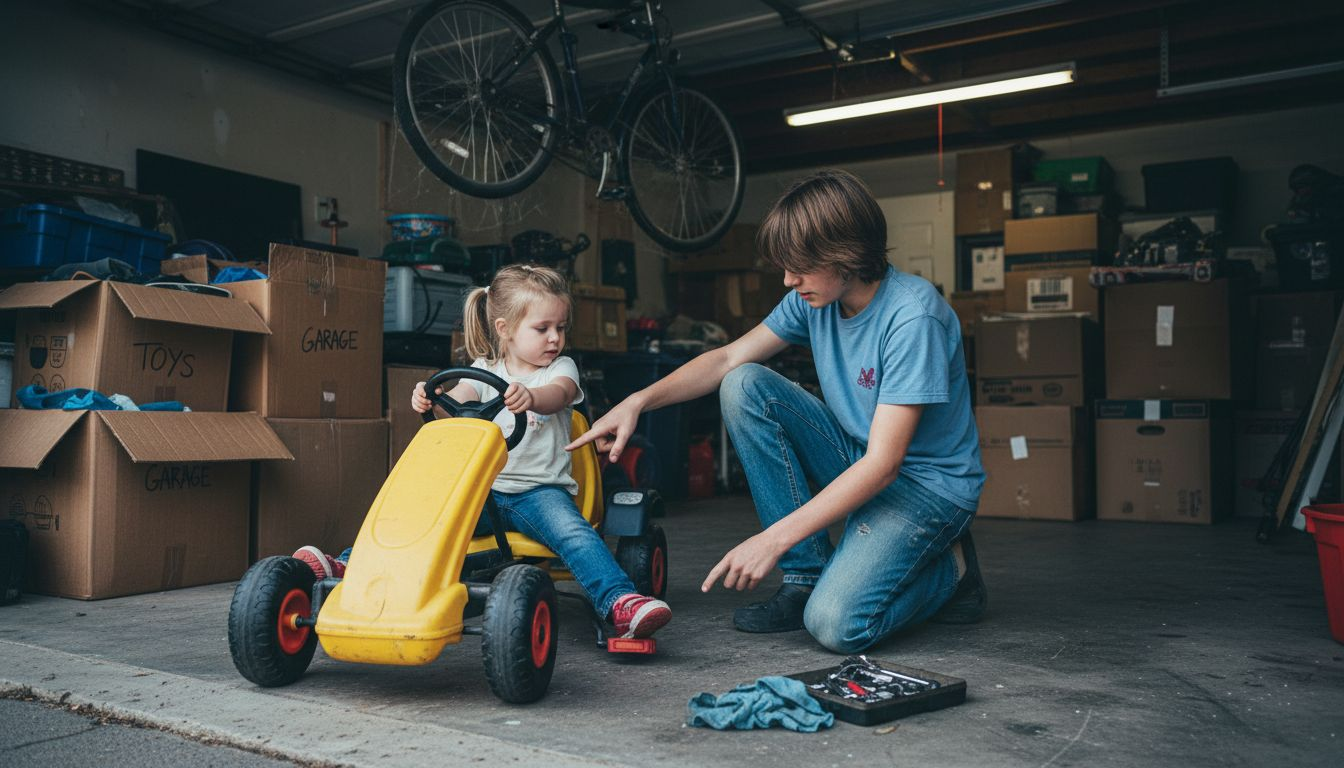
Measure your child standing barefoot against a wall for height, then weigh them on a reliable scale. Match these numbers to manufacturer specifications, not just age labels. Proper fit affects control and safety in kids go-karts, so verify dimensions like seat width, pedal distance, and steering wheel reach.
Typical dimensions by age:
- Ages 5 to 7: 36 to 42 inches tall, 40 to 60 pounds, 10-inch ground clearance
- Ages 8 to 10: 42 to 50 inches tall, 60 to 90 pounds, 12-inch ground clearance
- Ages 11 to 12: 50 to 60 inches tall, 90 to 120 pounds, 14-inch ground clearance
Pro Tip: Test fit before purchase by having your child sit in the kart, checking if feet reach pedals comfortably and hands grip the wheel without stretching.
For detailed sizing guidance, review our choosing go-kart safe buying guide and learn more about what is youth go kart standards.
Essential safety features to look for
Safety components separate toys from serious recreational vehicles. Seat belts and speed limiters cut injury risk by over 40% in kids aged 5-12, making them non-negotiable. Three-point harnesses secure riders better than lap belts, while adjustable speed limiters let parents set maximum velocity as skills develop.
Roll cages constructed from tubular steel absorb impact forces during rollovers or collisions. Steel frames reduce injury risk from rollovers or crashes by 40% compared to plastic alternatives that crack under stress. Frames should wrap around the driver compartment without gaps.
Key features to verify:
- Three-point or five-point harness systems
- Full tubular steel roll cage protecting head and torso
- Adjustable speed limiters from 5 to 20 mph
- Parental remote kill switches for emergency stops
- Low center of gravity preventing tip-overs
- Automatic engine cutoff when driver exits seat
“Modern safety technology transforms kids go-karts from risky toys into controlled learning vehicles that build confidence without compromising protection.”
Parental remote kill switches add an extra layer: you can stop the kart instantly if your child panics or loses control. This feature proves invaluable during early rides when skills are developing.
Explore our go-kart accessories for safety and understand what is a go-kart fundamentals. Learn about youth go-karts safety technology advances. Review go-kart frame safety materials and check go-kart safety statistics for current data.
Power source options: electric vs gas
Choosing between electric and gas power affects maintenance, noise, and operating costs. Electric karts run quieter, produce zero emissions, and require minimal upkeep: charge batteries, check tire pressure, and inspect brakes. They suit residential neighborhoods where noise ordinances limit gas engines.
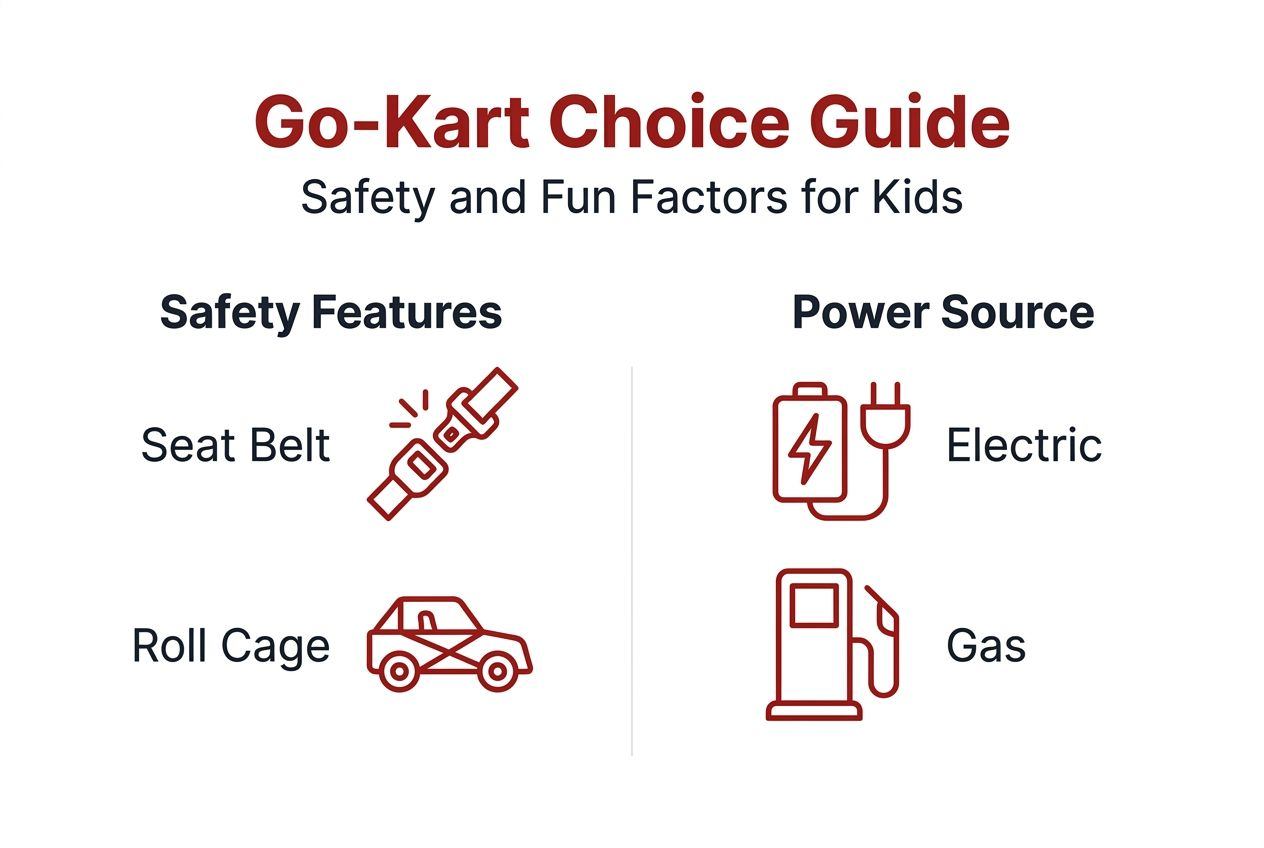
Gas karts deliver longer run times and more power for adventurous riders. A full tank provides 2 to 3 hours of continuous use versus 45 to 90 minutes per battery charge. However, gas engines demand oil changes, spark plug replacements, air filter cleaning, and fuel stabilization during storage.
| Feature | Electric | Gas |
|---|---|---|
| Noise level | Whisper-quiet under 60 dB | 85 to 95 dB requiring hearing protection |
| Maintenance frequency | Quarterly brake and tire checks | Monthly oil changes and filter cleaning |
| Run time per charge/tank | 45 to 90 minutes | 2 to 3 hours |
| Upfront cost | $400 to $1,200 | $500 to $1,500 |
| Operating cost per year | $50 to $100 (electricity) | $150 to $300 (fuel and oil) |
| Emissions | Zero | Moderate exhaust fumes |
Electric models work best for:
- Backyards and paved driveways
- Residential areas with noise restrictions
- Parents wanting minimal maintenance
- Younger children ages 5 to 8
Gas models fit:
- Large properties and off-road trails
- Rural areas without noise concerns
- Older children ages 9 to 12 seeking more power
- Families comfortable with basic engine maintenance
Pro Tip: If you choose electric, invest in a second battery so one charges while the other powers rides, eliminating downtime.
Discover why electric go-karts advantages appeal to many families.
Budgeting and value assessment
Kids go-karts range from $300 entry models to $2,000 professional-grade units. Budget options ($300 to $600) offer basic safety features and lower speeds suitable for beginners. Mid-range models ($600 to $1,200) include better frames, adjustable speeds, and improved suspension. Premium karts ($1,200 to $2,000) feature racing-inspired designs, higher weight limits, and extended warranties.
Beyond purchase price, calculate ongoing expenses:
- Protective gear: $100 to $250 for helmet, gloves, pads, and shoes
- Electric maintenance: $50 to $100 annually for brake pads and tires
- Gas maintenance: $150 to $300 yearly for oil, filters, spark plugs, and fuel
- Replacement parts: $50 to $200 depending on wear and accidents
Value assessment steps:
- Compare warranty coverage (1 to 3 years typical) and what it includes
- Research brand reputation through verified customer reviews on independent sites
- Check availability of replacement parts and local service centers
- Calculate total first-year cost including kart, gear, and maintenance
- Look for seasonal promotions offering free shipping or bundled accessories
Reputable brands provide clear specifications, responsive customer support, and transparent return policies. Avoid ultra-cheap karts lacking safety certifications or replacement part availability. Spending $100 more upfront often saves $300 in repairs and replacements over two years.
Find affordable go-karts tips balancing cost and quality.
Necessary protective gear
Every ride demands proper gear regardless of experience level. Helmets reduce traumatic brain injury risk by 50%, making them the single most important piece of equipment. Choose DOT or Snell certified full-face or open-face helmets fitting snugly without pressure points.
Additional gear protects against scrapes, bruises, and fractures:
- Padded gloves: prevent blisters and cushion hand impacts during falls
- Elbow pads: absorb shock when arms hit ground or kart frame
- Knee pads: protect kneecaps during tip-overs or collisions
- Closed-toe shoes: sturdy sneakers or boots with ankle support prevent foot injuries
Gear should fit properly without restricting movement. Helmets must sit level on the head with the chin strap secured tightly. Pads stay in place during activity without sliding or bunching.
Purchasing options:
- Sporting goods stores offer try-before-buy for proper sizing
- Online retailers provide detailed size charts and return policies
- Go-kart specialty shops bundle gear with kart purchases at discounts
- Used gear works if undamaged and meeting current safety standards
Pro Tip: Replace helmets after any significant impact even if no visible damage appears, as internal protective foam may compress and lose effectiveness.
Inspect gear before each ride for cracks, worn padding, or broken straps. Store equipment in a cool, dry place away from direct sunlight to prevent material degradation. Budget $100 to $250 initially, then $30 to $60 annually for replacements as your child grows.
Step-by-step purchase and setup process
Organized preparation ensures safe first rides and long-term enjoyment. Follow these steps after selecting your kart:
- Verify dimensions match your child’s current measurements, not aspirational growth
- Confirm all safety features function: test seat belts, check roll cage welds, activate speed limiter
- Assemble the kart following manufacturer instructions, double-checking bolt torque specifications
- Adjust seat position so feet rest flat on pedals with slight knee bend
- Set initial speed limit to lowest setting (5 to 8 mph) for first three rides
- Conduct pre-ride safety inspection: tire pressure, brake function, steering response, throttle return
- Equip your child with all protective gear before engine start
- Choose a flat, open area free of obstacles, traffic, and pedestrians for initial practice
- Provide constant adult supervision within 20 feet during first five rides
- Gradually increase speed limits as control and confidence improve over multiple sessions
First-time use checklist:
- All protective gear worn correctly and secured
- Kart inspected with no loose parts or fluid leaks
- Riding area cleared of hazards and marked boundaries
- Adult supervisor present with kill switch or remote control
- Emergency contact information and first aid kit nearby
Supervision requirements vary by age and skill. Children ages 5 to 7 need constant visual contact and immediate intervention readiness. Ages 8 to 10 can ride with supervision from 30 to 50 feet after mastering basic controls. Ages 11 to 12 may ride independently in controlled areas after demonstrating consistent safe operation.
Read our go-kart assembly guide for detailed instructions and review the beginners go-karting guide for skill development tips.
Common mistakes and how to avoid them
Parents often make predictable errors that compromise safety or waste money. Recognizing these pitfalls helps you make smarter decisions.
Ignoring age and weight limits: Manufacturers set these for crash testing and control dynamics. Exceeding limits voids warranties and increases injury risk. Always verify your child fits within specified ranges.
Skipping safety features to save money: Karts lacking seat belts, roll cages, or speed limiters cost less upfront but lead to expensive medical bills or permanent injuries. Never compromise on core safety components.
Underestimating maintenance needs: Gas engines require regular oil changes, filter replacements, and tune-ups. Neglecting maintenance causes breakdowns, reduced performance, and dangerous malfunctions mid-ride.
Buying from unknown brands: Obscure manufacturers often lack replacement parts, customer support, or safety certifications. Stick with established brands offering verifiable reviews and warranty coverage.
Other common errors:
- Allowing rides without full protective gear
- Setting speed limits too high before mastering controls
- Riding on public roads or unsafe terrain
- Storing karts outdoors without weather protection
- Skipping pre-ride safety inspections
Pro Tip: Create a laminated pre-ride checklist your child reviews before every session, building safety habits and personal responsibility.
Avoid these mistakes by researching thoroughly, prioritizing safety over savings, and committing to regular maintenance schedules. Document servicing dates and keep spare parts on hand for quick repairs.
Expected outcomes and success metrics
Measure your purchase success through observable safety and enjoyment indicators. Your child should operate the kart confidently without strain or fear. Full control means smooth starts, steady turns, and controlled stops without abrupt movements or loss of balance.
Safety benchmarks include:
- Zero accidents or injuries during first 20 rides
- Consistent use of all protective gear without reminders
- Respect for established boundaries and speed limits
- Immediate response to adult instructions or stop signals
- Proper shutdown procedures after each session
Performance indicators:
- Kart starts reliably on first attempt
- Brakes stop within designated distance (10 feet at 10 mph)
- Steering responds smoothly without excessive play
- Speed limiter functions at set maximum
- No unusual noises, vibrations, or fluid leaks
| Metric | Target | Measurement Method |
|---|---|---|
| Control proficiency | Smooth operation within 5 rides | Observe turns, stops, starts |
| Safety compliance | 100% gear use | Log each ride with checklist |
| Mechanical reliability | Zero breakdowns first month | Track maintenance and issues |
| Injury rate | Zero incidents first 20 rides | Record any accidents or near-misses |
| Maintenance schedule | Service intervals met | Calendar tracking with reminders |
Regular maintenance ensures long-term performance. Electric karts need quarterly brake and tire checks plus annual battery assessments. Gas models require monthly oil checks, quarterly filter replacements, and seasonal tune-ups.
Success means your child gains skills progressively, respects safety protocols naturally, and enjoys outdoor activity regularly. Families achieving these outcomes report stronger parent-child bonding and increased physical confidence.
Review usage and safety benchmarks for broader vehicle safety principles.
Explore safe and durable kids go-karts at GoKarts USA®
Ready to find the perfect kart for your family? GoKarts USA® specializes in age-appropriate models combining robust safety features with engaging performance. Our selection includes electric and gas options sized specifically for children ages 5 to 12, built with steel frames, adjustable speed limiters, and comprehensive harness systems.

Explore our 200 XRS off-road go kart featuring full roll cage protection and parent-controlled speed settings. The mini sport kids ATV 110cc offers reliable gas power with automatic transmission for easy learning. For younger riders, check the trailmaster storm minibike with its low seat height and beginner-friendly controls.
Every model includes detailed specifications, customer reviews, and transparent pricing. Take advantage of seasonal promotions offering free shipping and complimentary safety accessories. Visit our product pages today to compare features and find your child’s next adventure.
Frequently asked questions
What is the safest age to start kids go-karting?
Children as young as 5 can safely ride go-karts designed for their size with proper supervision and protective gear. Choose models with speed limiters under 10 mph and full safety harnesses. Adult supervision remains essential until age 10 when most kids demonstrate consistent control and judgment.
How do I know if an electric or gas go-kart is better for my child?
Electric karts suit residential areas, younger children (ages 5 to 8), and parents wanting minimal maintenance. Gas karts fit rural properties, older children (ages 9 to 12), and families comfortable with engine upkeep. Consider noise restrictions, available space, and your maintenance commitment when deciding.
What protective gear is absolutely required for beginners?
Every rider needs a certified helmet (DOT or Snell approved), padded gloves, elbow pads, knee pads, and closed-toe shoes with ankle support. Helmets prevent traumatic brain injuries while other gear protects against scrapes and fractures. Never allow rides without complete protective equipment regardless of experience level.
How often should a kids go-kart be maintained?
Electric karts need quarterly brake and tire inspections plus annual battery checks. Gas models require monthly oil level checks, quarterly oil changes and filter replacements, and seasonal tune-ups before heavy use periods. Always conduct pre-ride safety checks covering tires, brakes, steering, and throttle response.
Where can I find verified reviews for kids go-karts?
Check independent review sites like Consumer Reports, manufacturer websites with verified purchase badges, and powersports forums where experienced parents share detailed feedback. YouTube channels dedicated to kids’ outdoor vehicles often provide hands-on testing and long-term ownership updates. Avoid relying solely on retailer sites where reviews may be filtered or incentivized.
Recommended
- How to Choose Go-Kart for Kids: Safe Buying Guide – GoKarts USA®
- Why buy youth go-karts? 40% fewer accidents with safety tech – GoKarts USA®
- Beginner’s Guide Go Karting: Safe Entry-Level Fun for Kids – GoKarts USA®
- 6 Smart Tips for Affordable Go-Karts for Children – GoKarts USA®
- Kid Sailing- Group & Family Sailing Holiday | Sail Armada