




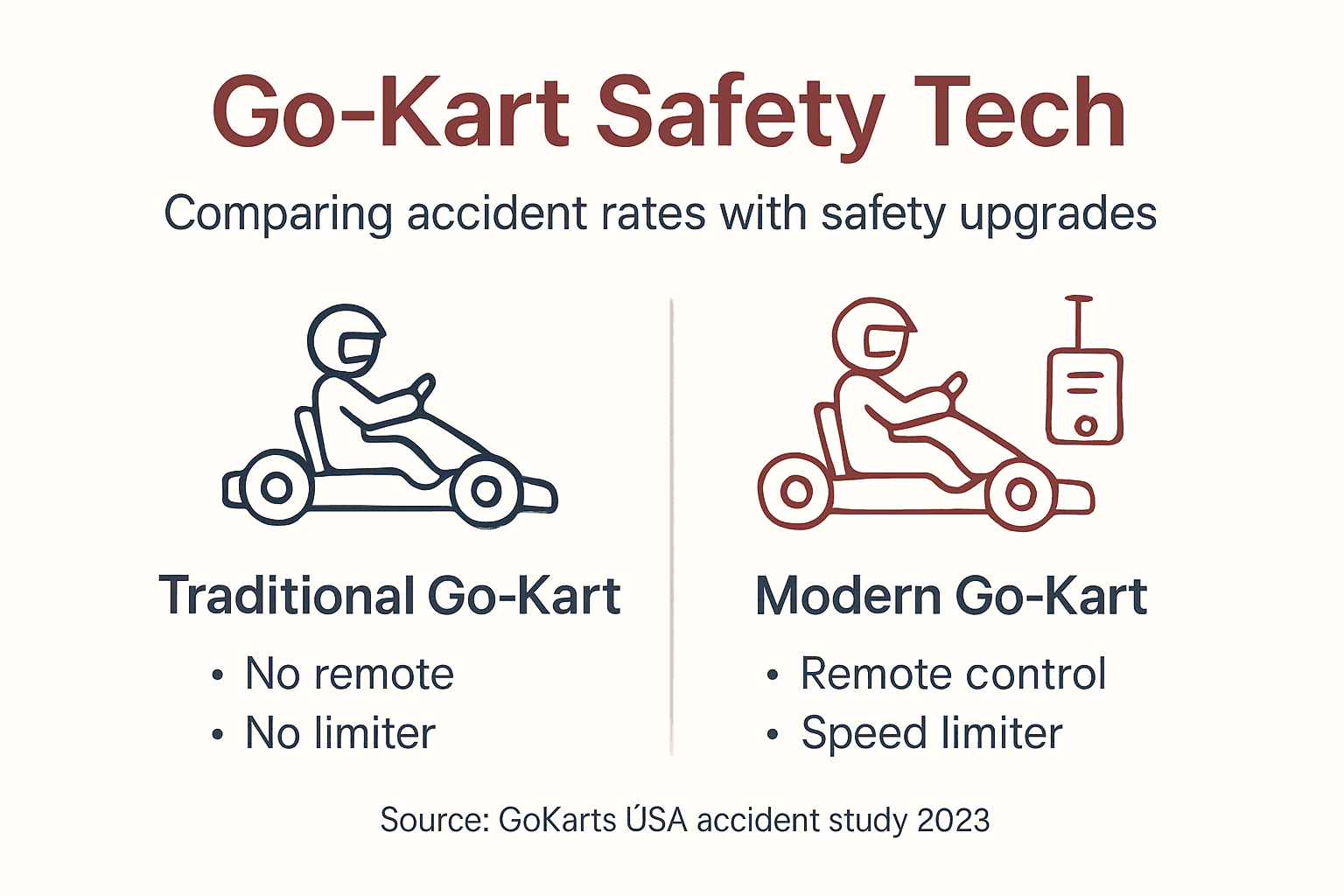
Youth go-karts have surged in popularity, offering families a compelling blend of outdoor fun and child development. Parents today prioritize safety, affordability, and activities that get kids moving, and modern youth go-karts deliver on all fronts. Parental remote control systems reduce youth go-kart accidents by up to 40%, transforming these vehicles into supervised, controlled experiences that build confidence while minimizing risk. Beyond entertainment, youth go-karts enhance motor skills, encourage responsibility, and create meaningful family memories through shared outdoor adventures.
Table of Contents
- Key Safety Features In Youth Go-Karts
- Affordability And Pricing Considerations
- Benefits To Children’s Physical And Social Development
- Common Misconceptions About Youth Go-Karts
- Family Bonding Through Youth Go-Kart Activities
- Making The Right Choice: How To Select A Youth Go-Kart
- Frequently Asked Questions About Youth Go-Karts
Key takeaways
| Point | Details |
|---|---|
| Safety technology works | Parental remote controls and speed limiters cut accident rates by 40%, making youth go-karts safer than many assume. |
| Affordable family fun | Priced between $600 and $1500, youth go-karts cost less than ATVs while delivering comparable outdoor recreation value. |
| Developmental benefits | Go-karting improves hand-eye coordination, spatial awareness, and social skills through active outdoor play. |
| Myths debunked | Certified youth go-karts have injury rates under 5 per 100,000 users annually, contradicting common safety fears. |
| Smart selection matters | Matching go-kart specifications to your child’s age, size, and skill level maximizes safety and enjoyment. |
Key safety features in youth go-karts
Modern youth go-karts incorporate engineering advances that directly address parental safety concerns. Understanding these features helps you distinguish between basic toys and serious recreational vehicles designed with child protection in mind.
Parental remote control systems reduce youth go-kart accidents by up to 40% by giving adults override authority. These wireless controls let you stop the vehicle instantly if your child veers toward hazards or loses control. Speed limiters complement this by capping maximum velocity based on driver experience, typically offering three preset levels that grow with your child’s skills.
Critical protective components include:
- Four-point safety harnesses that secure young drivers during sudden stops or tight turns
- Reinforced roll cages and impact-resistant chassis that protect against collisions
- Low center of gravity designs that prevent rollovers on uneven terrain
- Adjustable seat positions that ensure proper reach to pedals and steering
- Emergency kill switches within easy reach for quick shutdowns
Battery-powered models offer additional advantages over gas engines. They run quieter, eliminating the roar that can startle young drivers and neighbors. Zero emissions mean safer operation in enclosed spaces like garages during storage. Electric motors also provide smoother acceleration without the jerky power delivery that can surprise inexperienced operators.
Look for must-have go-kart safety accessories beyond the vehicle itself. Helmets rated for motorsports, not bicycles, protect against head injuries. Proper certifications matter too. ASTM F2048 and CPSC compliance indicate manufacturers followed rigorous testing protocols for materials, construction, and performance.
Pro Tip: Before your child’s first ride, walk through emergency procedures together. Practice using the kill switch and demonstrate how the parental remote works. This preparation builds confidence and ensures everyone knows how to respond if situations require quick intervention.
Following a safe go-kart assembly guide ensures all safety components function correctly from day one. Double-checking bolt torque, harness attachment points, and brake responsiveness prevents mechanical failures that compromise protection. Starting with proper setup establishes safe habits that carry through every ride.
Affordability and pricing considerations
Budget constraints influence every family purchase, and youth go-karts deliver exceptional value compared to alternative powered recreational vehicles. Understanding the complete cost picture helps you make financially sound decisions that fit your family’s resources.
Youth go-karts typically cost between $600 and $1500, positioning them as accessible options for middle-income families. Entry-level battery-powered models start around $600 with essential safety features intact. Mid-range options between $900 and $1200 add enhanced motors, better suspension, and more robust construction. Premium youth models approaching $1500 include advanced controls, longer battery life, and heavy-duty components for extended use.
Beyond purchase price, factor in:
- Safety gear like helmets ($50-$150), gloves ($20-$40), and protective padding ($30-$60)
- Replacement batteries for electric models every 2-3 years ($80-$200)
- Basic maintenance supplies including tire sealant, chain lubricant, and cleaning products ($50 annually)
- Optional upgrades such as better tires or upgraded seats as children grow
Comparing costs reveals youth go-karts’ competitive positioning:
| Vehicle Type | Average Price | Annual Operating Cost | Safety Features |
|---|---|---|---|
| Youth Go-Kart | $600-$1500 | $100-$200 | Speed limiters, remote controls, harnesses |
| Youth ATV | $1800-$3500 | $300-$500 | Roll protection, throttle limiters |
| Electric Scooter | $300-$800 | $50-$100 | Basic brakes, limited speed |
| Dirt Bike (Youth) | $1500-$4000 | $400-$700 | Protective gear required, throttle control |
Battery-powered go-karts often cost less to operate than gas models. Electricity for charging runs about $0.50 per full charge versus $3-$5 for gas tank fills. Electric motors require less maintenance without oil changes, spark plug replacements, or carburetor cleaning. However, gas models offer longer continuous run times before refueling, which matters for extended play sessions.
Pro Tip: Calculate total first-year costs including the go-kart, all required safety gear, and basic maintenance supplies. This complete picture prevents budget surprises and ensures you’re financially prepared before purchasing. Many families find setting aside $100-$150 annually for upkeep keeps their go-kart running smoothly.
The go-kart affordability guide explores financing options and seasonal sales that further reduce upfront costs. Spring promotions often include free accessories or shipping, effectively lowering total investment by 10-15%.
Benefits to children’s physical and social development
Youth go-karts deliver developmental advantages that extend far beyond simple entertainment. These vehicles become tools for building skills that serve children throughout their lives.
Youth go-karts encourage increased outdoor play and enhance coordination and spatial skills among children, countering sedentary screen time that dominates modern childhood. Operating a go-kart requires continuous physical engagement. Steering demands arm strength and fine motor control. Managing pedals builds leg coordination and teaches gradual pressure application rather than all-or-nothing reactions.
Specific developmental gains include:
- Hand-eye coordination improves as children learn to align steering inputs with visual targets and navigate courses
- Spatial awareness develops through judging distances, understanding turning radiuses, and avoiding obstacles
- Reaction time sharpens when responding to terrain changes or unexpected situations
- Core strength increases from maintaining balance and posture during rides
- Decision-making skills grow through route planning and speed management choices
Social benefits emerge when children ride together or participate in family go-karting. Shared activities create natural conversation opportunities and bonding moments. Kids learn to take turns, respect others’ space, and follow group safety rules. These interactions build communication skills and emotional intelligence in low-pressure, fun environments.
Responsibility lessons accompany go-kart ownership. Children who help with maintenance tasks like battery charging, tire pressure checks, and cleaning develop work ethic and mechanical understanding. Pre-ride safety inspections teach systematic thinking and attention to detail. Following operational rules reinforces that freedom comes with accountability.
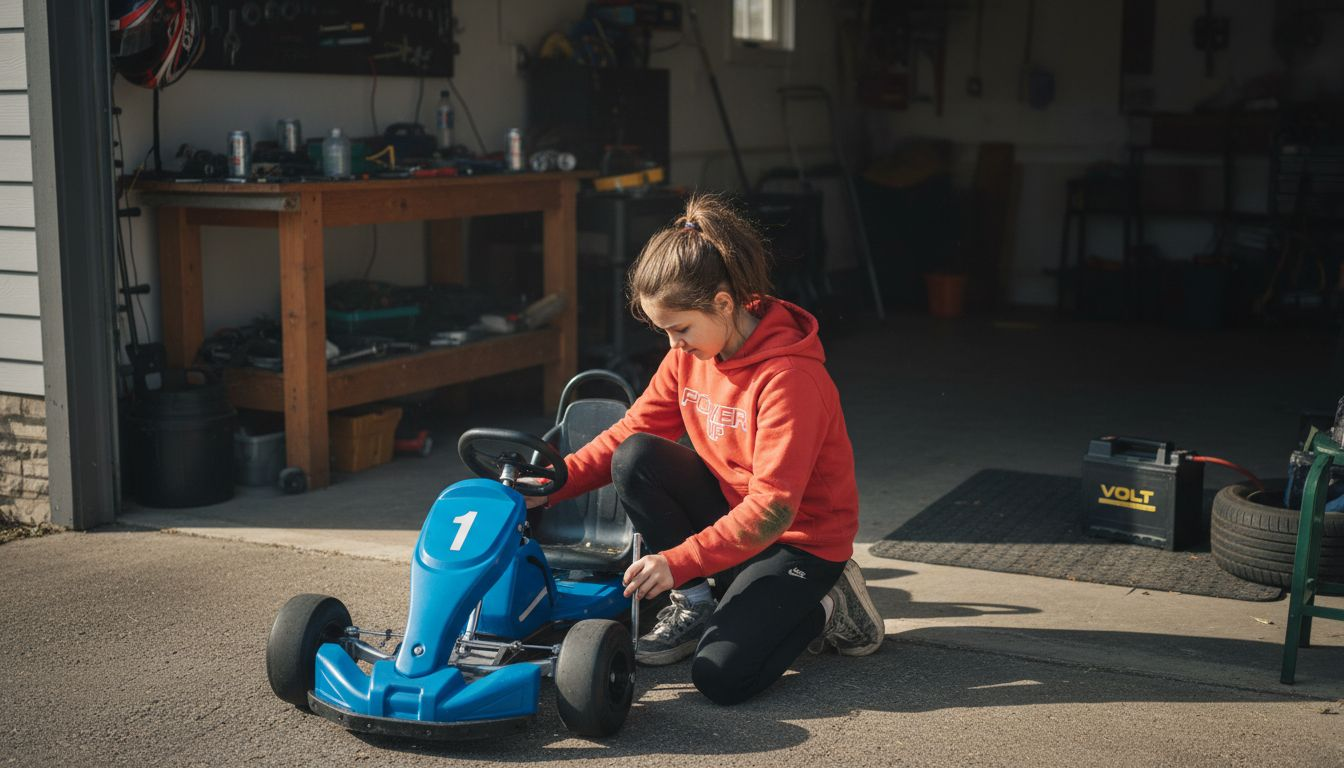
The go-karts and child development connection shows how active play combats childhood obesity and establishes healthy lifestyle patterns. Thirty minutes of go-karting provides moderate cardiovascular activity comparable to brisk walking, but feels like pure play rather than exercise. This positive association with physical activity often carries into adolescence and adulthood.
Common misconceptions about youth go-karts
Misunderstandings about youth go-karts prevent many families from exploring these beneficial vehicles. Addressing these myths with facts helps parents make informed decisions based on evidence rather than assumptions.
-
Myth: All youth go-karts are inherently dangerous. Reality shows certified youth go-karts have injury rates under 5 per 100,000 users annually, lower than bicycles, skateboards, or trampolines. Proper supervision and safety equipment make go-karting exceptionally safe.
-
Myth: Gas-powered go-karts are always superior and safer. Battery-powered models actually offer smoother, more controllable acceleration perfect for beginners. Electric motors eliminate hot exhaust components and fuel spill risks while running quieter to reduce auditory stress.
-
Myth: Go-karts encourage reckless behavior in children. Structured introduction with clear rules and parental involvement teaches responsibility instead. Speed limiters and remote controls let parents enforce safe practices while children develop judgment and self-control.
-
Myth: Youth go-karts cost too much for average families. Models starting at $600 deliver quality and safety features, and operational costs remain minimal compared to other powered toys. The years of use and developmental benefits provide strong return on investment.
-
Myth: Go-karts require professional racing tracks. Most youth models work perfectly in backyards, parks, or neighborhood streets with proper adult supervision. Designated riding areas don’t need special surfaces, just adequate space free from traffic and major hazards.
Understanding these realities through resources like the go-kart safety explained guide helps parents see youth go-karts as the safe, affordable recreation options they truly are. Fear based on misconceptions shouldn’t prevent families from activities that build skills and create memories.
Family bonding through youth go-kart activities
Youth go-karts create unique opportunities for families to connect through shared experiences that differ from typical screen-based entertainment. These activities build relationships while teaching valuable life skills.
Youth go-kart activities increase parent-child interaction and create community opportunities by providing structured yet flexible recreation time. Parents naturally become instructors and supervisors, opening communication channels as they teach steering techniques, safety protocols, and vehicle care. These teaching moments feel collaborative rather than authoritarian because they’re wrapped in fun.
Shared go-karting experiences strengthen family bonds through:
- Quality time outdoors away from household distractions and digital devices
- Cooperative problem-solving when planning courses or addressing mechanical issues
- Celebrating achievements together as children master new skills
- Creating traditions around regular riding sessions or seasonal go-karting outings
- Building trust as parents demonstrate confidence in their children’s growing abilities
Parents gain chances to model safe decision-making and responsible vehicle operation. Children observe how adults assess risks, follow rules, and handle equipment with care. These demonstrations teach more effectively than lectures because kids see principles in action.
Community connections expand when families join local go-karting groups or informal neighborhood riding clubs. Children develop friendships with peers who share their interests. Parents network with other families facing similar parenting challenges and recreational interests. These social circles often extend beyond go-karting into broader community involvement.
The family bonding with go-karts approach works because it combines physical activity, skill development, and relationship building into single activities. Unlike passive entertainment, go-karting requires engagement from everyone involved, naturally creating interaction and shared memories that families treasure for years.
Making the right choice: how to select a youth go-kart
Selecting the optimal youth go-kart requires matching vehicle specifications to your child’s current abilities while allowing room for growth. Strategic choices maximize safety, longevity, and family satisfaction.
Following age and size recommendations aligned with safety certifications helps choose appropriate youth go-karts that fit your child’s physical development. Manufacturers provide age ranges and weight limits for good reasons. A six-year-old lacks the reach and strength to control a go-kart designed for twelve-year-olds, creating dangerous situations regardless of supervision.
Start your selection process with these critical factors:
- Child’s age and physical size: Measure height and weight, then compare against manufacturer specifications to ensure proper fit and control capability
- Experience level: First-time drivers need simpler controls and lower top speeds than children with prior go-kart or vehicle operation experience
- Riding environment: Flat backyards suit basic models while hilly terrain requires better suspension and more powerful motors
- Supervision availability: Children with constant adult presence can handle more advanced features than those riding semi-independently
Comparing power types helps narrow choices:
| Feature | Battery-Powered | Gas-Powered |
|---|---|---|
| Best For | Beginners, younger children (ages 5-10) | Experienced riders, older children (ages 10+) |
| Top Speed | 8-15 mph (adjustable) | 15-30 mph |
| Run Time | 40-60 minutes per charge | 2-4 hours per tank |
| Noise Level | Very quiet operation | Moderate engine noise |
| Maintenance | Minimal (battery replacement every 2-3 years) | Regular (oil, spark plugs, fuel system) |
Prioritize these non-negotiable safety elements:
- Certification labels from ASTM, CPSC, or equivalent safety organizations
- Working parental remote control with adequate range (minimum 100 feet)
- Adjustable speed settings that start slow and increase as skills develop
- Four-point harness system with quick-release capability
- Functional roll cage or reinforced frame protecting driver compartment
Pro Tip: Visit retailers to let your child sit in different models before purchasing. Check whether they can comfortably reach pedals, see over the steering wheel, and operate controls without stretching. Proper fit matters more than impressive specifications for ensuring safe, enjoyable experiences.
Avoid common selection mistakes like buying overpowered models hoping children will “grow into them.” Vehicles that exceed current abilities create frustration and danger. Starting with appropriate equipment builds confidence and skills that make upgrading natural when the time comes. The safe go-kart selection tips and youth go-kart age guidelines provide detailed matching criteria for every stage of child development.
Explore safe, affordable youth go-karts at GoKarts USA®
Finding the right youth go-kart becomes simple when you work with specialists who understand both child development and vehicle safety. GoKarts USA® combines extensive product selection with expertise that helps families make confident decisions.

Our catalog features youth go-karts with the parental controls, speed limiters, and safety certifications this article highlights. Models span entry-level battery-powered options perfect for beginning riders through advanced designs that challenge experienced young drivers. Every product listing includes detailed specifications, age recommendations, and safety feature descriptions so you can compare options systematically.
GoKarts USA® provides resources beyond product sales. Our beginner’s guide to safe go-karting walks you through first-time setup, operation basics, and supervision strategies. Explore why choose go-karts for family fun to understand broader benefits these vehicles deliver. Budget-conscious families appreciate our go-kart affordability tips that identify value without sacrificing safety or quality. Customer support specialists answer questions about model selection, safety equipment, and maintenance to ensure your family’s go-karting success from day one.
Frequently asked questions about youth go-karts
What age is appropriate to start using a youth go-kart?
Most children can safely operate youth go-karts starting at age five with proper supervision and appropriately sized models. Battery-powered go-karts with parental remote controls work best for beginners ages five to eight, while children nine and older may handle more advanced features if they demonstrate responsibility and coordination.
How do parental remote controls work and improve safety?
Parental remote controls use wireless signals to override the go-kart’s throttle and braking systems from up to 100-150 feet away. Parents can reduce speed or stop the vehicle completely if children approach hazards, lose control, or ignore instructions. This technology reduces accident rates by 40% compared to unsupervised youth go-kart operation.
Are battery-powered go-karts safer than gas-powered ones?
Battery-powered models offer several safety advantages for younger children including quieter operation that reduces startling, smoother acceleration that’s easier to control, and elimination of hot exhaust components or fuel spill risks. Gas-powered go-karts suit older, more experienced riders who can handle their greater power and longer run times responsibly.
What are typical maintenance needs for youth go-karts?
Battery-powered go-karts require charging after each use, tire pressure checks monthly, and battery replacement every two to three years. Gas models need oil changes every 20 hours of operation, spark plug replacement annually, and periodic chain lubrication. Both types benefit from regular cleaning and pre-ride safety inspections checking brakes, steering, and harness function.
Can youth go-karts be used safely in neighborhoods or parks?
Yes, with proper precautions. Choose areas away from vehicle traffic, pedestrians, and major obstacles. Flat spaces like empty parking lots, large backyards, or designated recreational areas work well. Always maintain direct supervision, ensure children wear helmets and protective gear, and establish clear boundaries for riding zones before each session.