




Every parent faces the challenge of finding safe, affordable ways to get their children outdoors and moving. Entry-level go-karts offer a unique solution, blending straightforward engineering with fun and safety. These compact vehicles are designed for easy operation, simple maintenance, and cost-effective ownership, making them ideal for families new to outdoor motorsports. Discover how their basic design, accessible controls, and built-in safety features create lasting memories without complicated upkeep or high costs.
Table of Contents
- What Makes Entry-Level Go-Karts Unique
- Types of Entry-Level Go-Karts Available
- Essential Safety Features and Standards
- Comparing Costs and Value for Families
- Common Pitfalls When Choosing Go-Karts
Key Takeaways
| Point | Details |
|---|---|
| Entry-Level Go-Karts Are Family Friendly | These karts prioritize ease of use, safety, and affordability, making them ideal for families. |
| Three Main Types to Consider | Choose between Sprint, Endurance, and Off-Road karts based on your family’s preferences and intended use. |
| Safety Features Are Crucial | Ensure the go-kart adheres to safety standards like ASTM F2011 for the protection of all drivers. |
| Total Cost of Ownership Matters | Consider not only the initial price but also long-term maintenance and operational costs when selecting a go-kart. |
What Makes Entry-Level Go-Karts Unique
Entry-level go-karts stand apart from other recreational vehicles because they’re built on simplicity without sacrificing fun. These machines focus on what matters most: delivering an accessible, thrilling experience for families just getting started. Unlike their competitive racing cousins, entry-level models prioritize ease of use, affordability, and safety for drivers of all skill levels.
The magic behind entry-level go-karts lies in their straightforward design. Lightweight chassis construction eliminates unnecessary complexity while maintaining structural strength. These karts feature basic mechanical principles that make maintenance simpler and repairs less expensive than advanced models. You won’t find complicated suspension systems or differential components—just the essentials that keep your family rolling.
What really sets them apart is their cost-effectiveness. Entry-level go-karts cost a fraction of what serious racing equipment demands, making them perfect for families testing the waters. This affordability means you can invest in the experience without breaking the bank.
These vehicles share several defining characteristics:
- Small displacement engines that deliver reliable, manageable power
- Rigid frame designs that balance strength with responsive handling
- Compact sizing for easy storage and transportation
- Ergonomic layouts that accommodate different driver sizes
- Straightforward controls that new drivers master quickly
Safety is built into the DNA of entry-level design. Standardized safety rules guide their construction, and their simple mechanics mean fewer things can malfunction during your outing. Parents appreciate this reliability when kids are behind the wheel.
Entry-level go-karts also serve as excellent learning platforms. Because they lack complex systems, drivers focus entirely on developing fundamental skills rather than managing technical adjustments. This makes them ideal for teaching proper racing techniques and building confidence without overwhelming newcomers.
The driving experience feels responsive and direct. Without suspension cushioning every bump, you feel connected to the track—this connection teaches smooth inputs and smooth lines. Beginners develop better instincts faster on these simpler machines.
Entry-level go-karts prove that you don’t need complex engineering to create pure driving enjoyment and lasting family memories.
Pro tip: When evaluating entry-level models, look for karts with adjustable seats and steering wheel positions—your family members likely have different heights, and proper positioning keeps everyone comfortable and in control.
Types of Entry-Level Go-Karts Available
Entry-level go-karts come in several distinct varieties, each designed for different family preferences and driving environments. Understanding your options helps you choose the right machine for your household’s needs and skill level. Most families find one of these three main categories perfectly suited to their goals.
Sprint karts represent the most common entry-level choice for families wanting track-based fun. These machines feature lightweight frames and simple 2-stroke or 4-stroke engines that deliver manageable power for beginners. They’re built for short track racing sessions where responsive handling and quick acceleration create the excitement families crave.
Sprint karts excel at teaching driving fundamentals because they reward smooth inputs and penalize abrupt steering. Kids learn racing lines naturally, and parents enjoy watching them develop actual driving skills. These karts accelerate quickly enough to feel thrilling without becoming dangerous.
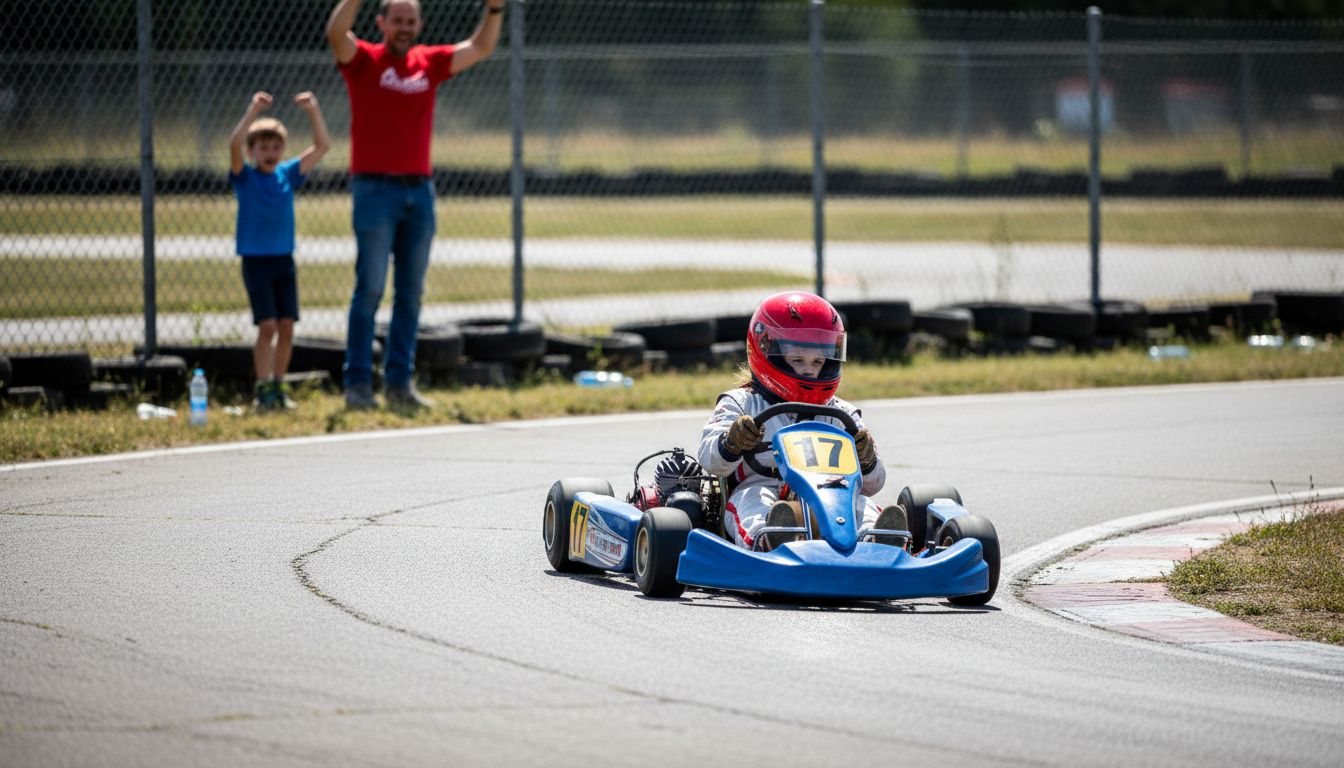
Endurance karts take a different approach, prioritizing durability over raw speed. Reinforced chassis designs keep them running reliably through longer sessions or multiple family outings back-to-back. These machines handle extended use without fatigue, making them ideal for families planning regular weekend adventures.
Endurance models cost slightly more upfront but reward you with fewer maintenance headaches. You’ll replace parts less frequently, and repairs tend to be simpler when they’re needed. They’re workhorses that just keep performing.
Off-road recreational karts open entirely different terrain possibilities for adventurous families. These machines incorporate suspension systems and aggressive tire treads designed for uneven ground, dirt tracks, and natural landscapes. Off-road karts transform your available play areas from just manicured tracks to forests, fields, and backcountry trails.
Here’s how these three types compare:
- Sprint karts: Speed-focused, track-only, lightweight, most affordable
- Endurance karts: Durability-focused, extended session reliability, reinforced frames
- Off-road karts: Terrain-versatile, suspension-equipped, adventure-ready, rougher terrain capability
Electric karts deserve special mention for families prioritizing quiet operation and minimal emissions. Battery-powered models deliver instant torque and surprisingly quick acceleration while keeping noise levels neighborhood-friendly. Charging times are manageable, and operating costs stay low.
Most families fall into one of these patterns: those wanting pure racing thrills gravitate toward sprint karts, those wanting dependable weekend fun choose endurance models, and adventurous families drawn to exploring nature prefer off-road options. Your budget, available space, and driving environment determine which fits best.
The right entry-level go-kart matches your family’s personality—whether that’s track-focused thrills, reliable weekend sessions, or off-road adventure.
Pro tip: Consider renting different types before buying to let family members experience sprint, endurance, and off-road karts firsthand, ensuring everyone’s excited about your eventual purchase.
Here’s a comparison of entry-level go-kart types to help choose based on family goals:
| Kart Type | Best For | Power Source | Distinct Strength |
|---|---|---|---|
| Sprint | Track-based lessons | 2-stroke/4-stroke | Teaches racing fundamentals |
| Endurance | Regular long sessions | Mostly gas-powered | Superior durability |
| Off-road | Outdoor exploration | Gas or electric | Handles rough terrain |
| Electric | Neighborhood use | Battery electric | Quiet, low maintenance |
Essential Safety Features and Standards
Safety isn’t an afterthought when buying entry-level go-karts—it’s the foundation of responsible family fun. Quality machines follow established guidelines that protect drivers without compromising the thrilling experience families crave. Knowing what safety features matter helps you make confident purchasing decisions.
Entry-level go-karts fall under voluntary safety standards that manufacturers use to guide responsible design. The ASTM F2011 standard provides comprehensive guidelines addressing speed limits, mechanical safety, structural integrity, and operator protection requirements. While not always legally mandatory, adherence to these standards represents best practice in the industry.
Quality entry-level karts include several critical safety components working together to protect your family.
Remote engine cut-off systems let you stop the kart instantly from outside the vehicle. This feature proves invaluable if a driver loses control or freezes up—you regain control without physical intervention.
Driver restraint systems keep operators safely seated during aggressive maneuvers. Proper harnesses prevent ejection and keep children centered in the seat, maintaining stability and control.
Enclosed body designs shield drivers from moving parts and debris while distributing impact forces during minor collisions. Full-body enclosure also protects against weather and flying objects on outdoor tracks.
Structural design standards ensure the frame absorbs impact energy without collapsing. A well-engineered chassis balances rigidity with controlled flex, protecting the driver compartment in minor accidents.
Critical safety features to verify:
- Remote emergency engine shut-off accessible to supervisors
- Multi-point harness systems rated for impact forces
- Enclosed body with protective bumpers front and rear
- Speed governors limiting maximum velocity for the driver’s age
- Responsive braking systems with adequate stopping power
- Rollover protection bars for off-road models
- Helmet mounting compatibility and padding
Speed governors deserve particular attention for families with younger drivers. These mechanical limiters prevent acceleration beyond safe thresholds, letting kids develop skills without excessive velocity.
Proper protective gear complements built-in safety features. Every driver needs an approved helmet, neck brace, gloves, and long sleeves—no exceptions. Protective equipment catches injuries before they reach skin and bone.
Manufacturers serious about safety comply with standards voluntarily because they understand liability and responsibility. Brands adhering to ASTM guidelines demonstrate commitment to family protection beyond legal minimums.
A safe go-kart feels fast without being reckless, protecting your family while delivering genuine excitement.
Pro tip: Before purchasing, request documentation confirming the kart meets ASTM F2011 standards and ask about the manufacturer’s safety testing results—reputable sellers provide this information readily.
Comparing Costs and Value for Families
Budget matters when buying entry-level go-karts, but smart families look beyond sticker price to understand true cost of ownership. The initial purchase is just one piece—fuel, maintenance, repairs, and storage add up quickly. Understanding the complete financial picture helps you make decisions that won’t drain your bank account.
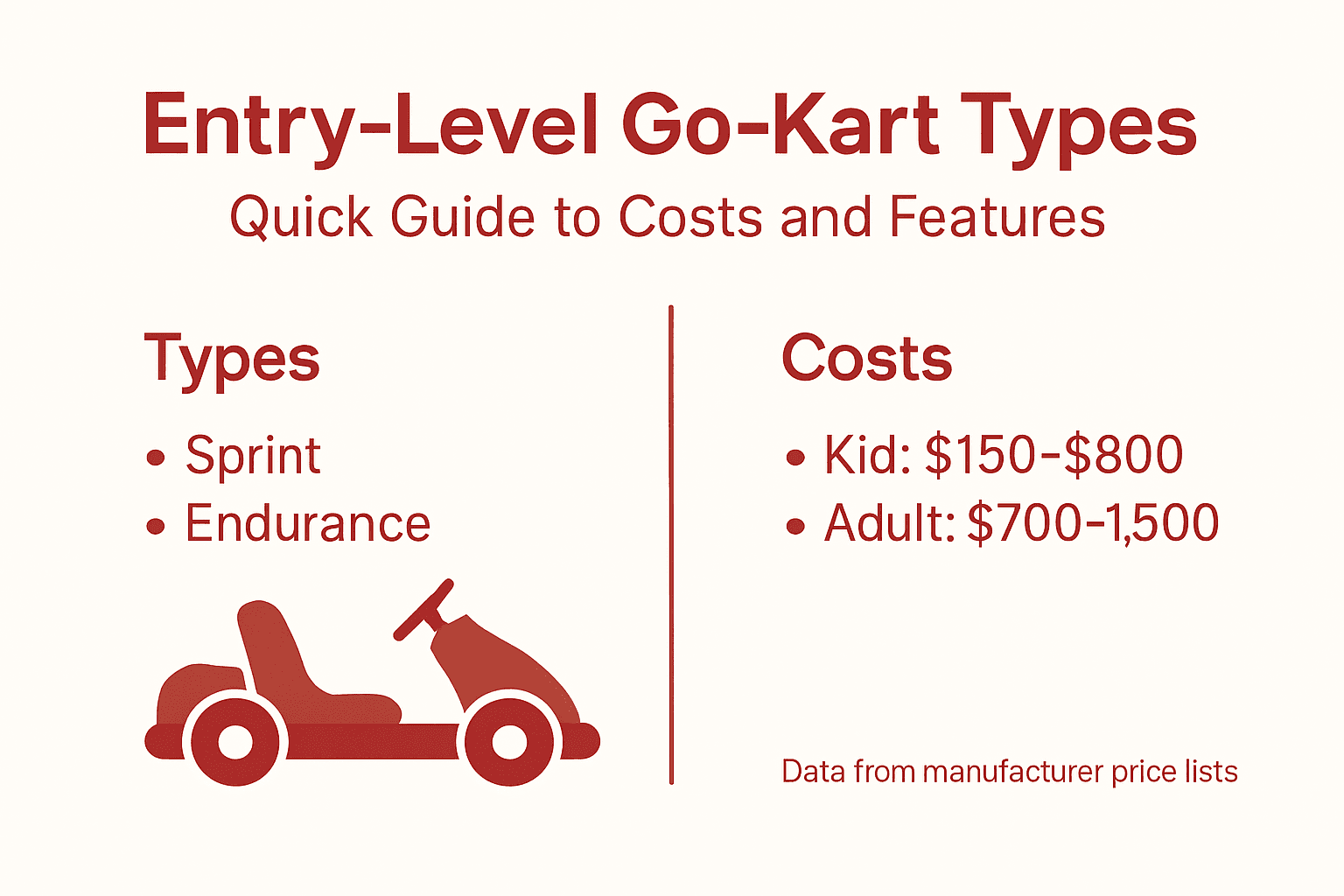
Entry-level go-kart prices vary significantly based on type and features. Kid models typically range from $150 to $800, while hobby-level gas or electric karts cost between $500 to $2,500. Youth and off-road recreational models settle around $600 to $3,000 depending on power and durability features. Your family’s budget and intended use determines which range makes sense.
Operational costs extend far beyond fuel or electricity. Maintenance and repair expenses represent the hidden budget drain most families underestimate. Regular upkeep, replacement parts, seasonal storage, and transportation to tracks all accumulate throughout ownership.
Gas-powered karts typically cost less upfront but demand more ongoing maintenance. You’ll replace spark plugs, air filters, and fuel system components regularly. Oil changes, belt adjustments, and wear parts add to your annual expense.
Electric karts flip this equation—higher initial cost with lower operating expenses. Battery-powered models eliminate fuel costs, reduce maintenance significantly, and require simpler repairs. Over five years, total ownership cost often favors electric options despite premium upfront prices.
Consider these cost factors when evaluating value:
- Initial purchase price: Kid karts ($150-$800), hobby models ($500-$2,500)
- Fuel or electricity: Monthly operational costs varying by usage
- Maintenance: Oil changes, filters, spark plugs for gas models
- Parts replacement: Tires, chains, brake pads, engine components
- Storage: Garage space or rental fees if needed
- Transportation: Fuel costs hauling kart to tracks or venues
- Insurance: Optional coverage for accidents or theft
Lower-powered karts offer easier control and superior safety while minimizing costs. They’re perfect for families prioritizing affordability and responsible operation over maximum speed.
Electric models deliver surprising value when you calculate five-year ownership costs. Initial prices run $800 to $2,000, but zero fuel expenses and minimal maintenance often make them cheaper long-term than gas alternatives.
Value extends beyond dollars. Your family’s enjoyment, safety, and lasting memories factor into true worth. An affordable kart delivering two years of weekend joy provides better value than an expensive machine gathering dust.
True go-kart value balances affordability, reliability, and the genuine excitement your family experiences together.
Pro tip: Calculate total five-year ownership costs including fuel, maintenance, parts, and storage before choosing between gas and electric—the cheaper purchase price often loses to lower operating expenses over time.
To clarify true go-kart ownership costs, review this breakdown of expenses:
| Cost Component | Gas-Powered Kart Example | Electric Kart Example |
|---|---|---|
| Upfront Price | $500–$2,500 | $800–$2,000 |
| Maintenance Needs | Frequent parts/service | Low, mostly battery checks |
| Fuel/Energy | Gasoline, ongoing cost | Electricity, minor cost |
| Long-Term Value | Higher if heavily used | Increases over 5+ years |
| Storage/Transport | May require garage/trailer | Similar for both types |
Common Pitfalls When Choosing Go-Karts
Most families make at least one mistake when buying entry-level go-karts. Understanding common errors helps you avoid expensive regrets and poor purchasing decisions. Smart shoppers know what to avoid before they spend their money.
The biggest trap is prioritizing low price over long-term value. Cheapest doesn’t mean best—a bargain kart that breaks constantly or requires constant repairs burns through savings fast. You’ll spend more fixing poor quality than paying more upfront for reliability.
Ignoring chassis strength represents another critical mistake. Proper frame design and material selection directly impact durability, safety, and performance. Weak frames flex excessively, reducing control and increasing injury risk during turns or impacts.
Material matters tremendously. Low-quality steel or improper welding weakens structural integrity. Your kart needs materials engineered for impact forces and repeated stress. Cheap construction compromises both performance and safety.
Failing to consider ergonomic fit creates ongoing frustration. A kart sized wrong for your child’s height and build causes discomfort, poor control, and lost enjoyment. Kids struggle to reach pedals properly or shift their weight correctly, leading to slower times and dangerous handling.
Common selection mistakes to avoid:
- Choosing price over build quality and durability
- Neglecting chassis strength and frame rigidity assessment
- Ignoring material quality in frame, welds, and components
- Skipping ergonomic evaluation for driver height and build
- Underestimating maintenance complexity and parts availability
- Overlooking safety features for budget savings
- Buying without considering intended use conditions
Overestimating your family’s maintenance willingness leads to abandoned karts gathering dust. Complex machines requiring frequent adjustments frustrate families without mechanical skills. Start with simpler models offering straightforward maintenance routines.
Missing the connection between kart selection and actual use patterns causes regret. A track-focused sprint kart sits unused if your family prefers outdoor adventures. Off-road models disappoint families wanting speed-focused thrills. Properly matching karts to your family’s interests ensures lasting enjoyment.
Safety shortcuts create dangerous situations. Cutting corners on protective features or buying models lacking proper restraint systems endangers your family. Safety isn’t optional—it’s essential.
Failing to account for growth and skill progression wastes money. A tiny kart your five-year-old outgrows within a year provides poor value. Consider models accommodating growth or allowing seat adjustments.
Avoid pitfalls by balancing affordability with quality, matching karts to your family’s actual interests, and prioritizing safety above budget savings.
Pro tip: Before purchasing, test-drive or rent the specific model your family wants and verify that every family member fits comfortably with proper pedal and steering wheel access.
Discover the Perfect Entry-Level Go-Kart for Your Family Today
Choosing the right entry-level go-kart means balancing safety, affordability, and lasting fun for your family. If you want a reliable kart that fits your child’s size with simple controls and essential safety features like remote engine cut-off and speed governors, look no further. At GokartsUSA.biz, we understand the importance of quality and comfort so your family can enjoy thrilling rides with peace of mind.
Explore our wide selection of go-karts tailored to fit various family needs from sprint, endurance, to off-road models. Take advantage of special offers including free shipping and complimentary safety accessories to get started right away. Visit GokartsUSA.biz now to choose a go-kart that matches your family’s fun style and guarantee safe, exciting memories on every ride.
Frequently Asked Questions
What are the key features of entry-level go-karts?
Entry-level go-karts typically have small displacement engines, rigid frame designs, compact sizing for easy storage, ergonomic layouts for various driver sizes, and straightforward controls that new drivers can master quickly.
How do I ensure safety when using entry-level go-karts?
Make sure the go-kart complies with ASTM F2011 safety standards, includes a remote engine cut-off system, has a driver restraint system, and features proper structural design. Always wear protective gear such as helmets, neck braces, and gloves.
What are the different types of entry-level go-karts, and how do they compare?
The main types include sprint karts (speed-focused, track-only), endurance karts (durability and extended session reliability), off-road karts (versatile for rough terrain), and electric karts (quiet operation with minimal emissions). Your choice depends on your family’s preferences and intended use.
What should I consider when evaluating costs for entry-level go-karts?
Look beyond the upfront purchase price to include maintenance, fuel or electricity costs, parts replacement, storage, transportation, and optional insurance. Understanding the total five-year ownership costs will help you make a more informed decision.