




Choosing the right mini bike for your child can feel overwhelming when you’re balancing safety concerns with affordability and your child’s excitement for outdoor adventure. Parents across the United States want vehicles that encourage active play without compromising protection or breaking the budget. This guide explains essential safety features, age-appropriate sizing, performance differences between electric and gas models, and practical selection criteria. You’ll discover how the right mini bike can boost your child’s physical fitness, motor skills, and outdoor activity levels while keeping them safe.
Table of Contents
- How To Choose The Right Mini Bike For Your Child
- Key Benefits Of Mini Bikes For Children
- Safety Features Of Mini Bikes Every Parent Should Know
- Comparing Electric And Gas-Powered Mini Bikes
- Popular Mini Bike Models And Their Best Use Cases
- Summary Comparison Of Mini Bikes For Kids
- Situational Recommendations: Choosing The Best Mini Bike For Your Family
- Explore Safe, Affordable Mini Bikes At GoKarts USA
- Frequently Asked Questions
Key takeaways
| Point | Details |
|---|---|
| Physical benefits | Mini bikes improve children’s motor skills and physical activity by up to 30% compared to inactive peers. |
| Safety effectiveness | Helmet use reduces serious head injuries by 85%, while speed limiters cut accident risk by 15-25%. |
| Electric advantages | Electric models offer quieter operation, lower maintenance, and 1-2 hour battery life at moderate 10-15 mph speeds. |
| Selection criteria | Proper sizing, safety gear packages, and age-appropriate features determine safe, enjoyable riding experiences. |
| Power options | Gas models reach faster 20 mph speeds with 45-minute fuel duration but require more maintenance than electric alternatives. |
How to choose the right mini bike for your child
Selecting the perfect mini bike starts with matching the vehicle to your child’s specific age, height, and skill level. Most manufacturers provide detailed size guides that correlate wheel diameter and seat height to rider dimensions. A properly sized bike allows your child to reach the ground comfortably with both feet, maintaining control during stops and starts.
Safety features should top your priority list when evaluating options. Helmet use reduces serious head injury risk by up to 85%, making quality headgear non-negotiable for every ride. Speed limiters and parental remote controls help prevent accidents by 15-25%, giving you peace of mind while your child builds confidence. Look for models that include these protective technologies as standard equipment rather than costly add-ons.
Power source significantly impacts your ownership experience and riding environment. Electric mini bikes deliver quieter operation ideal for suburban neighborhoods, require minimal maintenance beyond battery charging, and provide moderate speeds perfect for beginners. Gas-powered alternatives offer longer continuous ride times and faster speeds but demand regular fuel, oil changes, and produce noticeable engine noise. Consider your local noise restrictions and your willingness to handle routine mechanical upkeep.
Budget planning requires balancing initial cost against long-term value and safety. While cheaper models might seem attractive, compromising on essential safety features or durability often leads to replacement purchases or injury risks. Target mid-range options that bundle safety gear like helmets and protective pads, which saves money compared to buying equipment separately. Calculate total ownership costs including maintenance supplies, replacement parts, and safety accessories.
Pro Tip: Measure your child’s inseam and compare it against manufacturer specifications before purchasing. Bikes that fit properly from day one prevent the common mistake of buying oversized models your child can’t safely control.
Start by reviewing a comprehensive beginner guide to mini bikes to understand baseline requirements. Cross-reference mini bike safety features that match your child’s experience level. Budget time for regular mini bike maintenance to keep performance and safety standards high.
Key benefits of mini bikes for children
Mini bikes deliver measurable improvements in children’s physical development and outdoor activity habits. Studies show kids who regularly ride mini bikes boost their physical fitness and motor skill development by 20-30% compared to peers who remain predominantly sedentary. This active engagement strengthens core muscles, improves cardiovascular health, and burns calories during what children perceive as pure fun rather than structured exercise.
Balance and coordination see notable gains through consistent mini bike use. Children develop spatial awareness by about 15% as they navigate turns, adjust to terrain changes, and maintain stability at various speeds. These neurological improvements transfer to other physical activities like sports, cycling, and general movement confidence. The hand-eye coordination required to operate throttles, brakes, and steering simultaneously builds neural pathways that support broader cognitive development.
Outdoor activity frequency jumps dramatically when children have exciting reasons to leave screens behind. Families report activity increases exceeding 60% after introducing mini bikes into their recreational options. This shift combats rising childhood obesity rates and associated health risks while fostering appreciation for nature and outdoor exploration. Kids naturally spend more time in fresh air, sunlight, and physical movement.
Social development benefits emerge as children ride together, creating shared experiences and cooperative play opportunities. Group riding teaches turn-taking, spatial awareness around others, and communication skills. These interactions build confidence and social competence that extend beyond recreational activities into school and community settings.
Lifelong healthy habits often trace back to positive childhood experiences with physical activity. Introducing mini bikes at appropriate ages establishes patterns of active recreation that can continue through adolescence and adulthood. Children who associate outdoor activity with enjoyment rather than obligation tend to maintain fitness routines throughout life.
Safety features of mini bikes every parent should know
Helmets represent the single most critical safety investment for mini bike riders. Research confirms helmet use reduces serious head injuries by up to 85% in motorized vehicle accidents involving children. Look for DOT-approved helmets specifically designed for powersports use rather than bicycle helmets, which lack adequate protection for motorized speeds. Proper fit matters as much as quality, so ensure the helmet sits level on your child’s head with no more than two fingers’ width above the eyebrows.
Speed limiters give parents direct control over maximum bike performance as children build skills. These adjustable governors let you set appropriate top speeds for your child’s experience level, then gradually increase limits as competence grows. Many models offer multiple preset speed modes ranging from beginner to advanced. This progressive approach prevents the common scenario of children accessing more power than they can safely handle.
Remote parental controls add an extra safety layer for younger or less experienced riders. These wireless systems allow immediate engine shutdown from distances up to 100 feet if your child encounters trouble or enters unsafe situations. The peace of mind these devices provide helps parents feel comfortable allowing supervised practice while maintaining emergency intervention capability. Some systems include GPS tracking for added security during rides.
Comprehensive safety gear packages should include gloves, knee pads, elbow pads, and sturdy footwear alongside helmets. Free bundled equipment improves compliance since kids are more likely to wear protection that comes standard rather than gear parents must purchase separately. Proper protective equipment reduces injury severity by cushioning impacts and preventing abrasions during falls.
Pro Tip: Establish firm rules that no riding occurs without complete safety gear in place. Make this non-negotiable from the first ride to build habits that stick as your child gains independence.
Parental supervision remains essential regardless of safety features. Set clear boundaries for riding areas, establish speed expectations, and monitor initial rides closely. Teaching proper riding behavior including controlled starts, gradual turns, and safe stopping distances prevents accidents better than any equipment alone. Review mini bike safety features regularly to stay current with protective technologies.
Comparing electric and gas-powered mini bikes
Electric mini bikes deliver quiet operation that keeps peace with neighbors and allows conversation during rides. Battery technology provides 1-2 hours of continuous use with maximum speeds of 10-15 mph, ideal for beginner riders still developing control skills. Maintenance requirements stay minimal, typically limited to battery charging, tire pressure checks, and occasional chain lubrication. The absence of fuel mixing, oil changes, and engine tuning makes electric models particularly appealing for parents who prefer simpler upkeep.
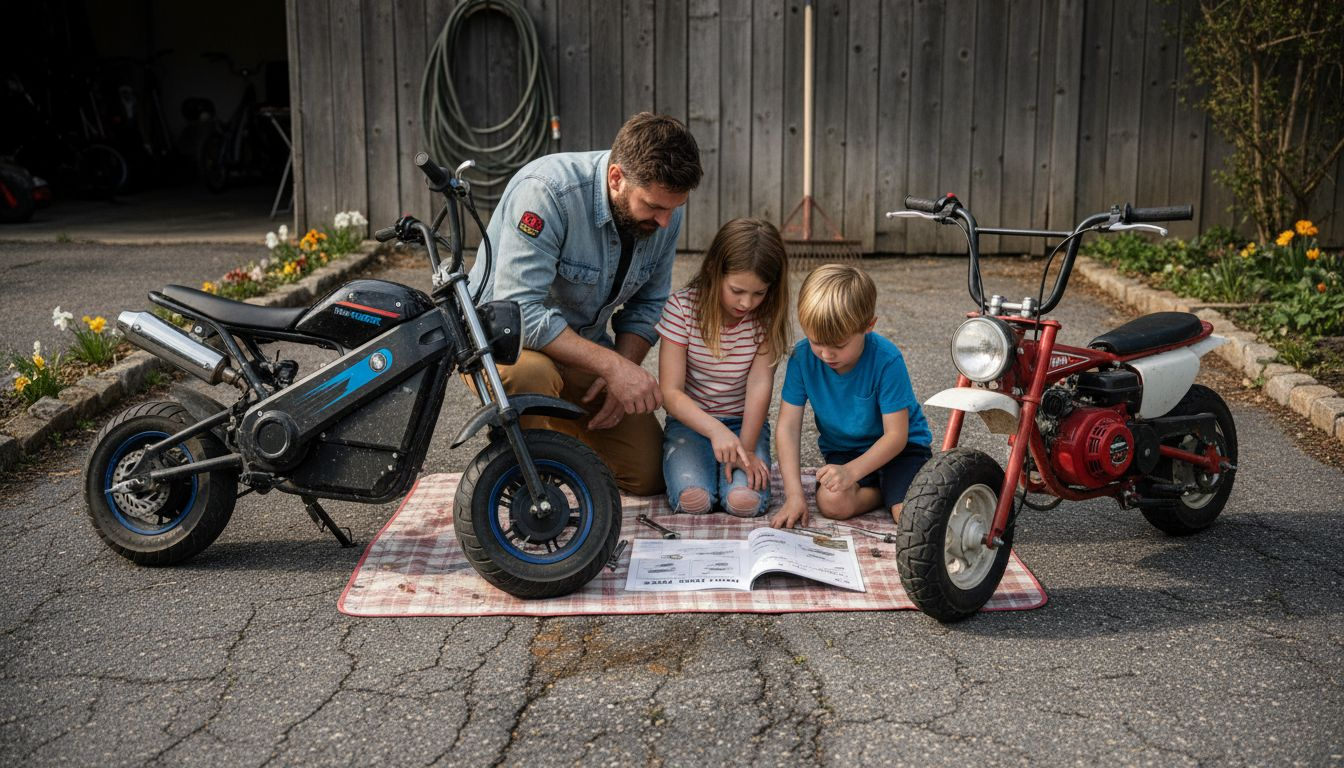
Gas-powered mini bikes offer performance advantages for experienced riders and longer adventure sessions. These models reach speeds up to 20 mph with approximately 45 minutes of runtime per fuel tank, delivering more power for varied terrain and extended rides. The trade-off comes through increased maintenance demands including regular oil changes, spark plug replacements, air filter cleaning, and fuel system care. Engine noise levels can disturb quiet neighborhoods and limit where you can ride legally.
Cost considerations extend beyond initial purchase price. Electric bikes eliminate ongoing fuel costs but eventually require battery replacement, typically after 300-500 charge cycles depending on usage intensity. Gas models demand continuous fuel and oil purchases plus more frequent part replacements due to engine wear. Calculate your expected usage frequency and duration to determine which power source offers better long-term value for your situation.
Environmental impact differs significantly between power sources. Electric mini bikes produce zero direct emissions, making them environmentally friendly choices that teach children about sustainable recreation. Gas models emit exhaust fumes and contribute to air pollution, though modern engines meet increasingly strict emission standards. Families prioritizing environmental values often prefer electric options despite performance limitations.
| Feature | Electric Mini Bikes | Gas-Powered Mini Bikes |
|---|---|---|
| Top Speed | 10-15 mph | Up to 20 mph |
| Runtime | 1-2 hours per charge | 45 minutes per tank |
| Noise Level | Very quiet | Moderate to loud |
| Maintenance | Minimal (battery, tires) | Regular (oil, fuel, parts) |
| Best For | Beginners, quiet areas | Experienced riders, varied terrain |
| Environmental Impact | Zero emissions | Exhaust emissions |
Weigh your family’s priorities including speed requirements, maintenance willingness, neighborhood noise tolerance, and environmental values. Compare mini bikes versus gas-powered alternatives to understand how each option fits your lifestyle.
Popular mini bike models and their best use cases
-
Beginner Electric Models with Speed Limiters: Entry-level electric mini bikes feature adjustable speed governors perfect for children ages 5-8 taking their first rides. These lightweight designs typically weigh 40-50 pounds, making them manageable for younger riders to control and parents to transport. Three-speed settings let you start at 5 mph for initial practice, then progress to 10 mph and finally 15 mph as skills develop. Parental remote controls provide emergency shutdown capability from 100 feet away. Best suited for flat terrain and paved surfaces in residential settings.
-
Gas-Powered All-Terrain Models: Durable gas mini bikes equipped with adjustable suspension handle rough terrain, dirt paths, and uneven ground that would challenge basic models. Recommended for children ages 10-14 with prior riding experience, these bikes deliver 15-20 mph speeds and robust construction. Knobby tires provide traction on loose surfaces while reinforced frames withstand impacts from rocks and bumps. The 45-minute fuel capacity supports extended trail adventures. Expect regular maintenance including oil changes every 20 hours of use.
-
Lightweight Remote-Control Models for Young Riders: Specifically designed for children ages 4-7, these compact electric bikes combine minimal weight (35-45 pounds) with maximum parental control features. Wireless remote systems allow parents to cut power instantly if children lose control or encounter hazards. Lower seat heights (18-20 inches) accommodate shorter inseam measurements while still providing stable four-wheel contact. Speed caps at 8-10 mph balance excitement with safety for developing riders.
-
Mid-Range Complete Safety Packages: Value-focused models that bundle essential protective equipment deliver the best overall value for budget-conscious families. These packages typically include DOT-approved helmets, gloves, knee pads, and elbow pads alongside the mini bike itself. Both electric and gas options exist in this category, with prices ranging $400-$800. Safety features include speed limiters, chain guards, and automatic engine shutoff switches. Suitable for ages 7-12 depending on specific model specifications.
Match mini bike selection to your child’s physical measurements using manufacturer height and weight guidelines. Consult the beginner guide to mini bikes for detailed sizing charts. Consider the Mini Sport Kids ATV for gas-powered performance or the TrailMaster iMini for electric convenience.
Summary comparison of mini bikes for kids
This comparison table consolidates key specifications across popular mini bike categories to simplify your decision process. Price ranges reflect typical market rates in 2026, though seasonal sales and promotions often provide savings opportunities. Safety features listed represent standard inclusions rather than optional add-ons, ensuring baseline protection across all models.
| Model Category | Price Range | Top Speed | Runtime/Duration | Key Safety Features | Recommended Age | Best Terrain |
|---|---|---|---|---|---|---|
| Beginner Electric | $300-$500 | 10-15 mph | 1-2 hours | Speed limiter, remote control, helmet included | 5-8 years | Paved, flat surfaces |
| Gas All-Terrain | $500-$900 | 15-20 mph | 45 minutes | Adjustable suspension, chain guard, speed limiter | 10-14 years | Dirt trails, rough terrain |
| Lightweight Remote | $250-$450 | 8-10 mph | 1-1.5 hours | Wireless remote, automatic shutoff, full gear package | 4-7 years | Smooth, flat areas |
| Mid-Range Package | $400-$800 | 12-18 mph | Varies by type | Complete safety gear, speed modes, protective guards | 7-12 years | Mixed terrain |
Electric models consistently cost less to operate over time despite comparable or higher initial prices compared to budget gas options. Factor in fuel costs, maintenance supplies, and replacement part expenses when calculating true ownership costs. Models with included safety gear packages save $75-150 compared to purchasing equipment separately.
Performance specifications directly correlate with intended use cases and rider experience levels. Beginners benefit most from lower speeds and enhanced control features, while experienced riders can safely handle increased performance. Terrain suitability depends on tire type, suspension quality, and frame construction rather than power source alone.
Review the comprehensive mini bike beginner guide for detailed model comparisons. Cross-reference mini bike safety features to understand how different protection systems work.
Situational recommendations: choosing the best mini bike for your family
First-time riders need maximum safety features and forgiving performance characteristics. Lightweight electric mini bikes with adjustable speed limiters let children build confidence gradually without overwhelming power. Parental remote controls provide safety nets during initial learning phases when mistakes happen frequently. Look for models with lower seat heights that allow solid foot contact with the ground, preventing tip-overs during stops. Three-speed progressive modes work well, starting at 5 mph for basic control mastery before advancing.
Rough terrain demands robust construction and proper suspension systems. Gas-powered models with adjustable shocks absorb impacts from rocks, roots, and uneven ground that would jar riders on basic bikes. Knobby tire treads provide necessary traction on loose dirt, gravel, and grass. Higher ground clearance prevents undercarriage damage from obstacles. Reinforced frames withstand the stress of off-road riding better than lightweight designs intended for smooth surfaces.
Quiet neighborhoods require consideration for nearby residents and local noise ordinances. Electric mini bikes operate nearly silently, allowing early morning or evening rides without disturbing neighbors. This quiet operation also permits conversation between parents and children during rides, improving instruction and bonding opportunities. Many municipalities restrict gas-powered recreational vehicles in residential zones, making electric models the only legal option in some areas.
Experience level should guide speed capability and control complexity. Beginners benefit from simplified controls, limited speeds, and enhanced stability features. Intermediate riders can handle moderate speeds up to 15 mph with standard safety equipment. Advanced young riders may safely operate faster gas models under proper supervision and with complete protective gear. Never allow children to ride bikes beyond their skill level regardless of age or size appropriateness.
Budget constraints don’t require sacrificing safety essentials. Mid-range models with included safety gear packages offer better value than cheap bikes requiring separate equipment purchases. Prioritize speed limiters, quality brakes, and protective guards over cosmetic features or maximum speed capabilities. Consider that proper maintenance extends bike lifespan, making slightly higher initial investments worthwhile for durability.
Family environment factors into daily usability. Families with limited storage space appreciate lighter electric models easy to move and store. Those with workshop access and mechanical interest may prefer gas bikes offering hands-on maintenance opportunities. Consider your available supervision time, as younger riders need closer monitoring than independent older children.
Explore safer mini bike choices comparing different vehicle types. Review mini bikes for beginners to match recommendations with your specific situation.
Explore safe, affordable mini bikes at GoKarts USA
GoKarts USA offers carefully curated mini bike selections designed specifically for family recreational use and child safety. Our inventory includes both electric and gas-powered options featuring the parental controls, speed limiters, and protective features discussed throughout this guide. Every model meets rigorous safety standards while maintaining affordability for budget-conscious families.

Our expert buying guides help you navigate model differences and select bikes matching your child’s age, skill level, and riding environment. Safety gear bundles eliminate the hassle of sourcing protective equipment separately while saving money compared to individual purchases. Browse detailed specifications, customer reviews, and side-by-side comparisons to make informed decisions with confidence.
Start with our comprehensive beginner guide to mini bikes covering selection fundamentals. Explore the reliable Mini Sport Kids ATV for gas-powered performance or discover the quiet TrailMaster iMini electric model perfect for neighborhood riding. Our customer support team stands ready to answer questions and help you find the ideal mini bike for your family’s outdoor adventures.
Frequently asked questions
Are mini bikes safe for young children?
Mini bikes can be very safe for children when equipped with proper safety features and used under adult supervision. Helmets reduce serious head injury risk by 85%, while speed limiters and remote parental controls cut accident rates by 15-25%. Age-appropriate sizing ensures children can reach controls comfortably and maintain balance. Always require complete protective gear including helmets, gloves, and pads for every ride regardless of experience level.
What is the difference between electric and gas mini bikes for kids?
Electric mini bikes operate quietly with 1-2 hour battery life and require minimal maintenance beyond charging and basic upkeep. Gas-powered models run faster (up to 20 mph versus 10-15 mph for electric) with 45-minute fuel duration but demand regular oil changes and engine maintenance. Electric bikes work best for beginners and quiet residential areas, while gas models suit experienced riders tackling varied terrain. Choose based on your maintenance willingness, noise tolerance, and child’s skill level.
How do I ensure the mini bike fits my child properly?
Check manufacturer size guidelines comparing your child’s height and inseam measurements to recommended specifications. Your child should comfortably reach the ground with both feet while seated, maintaining stability during stops. Hands must easily operate throttle and brake controls without stretching. Proper fit improves control, prevents tip-overs, and builds riding confidence. Consult detailed mini bike sizing guides before purchasing to avoid costly sizing mistakes.
What safety gear should my child wear while riding?
Complete safety gear includes a DOT-approved helmet specifically designed for powersports, sturdy gloves protecting hands during falls, knee and elbow pads cushioning joint impacts, and closed-toe boots with ankle support. The helmet represents the most critical piece, reducing head injury risk by up to 85%. Look for mini bike packages bundling safety equipment to ensure proper protection from the first ride. Never allow riding without full protective gear regardless of riding location or duration.
How much maintenance do mini bikes require?
Electric mini bikes need minimal maintenance including regular battery charging, tire pressure checks every few rides, and periodic chain lubrication. Gas-powered models demand more attention with oil changes every 20 hours of use, spark plug replacements, air filter cleaning, and fuel system care. Both types benefit from regular safety inspections checking brakes, throttle response, and frame integrity. Budget 30-60 minutes monthly for basic electric maintenance or 1-2 hours for gas models. Proper upkeep extends bike lifespan and maintains safety performance.
Recommended
- What Are Mini Bikes? 30% Safer Riding for Kids & Hobbyists – GoKarts USA®
- ATV vs Mini Bike 2026: 40% Safer Choice for Family Fun – GoKarts USA®
- Mini Bike Maintenance Steps: Cut Risks 50% & Boost Safety – GoKarts USA®
- Mini Sport Kids ATV, 110cc Gas Engine with Parental Remote Start/Kill – GoKarts USA®