




You’ve probably heard mini bikes are too dangerous for kids. The truth? Modern safety features and proper gear reduce injury risk by approximately 30%. This guide explains what mini bikes are, how they’ve evolved to prioritize safety, and how to choose the right one for your child or yourself. You’ll walk away with the knowledge to make confident, safe purchase decisions that put fun and responsibility first.
Table of Contents
- Introduction To Mini Bikes
- Safety Features And Regulations
- Common Misconceptions About Mini Bikes
- Mini Bike Buyer Criteria And User Suitability
- Comparison With Other Powersport Vehicles
- Maintenance And Care
- Cost And Value Considerations
- Explore Safe Mini Bikes And Go-Karts At Gokarts Usa
- What Are Mini Bikes? FAQ
Key Takeaways
| Point | Details |
|---|---|
| Mini bikes are small motorcycles with 40cc to 110cc engines designed for children and hobbyists | They offer controlled speeds and entry-level motorsport experiences |
| Safety features like throttle limiters reduce injury risk by about 30% when combined with proper gear | Helmets, gloves, and protective clothing are essential for all riders |
| Choosing the right bike depends on age, weight, and skill level | 40cc suits ages 4 to 7, while 110cc fits older children and adults |
| Routine maintenance every 10 riding hours keeps mini bikes safe and functional | Check tire pressure, chain condition, and oil levels regularly |
| Entry-level mini bikes start around $200 and often include safety accessories | Budget-friendly options make recreational riding accessible for families |
Introduction to Mini Bikes
Mini bikes are compact motorcycles with engines ranging from 40cc to 110cc, specifically engineered for children ages 4 and up, as well as hobbyist adults entering motorsports. These vehicles bridge the gap between toys and full-sized motorcycles, offering controlled power delivery and manageable handling for new riders.
Typical users include young children learning basic throttle control and balance, teenagers developing riding skills, and adults seeking affordable recreational vehicles. Common uses span backyard fun, skill-building exercises for future motorsport participation, and light trail exploration on private property.
Mini bikes measure roughly 3 to 4 feet in length and weigh between 40 and 70 pounds, making them highly portable. You can easily load one into a pickup truck or SUV for transport to riding areas. Their small footprint also simplifies storage in garages or sheds.
Key characteristics include:
- Engine sizes: 40cc for beginners, 70cc for intermediate riders, 110cc for advanced youth and adults
- Speed ranges: typically 15 to 35 mph depending on engine size and safety settings
- Weight capacity: 120 to 220 pounds based on frame design
- Fuel type: most run on regular gasoline with 2-stroke or 4-stroke engines
- User demographics: children ages 4 to 16 and adults seeking entry-level powersports
For those curious about adult mini bike information, larger engine options accommodate grown riders. Check out a comprehensive beginner mini bike guide for step-by-step selection advice.
Safety Features and Regulations
Modern mini bikes incorporate multiple safety mechanisms that distinguish them from older, unregulated models. Throttle limiters allow parents to cap maximum speed, giving young riders time to build confidence without overwhelming power. Speed governors mechanically restrict engine output, preventing accidental over-acceleration.
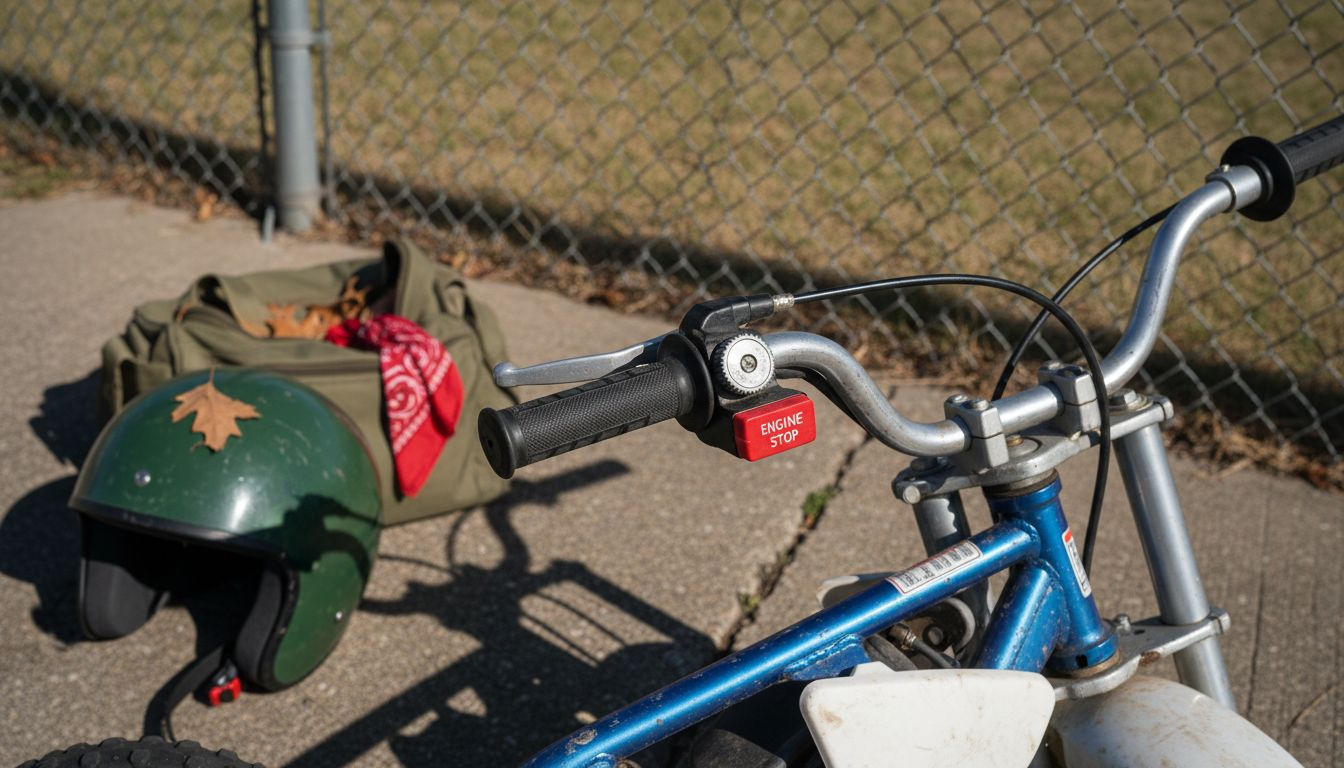
Auto shut-off switches cut the engine immediately when the rider falls or releases the handlebar, reducing runaway vehicle incidents. Kill switches provide quick emergency stops, a critical feature during learning phases.
The American Academy of Pediatrics recommends helmets and protective gear for all mini bike riders, emphasizing safety including speed reducers. Studies demonstrate controlled use with proper equipment lowers injury severity by roughly 30% compared to unsupervised, unprotected riding.
Essential safety gear includes:
- DOT-approved helmets with full face protection
- Impact-resistant gloves for hand and wrist safety
- Long-sleeved shirts and pants to prevent road rash
- Closed-toe boots with ankle support
- Knee and elbow pads for added joint protection
“The American Academy of Pediatrics strongly advises that all riders of mini bikes, regardless of age or experience, use helmets and full protective equipment. Speed-limiting devices should be standard on youth models.”
Pro Tip: Always test throttle limiters and speed governors before allowing a child’s first ride. Adjust settings to the lowest safe speed, then gradually increase as skills improve.
For detailed guidance, explore this mini bike safety guide and discover essential safety gear recommendations. Additional safety perspectives are available through AAP mini bike safety recommendations.
Common Misconceptions About Mini Bikes
Many parents and potential buyers hold outdated beliefs about mini bike safety and usability. Addressing these misconceptions helps you make informed decisions based on current engineering standards rather than fear.
-
Mini bikes are too dangerous for children. Mini bikes are not inherently unsafe; with speed limits typically under 20 mph and safety engineering, risks are mitigated in supervised settings. Modern throttle controls and protective gear dramatically reduce accident severity.
-
All mini bikes go dangerously fast. Entry-level models max out at 15 mph, slower than many bicycles on downhill slopes. Adjustable speed settings let you match power to rider ability.
-
Mini bikes only come in one size. Manufacturers produce varied frame sizes and engine powers tailored to different ages. A 40cc bike suits a 6-year-old, while a 110cc model accommodates teenagers and adults.
-
They’re just toys with no real safety features. Quality mini bikes include engineering like reinforced frames, disc brakes, and automatic shut-offs. These aren’t lawn ornaments but scaled motorsport vehicles.
-
You can’t control how fast kids ride. Parental throttle limiters physically prevent engines from exceeding set speeds. You maintain control even when you’re not riding alongside.
Understanding these realities helps distinguish responsible mini bike use from reckless behavior. Proper supervision, appropriate model selection, and mandatory safety gear transform mini bikes from perceived hazards into controlled learning tools.
Mini Bike Buyer Criteria and User Suitability
Selecting the right mini bike requires matching engine size, weight capacity, and safety features to your rider’s profile. Making the wrong choice risks frustration or safety issues, while the right match builds confidence and enjoyment.
Engine size choices correspond with rider age and weight; e.g., 40-50cc bikes fit ages 4-7, while 110cc models suit older children and adults. This progression ensures riders aren’t overwhelmed by power they can’t control or bored by insufficient performance.
| Engine Size | Recommended Age | Weight Limit | Typical Speed | Skill Level |
|---|---|---|---|---|
| 40-50cc | 4-7 years | 70-100 lbs | 10-15 mph | Beginner |
| 70cc | 7-10 years | 100-130 lbs | 15-20 mph | Intermediate |
| 110cc | 10+ years & adults | 130-220 lbs | 20-35 mph | Advanced |
Key selection factors include:
- Adjustable throttle: Essential for gradually increasing power as skills develop
- Frame size: Rider’s feet should touch the ground when seated
- Brake quality: Disc brakes offer superior stopping power over drum brakes
- Supervision requirements: Younger riders need constant adult oversight
- Skill compatibility: Match bike capabilities to current riding experience
Pro Tip: Before the first unsupervised ride, spend 30 minutes testing throttle response and speed settings in a controlled area. Let your child practice starts, stops, and turns at the lowest speed setting.
Gradually increase power every few riding sessions as confidence builds. Rushing this progression leads to accidents and fear, while patient advancement creates competent, safe riders.
Find comprehensive guidance in this mini bike buyer guide and learn about youth vehicle suitability standards.
Comparison with Other Powersport Vehicles
Understanding how mini bikes differ from similar vehicles clarifies their unique advantages for beginners and budget-conscious buyers. Each vehicle type serves distinct purposes and user profiles.
Mini bikes have lower engine sizes and speeds than full motorcycles and scooters, translating into lower injury severity risks for beginners. This makes them ideal stepping stones before advancing to more powerful vehicles.
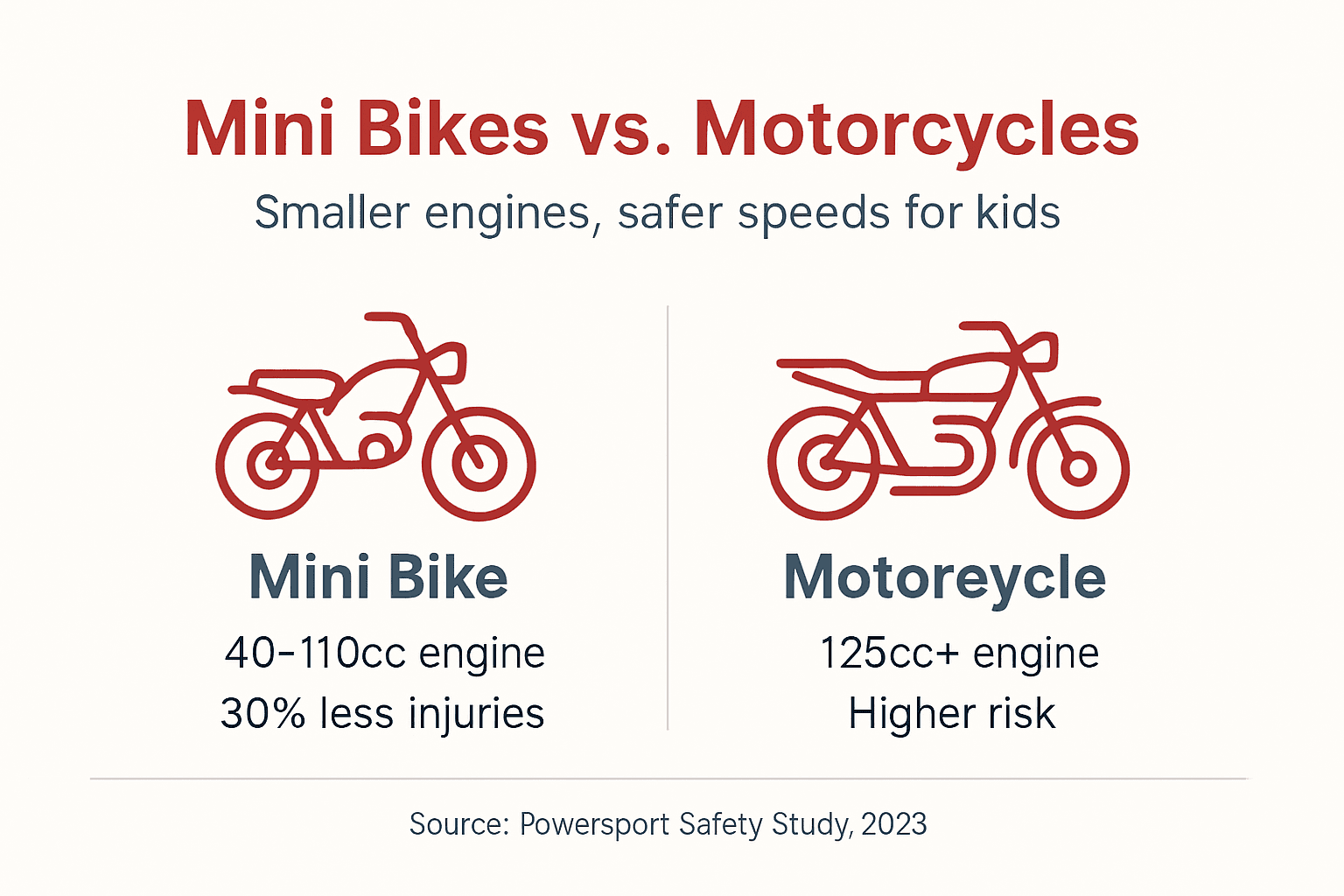
| Vehicle Type | Engine Size | Max Speed | Primary Use | Typical User |
|---|---|---|---|---|
| Mini Bike | 40-110cc | 15-35 mph | Recreation, skill building | Kids 4+, hobbyist adults |
| Scooter | 50-150cc | 30-60 mph | Urban commuting | Teens 16+, adults |
| Full Motorcycle | 250cc+ | 60-180+ mph | Transportation, sport | Adults with licenses |
Mini bike advantages:
- Lower purchase cost, often $200 to $800 versus $1,500+ for scooters
- Safer speed limits appropriate for learning basic riding skills
- User-friendly controls with fewer shifting complications
- No licensing requirements in most jurisdictions for private property use
- Compact size simplifies storage and transport
Scooter characteristics:
- Designed for paved road use and urban environments
- Require registration and licensing in most states
- Higher speeds suited for traffic integration
- Less suitable for young children or off-road recreation
Full motorcycle considerations:
- Demand advanced skill and extensive training
- Require motorcycle endorsements and insurance
- Significantly higher speeds create greater risk for inexperienced riders
- Not appropriate for children or entry-level hobbyists
Mini bikes occupy a sweet spot: substantial enough to teach real riding skills, yet forgiving enough for beginners. They offer authentic motorsport experiences without the complexity and danger of full-sized alternatives.
Maintenance and Care
Regular maintenance keeps mini bikes safe, reliable, and enjoyable while preventing costly repairs. Neglecting basic upkeep leads to breakdowns, unsafe operation, and shortened vehicle lifespan.
Routine maintenance such as checking tire pressure, chain condition, and oil levels every 10 riding hours or monthly is essential to keep mini bikes safe and functional. This schedule applies whether your bike sees daily use or occasional weekend rides.
Essential maintenance tasks:
-
Check tire pressure weekly. Underinflated tires reduce handling and increase puncture risk. Maintain manufacturer-recommended PSI, typically 15 to 20.
-
Lubricate the chain every 5 riding hours. A dry chain wears quickly and can snap during operation. Use motorcycle-specific chain lubricant, not WD-40.
-
Monitor oil levels before each ride. Low oil damages engines and causes overheating. Top off or change oil per manufacturer intervals, usually every 20 hours.
-
Inspect brakes monthly. Worn brake pads compromise stopping power. Replace pads when material thickness drops below 2mm.
-
Clean air filters every 10 hours. Clogged filters reduce engine performance and fuel efficiency. Wash foam filters with soap and water, then re-oil.
-
Tighten all bolts and fasteners. Vibration loosens hardware over time. Check and tighten every major riding session.
Pro Tip: Keep a simple maintenance log noting each task completion date and bike operating hours. This habit prevents forgotten intervals and helps diagnose recurring problems.
Teach young riders basic care responsibilities like checking tire pressure and cleaning the bike after muddy rides. This builds ownership mentality and mechanical understanding.
Proper maintenance directly impacts rider safety. Worn brakes or loose steering components cause accidents. Regular inspections catch problems before they become dangerous, protecting your investment and your family.
Additional guidance on maintenance best practices provides detailed upkeep schedules.
Cost and Value Considerations
Mini bikes offer accessible entry into powersports without the financial commitment of full-sized motorcycles or ATVs. Understanding pricing helps you balance affordability with safety and quality.
Entry-level mini bikes start around $200 for basic 40cc models suitable for young children. Mid-range 70cc bikes typically cost $350 to $600, while robust 110cc models run $500 to $900. These prices often include promotional accessory bundles like helmets, safety gear, and gift cards during seasonal sales.
Value-conscious shopping tips:
- Prioritize safety features over cosmetic extras. Throttle limiters and quality brakes matter more than custom paint.
- Look for package deals. Bundled helmets and protective gear save $50 to $100 compared to separate purchases.
- Consider long-term durability. A $600 bike with metal frame components outlasts a $300 plastic model, offering better per-year value.
- Factor maintenance costs. Budget $50 to $100 annually for oil, filters, and replacement parts.
- Don’t skip protective gear. Spending $150 on quality equipment prevents thousands in medical bills.
Investing in safety and quality pays dividends through reduced injury risk and longer vehicle life. The cheapest option isn’t always the best value if it lacks essential protections or breaks after one season.
Remember to include helmet, gloves, boots, and protective clothing in your total budget. A $300 mini bike requires roughly $150 in gear for proper safety, bringing real entry cost to $450.
Seasonal promotions from retailers often include free shipping and bonus accessories, effectively reducing total investment. Watch for spring and holiday sales to maximize value.
Learn about entry-level mini bike affordability and how smart purchasing delivers both safety and budget consciousness.
Explore Safe Mini Bikes and Go-Karts at GoKarts USA®
Ready to put this knowledge into action? GoKarts USA® offers an accessible selection of mini bikes and go-karts designed specifically for families and hobbyists prioritizing safety. Our inventory includes models for all ages and skill levels, from 40cc beginner bikes to robust 110cc options for experienced riders.
Every vehicle features the safety mechanisms discussed throughout this guide: throttle limiters, quality braking systems, and durable construction. We include helmets and protective accessories with many models, eliminating the hassle of sourcing gear separately. Browse detailed product specifications, customer reviews, and expert recommendations to find your perfect match.
Visit our beginner mini bike guide for step-by-step selection advice. Check out the 110cc mini sport kids ATV for older children ready to advance their skills. Explore why entry-level go-karts for families make excellent alternatives or companions to mini bikes.
What are Mini Bikes? FAQ
What age is appropriate to start riding a mini bike?
Children as young as 4 can safely ride 40cc mini bikes with proper supervision and safety gear. Match engine size to rider age and weight: 40cc for ages 4 to 7, 70cc for 7 to 10, and 110cc for 10 and up. Always prioritize adult oversight during learning phases.
How important is wearing protective gear on a mini bike?
Protective gear is absolutely critical and reduces injury severity by approximately 30% when accidents occur. Helmets prevent head trauma, gloves protect hands during falls, and long clothing minimizes road rash. Never allow riding without complete safety equipment regardless of experience level.
Can adults safely ride mini bikes designed for children?
Adults can ride mini bikes, but should choose 110cc models with appropriate weight capacities, typically 180 to 220 pounds. Smaller bikes designed for young children cannot safely support adult weight or provide adequate power. Select adult-rated frames for proper fit and performance.
What type of maintenance does a mini bike require?
Mini bikes need basic maintenance every 10 riding hours or monthly: check tire pressure, lubricate the chain, monitor oil levels, and inspect brakes. Clean air filters regularly and tighten all bolts to prevent loosening from vibration. This routine takes 20 to 30 minutes and prevents breakdowns.
Are mini bikes suitable for off-road use?
Many mini bikes handle light off-road trails on private property, but they’re not designed for extreme terrain like motocross tracks. Look for models with knobby tires and reinforced suspension if you plan trail riding. Always ride within the bike’s capability limits and rider skill level to maintain safety.
Recommended
- Beginner Guide to Mini Bikes: Choosing and Riding Safely – GoKarts USA®
- What Is an Adult Mini Bike and Why It Matters – GoKarts USA®
- Mini Sport Kids ATV, 110cc Gas Engine with Parental Remote Start/Kill – GoKarts USA®
- TrailMaster Cheetah 3 Kids Mini Go Kart, 80cc gas engine, seat belt, K – GoKarts USA®