




Choosing the right go-kart accessories for your family can feel overwhelming. Between safety certifications, performance upgrades, and fun add-ons, it’s hard to know where to start or what truly matters. This guide cuts through the confusion, helping you identify the best affordable, family-friendly accessories in 2026 that balance safety, performance, and fun without breaking the bank or requiring professional installation.
Table of Contents
- How To Choose The Right Go-Kart Accessories
- Safety Accessories: Helmets, Harnesses, And Protective Gear
- Performance Accessories: Tires, Brakes, And Engine Parts
- Fun Accessories: Lights, Audio, And Comfort Enhancements
- Comparing Top Accessories: Features, Costs, And Use Cases
- Recommendations Based On Family Needs And Use Cases
- Explore Go-Kart Options And Accessories At GoKarts USA®
Key takeaways
| Point | Details |
|---|---|
| Safety is priority one | Certified helmets and harnesses reduce injury risk significantly for family riders. |
| Performance upgrades matter | Better brakes and tires improve control and stopping power for safer rides. |
| Fun accessories add value | LED lights and audio boost engagement while improving visibility. |
| Budget-friendly options exist | Most essential accessories cost $50 to $150 per item. |
| Easy installation saves time | Proper setup reduces installation time by 30% and ensures safety. |
How to choose the right go-kart accessories
Selecting accessories starts with understanding your family’s primary needs. Ask yourself whether safety, performance, or fun matters most for your current riding situation. Each accessory category serves a distinct purpose, and knowing your priorities helps you spend wisely.
Compatibility is critical. Before buying any part, verify it fits your specific go-kart model. Manufacturers provide detailed compatibility charts, and checking these saves you from returns and frustration. Mismatched parts can compromise safety and void warranties.
Safety is the top priority for 78% of parents, making certified safety gear your first investment. Look for Snell SA2020 or DOT certifications on helmets, and prioritize 4-point harnesses over basic lap belts. These certifications guarantee tested protection standards.
Performance parts should deliver measurable benefits. Upgraded brakes that shorten stopping distances or tires that improve traction on varied terrain offer tangible safety improvements. Avoid accessories that promise vague “enhancements” without data.
Fun accessories work best when they also improve safety. LED lights increase visibility during evening rides, while Bluetooth audio keeps teens engaged and happy. Choose additions that serve dual purposes whenever possible.
Installation difficulty varies widely. Review guides and difficulty ratings before purchasing. Simple bolt-on upgrades save time and reduce the risk of incorrect installation. Complex modifications may require professional help, adding to your total cost.
Pro Tip: Start with safety gear, then add performance upgrades, and finish with fun accessories as your budget allows. This approach ensures you never compromise protection for entertainment.
When assembling go-karts safely, following manufacturer instructions exactly prevents common mistakes that lead to accidents. Take your time during installation and double-check all connections.
Safety accessories: helmets, harnesses, and protective gear
Helmets represent your most important safety investment. Snell SA2020 and DOT helmets reduce head injuries by 60%, making certification labels non-negotiable. Full-face helmets offer better protection than open-face designs, especially for younger riders who may lack experience.
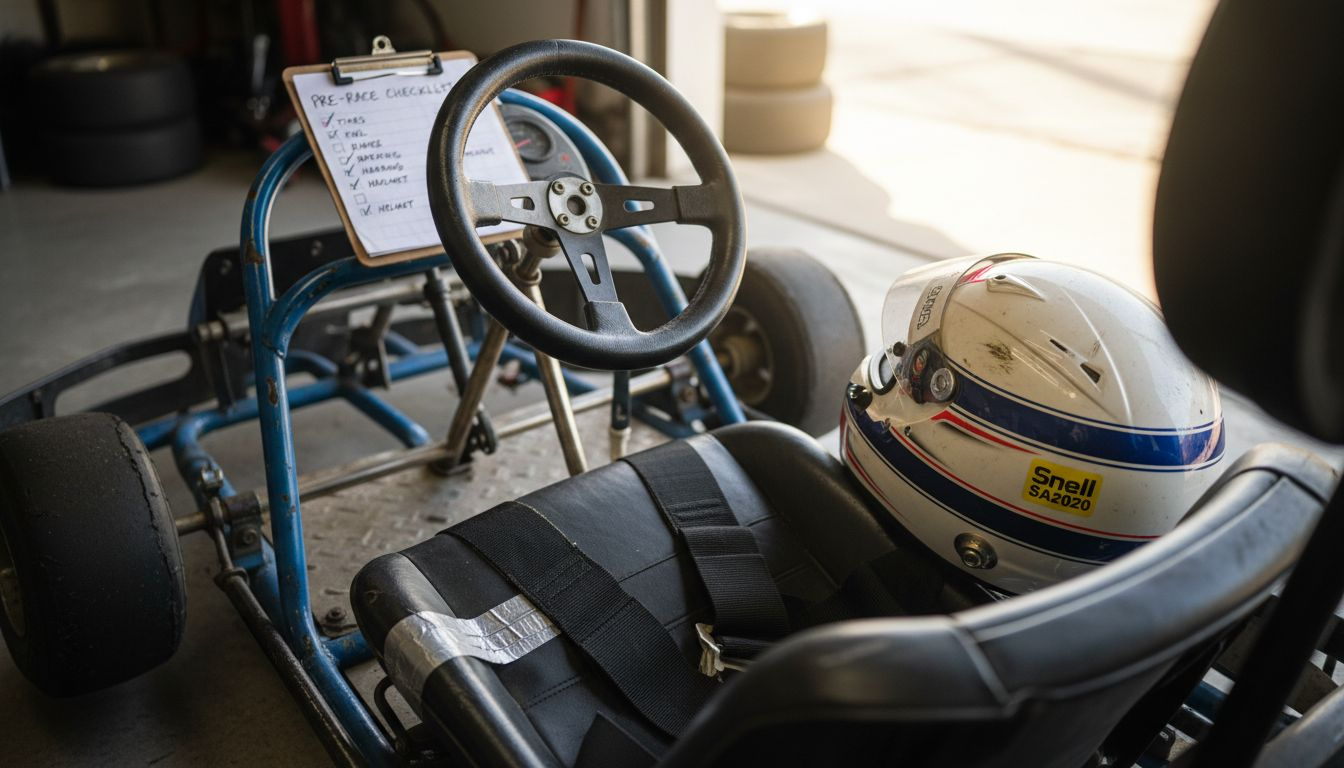
Check for certification stickers inside the helmet before purchasing. Counterfeit helmets flood online marketplaces, and these fakes provide zero protection despite looking authentic. Genuine certified helmets display permanent labels that cannot be removed without damage.
Four-point harnesses dramatically outperform standard lap belts. 4-point harnesses cut ejection risk by 45% during collisions or rollovers. The additional shoulder straps keep riders securely positioned, preventing dangerous slides under the belt during sudden stops.
Installation requires proper anchor points. Your go-kart frame must have reinforced mounting locations rated for harness loads. Never attach harnesses to weak points or improvised brackets, as these can fail during impacts.
Protective gear extends beyond helmets and harnesses. Gloves improve grip while protecting hands from abrasions. Knee and elbow pads prevent common injuries during minor tumbles. Racing suits or thick clothing shield skin from friction burns.
Pro Tip: Replace helmets after any significant impact, even if no visible damage appears. Internal foam compression reduces protection on subsequent impacts.
For comprehensive guidance on safe family go-kart accessories, consider reading detailed reviews that compare multiple brands and models. Research helps you identify the best value for your specific needs.
Performance accessories: tires, brakes, and engine parts
Tires directly affect handling and safety. High-traction tires improve handling by 25% on varied terrain, giving you better control during turns and on loose surfaces. Different tread patterns suit specific conditions, from smooth pavement to muddy trails.
Off-road tires feature aggressive lugs that dig into dirt and grass. Street tires use smoother patterns for paved surfaces. All-terrain options split the difference, offering decent performance everywhere but excelling nowhere. Match your tire choice to where you ride most often.
Braking upgrades save lives. Disc brakes reduce stopping distances by 20% compared to drum brakes, especially during repeated hard stops. Disc systems dissipate heat better, preventing brake fade during long downhill runs.
Hydraulic brake kits offer another advantage. Hydraulic brake kits require 40% less maintenance than cable systems because they self-adjust and resist stretching. You spend less time tweaking and more time riding.
Engine accessories boost power efficiently. High-flow air filters increase airflow to the carburetor, improving throttle response and peak power. Performance spark plugs ensure complete fuel combustion, maximizing efficiency and reducing fouling.
Pro Tip: Upgrade brakes before adding power. Better stopping ability matters more than extra speed, especially for family recreational use.
When choosing kids go-karts safely, consider models with built-in performance features that eliminate the need for immediate upgrades. This approach saves money and ensures compatibility.
| Accessory | Performance Gain | Cost Range |
|---|---|---|
| High-traction tires | 25% better handling | $80-$120 |
| Disc brake kit | 20% shorter stopping | $100-$150 |
| Hydraulic brakes | 40% less maintenance | $120-$180 |
| Performance air filter | 10% power increase | $30-$50 |
Fun accessories: lights, audio, and comfort enhancements
LED lighting serves dual purposes. These systems boost visibility by 30% during evening rides while increasing engagement by 20% among younger riders who love the visual appeal. Bright lights also make you more visible to others sharing outdoor spaces.
Wireless kits simplify installation. Battery-powered LED strips attach with adhesive backing, requiring no wiring or drilling. Rechargeable batteries last multiple rides, and USB charging makes power management easy.
Bluetooth audio systems increase ride satisfaction by 15%, particularly for teens who want their music along for the adventure. Handlebar-mounted speakers resist weather and vibration while delivering clear sound at speed.
Choose systems rated for powersports use. Regular portable speakers fail quickly when exposed to dust, moisture, and constant vibration. Purpose-built units cost more but last far longer.
Comfort upgrades matter for longer rides. Padded racing seats reduce fatigue and provide better lateral support during aggressive cornering. Adjustable steering wheels accommodate different driver heights, ensuring proper control position for everyone.
Fun accessories indirectly improve safety. Better visibility prevents collisions. Comfortable seating keeps riders alert and focused. Happy, engaged riders pay more attention to their surroundings.
For insights on family go-kart fun benefits, explore how recreational riding builds family bonds while teaching responsibility and vehicle control skills.
New riders especially appreciate these additions. Check out beginner go-kart fun tips to understand how the right accessories ease the learning curve and build confidence faster.
Comparing top accessories: features, costs, and use cases
Understanding how accessories stack up helps you make informed decisions. The table below compares popular options across key criteria that matter most to families.
| Accessory Type | Price Range | Safety Impact | Performance Benefit | Installation Difficulty |
|---|---|---|---|---|
| Certified helmet | $60-$120 | Very high | None | Instant |
| 4-point harness | $80-$130 | Very high | Minimal | Moderate |
| Disc brake kit | $100-$150 | High | High | Moderate |
| High-traction tires | $80-$120 | Medium | High | Easy |
| LED light kit | $40-$80 | Medium | None | Easy |
| Bluetooth audio | $50-$100 | None | None | Easy |
| Racing seat | $90-$140 | Low | Medium | Moderate |
Safety gear dominates parental priorities, explaining why helmets and harnesses appear first on most shopping lists. These items require the smallest installation effort while delivering maximum injury prevention.
Performance accessories offer tangible benefits but demand more complex installation. Brake kits require mechanical skills and proper tools. Tire changes need bead-breaking equipment or professional service. Budget extra time and potentially extra cost for installation help.
Fun accessories provide the easiest installation path. Most LED and audio systems install in minutes with basic hand tools. This simplicity makes them attractive first upgrades for families hesitant about mechanical work.
Use cases vary by family priorities. Racing-focused families prioritize performance. Safety-conscious parents invest heavily in protective gear. Budget-limited buyers focus on essentials first, adding extras later.
For comprehensive guidance, review the go-kart buying guide to understand how accessory needs change with different kart types and intended uses.
Recommendations based on family needs and use cases
Maximum safety configurations start with certified helmets and 4-point harnesses as non-negotiable foundations. Add protective gloves, knee pads, and elbow pads for complete coverage. This setup costs $200 to $300 total but provides comprehensive protection.
Performance-focused families should prioritize hydraulic brakes and off-road tires for measurably better control and stopping power. These upgrades transform handling on varied terrain while improving safety margins during emergency maneuvers. Expect to invest $200 to $270 for both components.
Fun-oriented setups benefit from LED lighting and Bluetooth audio that keep younger riders engaged and excited about outdoor time. These additions cost $90 to $180 combined and install quickly without special tools or skills.
Budget-conscious buyers face tough choices. Always prioritize safety first, even if it means skipping fun accessories initially. A quality certified helmet and basic harness upgrade cost $140 to $250 together, representing the minimum responsible investment.
Customization depends on primary goals. Families riding mostly on private property may skip some safety gear that public track riders need. Weekend recreational users can defer performance upgrades that competitive racers require immediately.
Pro Tip: Buy accessories in stages. Start with mandatory safety gear, add performance parts as skills improve, then finish with fun additions once the basics are covered.
For balanced guidance on kids go-kart safety and fun, consider how age-appropriate accessories change as children grow and develop better control skills.
Explore go-kart options and accessories at GoKarts USA®
Ready to upgrade your family’s go-karting experience? GoKarts USA® offers a wide selection of quality go-karts and compatible accessories designed for safe, affordable family fun. Whether you need a beginner-friendly model or performance parts for an existing kart, you’ll find trusted options backed by expert support.
The 200 XRS off-road go kart delivers rugged performance perfect for trail riding and backyard adventures. Its robust frame accommodates safety and performance upgrades easily. For younger riders, the mini sport kids ATV 110cc provides a safer starting point with built-in safety features and moderate power. The TrailMaster Storm minibike offers compact fun for smaller spaces and tight budgets.
Explore compatible accessories for each model to build your ideal setup. From certified safety gear to performance upgrades and fun additions, you’ll find everything needed to create memorable family experiences outdoors.
Frequently asked questions
What certification should a go-kart helmet have?
Look for Snell SA2020 or DOT certification labels permanently attached inside the helmet. These certifications guarantee the helmet passed rigorous impact testing and meets safety standards for motorsports use. Avoid helmets without visible certification stickers, as they offer unreliable protection.
How can I install go-kart accessories safely at home?
Follow manufacturer instructions exactly and use specified torque settings for all fasteners. Verify compatibility before starting, and inspect all connections after installation. For complex upgrades like brake kits, consider professional installation if you lack mechanical experience or proper tools.
Are LED lights legal for outdoor go-kart use?
LED lights are legal for private property use but may face restrictions on public roads or designated trails. Check local regulations before riding in public areas. Most recreational riders use lights on private land where legal concerns don’t apply.
What’s the best tire choice for off-road family go-karts?
High-traction off-road tires with aggressive tread patterns provide the best grip on dirt, grass, and loose surfaces. These tires feature deep lugs that dig into terrain for maximum control. All-terrain options work if you split time between paved and unpaved surfaces.
How much should I budget for essential safety accessories?
Plan to spend $140 to $250 for basic safety gear including a certified helmet and 4-point harness. Adding protective gloves, pads, and suits increases the total to $200 to $350. Prioritize helmet and harness first, then add other protective gear as budget allows.