




Choosing the right go-kart for your family can feel overwhelming with dozens of models, power types, and price points flooding the market. Safety, age suitability, and value matter most when you’re shopping for kids or planning weekend fun. This guide breaks down go-kart types by power source, highlights essential safety features, and compares performance trade-offs so you can pick confidently and avoid costly mistakes.
Table of Contents
- How To Choose A Go-Kart: Key Factors To Consider
- Types Of Go-Karts By Power Source
- Safety Features Across Go-Kart Types
- Price And Performance Comparison
- Popular Brands And Reliable Models
- Use Case Recommendations: Matching Kart Types To Needs
- Summary: Comparing Go-Kart Types Side-By-Side
- Explore Quality Go-Karts For Family And Hobby Fun
Key takeaways
| Point | Details |
|---|---|
| Power source defines performance | Pedal, kids electric, adult electric, and gas-powered karts each serve distinct age groups and speed needs. |
| Safety features vary widely | Roll cages, seat belts, speed limiters, and remote shutdown controls protect riders differently across kart types. |
| Price reflects capability | Pedal karts start under $150, kids electric $300-$1000, adult electric $1000-$3000, gas $1500-$5000+. |
| Match kart to rider age | Toddlers need pedal karts, kids 5-12 fit electric models, teens and adults handle gas or adult electric karts. |
| Maintenance demands differ | Electric karts need minimal upkeep, gas models require regular oil changes and engine tuning every 10-20 hours. |
How to choose a go-kart: key factors to consider
Selecting the right go-kart starts with understanding your rider’s age, size, and experience level. A kart that’s too powerful for a young child creates serious safety risks, while an underpowered model frustrates older kids or adults seeking thrills. Age and weight limits printed on product specs aren’t suggestions, they’re critical guardrails.
Safety features separate quality karts from dangerous toys. Look for seat belts, roll cages, and speed limiters that prevent excessive speeds. Many parents struggle with balancing safety features, price, and usability when selecting go-karts for kids and families. Remote parental shutdown controls let you stop the kart instantly if your child loses control or heads toward danger.
Power source affects noise, maintenance, and speed. Electric karts run quietly with zero emissions, perfect for neighborhoods or indoor tracks. Gas-powered models deliver longer run times and higher speeds but demand oil changes, air filter cleaning, and spark plug maintenance. Your budget and willingness to handle upkeep should guide this choice.
Price versus performance trade-offs influence every decision. Cheaper pedal karts suit toddlers learning coordination, while mid-range electric models balance safety and fun for elementary-age kids. High-end gas karts offer racing-style performance but cost significantly more upfront and over time. Understanding why choosing the right go-kart matters helps you avoid overspending on features you won’t use.
Intended use shapes your priorities. Backyard fun for a 6-year-old requires different specs than hobby racing for a 16-year-old. Consider where you’ll drive the kart, how often, and whether noise or emissions matter in your environment. Knowing what defines a youth go-kart clarifies age-appropriate options.
Pro Tip: Test the kart’s seat adjustability and steering reach before buying. Kids grow fast, and adjustable features extend usability by 2-3 years, saving you from early replacement costs.
- Verify weight capacity matches your rider’s current and projected size
- Check battery runtime or fuel tank capacity for your typical session length
- Confirm replacement parts availability for long-term maintenance
- Review warranty coverage for motor, frame, and safety components
Types of go-karts by power source
Recreational go-karts generally fall into four categories: kids’ electric, adult electric, gas-powered, and pedal go-karts. Each type serves specific age groups, skill levels, and use cases based on power delivery and safety profiles.
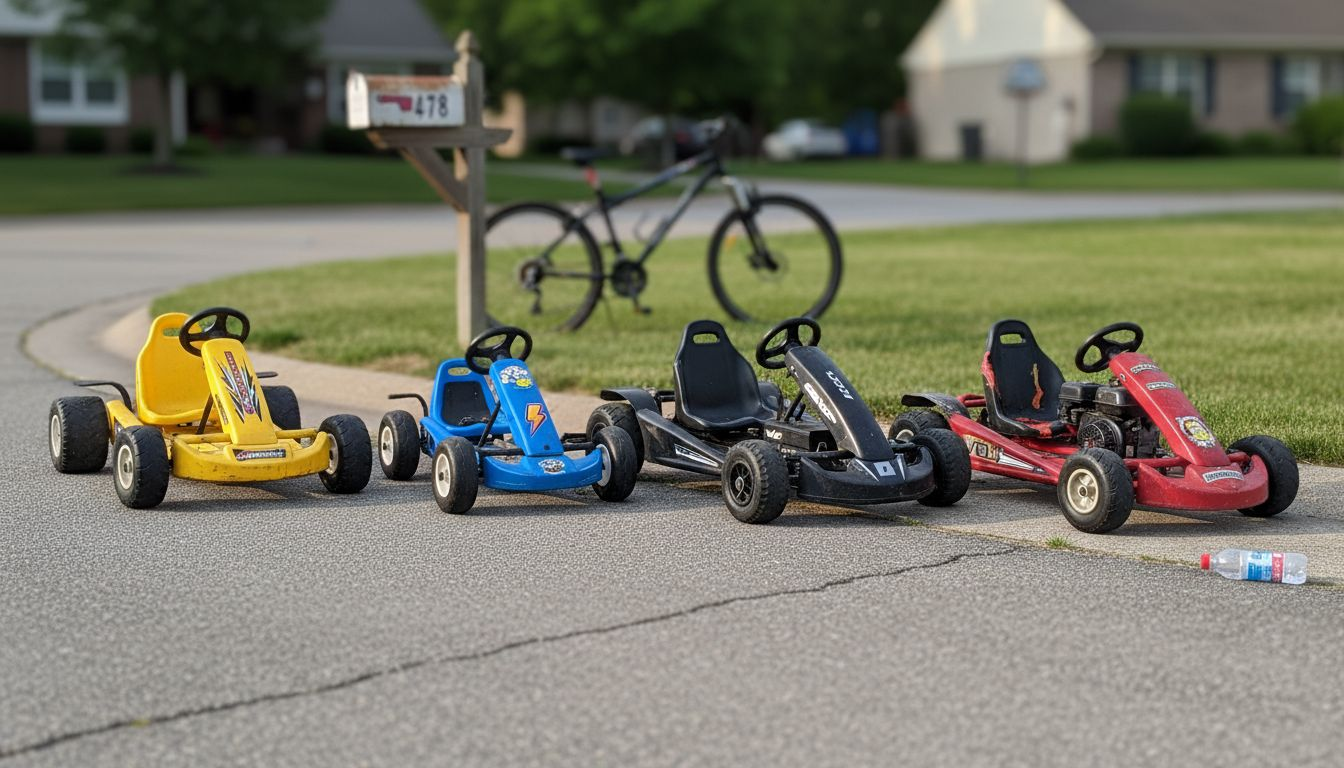
Pedal karts are manual, human-powered vehicles ideal for toddlers ages 2 to 5. They cost under $150, require zero maintenance beyond tire pressure checks, and eliminate speed-related dangers since kids control pace entirely through pedaling. These karts teach steering and coordination without motor risk.
Kids electric karts offer quiet, battery-powered fun with speeds ranging 5-15 mph depending on model and terrain. Built-in speed limiters let parents cap maximum velocity, and rechargeable batteries provide 40-90 minutes of runtime per charge. They suit children ages 5 to 12 who’ve outgrown pedal karts but aren’t ready for gas power.
Adult electric karts balance eco-friendliness, moderate speed up to 25 mph, and ease of use for recreational riders 13 and older. Lithium-ion batteries deliver consistent power without gas fumes or engine noise, making them neighborhood-friendly. Runtime typically reaches 60-120 minutes depending on terrain and rider weight.
Gas-powered karts provide higher speeds up to 50 mph and longer run times between refueling compared to battery limits. Four-stroke engines deliver racing-style acceleration and handle rough terrain better than electric motors. However, they demand regular oil changes, air filter maintenance, and spark plug replacements every 10-20 hours of use.
- Pedal karts: Best for toddlers learning coordination, zero operating costs
- Kids electric: Quiet operation, parental speed control, moderate runtime
- Adult electric: Eco-friendly, low maintenance, suitable for casual hobbyists
- Gas-powered: Highest speeds, longest range, requires mechanical upkeep
Understanding why entry-level go-karts suit beginners helps you match power type to experience level and avoid overwhelming new riders with excessive capability.
Safety features across go-kart types
Roll cages and seat belts enhance crash protection by preventing ejection and reducing impact force during rollovers or collisions. Steel roll bars absorb energy that would otherwise transfer to the rider’s body. Five-point harnesses distribute crash forces across shoulders, chest, and hips more effectively than lap belts alone.
Speed limiters prevent excessive speeds by electronically capping motor output or mechanically restricting throttle travel. Parents can adjust limits as kids gain experience, starting at 5 mph for beginners and gradually increasing to 15 mph for confident riders. This feature alone reduces injury risk dramatically in younger age groups.
Remote parental shutdown controls add supervision layers by letting adults cut power instantly via key fob or smartphone app. If your child drives toward a busy street, pool, or other hazard, you stop the kart immediately rather than shouting instructions they might not follow. This feature appears primarily on mid to high-end electric models.
Pedal karts have basic safety with full manual control but lack modern features like roll cages or harnesses. Their low ground-level design and human-powered speeds under 10 mph create minimal injury potential. However, supervision remains essential since toddlers can still tip over on slopes or collide with obstacles.
Safety certifications help verify build quality and regulatory compliance. Look for ASTM F963 toy safety standard approval on kids’ models and DOT or CPSC compliance where applicable. 70% of children’s go-karts include at least three major safety features such as roll cages and speed limiters, but cheaper imports often skip these protections.
Pro Tip: Always pair your go-kart purchase with a properly fitted helmet, even on low-speed models. Head injuries account for 40% of go-kart accidents, and a $30 helmet prevents potentially life-altering trauma.
- Verify roll cage meets ASTM standards for impact resistance
- Test seat belt latch mechanism for easy release in emergencies
- Confirm speed limiter adjustment process matches your tech comfort level
- Check brake responsiveness on flat ground and slopes before first ride
Learning how to choose a safe go-kart and investing in essential safety accessories protects your family from preventable injuries and builds confidence for new riders.
Price and performance comparison
Pedal karts cost under $150 with manual power and no ongoing expenses beyond occasional tire replacement. They deliver zero speed risk, infinite runtime limited only by rider stamina, and maintenance-free operation. However, they restrict use to flat terrain and very young children who lack strength for hills.
Kids electric karts range $300-$1000 depending on battery capacity, motor power, and safety features. Speeds between 5-15 mph suit elementary-age riders, and 40-90 minute runtimes support typical play sessions. Maintenance involves battery charging and occasional tire replacement, keeping annual costs under $50.
Adult electric karts cost $1000-$3000, delivering speeds up to 25 mph with eco-friendly battery power. Lithium-ion packs provide 60-120 minute runtime and recharge in 4-8 hours. Maintenance stays minimal at under $100 annually for tire replacement and brake pad service. Quiet operation suits noise-sensitive neighborhoods.
Gas karts range $1500-$5000+ depending on engine size and build quality. They accelerate faster and reach speeds up to 50 mph, appealing to experienced riders seeking performance. Gas-powered go-karts accelerate 15% faster and have double the runtime compared to electric models but produce 30 decibels more noise and require higher maintenance. Annual upkeep including oil, filters, and spark plugs runs $150-$300.
Noise levels matter for family use environments. Electric karts operate at 50-60 decibels, comparable to normal conversation, while gas engines reach 80-90 decibels, similar to a lawn mower. Neighbors and local noise ordinances may restrict gas kart use in suburban areas.
Maintenance varies significantly between gas and electric models. Electric karts need only tire checks and brake inspections every few months. Gas karts demand oil changes every 20 hours, air filter cleaning monthly during active use, and carburetor adjustments seasonally. Factor these time and cost differences into your total ownership budget.
| Kart Type | Price Range | Top Speed | Runtime | Annual Maintenance | Noise Level |
|---|---|---|---|---|---|
| Pedal | Under $150 | 5-8 mph | Unlimited | Under $20 | Silent |
| Kids Electric | $300-$1000 | 5-15 mph | 40-90 min | Under $50 | 50-60 dB |
| Adult Electric | $1000-$3000 | Up to 25 mph | 60-120 min | $50-$100 | 50-60 dB |
| Gas-Powered | $1500-$5000+ | Up to 50 mph | 2-4 hours | $150-$300 | 80-90 dB |
- Budget-conscious families benefit most from kids electric karts balancing cost and features
- Performance seekers should invest in gas models despite higher maintenance
- Noise-sensitive locations require electric karts to avoid complaints
- Consider total 3-year ownership costs including maintenance and fuel or electricity
Exploring entry-level go-kart pricing options reveals how features and quality scale with investment, helping you find the sweet spot between budget and longevity.
Popular brands and reliable models
Razor leads for pedal and kids electric go-karts with strong safety records and nationwide parts availability. Their Crazy Cart and Ground Force models include speed limiters, reinforced frames, and responsive braking systems that parents trust. Razor products consistently score high in consumer safety reviews and offer 90-day warranties covering defects.
Trail Master offers affordable, reliable entry-level gas karts popular with families upgrading from electric models. Their Mid-Size XRS balances 15 mph capability with roll cage protection and adjustable seating for growing kids. Trail Master focuses on durability over fancy features, using proven 4-stroke engines that mechanics easily service.
Bintelli is a trusted brand for adult electric go-karts, combining quality construction with eco-friendly battery technology. Their models suit hobbyists wanting performance without gas engine complexity. Bintelli provides detailed owner manuals and responsive customer support, addressing technical questions within 24 hours.
Market trends show consumer preference for safety and value over maximum speed. Families prioritize adjustable speed limits, sturdy construction, and positive owner reviews when comparing brands. Brand reputation aids quality assurance since established names face greater accountability for defects than no-name imports.
After-sales support separates leading brands from budget alternatives. Replacement parts, warranty service, and technical guidance matter when your kart breaks down mid-season. Buying entry-level models from reputable brands ensures parts availability and expert troubleshooting support years after purchase.
- Razor: Best for kids electric and pedal karts, ages 3-12
- Trail Master: Ideal for first gas-powered karts, ages 8-14
- Bintelli: Top choice for adult electric models, ages 13+
- Coleman: Reliable mid-range gas karts for recreational families
- Hammerhead: Premium gas karts for experienced youth racers
Use case recommendations: matching kart types to needs
-
Toddlers ages 2 to 5: Pedal karts provide the safest introduction to driving concepts without motor risks. Manual control lets children learn steering, spatial awareness, and cause-and-effect relationships between pedaling and movement. Brands like Razor and Berg offer adjustable seats growing with your child.
-
Elementary kids ages 5 to 12: Electric karts with built-in speed limiters deliver supervised fun as motor skills improve. Start at 5 mph for beginners, then increase limits as confidence builds. Remote shutdown controls give parents emergency stop capability. Understanding youth go-kart age guidelines prevents mismatched purchases.
-
Teens ages 13 to 16: Adult electric karts suit urban or suburban environments where noise matters, while gas karts appeal to rural properties with space for higher speeds. Choose based on available supervision, terrain, and noise restrictions. Following a safe kids go-kart selection guide ensures age-appropriate power levels.
-
Adult recreational riders: Gas-powered karts deliver the most engaging experience with racing-style acceleration and extended runtime for longer trail rides. Electric adult models suit casual use where convenience outweighs maximum performance. Consider your mechanical comfort level since gas maintenance requires basic engine knowledge.
-
Indoor or noise-sensitive areas: Electric karts exclusively, as gas engines violate most indoor facility rules and disturb neighbors in residential zones. Quiet operation lets you drive evenings and weekends without complaints.
-
Off-road or rough terrain: Gas-powered karts with higher ground clearance and torque handle dirt, gravel, and hills better than electric models. Larger tires and suspension systems absorb bumps that would bottom out lighter electric frames.
Summary: comparing go-kart types side-by-side
This comprehensive comparison table distills key factors to guide your final decision across power sources, safety profiles, pricing, and ideal use cases.
| Feature | Pedal Karts | Kids Electric | Adult Electric | Gas-Powered |
|---|---|---|---|---|
| Power Source | Human pedaling | Rechargeable battery | Lithium-ion battery | 4-stroke gasoline engine |
| Speed Range | 5-8 mph | 5-15 mph | Up to 25 mph | Up to 50 mph |
| Price Range | Under $150 | $300-$1000 | $1000-$3000 | $1500-$5000+ |
| Best Age | 2-5 years | 5-12 years | 13+ years | 13+ years |
| Runtime | Unlimited (stamina) | 40-90 minutes | 60-120 minutes | 2-4 hours |
| Safety Features | Low speed, stable | Speed limiters, remote stop | Speed control, lights | Roll cage, harness |
| Maintenance | Minimal (tires) | Battery care, tires | Battery, brakes, tires | Oil, filters, engine tune |
| Noise Level | Silent | 50-60 dB | 50-60 dB | 80-90 dB |
| Best Use | Toddler coordination | Supervised backyard fun | Hobby recreation | Performance racing |
| Top Brands | Razor, Berg | Razor, Trail Master | Bintelli, Razor | Trail Master, Coleman |
| Annual Cost | Under $20 | Under $50 | $50-$100 | $150-$300 |
Pedal karts win for cost-conscious families introducing toddlers to driving. Kids electric models dominate elementary-age recreation with balanced safety and fun. Adult electric suits eco-minded hobbyists in quiet areas. Gas karts deliver maximum performance for experienced riders with mechanical skills and rural space.
Decide based on rider age first, then filter by budget, maintenance willingness, and location constraints. Match your environment’s noise tolerance and terrain type to power source capabilities for best results.
Explore quality go-karts for family and hobby fun
Now that you understand go-kart types, safety priorities, and performance trade-offs, it’s time to explore models matching your family’s needs. The TrailMaster MID-Size XRS offers an excellent entry point for kids ready to graduate from electric to gas power, combining 15 mph capability with comprehensive safety features including roll cage and adjustable speed governor.

For families preferring gas engine performance in a compact ATV format, the Mini Sport Kids ATV 110 delivers reliable power and rugged construction suitable for outdoor adventures. Browse the full range of go-karts, ATVs, and accessories at GoKarts USA to compare specifications, read detailed reviews, and take advantage of current promotions including free shipping and complimentary safety gear with select purchases.
FAQ
What age is best for pedal go-karts?
Pedal go-karts suit toddlers ages 2 to 5 because they provide manual control with zero speed risk. These karts help develop motor skills, steering coordination, and cause-and-effect understanding through simple pedaling mechanics.
Are electric go-karts safer than gas-powered ones for kids?
Electric go-karts generally offer better safety for kids due to lower speeds, built-in speed limiters, and remote parental shutdown controls. They produce minimal noise, require less maintenance, and eliminate hot engine burn risks present on gas models.
How often does a gas-powered go-kart need maintenance?
Gas-powered go-karts demand maintenance every 10-20 hours of use, including oil changes, air filter cleaning, and spark plug inspection. Seasonal storage requires carburetor draining and battery disconnection to prevent damage during non-use periods.
Can adults safely use electric go-karts?
Yes, adult electric go-karts reach speeds up to 25 mph and provide safe, eco-friendly recreation for hobbyists. They feature stronger frames, higher weight capacities, and adequate power for moderate trail riding without gas engine complexity.
What safety gear should accompany any go-kart purchase?
Every rider needs a properly fitted helmet meeting DOT or CPSC standards, regardless of kart speed. Add gloves for grip and hand protection, closed-toe shoes for pedal control, and knee pads for younger riders prone to tumbles during entry and exit.