




Youth ATVs are not just smaller adult machines. They feature engine size limits (50cc-110cc) and speed settings between 10-30 mph specifically designed for child safety. Understanding these vehicles helps parents make informed decisions about recreational powersports for their children. This guide covers safety features, age recommendations, and how to choose the right youth ATV for your family.
Table of Contents
- Introduction To Youth ATVs
- Key Safety Features And Regulatory Standards
- Age And Skill Recommendations For Using Youth ATVs
- Common Misconceptions About Youth ATVs
- Comparing Youth ATV Models: Price, Safety, And Features
- Safe Usage Practices: Supervision And Protective Gear
- Step-By-Step Guide To Choosing A Youth ATV
- Explore Safe Youth ATVs And Accessories At GoKarts USA®
- FAQ
Key takeaways
| Point | Details |
|---|---|
| Youth ATVs prioritize safety | Designed with specific power limits, speed controls, and protective features for younger riders. |
| Supervision reduces injury | Proper training and adult oversight cut youth ATV injuries by over 60%. |
| Age matters significantly | Minimum recommended age is typically 6 years, with children under 16 avoiding full-size adult ATVs. |
| Affordable options exist | Budget models ($700-$1500) include essential safety controls like speed limiters and shutoff switches. |
| Protective gear is mandatory | Helmets, gloves, boots, chest protectors, and goggles are essential for safe riding. |
Introduction to youth ATVs
Youth ATVs serve as entry-level powersports vehicles designed exclusively for children and young teens. These machines typically feature engine sizes ranging from 50cc to 110cc, significantly smaller than adult models that often exceed 250cc. The reduced power output allows beginners to develop riding skills in a controlled environment.
Recreational use defines the primary purpose of youth ATVs. Families use these vehicles for backyard exploration, trail riding on private property, and introducing children to outdoor motorsports. The experience builds confidence and motor skills while creating memorable family bonding opportunities.
Design differences separate youth ATVs from adult models beyond just size. Lower seat heights accommodate shorter riders, while narrower frames suit smaller body proportions. Simplified controls reduce cognitive load for developing minds. These vehicles promote safe early powersports experiences through intentional engineering choices.
Key distinctions include:
- Automatic transmissions eliminating clutch operation complexity
- Adjustable throttle limiters allowing parents to control maximum speed
- Lighter overall weight for easier handling and reduced tip-over risks
- Smaller tire profiles improving stability for inexperienced riders
Understanding these fundamental differences helps parents recognize that youth ATVs represent purpose-built machines, not compromised versions of adult equipment. The youth go-kart age guide principles apply similarly to ATV selection, emphasizing matched vehicle capabilities to rider development stages.
Key safety features and regulatory standards
Speed limiters constitute the most critical safety feature in youth ATVs. These adjustable mechanisms restrict maximum velocity between 10-30 mph depending on model and settings. Parents gradually increase speed limits as rider competence improves, creating a progressive learning curve.
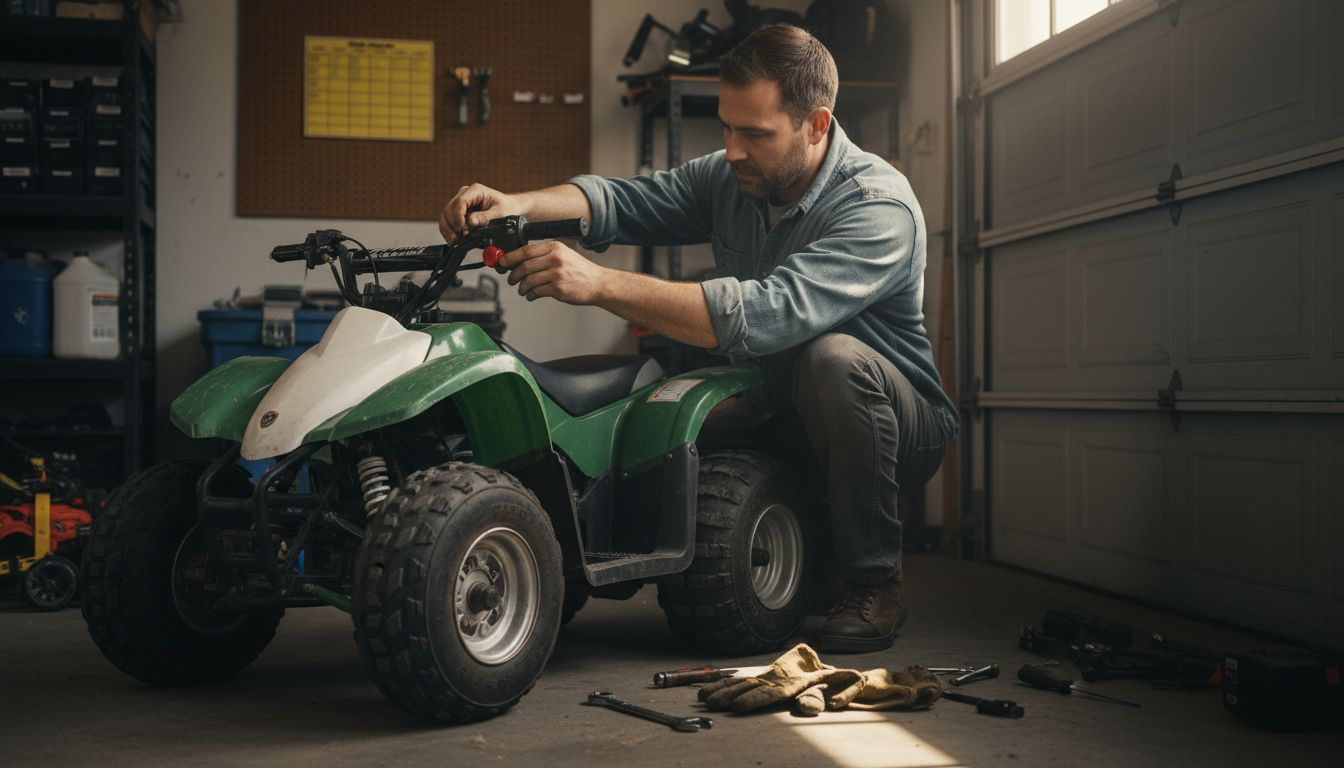
Safety shut-off switches provide immediate engine cutoff capability. Many models include tether cords that attach to the rider’s wrist or clothing. If the child falls off, the cord pulls free and instantly stops the engine. Premium models add parental remote controls enabling adults to kill the engine from a distance.
Regulatory standards mandate protective equipment usage in most jurisdictions. ATV crash death rates in children 10-15 years old are twice that of older teens, highlighting the importance of compliance. Many states require helmets by law, while safety organizations recommend comprehensive gear.
Manufacturers follow established safety protocols when designing youth ATVs:
- Frame geometry optimized for lower centers of gravity
- Suspension tuned for lighter rider weights
- Brake systems calibrated for smaller hand sizes
- Footpeg placement matching shorter leg lengths
Pro Tip: Test the safety shut-off switch before every ride session to ensure it functions properly. This five-second check could prevent serious injury.
“Youth ATV injuries often result from operating age-inappropriate vehicles. Proper size matching and safety features significantly reduce risk exposure.” - Consumer Product Safety Commission
The ATV for kids safety framework emphasizes multiple layers of protection rather than relying on single safety mechanisms. Combining vehicle features with rider training and adult supervision creates the most effective risk reduction strategy. The CDC youth ATV injuries report provides detailed analysis of injury patterns and prevention measures.
Age and skill recommendations for using youth ATVs
The recommended minimum age for youth ATVs typically starts around 6 years old, though individual readiness varies. Physical size, coordination level, and maturity matter more than chronological age alone. Some advanced 8-year-olds handle 110cc models safely, while less coordinated 10-year-olds may need 50cc machines.
Motor skill development critically impacts safe ATV operation. Young children possess less developed spatial awareness, reaction times, and risk assessment capabilities. Children under 16 years old have higher ATV-related injury risks due to these developmental factors. The gap between physical ability to operate controls and cognitive ability to make safe decisions creates dangerous situations.
Children under 16 should never ride full-size adult ATVs. The Consumer Product Safety Commission strongly advises against this practice due to vehicle weight, power output, and control complexity exceeding youth capabilities. Even teenagers who seem physically capable often lack the judgment needed for safe adult ATV operation.
“Developmental readiness encompasses physical coordination, cognitive maturity, and emotional regulation. All three must align before introducing youth to ATV riding.” - American Academy of Pediatrics
Supervised training enhances safe skill acquisition through structured progression:
- Initial sessions focus on stationary control familiarization
- Gradual introduction of movement in open, flat areas
- Progressive skill building including turns and obstacle navigation
- Consistent reinforcement of safety protocols and rules
The ATV safety guidelines for kids provide comprehensive frameworks for age-appropriate introductions. Parents should honestly assess their child’s abilities rather than rushing development. The CDC youth ATV injury analysis reveals that premature exposure to overpowered vehicles accounts for significant injury rates.
Formal training courses offer structured environments for skill development. Many organizations provide certified instruction specifically designed for youth riders. These programs teach fundamental techniques, safety awareness, and emergency response procedures through age-appropriate methods.
Common misconceptions about youth ATVs
Many parents mistakenly believe youth ATVs are simply miniature versions of adult machines. This fundamental misunderstanding overlooks the deliberate engineering differences that prioritize safety over performance. Youth models incorporate specific design elements addressing developmental limitations and learning needs.
The helmet-only safety approach represents another dangerous misconception. While helmets protect against head injuries, they provide zero protection for limbs, torso, or internal organs. Comprehensive protective gear addresses the full range of potential injury types occurring in ATV accidents.
Affordable youth ATVs can include robust safety features without premium pricing. Budget-conscious parents often assume lower cost equals inferior protection. Many entry-level models incorporate essential safety controls like speed limiters and emergency shutoffs. The key lies in identifying which features matter most and which represent unnecessary extras.
Parental supervision cannot be replaced by vehicle safety features alone. Some parents purchase ATVs with extensive safety technology then allow unsupervised operation. No mechanical system substitutes for active adult oversight and immediate intervention capability.
Common myths include:
- Automatic transmissions make ATVs foolproof for any age child
- Riding in the backyard eliminates the need for protective gear
- Expensive models guarantee safer experiences than budget options
- Previous bicycle riding experience translates directly to ATV competence
- Smaller engine sizes mean youth ATVs cannot cause serious injuries
The ATV safety for kids resources debunk these misconceptions with evidence-based guidance. Understanding the reality behind common myths helps parents make informed decisions protecting their children while still enabling enjoyable recreational experiences.
Comparing youth ATV models: price, safety, and features
Budget models priced between $700-$1500 offer essential safety features without premium costs. These entry-level options typically include adjustable speed limiters, emergency shutoff switches, and automatic transmissions. Build quality varies, with some manufacturers prioritizing durability while others focus on initial affordability.
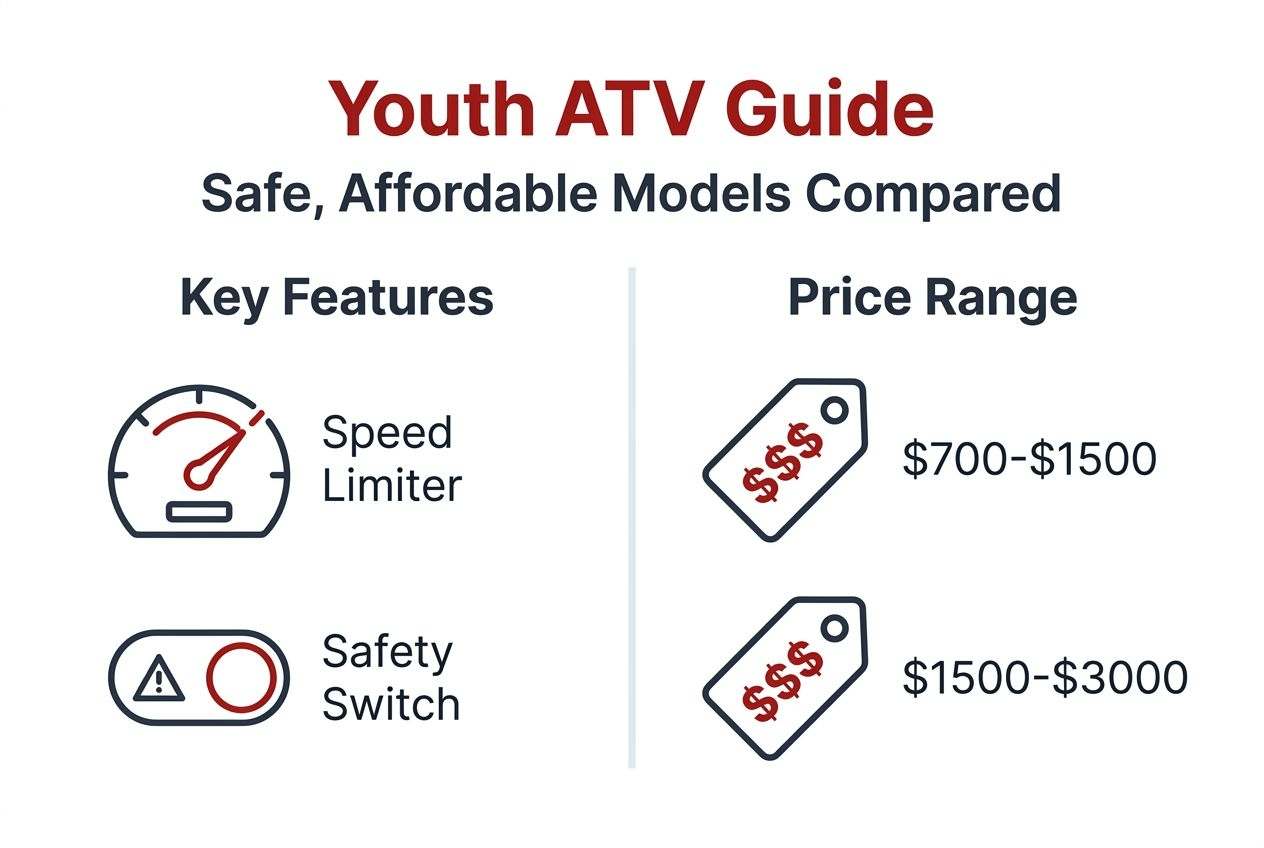
Premium models ranging from $1500-$3000 incorporate advanced suspension systems, multiple speed settings, and enhanced comfort features. Higher-end options often provide better ground clearance, improved shock absorption, and more refined throttle control. The price difference reflects manufacturing quality, component durability, and feature sophistication.
| Price Range | Key Features | Best For | Typical Limitations |
|---|---|---|---|
| $700-$1000 | Basic speed limiter, shutoff switch, 50cc engine | First-time riders age 6-8, occasional use | Basic suspension, limited adjustability |
| $1000-$1500 | Adjustable throttle, 70-90cc engine, improved brakes | Regular riders age 8-12, moderate terrain | Standard comfort features, basic build |
| $1500-$2500 | Multi-speed settings, 110cc engine, quality suspension | Experienced youth riders, varied terrain | Higher maintenance needs |
| $2500-$3000 | Advanced controls, premium components, extended warranty | Serious young riders, frequent use | Requires more rider skill |
Tradeoffs exist between price, safety technology, and ride quality. Budget models may sacrifice comfort and durability but still provide adequate safety for supervised recreational use. Premium options deliver superior experiences but exceed needs for casual riders.
Choosing the right model depends on several factors:
- Rider age and current skill level
- Anticipated usage frequency and terrain types
- Available budget and long-term value considerations
- Growth potential as rider abilities improve
Pro Tip: Consider buying a quality used premium model over a new budget model. Well-maintained youth ATVs often provide better value and safety features at comparable prices.
The youth ATV vs mini bike safety comparison helps families evaluate different vehicle types. The Mini Sport Kids ATV 110cc exemplifies mid-range options balancing affordability with comprehensive features. Understanding youth go-karts safety technology parallels apply when evaluating ATV safety systems.
Safe usage practices: supervision and protective gear
Active adult supervision combined with proper training reduces youth ATV injuries by an estimated 60%. This dramatic risk reduction requires more than passive observation. Effective supervision means staying within immediate intervention distance, maintaining constant visual contact, and being prepared to respond to dangerous situations.
Recommended protective gear forms a comprehensive safety system. Each component addresses specific injury risks:
- DOT-approved helmet protecting against head trauma and concussions
- Impact-resistant gloves preventing hand and finger injuries
- Over-the-ankle boots protecting feet, ankles, and lower legs
- Chest protector shielding ribs, spine, and vital organs
- Shatterproof goggles or face shield guarding eyes from debris
Parents should monitor usage environments carefully. Riding areas must be free from traffic, steep inclines, water hazards, and obstacles beyond rider skill levels. Establishing clear boundaries and enforcing them consistently prevents dangerous exploration beyond safe zones.
Training develops essential motor skills and judgment in young riders. Formal instruction covers:
- Proper body positioning and weight distribution
- Throttle control and smooth acceleration techniques
- Effective braking and emergency stopping procedures
- Safe turning methods and speed management
- Hazard recognition and avoidance strategies
Pro Tip: Create a pre-ride safety checklist covering gear inspection, vehicle condition check, and riding area assessment. Make it a non-negotiable routine before every session.
“Effective supervision requires active engagement, not passive watching. Parents must understand ATV operation well enough to recognize and correct unsafe behaviors immediately.” - Safe Kids Worldwide
The ATV safety for kids framework emphasizes layered protection strategies. Multiple safety measures working together provide far better protection than any single approach. Learn more about parental supervision and ATV safety through expert resources.
Step-by-step guide to choosing a youth ATV
Selecting the right youth ATV requires systematic evaluation matching rider characteristics to vehicle capabilities. Follow this structured approach:
-
Assess rider age, size, and skill level accurately. Measure your child’s height and inseam, then compare against manufacturer specifications. Consider coordination level, previous riding experience, and maturity. Choose engine size matching current abilities rather than anticipated growth.
-
Verify ATV meets safety certifications and includes essential features. Check for CPSC compliance, confirmed speed limiting capability, and emergency shutoff systems. Inspect build quality, brake responsiveness, and control accessibility. Ensure all safety features function properly before purchase.
-
Compare price relative to safety and feature requirements. Identify must-have versus nice-to-have features for your situation. Research reliability ratings and owner reviews for models within budget. Calculate total cost including protective gear, maintenance, and potential upgrades.
-
Ensure availability of proper protective gear and establish supervision commitment. Budget for quality helmets, boots, gloves, and protective wear sized correctly for your child. Confirm you can provide consistent adult supervision during all riding sessions. Plan for formal training through certified programs.
-
Review the Youth ATV Selection Framework. Match vehicle specifications to rider profile. Prioritize safety features over performance capabilities. Consider long-term value and growth accommodation.
The go-kart safe buying guide principles apply similarly to ATV selection. The kids go-kart safety guide offers parallel decision frameworks. For alternative options, explore the beginner guide to mini bikes covering similar powersports considerations.
Explore safe youth ATVs and accessories at GoKarts USA®
Finding the right youth ATV becomes simpler with expert guidance and quality options. GoKarts USA® offers carefully selected youth ATVs featuring essential parental controls and safety features. Our inventory includes models across price ranges, from budget-friendly entry options to premium youth machines.
The Mini Sport Kids ATV 110cc exemplifies our commitment to safe, affordable youth powersports. This model combines adjustable speed settings with durable construction and age-appropriate power delivery.

Beyond ATVs, we provide comprehensive protective gear, replacement parts, and accessories supporting safe riding experiences. Our selection includes DOT-approved helmets, impact gloves, protective wear, and maintenance supplies. For families exploring alternative options, the TrailMaster Storm minibike offers another entry point to youth powersports.
Visit GoKarts USA® to explore our complete youth ATV lineup, access buying guides, and connect with customer support ready to answer your questions.
FAQ
What age is appropriate for riding a youth ATV?
The minimum recommended age typically starts around 6 years old, depending on the specific ATV size and individual rider skill development. However, chronological age matters less than physical coordination, cognitive maturity, and ability to follow safety instructions. Children under 16 should never operate full-size adult ATVs due to significantly increased injury risks from vehicle weight, power, and control complexity exceeding youth capabilities.
What protective gear is essential for youth ATV riders?
Comprehensive protective gear includes a DOT-approved helmet, impact-resistant gloves, over-the-ankle boots, chest protector, and shatterproof goggles or face shield. Relying solely on helmets provides insufficient protection, as they only guard against head injuries while leaving limbs, torso, and internal organs vulnerable. Each gear component addresses specific injury types occurring in ATV accidents, creating a complete safety system when used together.
How can supervision reduce injury risks when children use youth ATVs?
Active adult supervision combined with proper training reduces youth ATV injuries by an estimated 60%. Effective supervision requires staying within immediate intervention distance, maintaining constant visual contact, and being prepared to respond instantly to dangerous situations. Supervision also ensures safety rules are consistently followed and allows adults to correct unsafe behaviors before they lead to accidents. Learn more through parental supervision ATV safety resources.
Can affordable youth ATVs include adequate safety features?
Budget models priced between $700-$1500 often include essential safety controls like adjustable speed limiters and emergency shutoff switches. Lower cost does not automatically mean inferior protection when manufacturers prioritize critical safety features over premium comfort options. The key involves identifying which features provide genuine safety benefits versus unnecessary extras that inflate price without improving protection.
What makes youth ATVs different from adult models?
Youth ATVs feature intentional design differences beyond just smaller size, including lower seat heights, narrower frames, simplified controls, and automatic transmissions eliminating clutch operation. Engine sizes range from 50cc to 110cc compared to adult models often exceeding 250cc. Speed limiters restrict maximum velocity between 10-30 mph, and lighter overall weight improves handling for inexperienced riders while reducing tip-over risks.