




TL;DR:
- Assess rider age, skill, terrain, and budget to select the safest and most suitable go-kart.
- Safety features like harnesses, roll cages, speed limiters, and helmets are essential for family use.
- Electric karts offer low maintenance, safety controls, and adaptability for growing children.
Picking the right go-kart for your family feels exciting until you realize just how many choices are out there. Speed ratings, power types, safety harnesses, age limits, price ranges — it adds up fast. The good news? A clear, step-by-step workflow turns that overwhelm into confidence. Whether you’re shopping for a curious seven-year-old or a teenager ready for some real throttle, this guide covers every decision point from needs assessment to first ride. We’ll walk you through safety priorities, power comparisons, and ownership basics so your family lands the perfect kart without second-guessing a single step.
Table of Contents
- Assess your needs: age, skill, and usage
- Safety first: must-have features for families
- Choose the right power and model: electric vs gas vs pedal
- Step-by-step: your go-kart buying workflow
- Beyond basics: customization, troubleshooting, and maintenance
- A better way: prioritize family safety and real-world support
- Ready to buy? Trusted go-karts and support for your family
- Frequently asked questions
Key Takeaways
| Point | Details |
|---|---|
| Start with family needs | Assess riders’ ages, uses, and skill levels before considering models. |
| Safety is non-negotiable | Prioritize harnesses, helmets, and speed controls for a worry-free first ride. |
| Choose the right power | Electric go-karts are best for new drivers thanks to ease, quiet operation, and affordability. |
| Follow a step-by-step workflow | A systematic buying process guarantees you don’t overlook key features or support. |
| Plan for maintenance | Consider ongoing support and simple maintenance needs to keep fun rolling year-round. |
Assess your needs: age, skill, and usage
Every great purchase starts with knowing exactly what you need. Before browsing models or comparing prices, take a few minutes to map out your family’s situation. Who will be riding? How old are they? Where do you plan to drive? These answers shape everything that follows.
Here are the key factors to pin down before you shop:
- Rider age and size: Younger kids need lower speeds, adjustable seats, and parental controls. Teens and adults can handle more power.
- Experience level: First-time riders need forgiving, easy-to-control models. Experienced drivers can explore more performance-oriented options.
- Riding environment: Backyard grass, flat pavement, and off-road dirt trails all call for different tires, suspension, and ground clearance.
- Number of riders: Multi-rider households benefit from adjustable, durable models that hold up across different skill levels.
- Budget: Factor in the kart, safety gear, and ongoing maintenance costs from day one.
A kids go-karts guide confirms what experienced buyers know: the go-kart buying workflow starts with assessing rider age, size, intended use, and budget to select electric or gas-powered models suitable for families and beginners. Skipping this step leads to buying something too powerful, too small, or simply wrong for your terrain.
Here’s a quick reference to match age groups with appropriate go-kart types:
| Age Group | Recommended Speed | Best Power Type | Typical Use Case |
|---|---|---|---|
| 3 to 6 years | Under 5 mph | Pedal | Backyard, flat surfaces |
| 6 to 10 years | 5 to 15 mph | Electric | Yard, light trails |
| 10 to 14 years | 15 to 25 mph | Electric or gas | Trails, open lots |
| 14 and up | 25 mph+ | Gas or performance electric | Off-road, tracks |
Families with kids of different ages should also explore the full range of types of go-karts to understand what fits each stage of growth. Buying a model that grows with your child is always a smart move. For value-focused shoppers, browsing affordable go-kart models early in your search sets realistic expectations.
Pro Tip: Look for models with adjustable seats, speed limiters, and foot pedal positioning. These features extend the kart’s usable life as your child grows, making it a smarter long-term investment.
Safety first: must-have features for families
After establishing who will ride and where, it’s crucial to focus on safety before looking at brands or specific features. This is the step most first-time buyers rush past, and it’s also the one that matters most.
The following features are non-negotiable for family go-karts:
- 5-point harness: Keeps young riders securely seated during turns and stops.
- Roll cage or frame protection: Shields riders if the kart tips or flips.
- Speed limiter: Lets parents cap the top speed for younger or newer riders.
- Disc brakes: Provide reliable, responsive stopping power at all speeds.
- Low center of gravity: Reduces the risk of tipping on uneven terrain.
- Helmet compatibility: A properly fitting helmet is essential for every ride, no exceptions.
The go-kart safety features that matter most for families include 5-point harnesses, roll cages, speed limiters, helmets, disc brakes, and a low center of gravity to minimize tipping risks. These aren’t premium extras — they’re baseline expectations for any kart your child will ride.
Important: Never allow a child to ride without a properly fitted helmet. Supervision is equally critical — most go-kart injuries happen when safety gear is skipped or an adult isn’t watching.
Electric go-karts deserve a special mention here. They offer built-in advantages for beginners: no exhaust fumes, quieter operation, and smoother power delivery that’s far less likely to surprise a young driver with a sudden surge. Parents also appreciate that electric models often come with remote speed controls, allowing you to reduce power while your child builds confidence. Reviewing the safe features for kids available on modern models gives you a solid baseline before you ever look at a product listing.
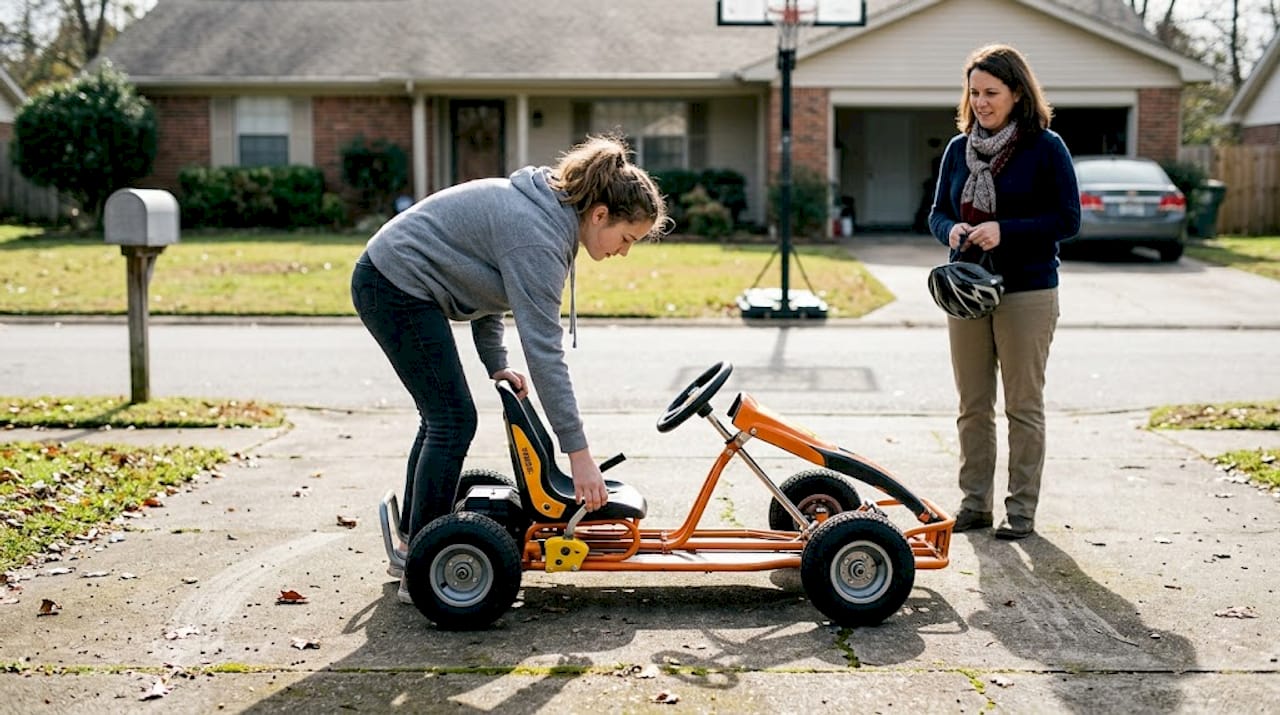
Speed safety by age is straightforward: keep kids under ten below 15 mph, teens between 15 and 25 mph, and only let experienced older riders push past that. These aren’t arbitrary numbers — they reflect the reaction times and decision-making abilities appropriate for each stage of development.
Choose the right power and model: electric vs gas vs pedal
Once safety is assured, you can narrow your choices by comparing power types and specific models. Each option has real trade-offs worth understanding before you commit.
| Power Type | Pros | Cons | Best For |
|---|---|---|---|
| Pedal | No cost to run, silent, zero maintenance | Slow, limited to flat ground | Ages 3 to 6, backyard only |
| Electric | Low maintenance, quiet, speed controls | Charging time, limited range | Ages 6 to 14, beginners |
| Gas | Higher speed, longer run time, refuel fast | Louder, more maintenance, fumes | Ages 10+, experienced riders |
Here’s a simple numbered process for picking the right power type:
- Identify your youngest rider’s age and size first.
- Match that age to the speed and power ranges in the table above.
- Assess your terrain — electric handles most surfaces, but off-road may need gas power.
- Set your maintenance comfort level — if wrenching isn’t your thing, go electric.
- Confirm your budget covers the initial cost plus ongoing expenses like batteries or oil.
Electric models typically start around $300 for entry-level youth karts and climb to $800 or more for models with extended range and higher speeds. Gas models often begin near $700 and rise steeply for performance builds. As electric vs gas comparisons show, electric preferred for low maintenance, quiet operation, and affordability. For families looking to balance performance with value, our affordable go-karts guide breaks down exactly what you get at each price point.
Pro Tip: If you have multiple kids at different skill levels, electric is almost always the smarter choice. The speed limiter means one kart can safely serve a six-year-old and a twelve-year-old with just a settings adjustment. Check out our smart tips for affordable go-karts for more guidance on stretching your budget without cutting corners on safety.
Step-by-step: your go-kart buying workflow
Now that you’ve chosen a model type, here’s how to follow a reliable go-kart buying workflow from start to finish. This process ensures nothing important slips through the cracks.
- Define your needs using the age, terrain, and budget factors from step one.
- Research brands known for quality and parts support — names like Trailmaster, Razor, and X-PRO have strong reputations.
- Check terrain and tire fit — knobby tires for dirt, smooth tires for pavement.
- Test the sit and fit in person when possible, or verify seat dimensions and weight limits against your rider.
- Verify parts availability and warranty coverage before purchasing.
- Buy from a reputable dealer who offers assembly support and after-sale service.
- Assemble and maintain according to the manual from day one.
A thorough buying overview confirms these purchase steps cover all critical decisions from research through ongoing maintenance. Use our go-kart buying checklist to keep track as you go.
| Workflow Stage | Key Action | Watch Out For |
|---|---|---|
| Needs assessment | Age, terrain, budget | Overlooking future growth |
| Research | Brand reputation, reviews | Brands without parts support |
| Fit check | Seat size, weight limit | Buying too big too soon |
| Dealer selection | Warranty, assembly support | No-return or no-support sellers |
| Post-purchase | Maintenance schedule | Skipping break-in procedures |
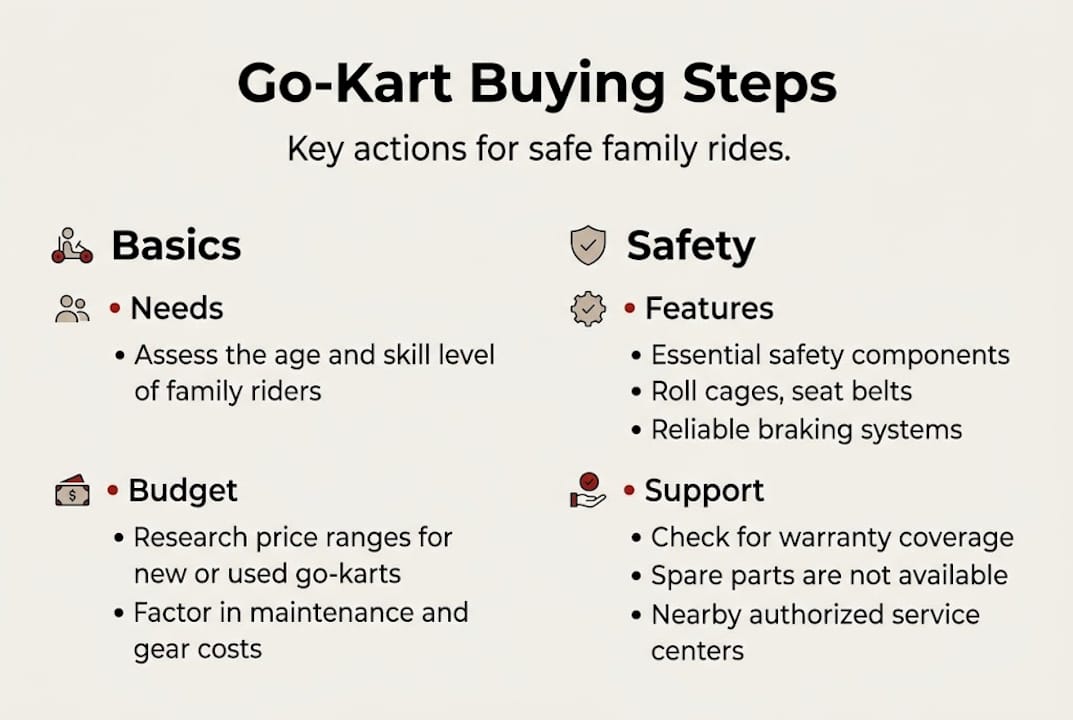
On the question of used vs new go-karts: used karts can save money upfront but often come with unknown wear histories. For first-time family buyers, new is generally worth the peace of mind. If budget is tight, use our resource on what makes go-karts affordable to find genuinely well-priced new options.
Pro Tip: Always ask the dealer about replacement part lead times before buying. A kart that can’t be repaired quickly becomes a garage ornament. Warranty coverage and parts availability are just as important as the initial price tag.
Beyond basics: customization, troubleshooting, and maintenance
With your new go-kart at home, it’s essential to keep it safe and running well for long-term enjoyment. Ownership doesn’t end at checkout — it’s where the real adventure begins.
Here are the maintenance tasks every family should stay on top of:
- Battery care (electric): Charge after every use, avoid full depletion, and store in a dry space during winter months.
- Tire pressure checks: Inspect before every ride session to ensure proper handling and safety.
- Brake inspection: Check brake pads and cables monthly for wear or fraying.
- Bolt and fastener check: Vibration loosens hardware over time — a quick check every few rides prevents bigger problems.
- Chain lubrication (gas models): Apply lubricant every 10 to 15 hours of use to prevent wear.
Electric go-karts are particularly well-suited for family ownership. As reviews of electric models make clear, electric karts for families win on no fumes, low maintenance, and built-in speed controls — especially when buying from brands with strong parts support. The X-PRO Ranger 150 review is a great example of how a well-supported model holds up over time.
Customization is also part of the fun. Passenger seating add-ons, dual controls for parent-assisted learning, upgraded suspension for off-road trails, and colored body panels all let your family make the kart feel like its own. Start small with safety upgrades and add performance tweaks as your riders build confidence.
Pro Tip: Order your owner’s manual, an extra set of safety gear, and any consumable parts (like brake pads or a spare battery) at the same time you buy the kart. You’ll thank yourself the first time something needs attention. And explore why families love go-karts for inspiration on getting the most out of every ride.
A better way: prioritize family safety and real-world support
Here’s the honest truth most buying guides won’t tell you: price and speed specs are the least important factors for most families. We’ve seen buyers chase horsepower numbers and sticker savings, only to end up with a kart that’s hard to repair, uncomfortable for their child, or missing key safety features.
The families who get this right focus on three things above all else: safety features, ease of use, and ongoing support from their dealer. A kart with a strong warranty and readily available parts will outlast and outperform a cheaper model with no support network, every single time.
Used karts can be tempting when budgets are tight. But for first-time buyers especially, the peace of mind that comes with a new kart and a real return policy is genuinely worth the price difference. You can always find a safe buying guide to help you evaluate options side by side. Buy for the long game. Buy for the whole family. Buy for the adventure that keeps going, not just the excitement of day one.
Ready to buy? Trusted go-karts and support for your family
You’ve done the homework. Now it’s time to find the right kart and get out on the trail. At GoKarts USA, we carry a wide selection of beginner-friendly and family-tested models built around the features that matter most: safety, reliability, and real fun.

The Mini Sport Kids ATV is a fantastic starting point for younger riders, offering manageable power and rugged build quality. Need to keep your kart in top shape? Parts like Pocket Bike Footpegs and other accessories are available to make upgrades and repairs straightforward. We’re not just a store — we’re your pit crew, committed to keeping your family’s adventure going strong every season.
Frequently asked questions
What is the best type of go-kart for young kids?
Electric or pedal go-karts are safest for young kids, offering low speeds and built-in parental controls. As experts confirm, electric is preferred for low maintenance, quiet operation, and affordability.
How much should you budget for a beginner family go-kart?
Expect to spend around $500 for entry-level electric models and $1,000 or more for gas models, plus costs for helmets and safety gear. Entry-level budgets should also factor in ongoing maintenance like oil or battery replacement.
Do you need any tools or skills to assemble a family go-kart?
Most beginner models require only basic tools and minimal mechanical experience, with electric karts generally being the easiest to put together. Following the assembly steps in your manual from the start prevents most common setup mistakes.
What critical safety gear is non-negotiable for first rides?
Every rider must wear a properly fitted helmet before their first lap, no exceptions. For added protection, safety features like gloves, closed-toe shoes, and a 5-point harness make every ride significantly safer.