




TL;DR:
- Properly certified helmets and 5-point harnesses are essential for go-kart safety.
- Welded steel frames with low centers of gravity reduce tipping risks.
- Modern safety tech like speed limiters and remote shut-offs enhance parental control.
Not every go-kart is built the same, and that gap in quality can mean the difference between a thrilling afternoon and a trip to the emergency room. Research shows that helmets virtually eliminate moderate and severe head injuries in go-kart incidents, yet many riders still hit the track without proper protection. As parents and recreational enthusiasts, you deserve clear, honest guidance on which safety features actually matter. This guide breaks down the most essential go-kart safety features, backed by real incident data, so you can make confident choices for your family and ride with the freedom that comes from knowing everyone is protected.
Table of Contents
- Essential protective gear: Helmets and harnesses
- Frame design and stability: The science behind prevention
- Smart safety tech: Speed limiters, remote shut-offs, and more
- Combining features: What to look for in a family-safe go-kart
- Why safety features matter more than fun: A fresh perspective
- Ready to choose the safest go-kart for your family?
- Frequently asked questions
Key Takeaways
| Point | Details |
|---|---|
| Certified helmets | Only certified helmets prevent moderate and severe head injuries during go-kart accidents. |
| Harnesses and seatbelts | A 5-point harness or lap belt is essential to keep riders secured and avoid injury in rollovers. |
| Stable frames and controls | Low center of gravity, strong frames, and speed limiters drastically reduce flip and collision risks for families. |
| Smart safety technology | Features like remote kill switches and parental limiters let adults supervise safely and adjust for different rider ages. |
Essential protective gear: Helmets and harnesses
With the basics of go-kart risks established, it’s critical to start with rider protection before considering the vehicle itself. No single investment pays off more than the right helmet and a properly fitted harness. These two features form the front line of defense, and cutting corners on either one puts your rider at serious risk.
When it comes to helmets, certification is everything. Snell, DOT, or ECE certified helmets are engineered to absorb and redirect impact energy, preventing the kind of moderate and severe head trauma that uncertified lids simply cannot stop. A shiny helmet with no certification label is essentially decorative. Always flip the helmet over and read the interior label before you buy or rent.
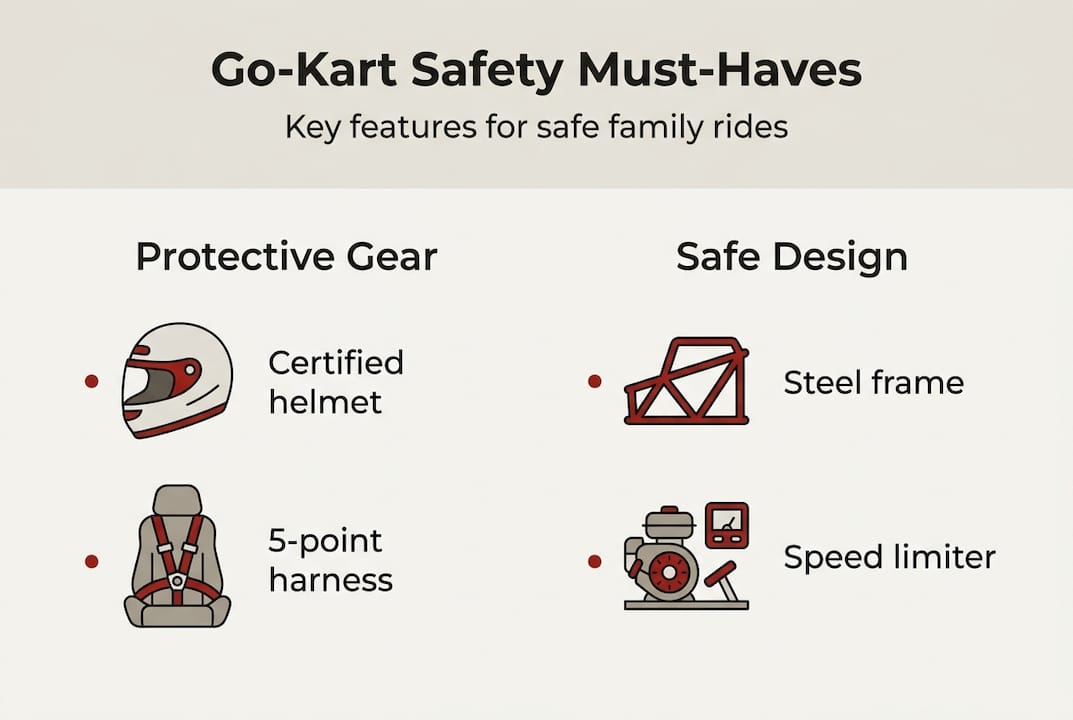
Harnesses tell a similarly urgent story. Studies on go-kart incidents reveal that seatbelt use drops to just 29% in reported accidents, and riders without restraints face dramatically higher injury risk, especially during rollovers. A 5-point harness is the gold standard because it anchors the rider at both shoulders, both hips, and the crotch, distributing crash forces across the strongest parts of the body. A basic lap belt is the minimum acceptable option, but it leaves the upper body dangerously free in a flip.
Before buying or renting, check these core protective features:
- Helmet certification: Look for Snell, DOT, or ECE labels inside the helmet shell
- Snug fit: The helmet should not rock side to side or front to back
- Harness type: 5-point harness preferred; lap belt as a last resort only
- Harness condition: No fraying, no cracked buckles, no loose mounting points
- Chin strap security: Should lock firmly with no slack after fastening
For a broader look at go-kart safety must-haves and beginner go-kart features, we’ve put together dedicated resources that go even deeper. The roll cage safety benefits are also worth understanding, as a roll cage works hand in hand with your harness to keep riders inside the kart during the worst-case scenario.
Pro Tip: Always check helmet certification labels yourself, even at reputable rental facilities. Staff turnover is common, and non-certified helmets can slip into rotation without anyone noticing.
Frame design and stability: The science behind prevention
Once gear and harnesses are secure, the go-kart’s frame is your next line of defense. The frame is not just a structural skeleton. It is the engineering foundation that determines how a kart handles stress, absorbs impact, and resists tipping during aggressive turns or unexpected obstacles.
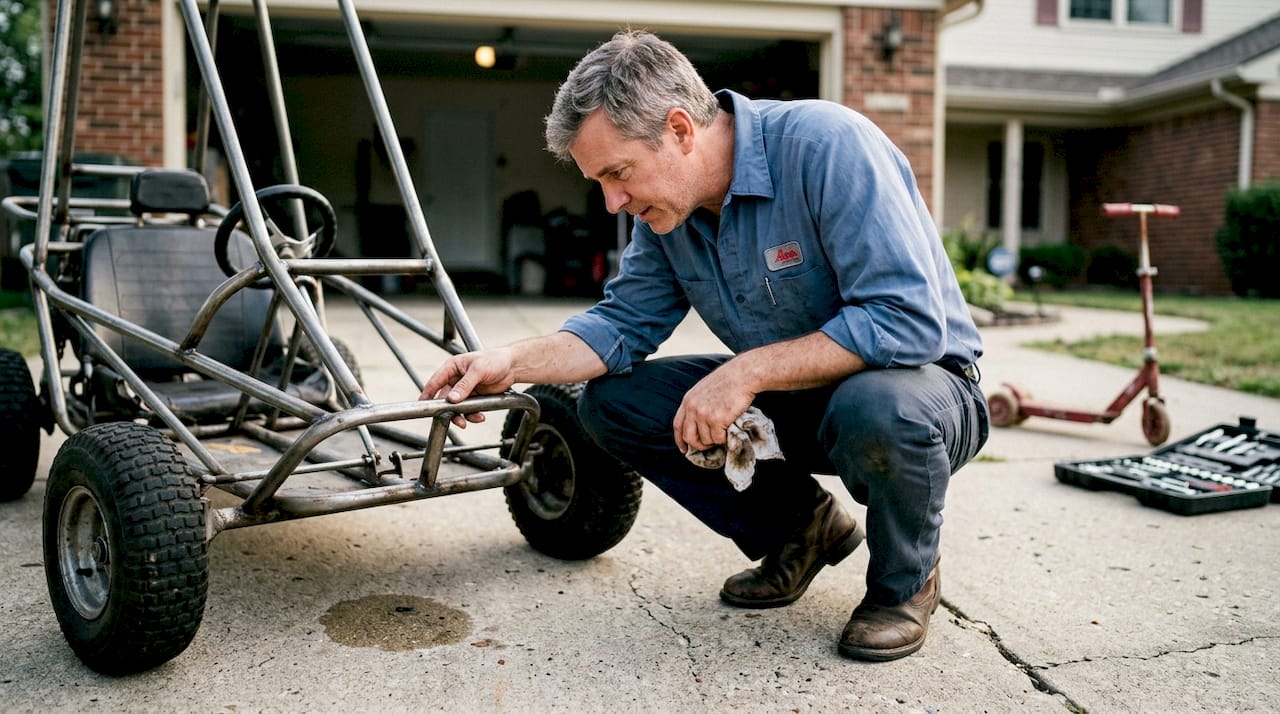
Steel frames, particularly those with fully welded joints rather than bolted connections, offer the most reliable protection. Low center of gravity and robust steel frames measurably improve balance and reduce flip risk, which is the single most dangerous event in recreational go-karting. Bolted frames can loosen over time and under vibration, creating weak points that welded construction simply does not have.
The chassis height matters just as much as the material. A kart that sits closer to the ground naturally resists tipping because physics works in your favor. The lower the center of gravity, the more lateral force is required to initiate a rollover. For young or beginner riders who may not yet have the instinct to ease off the throttle in a sharp corner, this engineering advantage is enormous.
Here is a quick comparison of common frame types and their safety impact:
| Frame type | Material | Joint method | Stability rating |
|---|---|---|---|
| Recreational family kart | Steel | Fully welded | High |
| Budget entry-level kart | Steel | Bolted | Moderate |
| Racing kart | Chromoly steel | Fully welded | Very high |
| Plastic body kart | Mixed | Bolted/plastic | Low |
Speed limiters also play a stability role that is easy to overlook. When a young rider cannot accidentally push the kart beyond a safe speed threshold, the risk of losing control in a turn drops significantly. Explore go-kart performance features and go-kart parts and customization to understand how these systems integrate with the overall build.
Pro Tip: When inspecting any kart, run your hand along the frame welds. Clean, consistent bead welds signal quality construction. Rough, uneven, or patchy welds are a warning sign worth taking seriously.
Smart safety tech: Speed limiters, remote shut-offs, and more
Beyond the hardware, modern go-karts now include high-tech features parents can use as real safeguards. These tools do not replace training or proper gear, but they give you an active role in managing risk while your child builds confidence behind the wheel.
Parental speed controls are vital for young riders, directly reducing incidents tied to loss of control. Here are the top tech features worth prioritizing:
- Speed limiters: Cap the maximum velocity, adjustable as skills improve
- Remote shut-off: Allows a parent to kill the engine instantly from a distance
- Horn: Simple but effective for alerting others on shared tracks
- Headlights and taillights: Critical for visibility in low-light conditions
- Automatic engine cut-off: Shuts down if the kart tips beyond a set angle
Here is how the main control options compare:
| Feature | Manual pedal limiter | Digital speed limiter | Remote shut-off |
|---|---|---|---|
| Parent control level | Low | Medium | High |
| Ease of adjustment | Fixed | Adjustable | Instant |
| Best for age group | Teens | Ages 8 to 12 | Ages 5 to 10 |
| Reaction time | Rider dependent | Automatic | Immediate |
Setting these features correctly makes a real difference. Follow these steps when configuring controls for a young rider:
- Start with the lowest speed setting available and observe how your child handles the kart at that pace.
- Increase the limit in small increments only after consistent, controlled laps without incidents.
- Test the remote shut-off before every session to confirm it responds reliably.
- Review the settings at the start of each riding season, as skills and confidence can change significantly over months.
- Never disable safety tech to satisfy a child’s request for more speed before they have demonstrated readiness.
For more guidance on age-appropriate choices, our resources on choosing kids go-karts and safe go-kart accessories walk you through the full picture.
Combining features: What to look for in a family-safe go-kart
Having covered individual features, practical decision-making comes down to combining these safeguards for real-world use. No single feature makes a go-kart safe on its own. The magic is in how they work together, and knowing what to look for before you buy or rent saves you from costly regrets.
Modeling go-kart choices after safety features measurably reduces accident risk. Family-focused karts now routinely borrow safety technology from youth racing models, making it easier than ever to find well-equipped options at accessible price points.
Use this checklist before committing to any purchase or rental:
- Certified helmet included or required: No exceptions, no substitutions
- 5-point harness or minimum lap belt: Inspect the condition personally
- Fully welded steel frame: Tap joints and look for consistent weld beads
- Low chassis profile: The lower the seat, the better the stability
- Speed limiter or governor: Adjustable preferred for growing riders
- Remote shut-off capability: Non-negotiable for children under 10
- Working brakes on all four wheels: Test before every ride session
- Visible safety signage at rental facilities: A sign of professional management
When speaking with sellers or rental operators, ask these questions directly: What certification does the helmet meet? Can the speed limit be adjusted? When were the harnesses last inspected? Is there a roll cage or bump rail? A reputable seller or facility will answer without hesitation. Vague responses are a red flag. For a broader look at options, best go-karts for kids and our guides on youth go-kart safety tech and types of go-karts offer excellent starting points.
Pro Tip: Even at well-known commercial rental facilities, always double-check that the helmet fits your child correctly. Rental staff often hand out helmets by size estimate, and a loose helmet offers far less protection than a properly fitted one.
Why safety features matter more than fun: A fresh perspective
Here is something the powersports community does not say loudly enough: safety features do not limit the fun. They create it. When you are not worried about whether your child’s kart can stop in time or whether that helmet is actually certified, you can fully enjoy the moment. That is freedom in its truest sense.
We see parents make the same mistake repeatedly. They choose a go-kart based on color, top speed, or price alone, then scramble to add safety features as an afterthought. That approach puts you behind the curve from day one. The families who have the best, most lasting go-kart experiences are the ones who built their setup around safety first and layered the fun on top.
We have heard from parents whose children walked away from rollovers because a 5-point harness held firm. We have seen close calls avoided because a remote shut-off worked exactly as designed. These are not hypotheticals. They are real outcomes from real families who made proactive choices. Understanding why parents buy electric go-karts for safety and value is part of that same proactive mindset. Safety is not a bonus feature. It is the foundation every great ride is built on.
Ready to choose the safest go-kart for your family?
You now have the knowledge to make a confident, informed choice. The next step is finding go-karts and accessories that actually deliver on every safety standard we have covered together.
At GokartsUSA.biz, we curate models built with the features that matter most to families: certified helmets, sturdy frames, parental controls, and reliable harness systems. Browse our selection of kids ATVs with remote shut-off for a great example of safety-first engineering in action. Need to upgrade or replace components? Check out replacement footpegs and other parts to keep your kart in top condition. Explore all of our go-kart safety options and let us be your trusted partner in building the safest, most thrilling family adventure on four wheels.
Frequently asked questions
What is the most important safety feature in go-karts for kids?
A certified helmet is the single most crucial safety feature, as no moderate or severe head injuries are reported when riders wear properly certified helmets during go-kart incidents.
How can I make sure my child’s go-kart is safe?
Check for a sturdy steel frame, low center of gravity and speed limiters, a certified helmet, a 5-point harness, and parental controls like remote shut-off before every ride.
Are seatbelts really necessary on all go-karts?
Absolutely. Rollovers cause 72% of serious injuries in go-kart incidents without seatbelts, making harnesses one of the most critical protections on any kart.
What safety features should I look for when renting a go-kart?
Look for certified helmets, 5-point harnesses, robust welded frames, speed governors, and posted safety rules, as kids go-karts should feature multiple safety elements working together for real protection.
Recommended
- Safe go-kart features for kids: 7 must-haves in 2026 – GoKarts USA®
- 7 Must-Have Go-Kart Accessories for Safe Family Fun – GoKarts USA®
- Why go-karts are popular: thrill, family fun, and safety – GoKarts USA®
- Top features of beginner go-karts for kids’ safety & fun – GoKarts USA®
- Teherautó biztonsági felszerelések: 50%-kal kevesebb baleset – Convoy Truck Shop HU