




Go-karting has evolved from a niche motorsport into a mainstream family activity enjoyed by millions across America. What started as a backyard hobby in the 1950s now represents a thriving recreational industry with over 1,200 tracks nationwide. The appeal extends far beyond speed and competition. Families discover that go-karting offers surprising health benefits, teaches valuable life skills, and creates lasting memories in a controlled, safe environment. Whether you’re a parent seeking quality time with your kids or an enthusiast chasing that adrenaline rush, go-karting delivers an accessible, inclusive experience that bridges generations and skill levels.
Table of Contents
- Key takeaways
- The appeal of go-karting for families and enthusiasts
- Safety and inclusivity: Why go-karting is great for kids and families
- Trends and technology shaping go-kart popularity
- Balancing thrill and safety: managing risks in go-karting
- Explore safe and fun go-karts for the whole family
- Frequently asked questions
Key Takeaways
| Point | Details |
|---|---|
| Family friendly accessibility | Go karting is approachable without years of training or expensive equipment, with tracks providing karts, safety gear, and instruction. |
| Health and focus gains | It delivers cardiovascular fitness, improved reflexes, core strength, focus, confidence, and stress reduction for both kids and parents. |
| Family bonding | Parents and children compete on equal footing, creating shared memories and healthy competition. |
| Safe track design | Modern tracks use barriers, runoff areas, and speed appropriate layouts to keep racing thrilling yet controlled for families. |
| Versatile events | Tracks host birthday parties, corporate events, and spontaneous weekend adventures, making go karting suitable for a range of occasions. |
The appeal of go-karting for families and enthusiasts
Go-karting attracts such diverse audiences because it removes traditional barriers to motorsport participation. You don’t need years of training, expensive equipment, or elite physical conditioning to experience the thrill of racing. Tracks provide everything you need: karts, safety gear, and expert instruction. This accessibility makes it perfect for birthday parties, corporate events, or spontaneous weekend adventures.
The adrenaline rush keeps enthusiasts coming back. Navigating tight corners at speed, executing perfect overtakes, and shaving seconds off lap times triggers genuine excitement. Yet the controlled environment ensures that thrill never crosses into reckless danger. Professional tracks design courses with safety barriers, runoff areas, and speed-appropriate layouts that challenge drivers without overwhelming them.
Health benefits surprise many first-time participants. Go-karting provides improved cardiovascular fitness, reflexes, core strength, focus, confidence, and stress reduction with significant positive effects on kids and parents. Steering a kart demands constant core engagement to maintain control through turns. Your heart rate elevates as you navigate the track, providing cardiovascular exercise disguised as play. The mental focus required to anticipate corners, judge braking points, and maintain racing lines sharpens cognitive function.
Key physical and mental benefits include:
- Enhanced hand-eye coordination through constant steering adjustments
- Improved reaction time from split-second decision making
- Strengthened neck and shoulder muscles from G-forces in turns
- Better spatial awareness and depth perception
- Reduced stress through immersive, focused activity
Families particularly value the bonding opportunities. Parents and children compete on equal footing, creating shared memories and healthy competition. Unlike many activities where adults hold inherent advantages, go-karting levels the playing field. Lighter kids often navigate corners more efficiently, while experienced parents leverage better racing lines. This balance makes races genuinely competitive and fun for everyone.
Pro Tip: Start with practice laps to learn the track layout before racing. Understanding where to brake and accelerate makes the experience more enjoyable and safer for beginners.
For those new to the sport, a beginner’s guide to safe go-karting provides essential tips on technique, safety, and track etiquette. Learning proper fundamentals from the start builds confidence and prevents bad habits that could lead to accidents.
“Go-karting teaches kids that speed must be balanced with control. They learn that the fastest driver isn’t always the winner, the smartest one is.” – Track Safety Director, SpeedSportz Racing Park
The sport also builds character in young participants. Children learn to handle disappointment when they don’t win, celebrate others’ success, and persist through challenges. These lessons transfer directly to school, sports, and social situations. The immediate feedback loop of racing, where better technique produces faster laps, teaches cause and effect in a tangible, memorable way.
Safety and inclusivity: Why go-karting is great for kids and families
Modern go-karting prioritizes safety without sacrificing excitement. Tracks implement multiple protective layers: helmet requirements, seat belts, roll bars, safety barriers, and speed governors on junior karts. Staff undergo extensive training to supervise races, enforce rules, and respond to incidents. This professional oversight transforms what could be risky into reliably safe.
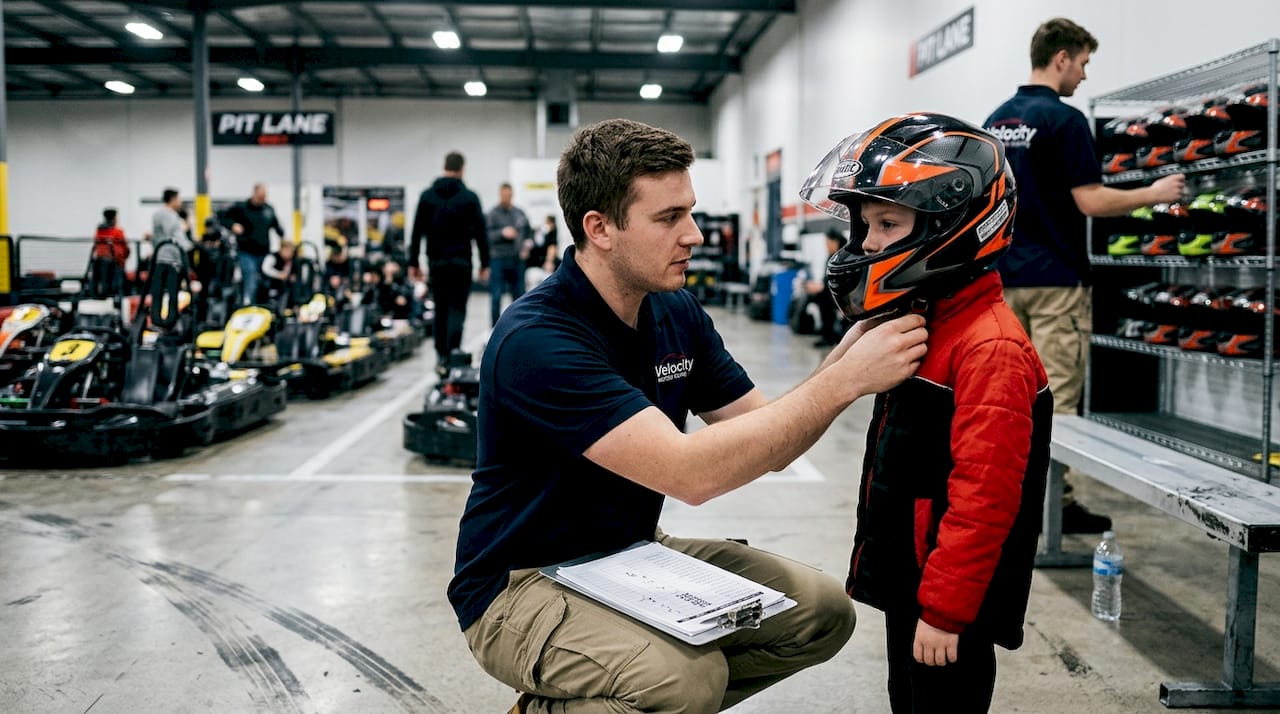
Junior karts make the sport accessible to young drivers. Over 1,200 U.S. tracks offer junior karts from age 7-8 and 48" height with speed limits appropriate for kids, enhancing safety and accessibility. These karts typically max out at 15-20 mph, fast enough to feel exciting but slow enough to maintain control. Adjustable pedals and seats accommodate different sizes, ensuring proper ergonomics for safe operation.
Essential safety features on quality junior karts:
- Speed governors limiting maximum velocity
- Remote kill switches allowing staff to stop karts instantly
- Full roll cage protection
- Four-point safety harnesses
- Bumpers minimizing impact force
- Adjustable seats for proper positioning
Families seeking home options should explore youth go-karts for families that incorporate similar safety technology. Private karts require more parental supervision but offer convenience and unlimited practice time in controlled spaces like large yards or private properties.
Proper preparation enhances safety and enjoyment:
- Review all safety rules and track layout before driving
- Ensure helmets fit snugly without gaps or movement
- Wear closed-toe shoes and avoid loose clothing
- Listen carefully to staff instructions and ask questions
- Start slowly to build confidence before pushing limits
- Respect flags and signals from track marshals
Go-karting teaches practical skills beyond driving. Kids learn to assess risk, follow rules for everyone’s benefit, and take responsibility for their actions. When a child spins out from braking too late, they immediately understand the consequence of poor judgment. This real-world feedback is more effective than any lecture about being careful.
The social aspect strengthens family bonds and friendships. Racing together creates shared stories and inside jokes. Parents gain insight into their children’s personalities, watching how they handle competition, setbacks, and success. These observations often spark meaningful conversations during the drive home.
Pro Tip: Invest in quality top go-kart safety accessories like properly certified helmets and gloves. Cheap gear may not provide adequate protection in impacts.
Birthday parties and group events thrive at go-kart tracks. The structured activity keeps kids engaged for hours, eliminating the chaos of unstructured play. Most facilities offer party packages including race time, food, and private rooms. The built-in competition and achievement (fastest lap awards) make every participant feel valued.
Trends and technology shaping go-kart popularity
The go-kart industry is experiencing significant growth driven by technological innovation and changing consumer preferences. The global go-kart market is growing steadily with electric karts gaining popularity due to their safety, low noise, and eco-friendliness compared to gas karts. This expansion reflects broader trends toward sustainable recreation and family-focused entertainment.
Electric versus gas karts represents the industry’s biggest technological divide. Each offers distinct advantages depending on priorities and use cases:
| Feature | Electric Karts | Gas Karts |
|---|---|---|
| Acceleration | Instant torque, quick off the line | Gradual power delivery |
| Top speed | 40-50 mph typical | 60-70+ mph possible |
| Noise level | Nearly silent operation | Loud engine noise |
| Maintenance | Minimal, battery charging only | Regular oil changes, tune-ups |
| Environmental impact | Zero emissions | Exhaust emissions |
| Runtime | 15-20 minutes per charge | 45-60 minutes per tank |
| Operating cost | Lower electricity costs | Higher fuel and maintenance |
Electric karts excel in family and recreational settings. The quiet operation allows normal conversation and reduces noise complaints in residential areas. Instant torque provides thrilling acceleration that rivals gas karts in the critical 0-30 mph range where most recreational racing occurs. Parents appreciate the lack of exhaust fumes and simpler maintenance requirements.
Gas karts maintain advantages for serious enthusiasts and competitive racing. Higher top speeds satisfy experienced drivers seeking maximum performance. Longer runtime between refueling supports extended practice sessions and endurance racing. The engine sound and vibration provide sensory feedback that some purists prefer.
Innovations in chassis design improve handling and safety simultaneously. Modern karts feature:
- Lower centers of gravity reducing rollover risk
- Wider wheelbases enhancing stability in turns
- Improved suspension systems absorbing bumps and impacts
- Adjustable components allowing customization for different drivers
- Lightweight materials increasing efficiency without sacrificing strength
Braking technology has advanced dramatically. High-performance disc brakes provide consistent stopping power even after repeated hard use. Some premium karts incorporate regenerative braking on electric models, converting kinetic energy back into battery charge while slowing the vehicle. This extends runtime and reduces brake wear.
Digital integration adds new dimensions to the experience. Timing systems display real-time lap data, allowing drivers to track improvement across sessions. Some facilities offer smartphone apps showing racing lines, braking points, and performance analytics. This gamification appeals to tech-savvy younger generations while providing valuable learning tools.
For those considering electric go-karts benefits, the decision often comes down to intended use. Families prioritizing safety, convenience, and environmental responsibility lean electric. Enthusiasts chasing maximum performance and traditional racing feel often choose gas.
Track facilities are upgrading infrastructure to support both technologies. Charging stations for electric fleets, improved ventilation for gas karts, and flexible layouts accommodating different speed ranges make modern tracks more versatile. This investment signals confidence in go-karting’s continued growth and evolution.
Balancing thrill and safety: managing risks in go-karting
Understanding injury patterns helps families make informed decisions and take appropriate precautions. While minor collisions are common among children, serious injuries are rare at certified tracks; risks increase with private karts and lack of proper safety gear. Research shows that supervised, professionally managed facilities maintain excellent safety records through equipment standards and rule enforcement.
Age-related risk factors differ significantly:
| Age Group | Common Incidents | Primary Risk Factors | Prevention Strategies |
|---|---|---|---|
| Children (7-12) | Minor bumps, bruises | Inexperience, overconfidence | Speed limiters, close supervision |
| Teens (13-17) | Aggressive driving | Risk-taking behavior | Clear rules, consequences |
| Adults (18+) | Neck strain, collisions | Overestimating ability | Proper instruction, warm-up laps |
Children experience more frequent but less severe incidents. Their lighter weight and lower speeds result in minor bumps rather than serious impacts. The main challenge is managing excitement that leads to mistakes like missing braking points or misjudging gaps. Close supervision and immediate correction of unsafe behaviors prevent these minor issues from escalating.
Adults face different challenges. Overconfidence leads experienced drivers to push beyond their actual skill level. Competitive instincts override safety judgment, resulting in aggressive maneuvers and collisions. Neck and back strain from poor posture or inadequate core strength affects older participants more severely.
Critical safety equipment requirements:
- DOT-approved helmets fitting snugly without movement
- Neck braces for high-speed racing (over 40 mph)
- Gloves improving grip and protecting hands
- Closed-toe shoes with good pedal feel
- Long pants and sleeves preventing abrasions
Helmet and seatbelt usage dramatically reduces injury severity, yet compliance isn’t universal. Some private kart owners skip proper restraints, significantly increasing risk. Tracks enforcing strict equipment checks before each session maintain better safety records. Parents should verify that facilities require and inspect safety gear, not just provide it.
Pro Tip: Replace helmets after any significant impact, even if no visible damage appears. Internal foam compression reduces protection in future accidents.
Certified tracks implement multiple safety protocols:
- Pre-race safety briefings covering rules and procedures
- Track marshals positioned to monitor all course sections
- Flag systems communicating hazards and instructions
- Regular kart maintenance and safety inspections
- Clear incident response procedures
- Age and size-appropriate kart assignments
Families using youth go-karts safety technology at home should replicate professional standards. Designate a safe driving area away from obstacles, establish clear boundaries, and supervise every session. Regular maintenance checks on brakes, steering, and safety equipment prevent mechanical failures.
Understanding go-kart safety essentials helps parents evaluate different options and facilities. Key questions to ask include: What safety certifications do karts have? How often are karts inspected? What staff training exists? What’s the incident response plan?
The data clearly shows that proper precautions make go-karting remarkably safe. Injury rates at professional facilities compare favorably to many common youth sports. The key is choosing reputable venues, following all safety rules, and matching kart specifications to driver age and experience.
Explore safe and fun go-karts for the whole family
Ready to bring the excitement home? Quality go-karts designed for family use combine thrilling performance with comprehensive safety features. Whether you’re seeking a first kart for young drivers or upgrading to more capable models, choosing the right equipment ensures years of safe enjoyment.

The mini sport kids ATV model offers an excellent entry point for families. Its 110cc gas engine provides appropriate power for learning while safety features like speed limiters and automatic transmissions keep young drivers protected. Parents can adjust performance as skills develop, extending the vehicle’s useful life.
Don’t overlook essential accessories that enhance safety and comfort. Quality pocket bike footpegs improve control and rider confidence. Browse the complete selection at GoKarts USA to find everything needed for safe, exciting family adventures.
Frequently asked questions
Is go-karting safe for young children?
Yes, when proper precautions are followed. Junior karts feature speed governors limiting velocity to 15-20 mph and require minimum heights around 48 inches to ensure proper fit and control. Certified tracks provide helmets, safety briefings, and constant supervision. Children as young as 7-8 can safely participate under these controlled conditions.
What are the main health benefits of go-karting?
Go-karting improves cardiovascular fitness through sustained elevated heart rate, sharpens reflexes via quick decision-making, and strengthens core muscles needed for steering control. Mental benefits include enhanced focus, increased confidence from skill mastery, and stress reduction through immersive activity. These advantages apply to both children and adults, making it valuable family exercise.
How do electric go-karts compare to gas ones?
Electric karts deliver instant torque for quick acceleration, operate nearly silently, and produce zero emissions, making them ideal for family and residential use. Gas karts achieve higher top speeds (60+ mph versus 40-50 mph) and run longer between refueling (45-60 minutes versus 15-20 minutes). Electric models require less maintenance but gas karts satisfy performance enthusiasts seeking maximum speed.
How can families enhance safety during go-kart outings?
Choose certified tracks with trained staff and proper safety equipment rather than informal setups. Verify that helmets fit properly and seatbelts are used correctly before every session. Select karts appropriate for each driver’s age, size, and experience level. Follow all track rules, respect flag signals, and start with practice laps to learn the course safely before competitive racing.