




Many parents worry that go-karting is too risky for their children, imagining high speeds and dangerous crashes. However, modern youth go-karts are specifically engineered with comprehensive safety features that make them one of the safest recreational activities for kids aged 6 to 16. These vehicles offer far more than just entertainment, they support physical development, build confidence, and create meaningful family bonding experiences. This guide reveals why youth go-karts deserve serious consideration for parents seeking engaging outdoor activities that combine safety, skill building, and quality time together.
Table of Contents
- Understanding Youth Go-Karts: Safety And Design
- Developmental Benefits Of Go-Karting For Children
- Practical Considerations: Choosing And Maintaining Youth Go-Karts
- Family Bonding And Outdoor Fun Through Youth Go-Karting
- Explore Safe Youth Go-Karts And Accessories At GoKarts USA®
- Frequently Asked Questions
Key takeaways
| Point | Details |
|---|---|
| Safety first design | Youth go-karts include speed governors, remote kill switches, and roll cages that minimize accident risks. |
| Developmental benefits | Karting improves children’s coordination, focus, confidence, and emotional control through structured activity. |
| Family connection | Shared go-karting experiences increase family communication and reduce screen time significantly. |
| Adjustable features | Modern karts accommodate growing children with adjustable seats and customizable safety settings. |
| Maintenance matters | Regular inspections and involving kids in care routines teach responsibility and ensure safe operation. |
Understanding youth go-karts: safety and design
Youth go-karts represent a specialized category of recreational vehicles designed specifically for children aged 6 to 16. Unlike adult racing karts, these entry-level models prioritize safety and gradual skill development over raw speed. Entry-level go-karts offer safe motorsports introduction through carefully calibrated performance limits that match children’s developmental stages.
The most critical safety feature in youth go-karts is the speed governor, which electronically limits maximum velocity to appropriate levels for young drivers. Parents can adjust these settings as their child’s skills improve, creating a controlled progression path. Remote kill switches give parents instant shutdown capability from a distance, providing peace of mind during early learning phases. These features work together to create multiple layers of protection that traditional recreational vehicles lack.
Physical safety components are equally important. Choosing go-karts with adjustable seats and 4-point seat belts ensures proper fit across different body sizes and ages. Roll cages protect young drivers if the kart tips, while low centers of gravity make rollovers extremely rare. Adjustable seating systems accommodate children as they grow, extending the useful life of the vehicle and maintaining proper safety positioning throughout development.
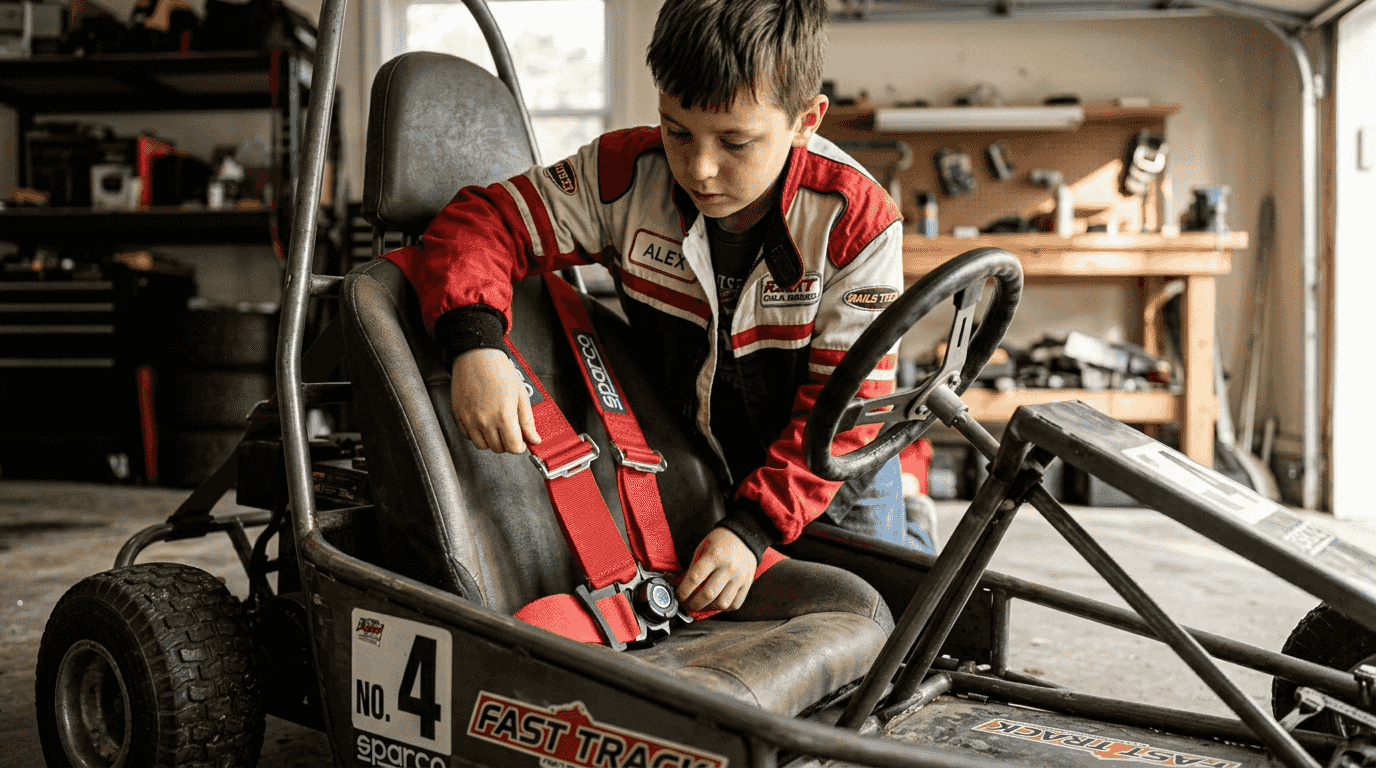
These engineering choices reflect decades of motorsports safety research applied to youth recreation. The combination of electronic controls and physical barriers creates redundant protection systems that significantly reduce injury risks compared to bicycles, skateboards, or even playground equipment when proper supervision and gear are used.
Pro Tip: Before purchasing any youth go-kart, physically test the fit with your child sitting in the driver’s seat. They should comfortably reach pedals with knees slightly bent and have clear sight lines over the steering wheel. Proper fit is foundational to safe operation and confident handling.
Developmental benefits of go-karting for children
Beyond recreation, youth go-karting delivers measurable developmental advantages across physical, cognitive, and emotional domains. The act of controlling a moving vehicle demands constant physical engagement. Children develop core strength through maintaining posture during turns, improve hand-eye coordination by steering through courses, and sharpen reflexes by responding to changing track conditions. These physical benefits accumulate naturally through enjoyable activity rather than forced exercise.
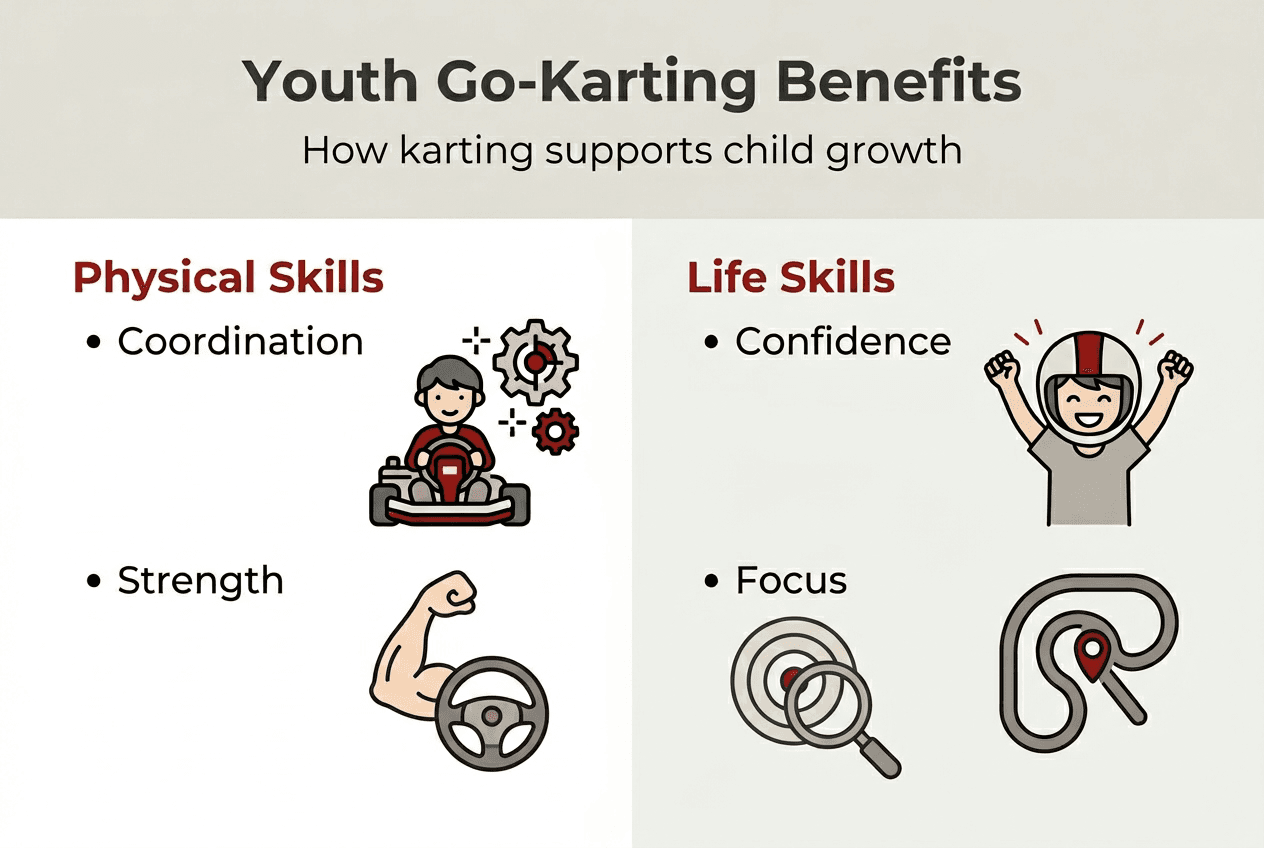
Cognitive development accelerates through karting’s unique demands. Karting builds focus and concentration as children must simultaneously monitor speed, position, upcoming turns, and other drivers. This multitasking in a dynamic environment strengthens executive function skills that transfer to academic performance and daily problem solving. The need for split-second decisions while managing vehicle control creates neural pathways that enhance overall cognitive processing speed.
Emotional growth represents perhaps the most profound benefit. Karting helps build confidence through controlled risk, allowing children to test their limits within safe boundaries. Successfully navigating challenges creates genuine achievement experiences that build self-efficacy. When children overcome initial nervousness and master new skills, they develop resilience that extends beyond the track.
Karting enhances emotional control and mental strength by requiring composure under pressure. Young drivers learn to manage frustration when they make mistakes, maintain focus despite distractions, and practice patience when waiting for opportunities to pass. These emotional regulation skills prove invaluable throughout life.
“Karting teaches children discipline and responsibility through structured rules, safety protocols, and vehicle care routines. The sport’s inherent accountability, where actions directly affect outcomes, creates natural learning opportunities for developing mature decision-making skills.”
The combination of physical challenge, mental engagement, and emotional growth makes youth go-karting a comprehensive developmental activity. Parents seeking activities that build multiple skill sets simultaneously will find few options as effective as supervised karting experiences.
Practical considerations: choosing and maintaining youth go-karts
Selecting the right youth go-kart requires evaluating several key factors to ensure safety, appropriate challenge level, and long-term value. Start with these essential considerations:
- Measure your child accurately and compare dimensions to manufacturer specifications, focusing on seat-to-pedal distance and steering wheel reach.
- Verify weight limits to ensure the kart can safely accommodate your child’s current size plus expected growth over the next year.
- Test adjustability features by physically manipulating seat positions, pedal extensions, and steering wheel angles before purchase.
- Confirm safety certifications by checking for compliance with recognized safety standards and reading independent safety reviews.
- Assess power appropriateness by matching engine size to your child’s experience level, starting conservatively for beginners.
Parents should prioritize speed governors and remote kill switches when comparing models. These features provide essential parental oversight during the learning process. Additionally, consider the go-kart’s adjustability for comfortable fit to accommodate growth spurts without requiring premature replacement.
| Safety Feature | Beginner Models | Intermediate Models | Advanced Models | | — | — | — | | Speed Governor | 10-15 mph max | 15-25 mph max | 25-35 mph max | | Remote Kill Switch | Standard | Often included | Optional | | 4-Point Seat Belt | Standard | Standard | Standard | | Roll Cage | Basic frame | Reinforced | Competition grade | | Adjustable Seat | Limited range | Wide range | Full customization |
Safety gear represents a non-negotiable investment. Every young driver needs a properly fitted helmet meeting DOT or Snell certification standards, gloves that provide grip without restricting movement, long sleeves and pants made from abrasion-resistant materials, and closed-toe shoes with good ankle support. Never compromise on protective equipment quality, as these items provide the final defense layer if accidents occur.
Regular maintenance ensures safe operation and prevents mechanical failures. Check tire pressure and tread wear before each use, inspect brake function and pad thickness weekly, verify all bolts and connections remain tight monthly, change engine oil according to manufacturer schedules, and clean air filters regularly to maintain performance. Document maintenance activities to establish patterns and catch developing issues early.
Pro Tip: Transform maintenance into teaching moments by involving your child in inspection routines. Let them check tire pressure, help with oil changes, and learn to spot wear indicators. This hands-on education builds mechanical understanding and reinforces that vehicle ownership includes care responsibilities.
Family bonding and outdoor fun through youth go-karting
Youth go-karting creates unique opportunities for family connection that few other activities match. Unlike passive entertainment where family members consume content side by side, karting demands active participation and communication. Parents coaching children through driving techniques, families discussing strategy between runs, and everyone celebrating improvements together builds relationship depth through shared investment in a common goal.
Go-karting fosters family bonding through shared recreational activity that naturally encourages interaction. Research demonstrates that families engaging in skill-based outdoor activities together report stronger emotional connections and better communication patterns. The combination of mild physical challenge, achievable goals, and collaborative problem solving creates ideal conditions for positive family dynamics.
The outdoor nature of go-karting delivers additional benefits by reducing screen time and increasing physical activity. Families spending regular time at karting tracks naturally decrease hours devoted to television, gaming, and social media. This shift toward active outdoor recreation improves physical health, mood regulation, and sleep quality for both children and adults. The fresh air, sunshine, and movement provide natural stress relief that indoor activities cannot replicate.
Youth go-karting increases family communication by up to 40% compared to typical leisure activities. The shared learning process creates natural conversation topics, mutual goals provide common ground across age gaps, and the excitement of motorsports generates enthusiasm that carries into daily family life.
Families can maximize karting’s bonding potential through several approaches:
- Schedule regular karting sessions as protected family time that takes priority over competing activities.
- Create friendly competitions with age-appropriate handicaps that keep everyone engaged regardless of skill level.
- Rotate roles between driver, coach, and timekeeper so everyone participates actively.
- Document progress through photos and videos that become cherished family memories.
- Plan karting trips that combine track time with other outdoor activities like picnics or hiking.
| Activity Type | Family Communication Increase | Outdoor Time | Skill Development | Cost Efficiency |
|---|---|---|---|---|
| Youth Go-Karting | 40% | High | High | Moderate |
| Movie Watching | 5% | None | Low | Low |
| Board Games | 25% | None | Moderate | High |
| Team Sports | 30% | High | High | Low |
| Hiking | 20% | Very High | Low | Very High |
The data clearly shows go-karting’s superior performance in combining communication benefits with outdoor activity and skill building. While cost per session may exceed some alternatives, the comprehensive benefits justify the investment for families prioritizing meaningful connection and child development.
Youth go-karting transforms typical family recreation into growth opportunities. The shared challenges, outdoor environment, and skill progression create bonding experiences that strengthen family relationships while building children’s capabilities. Few activities deliver this combination of fun, development, and connection as effectively as supervised karting experiences.
Explore safe youth go-karts and accessories at GoKarts USA®
Now that you understand youth go-karting’s benefits and requirements, finding the right equipment becomes your next step. GoKarts USA® specializes in safe, age-appropriate recreational vehicles designed specifically for family use. Their catalog features youth go-karts with parental remote start and kill switch capabilities, giving you complete control over your child’s early driving experiences.

The selection extends beyond go-karts to include ATVs and minibikes suitable for various skill levels and family preferences. Each product listing provides detailed safety specifications, age recommendations, and feature comparisons to simplify your decision process. Free shipping and complimentary accessories like helmets add value while ensuring you have essential safety gear from day one.
Popular family-friendly options worth exploring include:
- Mini Sport Kids ATV 110cc for children ready to transition from basic karts to more versatile terrain vehicles.
- Storm Motovox 200 minibike offering compact fun for smaller riders building confidence.
- Complete accessory packages ensuring proper protective gear matches your vehicle choice.
Pro Tip: Contact GoKarts USA®'s product specialists before purchasing to discuss your child’s specific age, size, and experience level. Their personalized recommendations help match you with equipment that maximizes safety while delivering appropriate challenge levels for sustained engagement.
Visit GoKarts USA® to explore the full range of youth recreational vehicles and start your family’s go-karting adventure with confidence in your equipment choices.
Frequently asked questions
Is youth go-karting safe for children?
Modern youth go-karts incorporate multiple safety features like speed governors, remote kill switches, roll cages, and 4-point seat belts that significantly reduce accident risks when used properly. These engineered protections, combined with appropriate supervision and mandatory safety gear like helmets and gloves, make youth go-karting comparable to or safer than many common recreational activities. Proper training and gradual skill progression further minimize risks.
What age is appropriate to start youth go-karting?
Entry-level youth go-karts typically suit children aged 6 to 16, though individual readiness varies based on physical size, maturity, and interest level. Younger children starting at age 6 or 7 should begin with the lowest-powered models featuring maximum parental controls. Choosing karts with adjustable seats and progressive speed settings allows the same vehicle to accommodate children as they grow and develop skills over several years.
How can parents ensure their child’s safety while karting?
Always verify that safety features like speed governors and remote kill switches function properly before each session. Ensure your child wears complete protective gear including a certified helmet, gloves, long sleeves, pants, and closed-toe shoes every time they drive. Regularly maintain and inspect the go-kart, checking tires, brakes, steering, and all connection points for wear or damage. Supervise all driving sessions, especially during the learning phase, and establish clear safety rules.
What are the key benefits of youth go-karting beyond fun?
Go-karting enhances physical fitness through core strengthening and coordination development while improving concentration and mental processing speed. Children build genuine confidence by mastering challenging skills in controlled environments, developing discipline through following safety protocols, and learning responsibility through vehicle care routines. The activity fosters family bonding through shared experiences, increases communication, and creates lasting memories while reducing screen time and encouraging outdoor activity.
How much maintenance do youth go-karts require?
Youth go-karts need regular but manageable maintenance to ensure safe operation. Check tire pressure and brake function before each use, inspect all bolts and connections weekly, change engine oil every 20 hours of operation or as specified by the manufacturer, and clean or replace air filters monthly depending on usage conditions. Most families spend 30 to 60 minutes monthly on routine maintenance, with seasonal deeper inspections adding another hour or two. Involving children in these routines teaches mechanical responsibility while ensuring thorough care.