




TL;DR:
- ATV safety requires a layered approach including gear, training, vehicle matching, and responsible habits.
- Proper protective equipment and certified training significantly reduce injury risks, especially for youth.
- Following comprehensive safety checks and rules is essential for incident prevention and safe riding.
Most riders assume ATVs are forgiving machines. They are not. ATV-related deaths totaled 1,728 between 2019 and 2021 alone, with emergency departments treating an average of roughly 102,000 injuries per year from 2019 to 2023. Those numbers are sobering, but here is the truth that changes everything: the vast majority of those incidents were preventable. ATV safety is not a single checkbox or a piece of gear you strap on before heading out. It is a layered system of habits, knowledge, and decisions. This guide breaks down every layer, from gear and training to vehicle choice and smart riding practices, so you can ride with real confidence.
Table of Contents
- Understanding ATV safety: What it really means
- Essential gear and training for safe riding
- Vehicle choice and age-appropriate riding
- Smart riding: Rules, checks, and avoiding common mistakes
- Why following multiple layers of safety is non-negotiable
- Find safe, smart ATV solutions for your family
- Frequently asked questions
Key Takeaways
| Point | Details |
|---|---|
| Proper gear saves lives | Wearing the right protective equipment—especially DOT-approved helmets—dramatically lowers the risk of serious injury during ATV use. |
| Match vehicle to rider | Always use an ATV that fits the rider’s age, size, and skill, especially for children to prevent rollovers and severe accidents. |
| Routine checks prevent breakdowns | Performing simple inspections before each ride, like the T-CLOC method, can prevent mechanical failures and unexpected crashes. |
| Certified training matters | Taking a hands-on ATV safety course teaches critical riding skills and boosts situational awareness in real trail scenarios. |
Understanding ATV safety: What it really means
With rising accident rates in mind, it is crucial to clarify what ATV safety actually covers, because it goes far beyond just wearing a helmet. Most new riders underestimate the complexity of these machines. An ATV (all-terrain vehicle) can weigh over 600 pounds, reach speeds above 60 mph, and shift its center of gravity dramatically on uneven ground. That combination demands respect, preparation, and a genuine commitment to safe habits.
ATV safety encompasses guidelines and best practices to prevent injuries and deaths during recreational use, emphasizing protective gear, training, vehicle selection, and responsible operation. Notice how broad that definition is. It is not just about helmets. It covers every decision you make before, during, and after a ride.
One of the biggest misconceptions is that slow speeds equal safe speeds. In reality, most ATV rollovers happen at speeds under 15 mph, often on gentle slopes that riders misjudge. Another common myth is that experience alone makes you safe. Experienced riders who skip pre-ride checks or ride impaired account for a significant share of serious incidents. Understanding why ATV safety matters means accepting that confidence without preparation is actually a risk factor.
Here are the core pillars every rider needs to internalize:
- Protective gear: A full set of appropriate equipment every single ride, no exceptions.
- Certified training: Hands-on instruction that teaches terrain reading, emergency response, and vehicle control.
- Vehicle match: Riding a machine sized and powered for your age, weight, and skill level.
- Responsible operation: Following trail rules, avoiding alcohol, and never carrying extra passengers on single-rider ATVs.
“Safety is not a product you buy. It is a culture you build, one ride at a time.”
Think of these pillars as links in a chain. Break one link and the whole system weakens. That is why a rider with perfect gear but zero training is still at serious risk, and why a trained rider on the wrong sized machine faces dangers that skill alone cannot overcome.
Essential gear and training for safe riding
Once you understand ATV safety’s pillars, the next step is equipping yourself for protection and skill-building. Gear is your last line of defense when something goes wrong, and something always can go wrong, even on a familiar trail.
Core protective gear includes DOT-approved helmets, eye protection, gloves, long sleeves, pants, and over-the-ankle boots. Each item serves a specific purpose:
- DOT-approved helmet: Protects against traumatic brain injury in rollovers and collisions. Full-face styles offer the best coverage.
- Goggles or face shield: Keeps debris, dust, and insects from impairing your vision at speed.
- Gloves: Improves grip and protects hands during falls, which are often the first point of contact with the ground.
- Long sleeves and pants: Heavy-duty fabric resists abrasion if you slide across dirt or gravel.
- Over-the-ankle boots: Supports ankles during rough terrain navigation and protects feet from crush injuries.
The statistics here are impossible to ignore. Helmets reduce head injury risk by approximately 50%, yet fewer than 10% of fatally injured ATV riders were wearing one. That gap between what works and what riders actually do is where lives are lost.
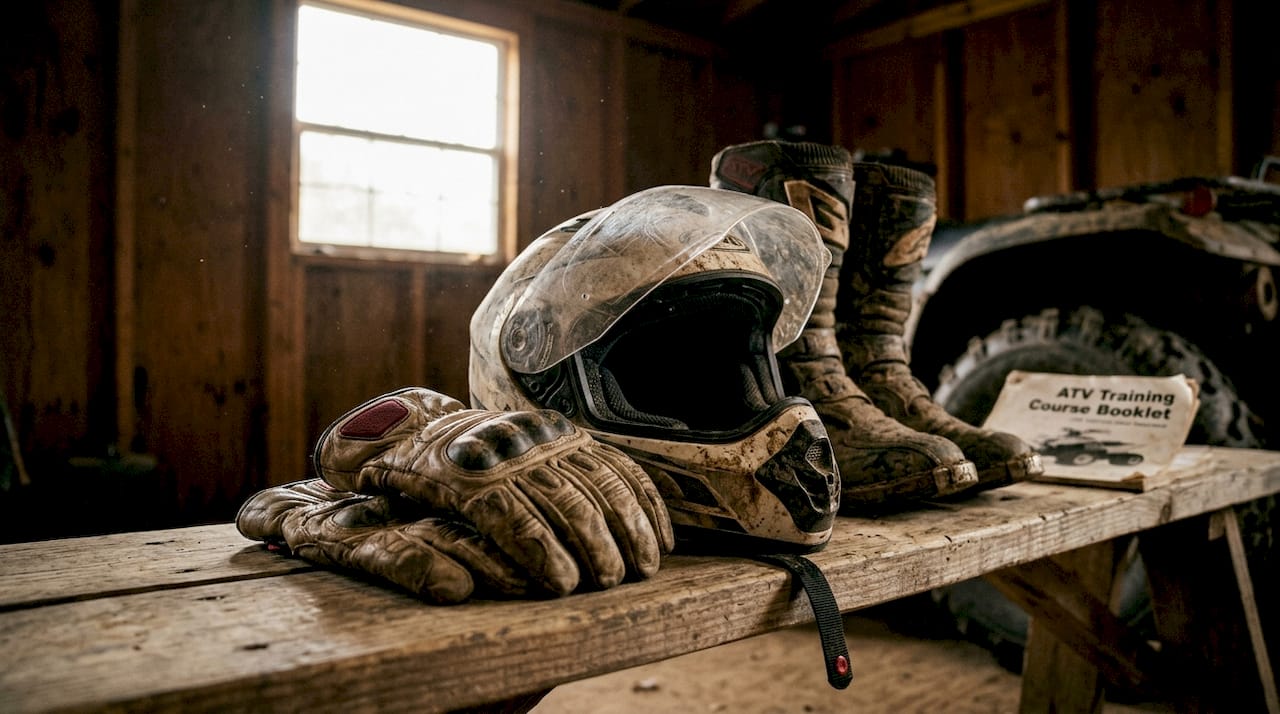
Training is equally non-negotiable. Certified ATV safety courses teach handling, terrain navigation, and emergency response. Many states require them for youth riders, but adults benefit just as much. A good course covers throttle control, braking technique, how to handle hills, and what to do when a machine starts to tip.
For entry-level ATV safety tips, look for programs that offer hands-on riding time, not just classroom instruction. Age-specific modules matter too, since a teenager learning to read terrain faces different challenges than an adult beginner.
Pro Tip: Before booking a course, ask the provider whether students practice emergency stops and hill navigation on actual terrain. If the answer is no, keep looking.
Vehicle choice and age-appropriate riding
Even with the right gear and training, choosing the correct ATV makes all the difference, especially for younger riders. This is the area where parents most often make costly mistakes, and where the injury data tells the clearest story.
Children under 16 should not use adult-sized machines due to higher rollover and injury risks. Adult ATVs have more powerful engines, heavier frames, and wider wheelbases that require adult-sized strength and reflexes to control safely. When a child rides one, the physics work against them at every turn.
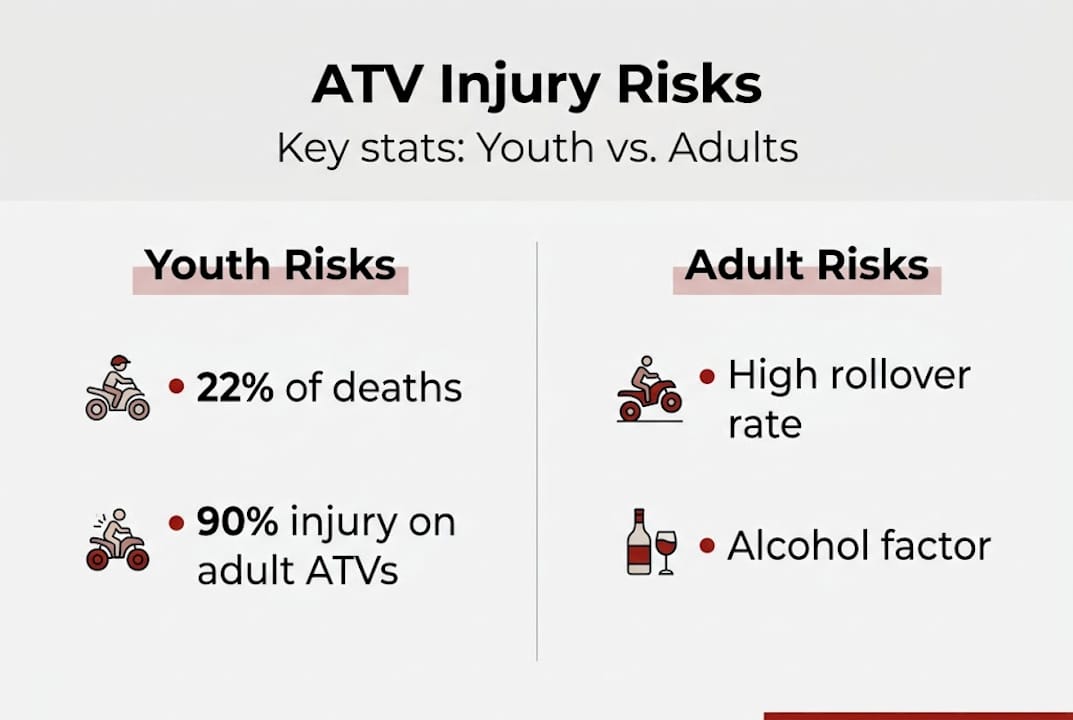
The numbers back this up. Youth under 16 represent about 22% of ATV deaths, and over 90% of youth ATV injuries occur on adult-sized vehicles. That is not a coincidence. It is a direct consequence of mismatched equipment.
| ATV type | Engine size | Recommended age | Key risk if mismatched |
|---|---|---|---|
| Youth ATV | 50cc to 110cc | Under 12 | Reduced control, tip risk |
| Teen ATV | 110cc to 200cc | 12 to 15 | Speed management issues |
| Adult ATV | 250cc and up | 16 and older | Severe rollover risk for youth |
For parents, these guidelines from manufacturers are not suggestions. They are safety thresholds built from real-world injury data. Here is what responsible ATV ownership for families looks like:
- Always check the manufacturer’s age and weight recommendations before purchasing.
- Supervise young riders at all times, especially on new terrain.
- Never allow a child to ride an adult machine, even briefly or “just in the yard.”
- Explore dedicated youth ATV sizing guides to find the right fit.
If you are shopping for ATVs for kids or researching entry-level ATVs for kids, start with engine size and weight capacity, not color or speed. The right machine builds confidence safely. The wrong one creates a crisis.
Smart riding: Rules, checks, and avoiding common mistakes
Selecting the right vehicle sets the stage, but smart riding and regular checks are what keep every trip incident-free. Even the safest ATV becomes dangerous when operated carelessly or without proper preparation.
Before every ride, run through the T-CLOC inspection:
- Tires: Check pressure and look for cuts or damage.
- Controls: Test throttle, brakes, and handlebars for smooth operation.
- Lights: Confirm headlights and brake lights work correctly.
- Oil: Check fluid levels and look for leaks.
- Choke: Verify the choke and fuel system are functioning properly.
Pre-ride inspections of tires, brakes, throttle, lights, and maintenance ensure mechanical reliability before you ever leave the driveway. This five-minute habit has prevented countless accidents.
Riding posture also matters more than most beginners realize. Keep your feet firmly on the footrests, grip the handlebars firmly but without tension, and shift your body weight toward the uphill side when navigating slopes. Leaning the wrong way on a hill is one of the fastest ways to trigger a rollover.
Alcohol is involved in roughly 30% of fatal ATV crashes, and males account for 81 to 92% of fatalities. Impaired judgment and delayed reaction time are catastrophic on a machine that demands constant physical input. There is no safe threshold here.
Never carry passengers on single-rider ATVs, avoid public roads, and ride only on designated trails. Public roads introduce vehicle traffic, road hazards, and collision risks that ATVs are simply not built to handle. Designated trails exist for a reason, and sticking to them protects both you and others. For a deeper look at responsible trail use, our guide on safe off-road ATV riding covers terrain-specific strategies in detail.
Pro Tip: Build your T-CLOC check into a ritual, not just a task. Do it at the same time, in the same order, every single ride. Consistency is what makes it reliable.
| Accident cause | Prevention strategy |
|---|---|
| Rollover on slopes | Shift weight uphill, reduce speed |
| Alcohol impairment | Zero tolerance policy, every ride |
| Passenger overload | Single-rider machines carry one person only |
| Mechanical failure | T-CLOC check before every ride |
| Wrong-sized vehicle | Match ATV to rider age and weight |
Why following multiple layers of safety is non-negotiable
We have seen the data, and we want to be direct with you: there is no single fix that makes ATV riding safe. The evidence is clear. Most severe ATV incidents involve multiple skipped steps, not just one missing piece of gear or one lapse in training. A rider who wears a helmet but skips the pre-ride check and rides an oversized machine on an unmarked trail is still in serious danger.
National statistics confirm that gear, training, vehicle match, and routine checks must all work together. Remove any one of them and your risk profile climbs sharply. What we see again and again is that culture, convenience, and peer pressure push riders toward shortcuts. “Just this once” is the most dangerous phrase in powersports.
The riders who stay safe over years of riding are not the ones with the most expensive gear. They are the ones who treat safety as an ongoing discipline, not a one-time lesson. They run their ATV safety checklist every time, no matter how short the ride. They update their training when they upgrade their machine. They model the right behavior for younger riders watching them. That consistency, repeated across every ride, is what separates the riders who thrive from those who end up in an emergency room.
Find safe, smart ATV solutions for your family
With a safety-first mindset in place, the next step is finding trusted, family-friendly ATV options and gear that match your commitment to responsible riding.

At GoKarts USA®, we carry age-appropriate machines built with safety features that matter to real families. The Mini Sport Kids ATV is a great starting point for younger riders, offering a 110cc engine in a frame sized for youth confidence and control. We also stock accessories like Pocket Bike Footpegs to help riders maintain proper posture and stability. Our team knows the powersports lifestyle from the inside out, and we are here as your trail guides and pit crew, helping you find the right machine and the right gear so every ride is one worth remembering.
Frequently asked questions
What does ATV safety mean for new riders?
ATV safety means following best practices for protective gear, training, and using vehicles appropriate for your age and size to reduce accident risk. It is a complete system, not a single step.
Is it safe for children to ride adult-sized ATVs?
No. Children under 16 should never ride adult-sized ATVs due to high risks of rollovers and serious injury. Over 90% of youth ATV injuries happen on adult machines.
How effective are helmets in preventing ATV head injuries?
Helmets reduce head injury risk by approximately 50% in ATV crashes, yet fewer than 10% of fatally injured riders were wearing one at the time of the crash.
What pre-ride checks should I do before riding an ATV?
Perform the T-CLOC safety check before every ride: Tires, Controls, Lights, Oil, and Choke. This five-step routine catches most mechanical issues before they become trail emergencies.
Why should you avoid riding ATVs on public roads?
Public roads expose ATV riders to vehicle collisions, limited sight lines, and crash dynamics that ATVs are not engineered to handle. Designated trails are the only safe option for recreational ATV use.