




An off-road ATV is a small motorized vehicle with three or four low-pressure tires, handlebar steering, and a straddle seat designed for rough terrains like trails, dirt, mud, sand, and hills. Many families and beginners confuse ATVs with street-legal vehicles or assume any four-wheeler can handle both roads and trails safely. This guide clarifies what makes an ATV truly off-road, explains types suited for different riders, covers essential safety practices, and highlights performance upgrades for enthusiasts seeking more capability and fun.
Table of Contents
- Key takeaways
- What is an off-road ATV and its main features
- Understanding different ATV types and rider suitability
- Performance features and upgrades for sports enthusiasts
- Handling nuances, maintenance, and safety best practices
- Explore safe and fun off-road vehicles at GoKarts USA®
- FAQ
Key Takeaways
| Point | Details |
|---|---|
| Off road design features | ATVs use three or four low pressure tires, handlebar steering, and a straddle seat to handle rough terrain and stay non street legal. |
| Age appropriate fit | Choosing youth versus adult models based on rider age and ability reduces risk and improves control. |
| Practice and training | Starting in controlled environments and practicing basic maneuvers lowers the chance of accidents. |
| Not street legal | ATVs are designed for off road use only and lack required street safety equipment. |
| Helmet size matters | Always match helmet size to the rider head for a proper fit and maximum protection. |
What is an off-road ATV and its main features
An all-terrain vehicle combines specific design elements that separate it from other recreational vehicles. The core components include three or four low-pressure tires that spread weight across soft surfaces, handlebar steering for precise control, and a straddle seat that positions riders to shift weight during turns and climbs. These features work together to tackle trails, dirt paths, muddy tracks, sandy dunes, and steep hills where conventional vehicles cannot venture.
Low-pressure tires matter because they create a larger contact patch with the ground, improving traction on loose surfaces like sand and gravel. The handlebar steering system gives riders direct feedback from the front wheels, allowing quick adjustments when navigating rocks or ruts. The straddle seat design lets you stand or lean during aggressive maneuvers, distributing your body weight to maintain balance on uneven terrain.
Off-road ATVs serve recreational and utility purposes but are never street-legal. You can use them for trail riding, farm work, hunting access, or exploring backcountry areas. They differ fundamentally from street-legal vehicles like Jeeps because they lack safety equipment required for public roads such as turn signals, mirrors, and DOT-approved lighting systems. Understanding ATV safety basics helps families make informed decisions about when and where to ride.
Key features that define off-road ATVs include:
- Three or four low-pressure tires engineered for soft and uneven surfaces
- Handlebar steering providing direct control and terrain feedback
- Straddle seat allowing weight shifts during turns and climbs
- Compact frame designed for tight trails and obstacle navigation
- Engine sizes ranging from 50cc for youth models to 1000cc for adult sport versions
Understanding different ATV types and rider suitability
Youth ATVs are sized specifically for children, featuring restricted speed, smaller frames, and safety features like parental remote kill switches. Adult models split into utility ATVs built for work tasks and sport ATVs designed for recreation and performance. Youth vs adult sizing proves critical because mismatched vehicles increase injury risk when riders cannot reach controls or manage vehicle weight properly.

Age-appropriate vehicle selection prevents common accidents. A 10-year-old on an adult-sized ATV cannot brake effectively or steer with confidence, creating dangerous situations on trails. Youth models typically range from 50cc to 125cc with automatic transmissions, while adult ATVs start at 250cc and reach 1000cc with manual or automatic options. Check our youth ATV guide for detailed sizing recommendations.
Training courses and proper practice reduce risks for beginners by teaching essential skills before riders encounter challenging terrain. Start with controlled environments where you can practice starting, stopping, and steering without obstacles. Master basic maneuvers like figure-eights and emergency stops before attempting trails with hills or tight turns. Many accidents happen because riders skip this foundational practice and immediately tackle difficult terrain.
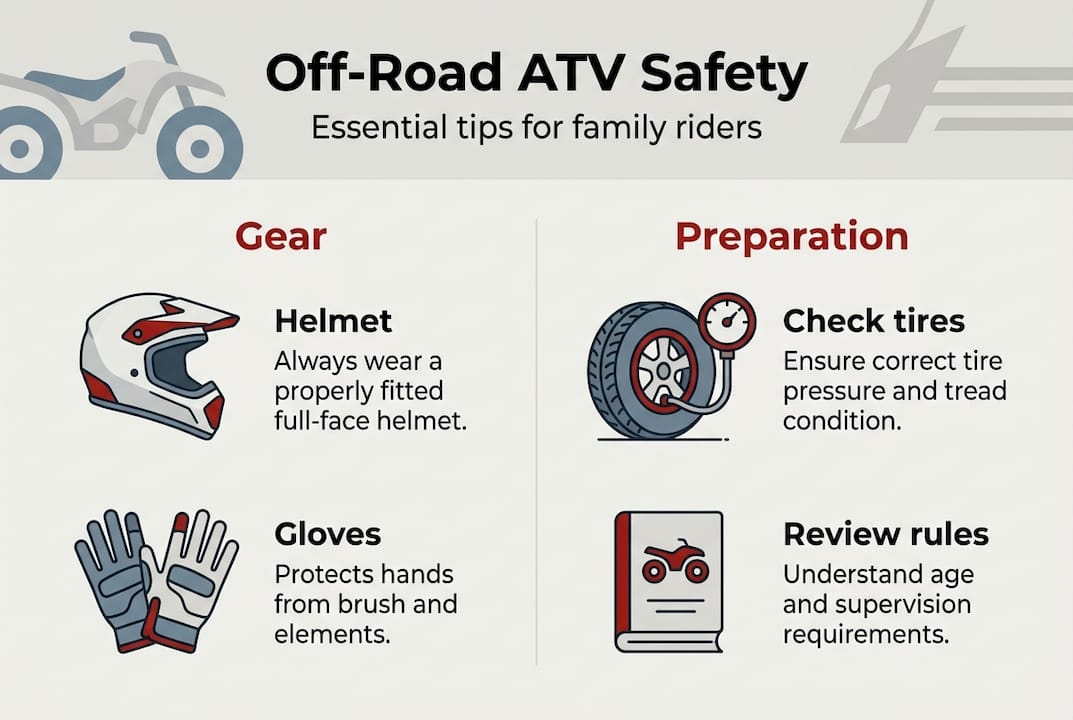
Pro Tip: Always match helmet size to the rider’s head, not the ATV size. A properly fitted helmet should sit level on the head with the chin strap snug enough to allow only two fingers between strap and chin.
Beginner-friendly ATVs feature automatic transmissions, lower seat heights, and predictable power delivery. Performance ATVs offer manual transmissions, higher ground clearance, and aggressive power bands that challenge experienced riders. Review our ATV for kids safety article and ATV buying checklist before making purchase decisions.
Key considerations for choosing the right ATV type:
- Match engine size to rider age and experience level
- Verify rider can reach all controls comfortably while seated
- Select automatic transmission for beginners to simplify learning
- Confirm safety features like throttle limiters on youth models
- Consider utility vs sport purpose based on intended use
Performance features and upgrades for sports enthusiasts
Adult sport ATVs deliver impressive specifications that appeal to performance-focused riders. The Kawasaki Brute Force 750 produces 49.6 horsepower and handles 1250 pounds of towing capacity, setting benchmarks for utility ATV performance. Suspension travel typically ranges from 7 to 10 inches, allowing wheels to absorb large bumps while maintaining tire contact with the ground. These specs matter when you want to climb steep hills, cross deep ruts, or haul equipment to remote locations.
Upgrade priorities should start with tires because they directly affect traction, handling, and ride comfort. Balanced upgrades like tires, clutch, and suspension improve torque delivery and terrain handling more effectively than simply adding horsepower. Aggressive tread patterns excel in mud but sacrifice comfort on hard-pack trails, while all-terrain designs compromise maximum grip for versatility across conditions.
After tires, focus on clutch systems and suspension components. A performance clutch kit improves throttle response and prevents belt slippage during hard acceleration. Upgraded suspension springs and adjustable shocks let you tune ride height and damping for specific terrain types. Engine modifications like exhaust systems and air intake upgrades should come last because they stress drivetrain components that may not handle the extra power without reinforcement.
| Feature | Baseline ATV | Upgraded ATV | Benefit |
|---|---|---|---|
| Tires | Stock all-terrain | Aggressive mud or trail-specific | 30% better traction in target conditions |
| Clutch | Standard belt drive | Performance clutch kit | Faster acceleration, reduced slippage |
| Suspension | Fixed preload | Adjustable coilovers | Custom tuning for terrain and load |
| Exhaust | Restrictive stock | Free-flowing aftermarket | 5-8% horsepower gain |
Smart riding techniques amplify your ATV’s capabilities without expensive modifications. Body positioning matters more than most riders realize. Shift your weight forward during climbs to keep the front end planted, and move rearward on descents to prevent flipping. Use momentum to carry you through obstacles rather than relying purely on throttle, which reduces wear on drivetrain components and improves control.
Pro Tip: Avoid chasing peak horsepower numbers without upgrading brakes and suspension first. A 20% power increase on stock components creates dangerous handling characteristics and accelerates wear on critical safety systems.
Explore our performance upgrades guide for step-by-step instructions on installing common modifications safely and effectively.
Handling nuances, maintenance, and safety best practices
Skidding turns rely on differential slip between inside and outside wheels, with handling characteristics affected by load transfer and suspension tuning. When you initiate a turn at speed, weight shifts to the outside wheels while inside wheels lose traction. This dynamic changes your turning radius and requires active body positioning to maintain control. Understanding these physics helps you predict how your ATV will respond during aggressive maneuvers.
Suspension preload and compression settings dramatically alter performance across terrain types. For rocky trails, increase preload to prevent bottoming out on sharp impacts. In muddy conditions, soften compression damping to let wheels follow contours and maintain contact with the surface. Adjusting suspension sag between 25% and 35% of total travel optimizes both small bump compliance and large hit absorption.
Maintenance schedules prevent breakdowns and extend ATV lifespan significantly. Perform these checks every 100 hours of operation or before each ride:
- Inspect tire pressure and tread depth, adjusting to terrain requirements
- Check brake pad thickness and fluid levels for both front and rear systems
- Examine suspension components for leaks, cracks, or loose mounting bolts
- Verify engine oil level and condition, changing at manufacturer intervals
- Clean and lubricate chain or belt drive, removing debris and checking tension
These maintenance tasks take 20 minutes but prevent costly repairs and dangerous equipment failures on the trail. Pay special attention to brake systems because off-road riding generates extreme heat that degrades fluid and wears pads faster than street use.
Safety practices extend beyond equipment maintenance to rider behavior and preparation. Always wear a DOT-approved helmet, goggles, gloves, long sleeves, long pants, and over-the-ankle boots. Ride with a buddy whenever possible and carry a basic tool kit plus first aid supplies. Never operate an ATV under the influence of alcohol or drugs, and avoid riding beyond your skill level on unfamiliar terrain.
Review ATV safety information regularly to stay current on best practices and emerging safety technologies. Proper preparation and consistent maintenance habits create confident, enjoyable riding experiences for families and enthusiasts alike.
Explore safe and fun off-road vehicles at GoKarts USA®
GoKarts USA® offers ATVs and minibikes designed specifically for families prioritizing safety alongside performance. Our Mini Sport Kids ATV 110cc features parental remote start and kill switches, giving you control over when and how young riders operate their vehicle. This model includes automatic transmission and speed limiters that grow with your child’s skills.

For enthusiasts ready to tackle more challenging terrain, the TrailMaster K125 Sport ATV delivers mid-size performance with automatic transmission and reverse capability. Riders seeking compact alternatives can explore the TrailMaster Storm Minibike, which offers nimble handling for tight trails and backyard fun. Browse our complete selection to find the perfect match for your family’s off-road adventures.
FAQ
What terrain is suitable for off-road ATVs?
Off-road ATVs excel on unpaved surfaces including dirt trails, mud tracks, sandy dunes, gravel paths, and steep hills. They are engineered specifically for these conditions with low-pressure tires and robust suspension systems. Never operate ATVs on public roads because they lack required safety equipment and are illegal in most jurisdictions for street use.
How do I choose the right off-road ATV for a beginner?
Select models sized appropriately for the rider’s age, weight, and height so they can reach all controls comfortably. Enroll in a certified training course that teaches starting, stopping, and steering fundamentals before attempting trail riding. Always require proper safety gear including helmets, goggles, gloves, and protective clothing regardless of experience level. Consult our youth ATV purchasing guide for detailed selection criteria.
What maintenance is essential for off-road ATVs?
Perform comprehensive inspections every 100 hours of operation or before each ride to catch problems early. Check tire pressure and tread depth, inspect brake pads and fluid levels, examine suspension for leaks or damage, and verify engine oil condition. Clean and lubricate the drive chain or belt after muddy or dusty rides to prevent premature wear and maintain smooth power delivery.
What upgrades improve ATV performance most effectively?
Start with tire upgrades because they directly impact traction, handling, and ride quality across all terrain types. Next upgrade clutch systems to improve throttle response and prevent belt slippage during hard acceleration. Add suspension modifications like adjustable shocks only after tires and clutch to maintain balanced handling characteristics. Review our performance upgrade tips for detailed installation guidance and component recommendations.