




Choosing the right ATV for your family can feel overwhelming with countless models, features, and safety considerations competing for your attention. Whether you’re a parent seeking a safe vehicle for your child or an entry-level hobbyist ready to explore recreational riding, making an informed decision requires understanding what truly matters. This guide cuts through the confusion by focusing on practical safety features, age-appropriate sizing, and real-world performance factors that ensure your ATV purchase delivers both fun and peace of mind for years to come.
Table of Contents
- ATV Buying Criteria: What To Evaluate Before Choosing
- Top ATV Options For Families And Beginners In 2026
- Comparing New Vs. Used ATVs: Key Factors And Trade-Offs
- Test Riding And Final Decision Tips For Confident ATV Purchase
- Find The Perfect ATV For Your Family At GoKarts USA®
- Frequently Asked Questions
Key takeaways
| Point | Details |
|---|---|
| Safety features matter most | Prioritize engine size limits, parental controls, and speed limiters for young riders |
| Match size to rider | Choose ATV types and engine power appropriate for age, weight, and experience level |
| Evaluate new vs. used carefully | Balance cost savings against warranty coverage, safety updates, and inspection needs |
| Test before buying | Assess comfort, controls, braking, and handling through hands-on riding experience |
| Plan for maintenance | Consider warranty length, parts availability, and service requirements for long-term satisfaction |
ATV buying criteria: what to evaluate before choosing
Selecting the right ATV starts with understanding core features that directly impact safety and enjoyment. Engine size serves as your first decision point, with 50cc engines suited for toddlers learning basic controls, 90-110cc models appropriate for elementary-age children, and larger displacement options for teens and adults. Safety considerations and engine size are critical when purchasing for children and beginners, as underpowered vehicles frustrate riders while overpowered ones create dangerous situations.
ATV categories break down into distinct types serving different purposes. Youth models feature automatic transmissions, restricted top speeds, and smaller frames designed for developing coordination. Sport ATVs emphasize agility and speed for experienced riders tackling trails. Utility ATVs prioritize cargo capacity and towing for property work. Four-seater UTVs accommodate entire families for shared adventures, making them ideal for parents wanting to ride alongside children.
Safety features separate quality youth ATVs from basic models. Look for parental remote controls that allow emergency engine shutdown, adjustable speed limiters that grow with rider skill, and automatic transmissions eliminating clutch complexity. ATV safety for kids extends beyond the vehicle itself to include properly fitted helmets, goggles protecting against debris, and protective clothing covering arms and legs.
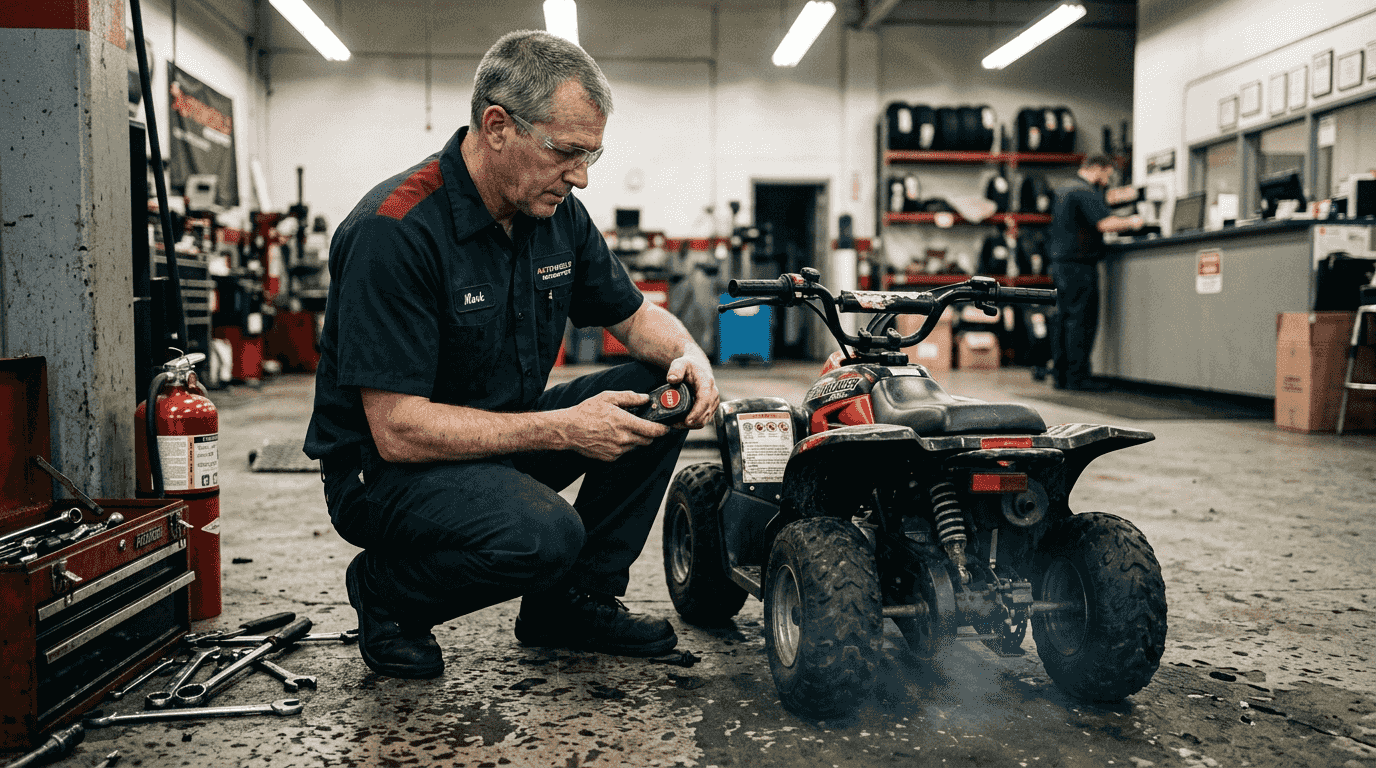
Control ergonomics determine whether a rider can safely operate their ATV. Throttle placement should allow comfortable thumb operation without hand fatigue. Brake levers must reach small hands easily while providing adequate stopping power. Foot pegs need proper spacing for stable standing positions on rough terrain. Test these controls during evaluation to ensure your rider can reach everything comfortably.
Pro Tip: Always verify that youth ATVs carry proper safety certifications and include child-specific features like engine kill switches accessible to parents, not just standard adult ATV controls scaled down. Review the ATV safety overview to understand certification standards before purchasing.
Top ATV options for families and beginners in 2026
Navigating today’s ATV market reveals several standout options designed specifically for family recreation and entry-level riders. The Mini Sport Kids ATV exemplifies youth-focused engineering with its 110cc gas engine and parental remote start/kill system. This model allows parents to control when their child rides and provides emergency shutdown capability from up to 30 feet away, addressing the primary safety concern for families new to powersports.
For families wanting shared riding experiences, the TrailMaster Taurus 450G four-seat UTV transforms recreational outings into group adventures. Its spacious cabin accommodates two adults and two children comfortably, while safety features like seat belts, roll cage protection, and moderate top speed make it suitable for cautious parents. The utility bed adds practical value for picnic supplies or light property tasks between recreational rides.
Entry-level riders considering alternatives should evaluate the Storm 200 Minibike as a stepping stone to full-size ATVs. This compact option teaches throttle control and balance in a lower-risk package before graduating to more powerful four-wheelers. Its simplified controls and lower seat height build confidence for riders still developing coordination.
Utility ATVs for beginners typically feature 250-400cc engines providing adequate power without overwhelming new riders. These models balance recreational capability with practical applications like trail maintenance or light hauling. Automatic transmissions eliminate shifting concerns while riders focus on steering and terrain navigation.
Each category presents trade-offs worth considering. Youth ATVs maximize safety but require replacement as children grow. Four-seater UTVs accommodate families but cost significantly more and demand larger storage space. Minibikes offer affordable entry points but lack the off-road capability serious trail riders eventually want. Match your choice to your family’s primary use case and growth timeline.
Comparing new vs. used ATVs: key factors and trade-offs
The new versus used decision significantly impacts your ATV ownership experience beyond initial purchase price. New ATVs deliver complete peace of mind with manufacturer warranties typically covering 90 days to one year, latest safety innovations like improved braking systems, and zero uncertainty about previous use or abuse. You receive proper break-in procedures, fresh fluids, and dealer setup ensuring everything functions correctly from day one.
Used ATVs tempt budget-conscious buyers with savings ranging from 30% to 60% off comparable new models, but these deals carry hidden risks requiring careful evaluation. Used ATVs can be affordable but require careful inspection to ensure safety and reliability, particularly when buying from private sellers lacking service records or quality guarantees. Missing maintenance, worn components, and undisclosed damage frequently turn bargains into money pits.
| Factor | New ATV | Used ATV |
|---|---|---|
| Warranty coverage | 90 days to 1 year manufacturer warranty | Typically none, unless certified pre-owned |
| Safety features | Latest technology and design improvements | May lack modern safety updates |
| Condition certainty | Zero hours, factory fresh | Unknown history, potential hidden issues |
| Price point | Full retail, financing available | 30-60% savings, often cash only |
| Parts availability | Current model parts readily stocked | Older models may have limited parts |
Inspecting used ATVs demands systematic evaluation beyond a quick visual check. Examine the frame for cracks, bends, or welding repairs indicating previous crashes. Start the engine cold to assess starting behavior and listen for unusual noises suggesting internal wear. Check tire tread depth and look for uneven wear patterns revealing suspension problems. Test all controls including throttle, brakes, and transmission through their full range of motion.
Maintenance history separates well-cared-for used ATVs from neglected ones heading toward expensive repairs. Request service records documenting oil changes, brake replacements, and other routine maintenance. ATVs lacking documentation should trigger price negotiations or reconsideration, as deferred maintenance costs quickly erase purchase savings. Calculate potential repair expenses before committing to any used purchase.
Pro Tip: Buy used ATVs exclusively from reputable dealers offering certified pre-owned programs with inspection reports and limited warranties rather than risking private party purchases lacking any buyer protection or recourse. Review ATV safety considerations to understand what safety features you should not compromise on, even when buying used.
Test riding and final decision tips for confident ATV purchase
Test rides transform theoretical evaluations into practical experience revealing how an ATV actually performs for your specific needs. Schedule test rides during dry conditions on terrain similar to where you’ll ride, whether groomed trails, open fields, or property paths. Bring the intended rider whenever possible, as an ATV comfortable for you might overwhelm or underwhelm your child.
Follow this systematic test ride checklist to evaluate every critical aspect:
- Check seat comfort and legroom before starting the engine, ensuring the rider reaches controls naturally without stretching.
- Assess starting procedure difficulty, noting whether electric start functions reliably or pull-start requires excessive effort.
- Test throttle response at low speeds, confirming smooth acceleration without jerky power delivery that startles new riders.
- Evaluate steering effort and precision through gentle turns, then tighter maneuvers simulating trail obstacles.
- Test brake effectiveness from various speeds, checking for adequate stopping power without wheel lockup.
- Listen for unusual engine noises, excessive vibration, or rattles suggesting mechanical issues needing investigation.
- Confirm visibility over the front end and assess whether the rider feels confident controlling the vehicle independently.
Ergonomic factors often determine long-term satisfaction beyond initial excitement. Pay attention to handlebar height and grip angle, as poor positioning causes hand fatigue during extended rides. Evaluate noise levels, particularly for youth models where excessive engine roar might frighten young riders. Assess vibration transmitted through the seat and handlebars, as harsh vibration reduces comfort on longer adventures.
Warranty coverage and dealer support deserve equal weight with vehicle performance in your final decision. Compare warranty terms carefully, noting that some manufacturers exclude certain components or require dealer-performed maintenance to maintain coverage. Verify your local dealer stocks common replacement parts and offers reasonable service rates for future maintenance needs.
Insurance considerations vary by state and usage, but family safety justifies exploring coverage options. Some homeowner policies extend to recreational vehicles, while specialized powersports insurance provides comprehensive protection including liability, collision, and medical payments. Contact your insurance agent before purchase to understand costs and coverage limits.
“The best ATV purchase balances safety features, appropriate sizing, and realistic assessment of your family’s riding frequency and skill development timeline.”
Final safety reminders center on proper protective equipment regardless of which ATV you choose. Equip every rider with DOT-approved helmets, impact-resistant goggles, gloves protecting hands during falls, and boots covering ankles. Consider chest protectors and knee pads for aggressive trail riding. Review ATV vs mini bike safety to understand how different vehicle types affect injury risks and protective gear needs.
Find the perfect ATV for your family at GoKarts USA®
Now that you understand the essential criteria for selecting a safe, suitable ATV, it’s time to explore options designed specifically for families and recreational riders. GoKarts USA® specializes in family-friendly powersports vehicles with expert guidance helping you match the right model to your rider’s age, experience, and intended use. Our curated selection emphasizes safety features like parental remote controls, adjustable speed limiters, and age-appropriate engine sizing that grows with your family’s skills.

Browse proven models like the Mini Sport Kids ATV for young riders or the spacious TrailMaster Taurus UTV for family adventures. Our team provides personalized recommendations based on your specific needs, and our customer service ensures you receive proper setup guidance and ongoing support. Visit GoKarts USA today to find the perfect ATV that delivers safe, memorable outdoor experiences for your entire family.
Frequently asked questions
What size ATV is safe for my child?
Engine size recommendations vary by age: 50cc for toddlers ages 4-6, 90-110cc for children ages 7-11, and 125-250cc for teens 12 and older. Always prioritize models with parental controls and speed limiters over raw power. Consider your child’s physical size, maturity level, and previous riding experience when selecting engine displacement, as responsible manufacturers design youth ATVs with safety governors preventing speeds beyond beginner capabilities.
How often should I maintain my ATV?
Perform routine maintenance every 25 hours of riding or annually, whichever comes first, to ensure reliable performance and safety. Essential tasks include engine oil changes, air filter cleaning or replacement, brake inspection and adjustment, tire pressure checks, and chain lubrication for models with chain drive. More intensive service intervals at 50 and 100 hours address valve adjustments, spark plug replacement, and transmission fluid changes. Keep detailed maintenance logs to track service history and identify developing issues before they cause breakdowns.
What are important safety accessories for ATV riders?
Essential safety gear includes a DOT-approved helmet, shatter-resistant goggles or face shield, gloves with palm protection, over-the-ankle boots with solid soles, and long sleeves plus pants made from durable material. Consider adding chest protectors, elbow guards, and knee pads for aggressive trail riding or young riders still developing balance and coordination. Never compromise on helmet quality, as head injuries represent the most serious ATV accident consequence. Review ATV safety accessories for comprehensive equipment recommendations based on rider age and experience level.
Should I buy a two-stroke or four-stroke ATV engine?
Four-stroke engines suit most family and recreational riders due to quieter operation, better fuel efficiency, and lower maintenance requirements compared to two-stroke alternatives. Two-stroke engines deliver more power per displacement and weigh less, making them popular for competitive sport riding, but they require oil mixed with gasoline and produce more emissions. For beginners and families prioritizing reliability and ease of use, four-stroke ATVs provide superior long-term value despite slightly higher initial costs. Modern four-stroke technology has largely eliminated the performance gap that once favored two-stroke designs.
Recommended
- ATV vs Mini Bike 2026: 40% Safer Choice for Family Fun – GoKarts USA®
- What Is an ATV and Why Safety Matters Most – GoKarts USA®
- What Is ATV for Kids and Why Safety Matters – GoKarts USA®
- What is a youth ATV? Safe, affordable guide 2026 – GoKarts USA®
- 8 Family Safari Packing Checklist Must-Haves for Uganda
- Sikre adventure oplevelser for hele familien i Danmark - Rejs i Danmark