




Choosing a go-kart for your family should be exciting, not confusing. Many parents assume all go-karts offer similar safety and handling, only to discover significant differences once their kids start riding. The truth is that specific performance features directly determine how safe, stable, and enjoyable your go-kart will be. Understanding chassis design, weight distribution, and handling components helps you make smarter purchasing decisions that prioritize both fun and safety. This guide breaks down the essential performance features that matter most for recreational family use, so you can confidently select a go-kart that matches your family’s skill level and safety expectations.
Table of Contents
- Key takeaways
- How chassis design influences go-kart performance and safety
- The importance of low center of gravity and weight distribution
- Performance features that enhance handling and control for recreational go-karting
- Choosing the right go-kart based on performance features for your family’s needs
- Discover safe and fun go-karts for your family at GoKarts USA®
- Frequently asked questions
Key Takeaways
| Point | Details |
|---|---|
| Chassis rigidity matters | A stiff, heavy tubular chassis reduces flex and provides predictable handling for beginners. |
| Low center of gravity | Lower weight placement keeps more mass near the ground, improving stability and reducing rollover risk. |
| Weight distribution matters | Balanced weight between front and rear axles improves acceleration, braking, and cornering stability. |
| Rental vs recreational differences | Performance features and chassis design differ between rental and family oriented karts, so choose based on skill level and safety needs. |
How chassis design influences go-kart performance and safety
The chassis forms the foundation of every go-kart’s handling characteristics and safety profile. Think of it as the skeleton that determines how your kart responds to steering inputs, absorbs impacts, and maintains stability during turns. For families and beginners, understanding chassis construction helps you identify karts that offer predictable, confidence-building control rather than twitchy, advanced handling.
Rental chassis are very stiff and durable, made of heavy tubular steel for stability and beginner safety. Most rental and family-oriented karts use chassis weighing between 65 and 85 kilograms, constructed from thick-walled steel tubing. This rigidity minimizes flex during cornering, which creates more predictable handling for inexperienced drivers. When a chassis flexes too much, it introduces variables that require skill and experience to manage effectively. Stiff frames eliminate this complexity, letting new drivers focus on basic steering and braking without worrying about unpredictable weight transfer.
Chassis geometry also plays a crucial role in safety. Wider wheelbases and lower frame rails distribute impact forces more effectively during collisions or rollovers. The tubular construction creates a protective cage around the driver, absorbing energy that might otherwise transfer to the occupant. For parents shopping for kids’ karts, this structural integrity matters far more than raw speed capabilities.
Pro Tip: Inspect chassis welds and joints every few months for cracks or rust. Small structural issues compound quickly under regular use, compromising both handling predictability and crash protection.
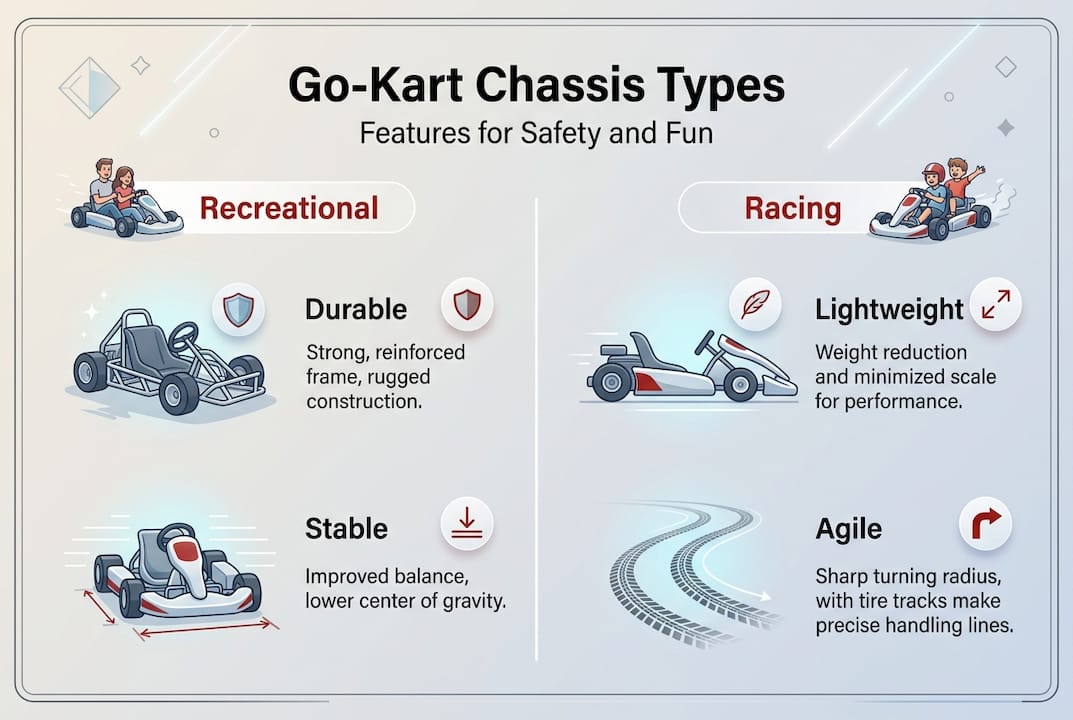
Different chassis designs serve different purposes. Recreational karts prioritize durability and stability, while racing karts may use lighter, more flexible frames that reward advanced driving techniques. For family use, heavier and stiffer always translates to safer and more forgiving. Understanding go-kart safety fundamentals helps you recognize which construction features align with your family’s needs rather than just chasing performance specs that matter more to competitive drivers.
The importance of low center of gravity and weight distribution
Center of gravity determines how stable your go-kart feels during normal operation and emergency maneuvers. A lower center of gravity keeps more weight closer to the ground, reducing the leverage that causes tipping during sharp turns or sudden direction changes. For families, this single factor often matters more than engine power or top speed.
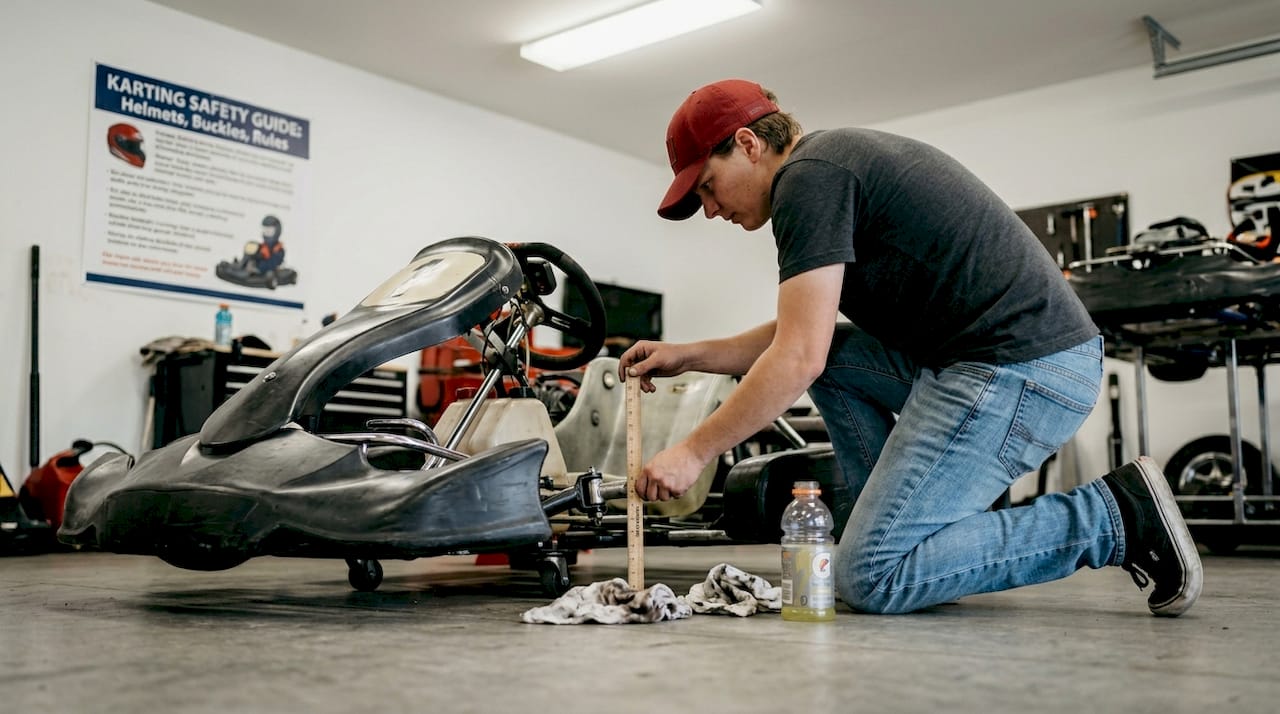
A low center of gravity is essential for safety in family use to prevent rollovers and enhance handling. When weight sits higher off the ground, physics works against stability. Every turn creates lateral forces that try to flip the kart outward. Lower weight placement counteracts these forces naturally, letting families navigate corners confidently without worrying about tipping.
Weight distribution between front and rear axles affects both acceleration and braking behavior. Karts with too much rear weight tend to spin out during hard braking, while front-heavy designs push wide in corners. Balanced distribution creates neutral handling that responds predictably to driver inputs. For beginners, this predictability builds confidence faster than any other performance characteristic.
Here’s how to evaluate center of gravity and weight distribution when selecting a kart:
- Check seat height relative to axle centerline. Lower seats place the driver’s weight closer to the ground, improving overall stability during cornering and uneven terrain navigation.
- Observe fuel tank and battery placement. Components mounted low and centered contribute to better balance, while high-mounted tanks raise the center of gravity unnecessarily.
- Test weight transfer during acceleration and braking. Quality family karts maintain composed handling without excessive nose-diving under braking or wheelie tendencies during acceleration.
- Verify ballast options for lighter drivers. Adjustable weight placement lets you optimize handling as kids grow, extending the kart’s useful life across multiple skill levels.
Proper seating position also influences effective center of gravity. Seats that position drivers too upright raise their weight unnecessarily, while reclined positions keep mass lower. Many safe kids go-karts feature adjustable seats that let you optimize positioning as children develop, maintaining ideal weight distribution throughout their growth.
Weight distribution also affects tire wear patterns and brake balance. Uneven distribution causes premature wear on one axle while underutilizing the other, reducing overall safety margins. Balanced karts brake straighter, corner more neutrally, and handle unexpected obstacles with greater composure. For families prioritizing safety over lap times, these characteristics matter far more than outright speed capabilities.
Performance features that enhance handling and control for recreational go-karting
Beyond chassis and weight distribution, several key components directly influence how your go-kart handles and responds to driver inputs. Understanding these features helps you identify karts that offer appropriate control for family and beginner use rather than advanced performance that requires expert skills to manage safely.
Performance features vary widely between rental and recreational karts, influencing handling and safety. The table below highlights common differences that affect family suitability:
| Feature | Rental/Family Karts | Recreational/Sport Karts |
|---|---|---|
| Tire compound | Hard, long-lasting rubber | Softer compounds for grip |
| Brake system | Rear disc with strong bias | Four-wheel hydraulic discs |
| Steering ratio | Slower, more forgiving | Quick, responsive steering |
| Suspension | Often rigid or minimal | Adjustable shocks available |
Tires represent one of the most significant performance variables. Harder compounds last longer and provide more predictable breakaway characteristics for beginners. When tires lose grip gradually, new drivers have time to recognize the limit and correct. Softer racing compounds grip harder but break away suddenly, requiring faster reflexes and more experience to manage safely. For family use, prioritize durability and progressive handling over maximum grip.
Brake systems vary from simple rear-only mechanical setups to sophisticated four-wheel hydraulic systems. Beginners benefit from strong, easy-to-modulate brakes that stop consistently without requiring perfect pedal pressure. Rear-biased braking prevents front-wheel lockup that causes loss of steering control, a critical safety feature for inexperienced drivers still learning proper braking technique.
Steering responsiveness affects how quickly karts react to handlebar inputs. Slower steering ratios require more handlebar movement to achieve the same directional change, giving beginners more time to process feedback and make corrections. Quick steering feels more exciting to experienced drivers but overwhelms newcomers with too much sensitivity.
When shopping for a family recreational kart, inspect these key factors:
- Brake pedal effort and travel distance. Pedals should require moderate pressure and provide clear feedback without excessive travel or mushiness.
- Tire tread depth and sidewall condition. Fresh tires with visible tread ensure predictable grip, while worn tires compromise both performance and safety.
- Steering play and binding. Handlebars should turn smoothly without excessive looseness or tight spots that indicate worn components.
- Suspension articulation if equipped. Moving suspension components should operate freely without binding, leaking, or unusual noises.
Pro Tip: Upgrading to quality go-kart tires and brake pads can dramatically improve control and safety without requiring major chassis modifications or expensive engine work.
Many recreational karts also benefit from safety accessories that enhance both performance and protection. Proper helmets, gloves, and padding improve driver confidence, which translates directly to smoother, safer operation. When drivers feel protected, they focus better on developing proper technique rather than worrying about potential injuries.
Choosing the right go-kart based on performance features for your family’s needs
Applying your knowledge of performance features to actual purchasing decisions requires matching technical characteristics with your family’s specific skill levels, ages, and intended use patterns. Not every feature that sounds impressive actually benefits recreational family use, and some marketing claims prioritize excitement over practical safety.
Different usage contexts require prioritizing features: rental, family, beginner, and hobbyist needs differ significantly. The comparison below helps align kart types with appropriate user profiles:
| Kart Type | Best For | Key Safety Features | Performance Focus |
|---|---|---|---|
| Youth entry karts | Ages 6-10, beginners | Speed limiters, roll bars | Stability over speed |
| Family recreational | Mixed ages, casual use | Adjustable seats, strong brakes | Ease of control |
| Sport recreational | Teens, enthusiasts | Safety harnesses, better tires | Balanced performance |
For families prioritizing safety and ease of use, focus on these must-have features:
- Adjustable speed governors that let you limit top speed as kids develop skills and confidence
- Robust roll protection integrated into chassis design rather than added as afterthoughts
- Easy-access kill switches positioned where parents can reach them quickly during supervision
- Clear sight lines and ergonomic controls sized appropriately for younger or smaller drivers
Follow these steps to evaluate performance features before purchasing:
- Identify your least experienced intended driver and prioritize features supporting their skill level. Karts grow with kids better than buying too much performance too soon.
- Test brake feel and steering effort with actual family members. What feels easy for adults may overwhelm smaller children with less strength.
- Verify parts availability and maintenance requirements. Exotic performance features mean nothing if you cannot source replacement components locally.
- Compare warranty coverage specifically for chassis, steering, and brake components. These systems endure the most stress and benefit most from manufacturer support.
Many parents mistakenly assume more power equals more fun, but appropriate performance features matched to skill level create far more enjoyment than overwhelming speed. A safe kids go-kart that builds confidence through predictable handling teaches better driving habits than a powerful kart that scares young drivers into tentative, jerky inputs.
Understanding types of family go-karts helps you recognize which categories offer the performance characteristics your family actually needs. Entry-level youth karts prioritize safety and ease of control. Mid-range recreational models balance performance with family-friendly features. Sport karts emphasize handling and speed for experienced drivers. Matching your purchase to the correct category prevents both under-buying karts kids quickly outgrow and over-buying performance that sits unused because it intimidates intended users.
Discover safe and fun go-karts for your family at GoKarts USA®
Now that you understand which performance features matter most for family safety and enjoyment, exploring options designed specifically for recreational use makes your next step easy.

GoKarts USA® offers carefully selected go-karts, ATVs, and mini bikes engineered with the stability, control, and safety features families need. Our Mini Sport Kids ATV 110cc combines a low center of gravity with adjustable speed controls, perfect for building young rider confidence. The TrailMaster Storm minibike features a rigid steel frame and responsive brakes ideal for beginners learning proper control. We also carry essential accessories like pocket bike footpegs that improve rider positioning and control. Browse our complete selection to find models matching your family’s specific needs, with detailed specifications and expert support to guide your decision.
Frequently asked questions
What are the most important performance features for a beginner go-kart?
Beginners benefit most from stiff chassis that provide predictable handling, low centers of gravity that prevent tipping, and strong brakes that stop consistently. Speed governors that limit top speed and adjustable seats that accommodate growth also rank as essential features. Prioritize stability and ease of control over raw performance capabilities when selecting karts for new drivers.
How does chassis rigidity impact go-kart handling?
Stiff chassis provide stability and predictable handling, while flexible chassis allow more cornering feedback but require skill. Rigid frames eliminate variables that demand experience to manage, making them ideal for families and recreational use. Advanced drivers may prefer some flex for fine-tuning cornering behavior, but beginners gain confidence faster with stiffer construction that responds consistently to inputs.
Why is a low center of gravity important in family go-karts?
Lower centers of gravity dramatically reduce tipping risk during turns, sudden maneuvers, and uneven terrain navigation. Physics dictates that weight positioned closer to the ground resists the lateral forces that cause rollovers. For families prioritizing safety, this characteristic matters more than speed or acceleration. Karts with low-mounted seats, batteries, and fuel tanks provide inherently safer handling that builds driver confidence naturally.
Can I upgrade performance features on an existing go-kart?
Many performance features accept upgrades without major modifications. Tires, brake pads, and steering components often swap easily, providing noticeable improvements in control and safety. Chassis geometry and center of gravity prove much harder to modify effectively. When considering upgrades, focus on consumable components that wear naturally rather than attempting structural changes that may compromise safety or void warranties.
How do I know if a go-kart’s performance features match my child’s skill level?
Match features to your child’s demonstrated abilities rather than their age or your aspirations. Can they consistently control speed and direction on their current ride? Do they brake smoothly and corner predictably? If yes, consider karts with slightly more responsive handling. If they struggle with basics, prioritize more forgiving features like slower steering ratios and stronger brakes. Visit our beginners guide for detailed skill assessment frameworks.