




TL;DR:
- Safety features like harnesses, roll cages, and parental controls are essential for go-kart safety.
- Pedal, electric, and gas karts suit different ages, speeds, and supervision levels.
- Proper fit, terrain, and regular safety oversight prevent accidents and enhance riding enjoyment.
Picking the right go-kart is one of those decisions that feels thrilling and a little overwhelming at the same time. You want your child grinning from ear to ear, not sitting in an emergency room. The good news is that a solid buying checklist takes most of the guesswork out of the process. CPSC data shows that helmets alone cut head injury risk by 85%, and that overloading a kart triples rollover risk. Follow the right steps, and you set your family up for years of safe, memorable adventure on every ride.
Table of Contents
- Safety first: What to check before you buy a go-kart
- Choosing the right type: Pedal, electric, and gas go-karts
- Sizing up fit: Terrain, age, and engine considerations
- Checklist for go-kart features and buying decision
- Our expert view: What most buying guides miss about go-karts
- Find the perfect go-kart or ATV with GoKarts USA®
- Frequently asked questions
Key Takeaways
| Point | Details |
|---|---|
| Safety is non-negotiable | Go-kart selection must start with checking all key safety features and protective gear. |
| Type matters by age | Pedal, electric, and gas go-karts each fit different age groups and experience levels. |
| Fit terrain, fit rider | Tires, suspension, and engine size should always match both the surface and the child’s age. |
| Test before you buy | Always check ride comfort, control access, and safety feature operation before purchasing. |
| Adult supervision is essential | No checklist replaces the need for responsible adult oversight, especially with gas karts. |
Safety first: What to check before you buy a go-kart
Let’s dive into the safety fundamentals every buyer should check off first. This is the foundation of the entire purchase, and skipping even one item can turn a fun afternoon into a frightening one.
Every quality kids’ go-kart should come equipped with a core set of protective features. According to expert guidance on go-kart safety features, the non-negotiables include:
- 3- to 5-point harness that holds your child firmly in the seat during sharp turns
- Roll cage built from steel tubing to protect against tip-overs
- Parental remote control or speed lock so you can cut power instantly
- Soft-start acceleration that prevents sudden lurching when the throttle is pressed
- Disc brakes for reliable, responsive stopping power
- Rubber or EVA tires that grip the surface and absorb impact
These must-have safety features are not optional extras. They are the baseline. Any kart missing two or more of these items deserves a hard pass, no matter how appealing the price tag looks.
Beyond the kart itself, personal protective equipment (PPE) is equally critical. A certified helmet is the single most important piece of gear you can buy. Helmets cut head injury risk by 85%, which is a number worth repeating to every parent who thinks a short backyard ride is “too casual” for a helmet. Add gloves, knee pads, and elbow pads, and you have a complete safety kit.
“No matter how safe the kart, the rider’s gear is the last line of defense. Treat it with the same seriousness as the vehicle itself.”
Parental oversight rounds out the safety picture. Young riders need an adult nearby, especially during the first several sessions. Parental remote controls give you the power to slow or stop the kart from a distance, which is invaluable when a child gets overconfident.
Pro Tip: Start toddlers on pedal karts with zero motor risk, graduate to electric models around ages 5 to 7, and only consider gas-powered options once a rider has solid experience and maturity. This progression keeps the learning curve safe and enjoyable.
Choosing the right type: Pedal, electric, and gas go-karts
With safety covered, next is making sense of your main options: pedal, electric, or gas. Each type serves a different rider profile, and choosing the wrong one is one of the most common mistakes families make.
Pedal karts are safest for toddlers and very young children because they have no motor, no battery, and no throttle to mismanage. Electric karts are the sweet spot for older beginners, offering real speed with manageable power and parental controls. Gas karts deliver the most authentic powersports experience, but they carry a higher injury risk if used without proper supervision. Always pair any kart type with a helmet and full gear.
Here is a quick comparison to guide your decision:
| Feature | Pedal | Electric | Gas |
|---|---|---|---|
| Best age range | 2 to 5 years | 5 to 12 years | 10 years and up |
| Top speed | Human-powered | 5 to 15 mph | 15 to 35+ mph |
| Maintenance | Minimal | Low | Moderate to high |
| Cost range | $50 to $200 | $200 to $800 | $500 to $2,000+ |
| Supervision level | Light | Moderate | Close at all times |
| Noise level | Silent | Quiet | Loud |
Electric karts have surged in popularity, and for good reason. Explore electric go-karts if you want a balance of real performance and parent-friendly controls. They charge overnight, run quietly, and require far less mechanical upkeep than gas models.
Gas karts, on the other hand, are best reserved for riders who have already logged meaningful hours on electric models. The throttle response is sharper, the speeds are higher, and the mechanical complexity is greater. They are genuinely exciting, but that excitement demands respect.
Pro Tip: Think about resale value and the upgrade path before you buy. A quality electric kart holds its value well and can be sold or passed down when your child is ready to step up to a gas model. Browse age-appropriate go-karts to find the right fit for where your child is today, not just where you hope they will be in two years.
Sizing up fit: Terrain, age, and engine considerations
Now let’s ensure your dream kart actually matches your child and environment. A kart that is too powerful, too large, or built for the wrong surface is a safety hazard waiting to happen.
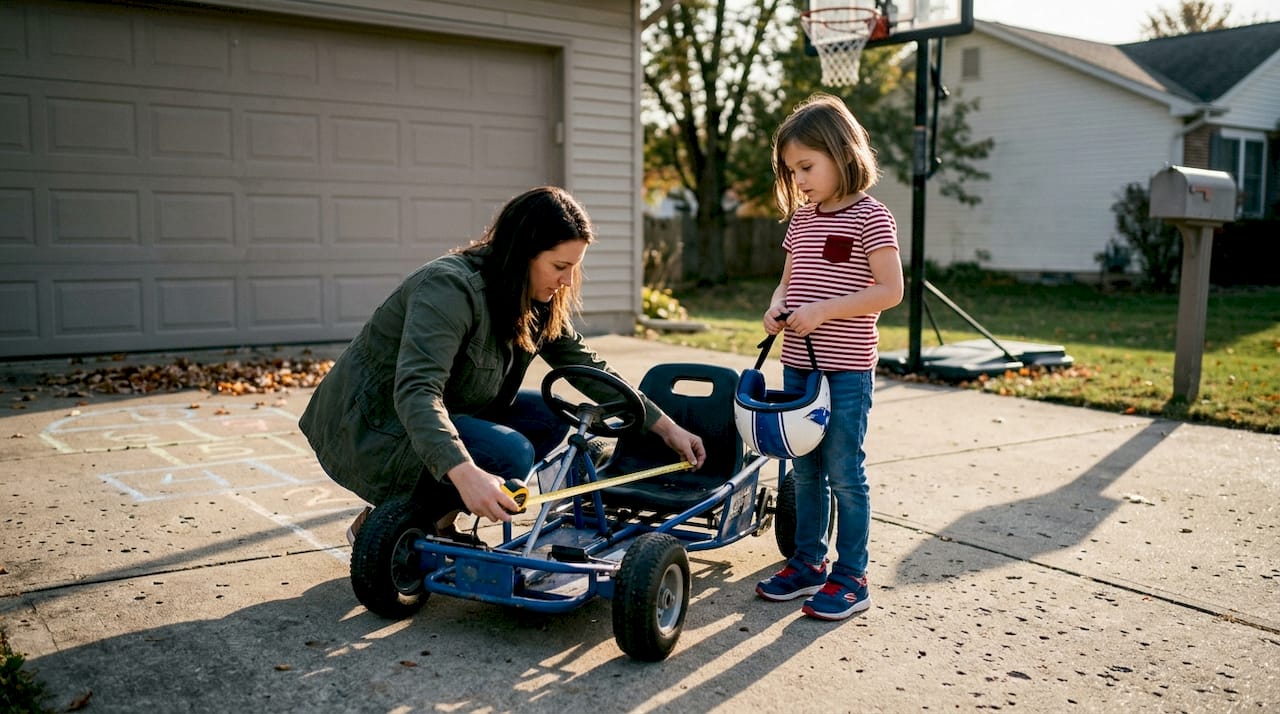
Terrain is the starting point. Smooth pavement calls for slick or lightly treaded tires that maximize grip on flat surfaces. Off-road tracks, grassy fields, and dirt paths require knobby tires with deep tread, along with suspension systems and at least 2 inches of ground clearance. Putting a pavement kart on rough terrain is like wearing dress shoes on a hiking trail. It just does not work.
Engine size is equally important. Matching engine displacement (measured in cubic centimeters, or cc) to your child’s age keeps power in a manageable range:
- 110cc works well for riders aged 6 to 10 years, offering enough power to feel exciting without being uncontrollable.
- 125cc suits riders aged 8 to 12, with a bit more punch for kids who have already built confidence.
- 200cc is appropriate for riders aged 12 and up who have demonstrated responsibility and skill.
These engine size recommendations are not arbitrary. They reflect the physical and cognitive ability of kids at each stage to manage speed and react to unexpected situations.
Fit testing before you finalize a purchase is just as important as the spec sheet. Run through this checklist with your child seated in the kart:
- Legs should reach the pedals comfortably without full extension
- Arms should reach the steering wheel with a slight bend at the elbow
- The helmet should not contact the roll cage when the head is in a neutral position
- The harness should hold snugly without pinching or restricting breathing
Review our beginner go-kart features guide for a deeper look at what makes a kart genuinely comfortable for new riders. Our go-kart guide by age also breaks down the full picture by developmental stage.
Pro Tip: If you are shopping online, ask the seller for the exact seat-to-pedal distance and steering wheel height. These two measurements tell you more about real-world fit than any age recommendation on the box.
Checklist for go-kart features and buying decision
With the technical fit in mind, here is your complete, ready-to-use buying checklist. Work through it in order, and you will arrive at a purchase you feel confident about.
- Measure your child for height, weight, and reach before looking at any model.
- Confirm the weight limit of any kart you consider. Overloading triples rollover risk, making this a non-negotiable check.
- Verify all safety features are present: harness, roll cage, speed lock, soft-start, and disc brakes.
- Test drive whenever possible. Even a short run in a parking lot reveals fit and comfort issues that no spec sheet will show.
- Compare at least three models side by side on price, safety features, and warranty terms.
- Confirm the warranty covers both the frame and the engine or motor for at least 90 days.
- Bundle your go-kart safety accessories at purchase so you are ready to ride safely from day one.
Watch out for these red flags during your search:
- Wobbly or loose wheels that do not tighten properly
- Missing or vague parental control documentation
- No visible roll cage or a cage made from thin, lightweight tubing
- Sellers who cannot answer basic questions about weight limits or safety certifications
Our kids go-kart buying tips page covers common pitfalls in more detail, and our must-have go-kart accessories guide helps you build out a complete safety kit without overspending.
Pro Tip: Always register your kart with the manufacturer after purchase. Registration activates your warranty and ensures you receive recall notices if a safety issue is ever identified.
Our expert view: What most buying guides miss about go-karts
Having walked through the full checklist, here is our hard-won perspective on what families really need to know. Most guides focus entirely on the kart. We think that is only half the story.
The real danger in youth powersports is not a missing roll cage or an undersized tire. It is the supervision gap. Parents buy a kart, run through the setup, and then gradually drift toward a more hands-off approach as their child grows more confident. That drift is where injuries happen. Gas karts carry higher injury risk specifically when used without consistent adult supervision, and that risk does not shrink just because a rider has logged more hours.
We believe every family should treat safety procedures like a living document. Revisit the rules every season. Raise the bar as skills improve, but never eliminate oversight entirely. A checklist gets you started, but a culture of safety keeps everyone protected. Learn more about building that culture through our family go-kart safety resources.
Find the perfect go-kart or ATV with GoKarts USA®
Ready to check off every box? We have built our entire catalog around the safety standards and fit criteria you just read about.

At GoKarts USA®, we carry a wide range of models designed for real families with real safety priorities. From beginner-friendly electric karts to feature-packed gas models with parental controls, every product in our lineup is chosen with your child’s protection in mind. Check out our kids ATV with safety features for a great example of what thoughtful engineering looks like in practice. Or browse our full explore go-kart options catalog to find the model that fits your child’s age, terrain, and experience level. Our team is here to answer your questions about fit, accessories, and after-sale support every step of the way.
Frequently asked questions
What are the most important safety features in a kids’ go-kart?
A 3- or 5-point harness, roll cage, speed lock, parental remote, and disc brakes top the safety list. These core safety features work together to protect young riders from the most common go-kart hazards.
What engine size go-kart is right for my child’s age?
110cc suits ages 6 to 10, 125cc works for ages 8 to 12, and 200cc is appropriate for riders 12 and older who have demonstrated solid skills and responsibility.
Is a pedal, electric, or gas go-kart safest for beginners?
Pedal karts are safest for young kids, electric for older beginners, and gas for supervised experienced users. The safest progression moves from pedal to electric to gas as experience and maturity increase.
How do I know if a go-kart fits my child?
Check for proper leg reach to the pedals, a slight elbow bend at the steering wheel, and a snug harness that does not restrict breathing. Helmet clearance from the roll cage is another critical fit indicator to verify before buying.
Do I need special gear for my child to ride a go-kart?
Yes, always use a helmet, gloves, and pads for every ride without exception. Helmets reduce head injury risk by 85%, making them the single most important piece of protective gear you can invest in.