




TL;DR:
- Braking systems in go-karts influence handling, safety, and driver confidence beyond just stopping.
- Rear-only disc brakes are ideal for beginners due to their simplicity, safety, and predictable control.
- Proper braking techniques and regular maintenance are crucial for optimal performance and safety.
Most riders think about brakes only when they need to stop. That mindset costs speed, control, and sometimes safety. In go-karting, your braking system shapes every corner entry, every turn rotation, and every moment of confidence you feel behind the wheel. Whether you’re a parent choosing your child’s first kart or an enthusiast pushing lap times lower, understanding how brakes actually work changes everything. We’re going to walk you through why brakes matter beyond stopping, which systems suit different skill levels, and how to use and maintain them for the best possible experience on the track.
Table of Contents
- Why brakes matter in go-karts
- Core types of go-kart braking systems
- Braking techniques: Maximizing performance and safety
- Brakes, handling, and regular maintenance
- The overlooked truth about go-kart brakes
- Explore go-kart models with optimized braking systems
- Frequently asked questions
Key Takeaways
| Point | Details |
|---|---|
| Brakes shape go-kart safety | Brakes do more than stop a kart; they ensure steering and handling stay predictable for all drivers. |
| Rear-only systems aid beginners | Rear-only brakes are chosen for safety, making them ideal for new and young drivers. |
| Proper technique prevents accidents | Using progressive braking and never braking while accelerating helps avoid spins and control loss. |
| Regular maintenance is critical | Routine inspection of the braking system prevents failures and ensures reliable performance. |
| Simplicity often means safety | More complex braking isn’t always better—simple systems can provide safer learning experiences for kids. |
Why brakes matter in go-karts
Brakes do far more than slow you down. They determine how predictably your kart handles through corners, how much steering control you maintain under pressure, and how safe the overall driving experience feels. When you brake late into a corner, you’re not just slowing the kart. You’re shifting weight forward, loading the front tires, and setting up the rotation of the chassis. That’s why braking is considered a foundational skill in karting, not just a safety reflex.
For new drivers, especially kids, this complexity is exactly why manufacturers make deliberate design choices. Rear-only braking is the standard on most recreational go-karts because it avoids front wheel lock-up, which can instantly rob the driver of steering control. When the front wheels lock, the kart goes straight regardless of where you point the wheel. That’s a frightening and dangerous situation for any beginner. Rear braking keeps the front wheels rolling and steering, even during hard stops.
“Rear-only braking is used for simplicity, cost, safety, better weight distribution, and predictable handling, especially for novices.” This design philosophy isn’t a shortcut. It’s a deliberate commitment to reliability and driver confidence.
Beyond safety, good braking contributes directly to go-kart safety features that make family karting trustworthy and fun. Parents shopping for their kids will find that safety features for kids often center on braking system design as the first line of protection.
Here’s why go-kart brakes are designed the way they are in most recreational models:
- Predictable handling: Rear braking keeps the kart stable and easier to control for new drivers.
- Steering preservation: Front wheels stay unlocked, so the driver always has directional control.
- Weight distribution: Braking forces are managed through the rear axle, reducing chassis imbalance.
- Lower maintenance complexity: Fewer components mean fewer failure points, especially for younger riders.
- Cost efficiency: Simpler systems keep karts affordable without sacrificing core safety.
With the importance of brakes established, let’s explore the core types of braking systems found on go-karts.
Core types of go-kart braking systems
Not all go-kart brakes are built the same. The system on your kart affects everything from stopping power to feel underfoot. Knowing the differences helps you choose the right kart and maintain it properly.
Rear-only disc brakes are the most common setup in recreational karting. A single disc sits on the rear axle, clamped by a caliper when you press the pedal. This setup is reliable, easy to service, and ideal for beginners. It’s the system you’ll find on most entry-level and youth karts.
Dual disc brakes add a second rotor at the front axle. This increases stopping power significantly and gives experienced drivers more control over weight transfer. However, this setup requires more skill to use safely. In the wrong hands, front braking can cause lock-up and loss of steering, which is why rear-only braking remains the default for novices.
Hydraulic brakes use fluid pressure to activate the caliper. They offer consistent, powerful stopping with minimal pedal effort. Mechanical brakes use a cable or rod linkage instead. Mechanical systems are simpler and cheaper but can feel less responsive over time as cables stretch or wear.
| Brake type | Best for | Stopping power | Maintenance level |
|---|---|---|---|
| Rear-only disc | Beginners, kids | Moderate | Low |
| Dual disc | Intermediate, advanced | High | Medium |
| Hydraulic | Performance karts | Very high | Medium |
| Mechanical | Entry-level, budget | Moderate | Low to medium |
For a deeper look at how these systems fit into the full kart build, our go-kart parts breakdown covers every component in detail.
Pro Tip: If you’re buying a kart for a child or first-time driver, prioritize rear-only disc brakes with a hydraulic actuation system. The consistent pedal feel builds confidence faster than mechanical setups, and the rear-only design keeps steering predictable no matter how hard they brake.
Understanding these brake types sets the stage for knowing how to use them effectively, which is what we’ll unpack next.
Braking techniques: Maximizing performance and safety
Knowing your brake system is only half the equation. How you use it determines whether you stay in control or spin out. Proper braking technique is one of the most underrated skills in recreational karting, and it’s the one that separates smooth, fast drivers from those who struggle through corners.
Progressive braking is the foundation. You apply maximum pressure at the start of the braking zone, then gradually release as the kart slows. This approach, confirmed by braking technique research, delivers optimal deceleration without triggering wheel lock-up. Think of it as squeezing rather than stabbing the pedal.
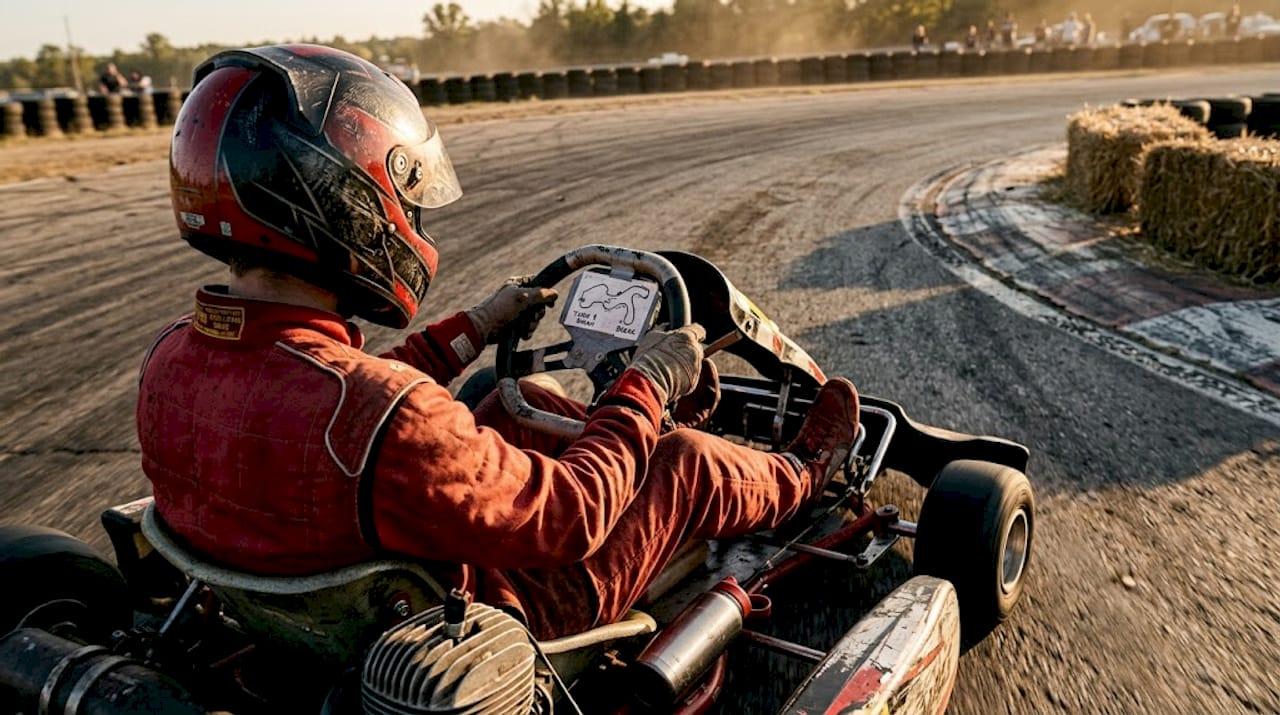
Trail braking takes this further. Instead of releasing the brake fully before turning, you carry a light brake pressure into the corner entry. This keeps weight on the front tires, helping the kart rotate toward the apex. It’s a technique used by competitive drivers to improve corner speed, and it requires practice to execute cleanly.
For new drivers, the golden rule is simple: brake, then steer. Trying to do both at once overwhelms the tires and causes understeer or spins. Teach young racers to complete their braking in a straight line before turning the wheel.
Here’s a practical list of do’s and don’ts for safe kart braking:
- Do apply brakes firmly and progressively, then ease off as you slow.
- Do complete your braking before initiating a turn.
- Do keep both hands on the wheel during braking.
- Don’t stab the brake pedal suddenly at high speed.
- Don’t brake and accelerate at the same time, as this creates unpredictable handling.
- Don’t coast into corners without braking if you’re carrying too much speed.
For those focused on improving lap times, mastering braking zones is the single fastest way to drop seconds without touching the engine. And understanding the performance features in go-karts helps you see how braking connects to the full picture of kart setup.
Pro Tip: The best habit any driver can build is choosing a consistent braking marker, a cone, a crack in the pavement, a painted line, and hitting it every single lap. Consistency in braking beats aggression every time.
Now that you’ve learned the techniques, let’s connect braking to the overall karting experience and why regular maintenance matters.
Brakes, handling, and regular maintenance
A well-tuned brake system doesn’t just stop your kart. It gives you confidence. When the brakes feel firm and predictable, you brake later, carry more speed, and drive with greater precision. When they feel spongy or inconsistent, you hesitate, brake early, and lose time and trust in the machine.
Rear-only braking is more predictable and safer for beginners, and that predictability depends entirely on keeping the system in good shape. A worn brake pad or low fluid level can turn a reliable system into a dangerous one.
Tires and brakes are also deeply connected. Worn or underinflated tires reduce the friction available for braking, meaning your stopping distance increases even if the brake system itself is perfect. Checking go-kart tires and safety alongside your brakes is a habit every serious karter should develop.
Here’s what to check regularly:
- Brake pads: Look for wear indicators or measure pad thickness. Replace before they reach the metal backing.
- Brake fluid: Check the reservoir level and look for discoloration, which signals moisture contamination.
- Lever or pedal travel: Excessive travel before engagement means air in the line or worn components.
- Caliper and rotor condition: Look for scoring, cracking, or uneven wear on the rotor surface.
- Cable or linkage (mechanical systems): Check for fraying, kinking, or loose connections.
| Common brake issue | Likely cause | Quick action |
|---|---|---|
| Spongy pedal feel | Air in hydraulic line | Bleed the brake system |
| Grinding noise | Worn brake pads | Replace pads immediately |
| Pulling to one side | Uneven pad wear or caliper drag | Inspect and adjust caliper |
| Reduced stopping power | Contaminated pads or fluid | Clean or replace components |
| Excessive pedal travel | Stretched cable or air in line | Adjust cable or bleed system |
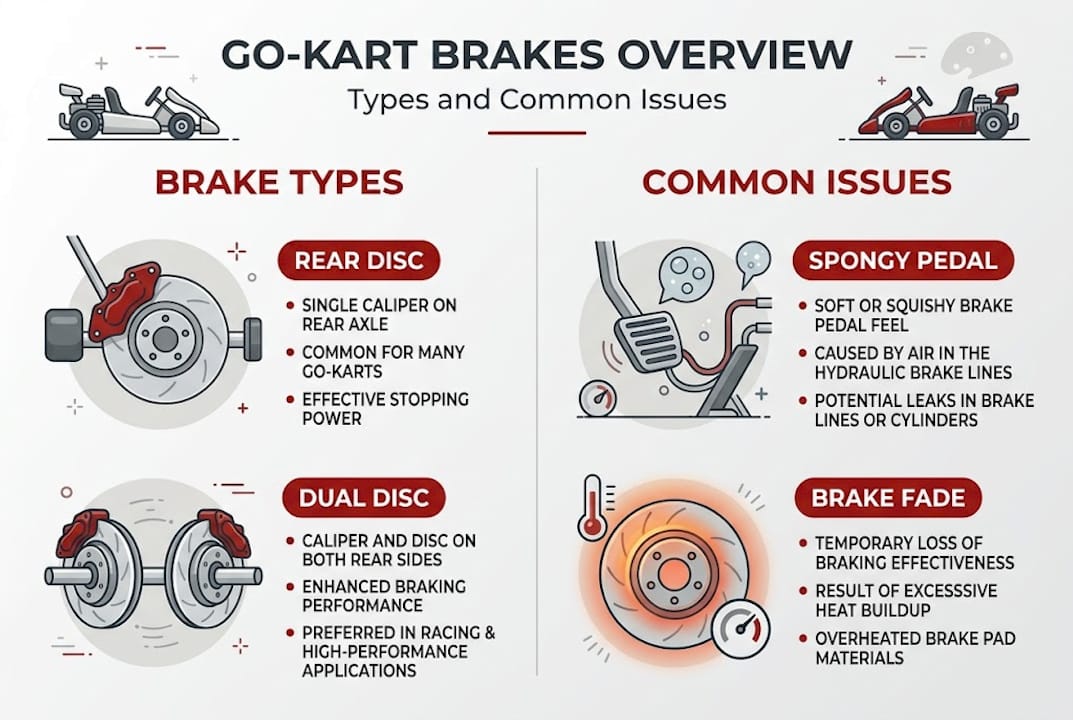
For those ready to take things further, our guide on upgrading go-kart brakes walks through performance upgrades step by step. And if something feels off, our go-kart brake troubleshooting resource helps you diagnose and fix issues fast.
With a solid grasp of maintenance and handling, let’s step back and consider what most guides miss about go-kart brakes.
The overlooked truth about go-kart brakes
Here’s something we’ve seen time and again: parents and new enthusiasts obsess over engine size and top speed, then treat the brake system as an afterthought. That’s backwards. The engine gets you into trouble. The brakes get you out of it.
What surprises many people is that more advanced braking systems aren’t automatically safer for young or beginner drivers. Dual disc setups give experienced racers more control, but in the hands of someone still learning, they introduce the real risk of front wheel lock-up and instant loss of steering. Simplicity, in this case, genuinely improves safety.
The real skill isn’t having the strongest brakes. It’s knowing exactly when and how to use what you have. A child who learns to brake smoothly and consistently on a rear-only system builds the muscle memory and judgment that will serve them for life, whether they stay recreational or move into competitive karting.
Manufacturers who choose rear-only systems for youth karts aren’t cutting corners. They’re teaching fundamentals first. We believe that’s the right call, and the family safety features built into quality karts reflect that same philosophy. Trust the design. Then build the skill.
Explore go-kart models with optimized braking systems
Ready to put this knowledge into action? At GoKartsUSA.biz, we carry models designed with exactly these principles in mind, matching the right braking system to the right driver at every skill level.
The Mini Sport Kids ATV is a great entry-level model that pairs reliable braking with youth-friendly safety features, giving young riders the confidence to learn properly from day one. Whether you’re shopping for a first kart or upgrading to something with more performance capability, GoKartsUSA.biz has the selection, expertise, and support to match you with the right machine. Browse our full lineup and find the model that fits your family’s adventure.
Frequently asked questions
Why do most go-karts use rear-only brakes?
Rear-only brakes are simpler, safer for beginners, and prevent loss of steering control caused by front wheel lock-up, making them the ideal choice for recreational and youth karting.
What is the best way to brake safely in a go-kart?
Apply strong initial pressure, then ease off gradually as you approach the turn; progressive braking prevents lock-up and keeps the kart stable, and you should never brake and accelerate at the same time.
How often should go-kart brakes be checked or maintained?
Check go-kart brakes before every session and inspect pads, fluid, and linkages regularly to catch wear early and ensure consistent, safe stopping performance.
Do advanced braking systems make go-karts safer for kids?
Not always; simpler rear-only systems are often the better choice for children because they offer predictable handling and teach safe, foundational driving habits before adding complexity.
Recommended
- Go-kart tires: The real key to performance and safety – GoKarts USA®
- Safe go-kart features for kids: 7 must-haves in 2026 – GoKarts USA®
- Understanding performance features in go-karts for family fun – GoKarts USA®
- Top go-kart accessories for safe family rides in 2026 – GoKarts USA®
- Få styr på køreteknik: Din guide til praktisk kørekort