




Most people walk up to a go-kart and immediately check the engine size or ask about top speed. That instinct makes sense, but it misses the real story. Tires are the sole contact point with the track, delivering every ounce of grip, traction, and handling a kart can offer. Without suspension to absorb mistakes, the tire is doing all the heavy lifting. Whether you are a parent setting up your child’s first kart or a weekend enthusiast chasing faster lap times, understanding tires transforms how you think about the entire karting experience.
Table of Contents
- Why tires matter more than you think
- Understanding go-kart tire design and compounds
- Tire maintenance: Keeping performance and safety in check
- Driving style: The ultimate tire performance enhancer
- Choosing the right tire: A practical comparison
- Shop safe, high-performance go-karts and accessories
- Frequently asked questions
Key Takeaways
| Point | Details |
|---|---|
| Tires control performance | Go-kart tires are the single most critical factor in your handling, safety, and fun on the track. |
| Compound choice is key | Medium compounds strike the best balance between grip and tire life for most recreational and youth drivers. |
| Maintenance matters | Simple checks for pressure, temperature, and wear can prevent accidents and keep karts running smoothly. |
| Driving style impacts tires | Smooth steering and proper technique protect your tires and elevate your go-karting experience. |
Why tires matter more than you think
Imagine driving a car with no shock absorbers, no stability control, and no margin for error. That is essentially what go-karting feels like, and it is part of what makes it so thrilling. But it also means that tires provide all grip, traction, and handling since karts lack suspension entirely. Every turn, every brake, every burst of acceleration runs through those four small patches of rubber touching the track.
“The tire is not just a component in go-karting. It is the entire performance system. Everything else on the kart serves the tire’s ability to do its job.”
For families just getting started, this reality shapes every safety decision. A worn or improperly inflated tire on a youth kart does not just slow things down. It creates unpredictable handling that even experienced drivers struggle to manage. Choosing the right setup from the start is part of safe entry-level go-karting that builds confidence rather than fear.
Here is what proper tire grip actually affects on the track:
- Cornering stability: Tires with adequate grip let drivers turn smoothly without sliding wide.
- Braking distance: Good rubber bites into the track surface and shortens stopping distances meaningfully.
- Acceleration traction: Without grip, power just spins the rear wheels and wastes speed.
- Driver confidence: Predictable tires help young and new drivers build real skill instead of just surviving each lap.
With a fresh perspective on tires’ importance, let’s dig into what makes go-kart tires unique compared to those on other vehicles.
Understanding go-kart tire design and compounds
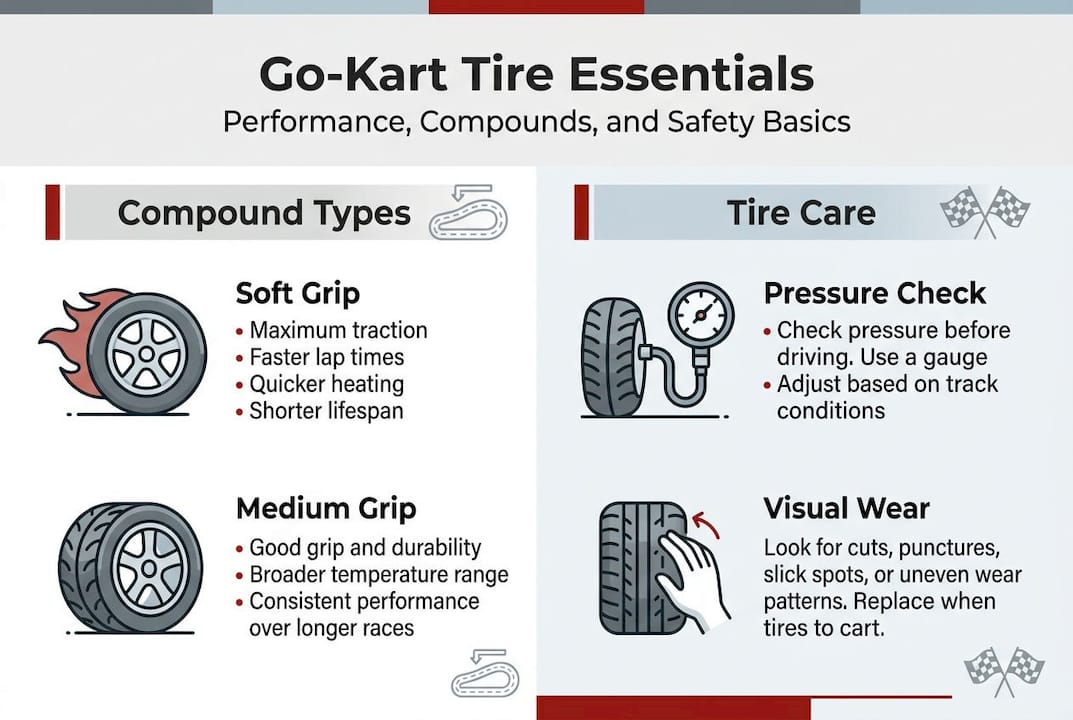
The word “compound” refers to the rubber mixture used to make a tire. Softer compounds grip the track more aggressively but wear down faster. Harder compounds last longer but sacrifice some of that immediate bite. Medium compounds sit in the middle, offering a reliable balance that works well across a wide range of conditions and skill levels.
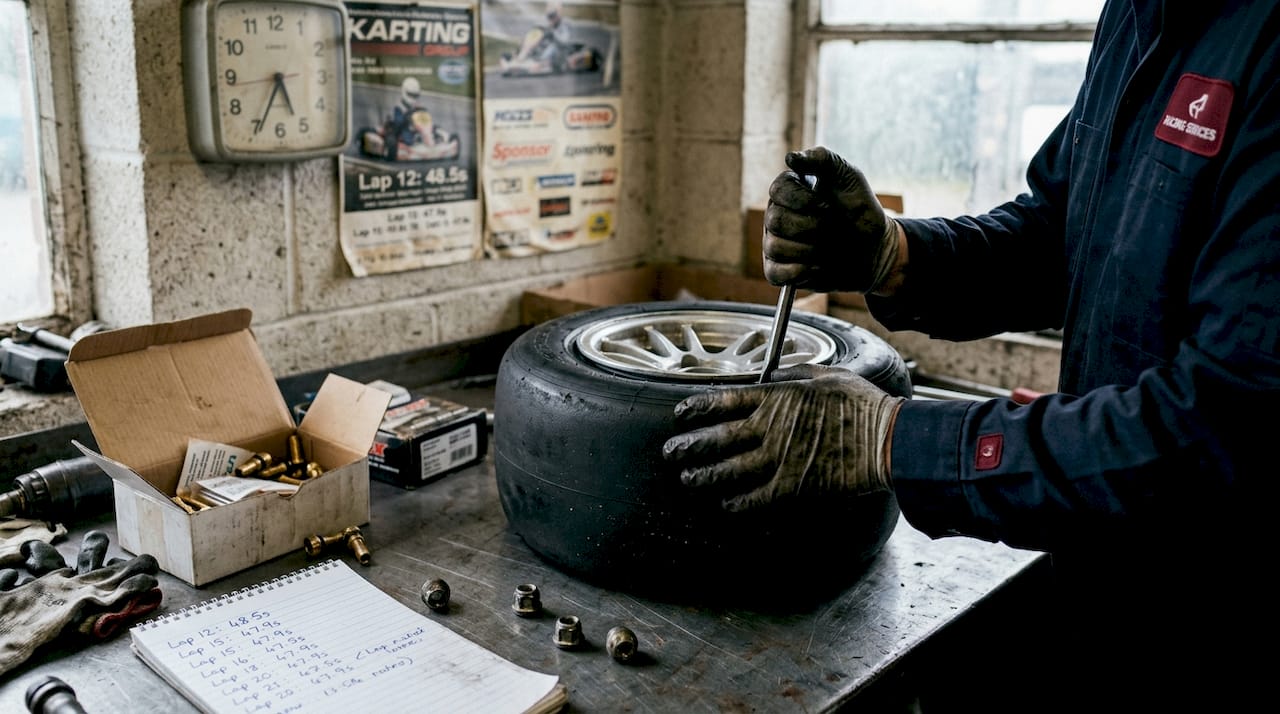
Manufacturers design go-kart tires specifically for short, intense performance windows. Tire compounds typically last 80 to 200 laps, prioritizing grip over longevity. That is a very different philosophy from street car tires, which are built to last tens of thousands of miles. Knowing this helps you plan replacement schedules and budget accordingly.
| Compound | Grip level | Average lap life | Best for |
|---|---|---|---|
| Soft | Very high | 80 to 120 laps | Competitive racing, dry tracks |
| Medium | Balanced | 130 to 170 laps | Recreational use, youth drivers |
| Hard | Moderate | 160 to 200 laps | High-heat tracks, extended sessions |
When you want to choose and maintain go-kart tires for a family setup, the compound choice is one of the most impactful decisions you will make. Soft tires feel incredible for the first few sessions, then drop off sharply. That sudden change in handling can catch young drivers completely off guard.
Pro Tip: For parents and casual drivers, medium compound tires offer the best combination of grip, predictability, and session-to-session consistency. They help new drivers learn proper technique without the dramatic performance swings that soft compounds create. If you want to improve go-kart performance without chasing exotic setups, starting with the right compound is the smartest move.
Once you know how tire compounds set the stage for performance, it is essential to grasp how maintaining these tires keeps that performance consistent on track.
Tire maintenance: Keeping performance and safety in check
Maintenance does not have to be complicated. A simple three-step routine before and after each session catches most problems before they become dangerous. Here is what we recommend for every recreational driver and parent:
- Check tire pressure before every session. Use a quality gauge and match the manufacturer’s recommended PSI. Even a few pounds off can change how the kart handles through corners.
- Monitor tire temperature after each session. Use a basic pyrometer to measure inner, middle, and outer temps across the tire surface. Uneven readings often point to alignment or pressure issues that need attention.
- Inspect for visible wear and damage. Look for flat spots, cracking on the sidewall, or chunks missing from the tread. Any of these signs mean it is time to replace, not patch.
Pro Tip: Checking tire pressure before every session is genuinely the cheapest and fastest safety upgrade available. A quality tire pressure gauge costs less than ten dollars and takes thirty seconds to use. For kids’ karts especially, this single habit prevents most handling surprises.
Uneven tire temperatures are one of the most useful diagnostic signals in karting. If the inner edge of a tire runs significantly hotter than the outer edge, that often points to a camber or alignment issue. Catching this early protects both the tire and the driver. For more on building a safe setup, our guides on safe go-kart features for kids and must-have go-kart accessories walk through the full picture. If you are still in the selection phase, our resource on how to choose a kids go-kart covers everything from size to safety ratings.
Now that you know how to maintain tires for peak condition, let’s discover how the way you drive can make or break tire effectiveness.
Driving style: The ultimate tire performance enhancer
Here is something that surprises most new karting families: two drivers on identical karts with identical tires can have completely different experiences based purely on driving style. Smooth driving preserves the optimal grip window, while aggressive, jerky inputs push tires past their operating limits fast.
“Tire management is what separates fast karts from frustrated ones. The driver who respects the tire’s limits will always outlast the one who fights it.”
When a tire overheats, it does not just wear faster. Overheating causes sudden greasy grip loss that feels like the kart is sliding on ice. That transition happens quickly and can be genuinely scary for young or inexperienced drivers. Teaching smooth technique from day one is the best protection against this.
Watch for these signs that driving style is hurting your tires:
- Sudden grip loss mid-corner after several laps of normal handling
- Rapid, uneven wear on one side of the tire more than the other
- Squealing through every corner rather than just the sharpest turns
- Visible heat blistering or rubber chunks on the tire surface after a session
- Kart pulling to one side under braking, suggesting uneven tire loading
Coaching young drivers to brake early, steer smoothly, and accelerate gradually does more for their safety and enjoyment than any equipment upgrade. For more on building good habits early, our resource on youth go-kart safety covers the full picture of responsible karting for kids.
To put all these insights into practice, here is an easy-to-reference comparison and practical checklist for making tire choices you can trust.
Choosing the right tire: A practical comparison
Selecting the right tire comes down to matching the compound to your actual use case. Competitive racers and recreational families have very different needs, and the right choice for one can be the wrong choice for the other.
| Scenario | Recommended compound | Key benefit | Watch out for |
|---|---|---|---|
| Family track days | Medium | Consistent handling session to session | Slightly less peak grip than soft |
| Youth drivers (beginners) | Medium to hard | Predictable, forgiving behavior | Less exciting feel at first |
| Hobbyist enthusiasts | Soft to medium | Strong grip, rewarding feedback | Faster wear, more frequent replacement |
| High-heat summer sessions | Hard | Resists overheating longer | Reduced grip in cooler conditions |
Tire management differentiates fast karts from slow ones, and parents should prioritize safety with proper pressures and medium compounds to avoid slips. That principle holds whether you are buying your first kart or your fifth.
Here is a simple checklist to guide your tire selection:
- Identify your primary use. Recreational family fun, youth learning, or competitive hobbyist sessions each call for different priorities.
- Check the track surface. Smooth indoor tracks favor softer compounds. Rougher outdoor surfaces often work better with medium or hard rubber.
- Consider the driver’s experience level. New and young drivers benefit most from predictable medium compounds.
- Plan your replacement budget. Soft tires perform brilliantly but need replacing more often. Factor that into your overall cost.
- Consult your kart’s manual. Manufacturer recommendations exist for a reason and are a reliable starting point.
Our go-kart buying guide for kids and our roundup of go-kart accessories for family rides are great next reads once you have your tire strategy locked in.
With your tire knowledge toolkit complete, you are ready to apply these insights on your next track day or family kart outing.
Shop safe, high-performance go-karts and accessories
At GokartsUSA.biz, we believe the best adventures start with the right equipment and the right knowledge. Everything we have covered here, from compound selection to pressure checks to driving style, is the kind of insight our team lives and breathes every day. We are not just selling karts. We are your pit crew, your trail guides, and your fellow riders in this community.

Whether you are shopping for a first youth kart or upgrading your family’s setup, we carry vehicles and accessories built for reliability, safety, and pure fun. Check out options like the Mini Sport Kids ATV for younger riders or the TrailMaster Taurus 200GX for a versatile family ride. Browse our full selection of go-karts and reach out anytime. Our team is always ready to help you find the perfect match for your track, your family, and your adventure.
Frequently asked questions
How often should I replace go-kart tires for recreational use?
Most recreational drivers can expect 80 to 200 laps from a set of high-grip go-kart tires before performance drops noticeably. Replacing them on schedule keeps handling predictable and safe.
What is the best tire compound for kids’ go-karts?
A medium compound tire provides a safe balance between grip and longevity, and medium compounds avoid slips that can surprise young drivers. It is the most forgiving choice for beginners of any age.
How do I know if my go-kart tires are overheating?
The clearest sign is a sudden loss of grip mid-session, often described as a greasy or slippery feel. Overheating causes sudden greasy grip loss that differs from the gradual decline of normal wear.
Why is maintaining correct tire pressure so important in go-karting?
Because tires are the sole contact point with the track, even small pressure changes shift how the kart handles through every corner and braking zone. Correct pressure protects both performance and driver safety.