




Pocket bikes deliver thrills, but they also send over 2,300 children to emergency rooms each year with injuries ranging from fractures to head trauma. These miniature motorcycles are not toys. They’re motorized vehicles capable of speeds exceeding 40 mph, and without proper safety measures, they pose serious risks to young riders. As a parent, you hold the key to transforming pocket biking from a dangerous gamble into a safe, rewarding adventure. This guide walks you through essential protective gear, age-appropriate supervision, maintenance routines, and family safety practices that keep your child secure while they enjoy the freedom of the ride.
Table of Contents
- Why pocket bike safety matters
- Essential protective gear and riding equipment
- Age guidelines and supervision policies
- Routine maintenance and safe riding best practices
- Building a family safety culture around pocket bikes
- Explore safe riding solutions with GoKarts USA®
- Frequently asked questions
Key Takeaways
| Point | Details |
|---|---|
| Safety is non-negotiable | Proper gear and supervision are crucial for preventing serious injuries when children ride pocket bikes. |
| Know age rules | Children under 12 should not ride pocket bikes, and older kids need close adult supervision. |
| Routine checks prevent accidents | Regular maintenance and bike inspections dramatically reduce the risk of mechanical failures. |
| Promote family safety culture | Establish shared routines and rules that reinforce careful, responsible riding for all children. |
Why pocket bike safety matters
Pocket bikes look like scaled-down motorcycles, but they carry full-size risks. Empirical data shows high injury rates tied to poor handling at low speeds, design flaws in brakes, and lack of protective equipment. Many parents mistakenly view these machines as oversized toys, but they’re genuine motorized vehicles that demand respect and caution.
Injuries spike when children ride without helmets, gloves, or knee pads. Mechanical failures, such as brake malfunctions or throttle sticking, contribute to crashes that leave young riders with broken bones, road rash, and concussions. Emergency room statistics reveal a troubling pattern: most accidents involve children under 14 who were riding unsupervised or without proper gear.
“Pocket bikes are motorized vehicles, not toys. Treating them as playthings leads to preventable injuries and heartbreak for families.”
Experts emphasize that parental involvement is the single most effective safety measure. When you enforce gear requirements, supervise rides, and maintain the bike regularly, you dramatically reduce the likelihood of serious harm. Government safety guidelines reinforce these principles, urging families to treat pocket bikes with the same caution they would apply to full-size motorcycles.
Key risk factors include:
- Riding without certified helmets or protective clothing
- Operating bikes on public roads or uneven terrain
- Lack of adult supervision during rides
- Skipping pre-ride mechanical inspections
- Allowing children under 12 to ride
Understanding these dangers is the first step toward creating a safer riding environment. For more insights, explore our kids’ mini bike safety tips and learn about safer mini bike riding practices that protect young enthusiasts.
Essential protective gear and riding equipment
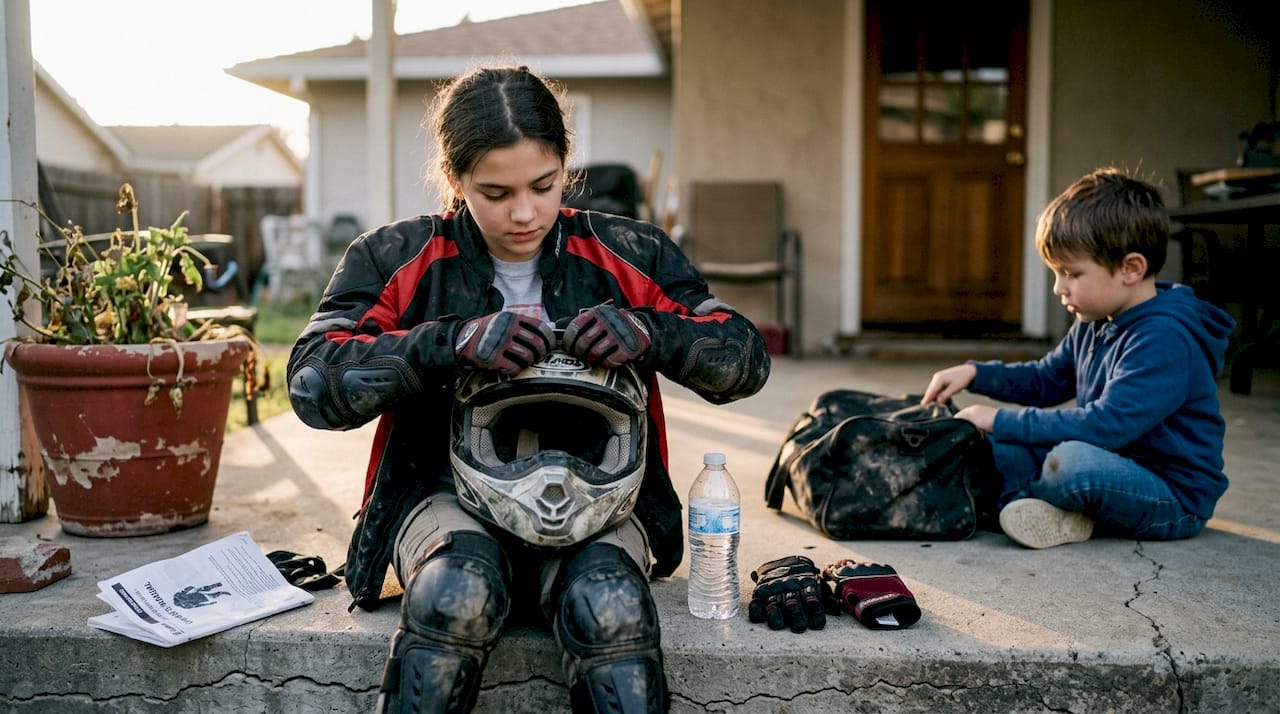
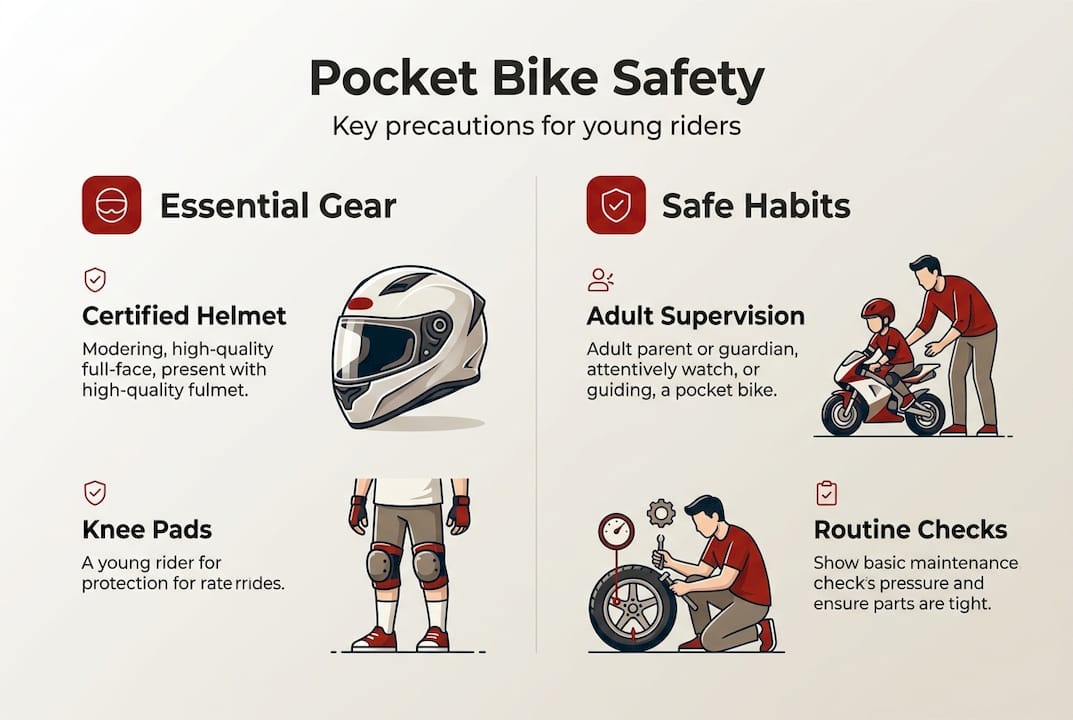
A certified helmet is your child’s most critical defense against head injuries. Look for DOT or Snell certification labels, which indicate the helmet has passed rigorous impact testing. A proper fit means the helmet sits snugly without wobbling, and the chin strap stays secure under tension.
Beyond the helmet, full protective gear includes elbow pads, knee pads, gloves, long pants, long sleeves, boots, and goggles. Each piece serves a specific purpose. Elbow and knee pads absorb impact during falls, gloves protect hands from abrasions, and boots shield ankles from twisting injuries. Goggles keep dust and debris out of your child’s eyes, maintaining clear vision at speed.
Protective Gear Comparison
| Gear Item | Entry-Level Features | Advanced Features | Key Benefit |
|---|---|---|---|
| Helmet | Basic foam padding, DOT certified | Multi-density foam, Snell certified, ventilation | Prevents head trauma |
| Gloves | Cloth with light padding | Reinforced knuckles, leather palms | Protects hands from road rash |
| Knee Pads | Soft foam, elastic straps | Hard shell, adjustable straps | Shields knees from impact |
| Boots | Ankle-high, basic sole | Over-ankle, reinforced toe/heel | Prevents ankle injuries |
| Goggles | Clear plastic lens | Anti-fog, UV protection | Maintains visibility |
Fit and certification matter more than brand names. A helmet that’s too loose will shift during a crash, reducing its protective value. Knee pads that slip down mid-ride leave joints exposed. Before each outing, inspect every piece of gear for cracks, worn straps, or damaged padding.
Pro Tip: Always check gear for damage before each ride. A cracked helmet or torn glove loses its protective power and should be replaced immediately.
Investing in quality gear pays dividends in safety. Entry-level equipment works well for beginners, but as your child gains experience, consider upgrading to advanced options with better impact resistance and comfort features. For guidance on selecting the right setup, visit our beginner mini bike guide and compare ATV vs mini bike safety considerations.
Age guidelines and supervision policies
Children under 12 should not ride pocket bikes. Their physical coordination, judgment, and reaction times are still developing, making them ill-equipped to handle the speed and control demands of motorized vehicles. For riders aged 13 to 16, close adult supervision is non-negotiable.
Manufacturer recommendations and local laws vary, so check both before allowing your child to ride. Some jurisdictions ban pocket bikes on public roads entirely, while others impose strict age and licensing requirements. Ignoring these rules exposes your family to legal penalties and insurance complications.
Age-Based Supervision Standards
| Age Range | Riding Allowed? | Supervision Level | Additional Requirements |
|---|---|---|---|
| Under 12 | No | N/A | Not developmentally ready |
| 13-14 | Yes | Constant adult presence | Restricted speed, private property only |
| 15-16 | Yes | Close adult oversight | May ride with periodic check-ins |
| 17+ | Yes | Minimal supervision | Follow local laws, wear full gear |
Effective supervision means more than watching from a distance. You should:
- Stay within earshot and line of sight during every ride
- Set clear boundaries for where your child can ride
- Establish hand signals for stopping or slowing down
- Review safety rules before each session
- Monitor your child’s energy and focus levels
Pro Tip: Always keep emergency contact info and a basic first aid kit nearby when supervising rides. Accidents happen fast, and being prepared can make a critical difference.
Younger riders benefit from structured practice sessions in controlled environments. Start with short rides on flat, open terrain, gradually increasing duration and complexity as skills improve. For age-specific guidance, explore our youth ATV age guidelines and youth go-kart age standards to understand developmental readiness across different vehicle types.
Routine maintenance and safe riding best practices
Mechanical failures cause preventable accidents. Before every ride, inspect your child’s pocket bike for loose bolts, worn brake pads, low tire pressure, and fuel leaks. A quick five-minute check can catch problems before they turn into crashes.
Regular maintenance practices include reading the owner’s manual, using speed limiters for younger riders, prohibiting passengers, and ensuring proper training. Speed limiters are adjustable devices that cap the bike’s maximum velocity, giving beginners time to build confidence without risking high-speed wipeouts.
Follow this pre-ride checklist:
- Check tire pressure and tread depth
- Test brakes for responsiveness
- Inspect throttle for smooth operation
- Verify chain tension and lubrication
- Confirm all bolts and fasteners are tight
- Check fuel level and look for leaks
Training is just as important as maintenance. Teach your child to:
- Start and stop smoothly without jerking the throttle
- Use both brakes evenly to avoid skidding
- Lean into turns rather than steering abruptly
- Scan ahead for obstacles and hazards
- Ride at speeds appropriate for their skill level
Pro Tip: Log maintenance and checks in a notebook for quick reference and accountability. This habit builds responsibility and ensures nothing gets overlooked.
Ride planning prevents accidents. Choose flat, open areas away from traffic, pedestrians, and obstacles. Avoid wet or muddy conditions that reduce traction. Set time limits to prevent fatigue, which impairs judgment and reaction time. For detailed maintenance steps, visit our mini bike maintenance guide and mini bike setup tips. You can also review pit bike safety basics for additional insights.
Building a family safety culture around pocket bikes
Safety becomes second nature when it’s woven into your family’s routine. Make pre-ride gear checks a ritual that everyone participates in. Let your child help inspect the bike, tighten bolts, and verify tire pressure. This hands-on involvement builds mechanical awareness and reinforces the importance of preparation.
Set clear, non-negotiable boundaries:
- No riding on public roads or sidewalks
- No racing without adult supervision
- No riding after dark or in poor weather
- No passengers, ever
- Full gear required for every ride, no exceptions
Reward responsible behavior. When your child consistently follows safety rules, acknowledge their maturity with praise or small privileges. Positive reinforcement works better than punishment for building long-term habits.
Share real-life stories that illustrate risks without resorting to scare tactics. Explain how a friend’s cousin broke an arm riding without knee pads, or how a neighbor avoided injury because they wore a helmet during a fall. These examples make abstract dangers concrete and relatable.
Involve your child in gear maintenance. Teach them to spot worn padding, check strap integrity, and clean goggles after each ride. When kids understand how gear protects them, they’re more likely to wear it without complaint.
Contrasting views note fun on private tracks with precautions. Supervised riding in controlled environments offers adventure without unnecessary risk. By creating a family culture that values safety as much as excitement, you give your child the freedom to enjoy pocket biking while minimizing the chance of serious harm.
Explore safe riding solutions with GoKarts USA®
At GoKarts USA®, we understand that safety and adventure go hand in hand. We’ve spent years helping families across the nation find the right gear, vehicles, and support to make powersports a safe, thrilling part of their lives. Whether you’re upgrading protective equipment, adding parental control features, or exploring supervised family fun options, we’re here to guide you every step of the way.

Our catalog includes quality safety accessories like reinforced pocket bike footpegs that improve stability and control. For families seeking supervised alternatives, our mini sport kids ATV delivers the excitement of motorized riding with features designed specifically for younger enthusiasts. Every product we offer is backed by expert guidance and a commitment to your family’s safety.
Explore our full range of vehicles, parts, and accessories at GoKarts USA. We’re your pit crew, trail guides, and fellow riders, fueling adventure while keeping safety front and center. Let’s make every ride a safe one.
Frequently asked questions
What gear should my child wear when riding a pocket bike?
Your child should wear a certified helmet, gloves, elbow and knee pads, long sleeves, pants, boots, and goggles every ride. Each piece protects against specific injuries and should fit snugly without restricting movement.
Is there a minimum age for pocket bike riding?
Children should be at least 12 before riding pocket bikes, and those under 16 need close adult supervision. Younger children lack the coordination and judgment required for safe operation.
How can I make my child’s pocket bike safer?
Install speed limiters, perform regular maintenance checks, and train your child to use the bike responsibly. Consistent pre-ride inspections catch mechanical issues before they cause accidents.
What are the most common causes of pocket bike injuries?
Lack of protective gear, mechanical issues, high speeds, and poor supervision are leading causes of injuries. Most accidents are preventable with proper equipment and adult oversight.