




Many parents hear “mini bike” and picture a dangerous toy with no place in a child’s backyard. That instinct is understandable, but it misses a bigger picture. Research shows that outdoor active play with mini bikes can boost moderate-vigorous activity when kids spend at least two hours outside daily. When you pair the right bike with the right guidance, mini bikes become one of the most rewarding outdoor adventures you can give your child. This guide walks you through everything you need to know, from safety standards to choosing the perfect first ride.
Table of Contents
- What are mini bikes for kids?
- Top benefits of mini bikes for your child
- What safety standards and risks should parents know?
- How to choose the right mini bike for your child
- Mini bikes vs alternatives: What makes them special?
- Get started: Find the perfect mini bike for your child
- Frequently asked questions
Key Takeaways
| Point | Details |
|---|---|
| Mini bikes boost activity | Riding mini bikes outdoors leads to more exercise and healthier kids. |
| Safety depends on readiness | Choose a model based on your child’s age, size, and skills for the best experience. |
| Supervision lowers risks | Active parental guidance and safety gear help keep mini biking safe and fun. |
| Compare before buying | Mini bikes offer unique benefits but should be compared to other options like ATVs and go-karts. |
What are mini bikes for kids?
Now that you’re considering mini bikes as an option, let’s clarify exactly what makes a mini bike for kids unique. A kids’ mini bike is not simply a shrunken adult motorcycle. It is a purpose-built machine with a smaller engine, a lighter frame, and a lower top speed designed to match a child’s size, strength, and skill level. Most models built for ages 5 to 12 feature engines ranging from 40cc to 110cc, weight limits between 100 and 150 pounds, and maximum speeds that parents can dial back with a built-in limiter.
Understanding mini bike basics helps you see how these machines differ from adult mini bikes, ATVs, and go-karts. Adult mini bikes carry larger engines and higher top speeds that are simply not appropriate for young riders. ATVs offer four-wheel stability but are heavier and harder to maneuver for smaller children. Go-karts keep kids low to the ground but limit the sense of freedom and balance-building that a mini bike delivers.
Key features to look for in a kids’ mini bike include:
- Speed limiters that cap the throttle so beginners stay in control
- Remote kill switches that let parents cut the engine instantly from a distance
- Size-appropriate controls with shorter reach to handlebars and brakes
- Lightweight frames that a child can manage without adult help
- Low seat heights so your child’s feet rest flat on the ground
Research confirms that mini bikes can be safer than full-sized motor vehicles when parents assess readiness and choose appropriate models. That combination of thoughtful design and parental involvement is what separates a great first ride from a risky one.
Top benefits of mini bikes for your child
Understanding how mini bikes are tailored for kids sets the stage for considering their unique benefits. The advantages go well beyond simple fun, touching on physical health, emotional growth, and social development.
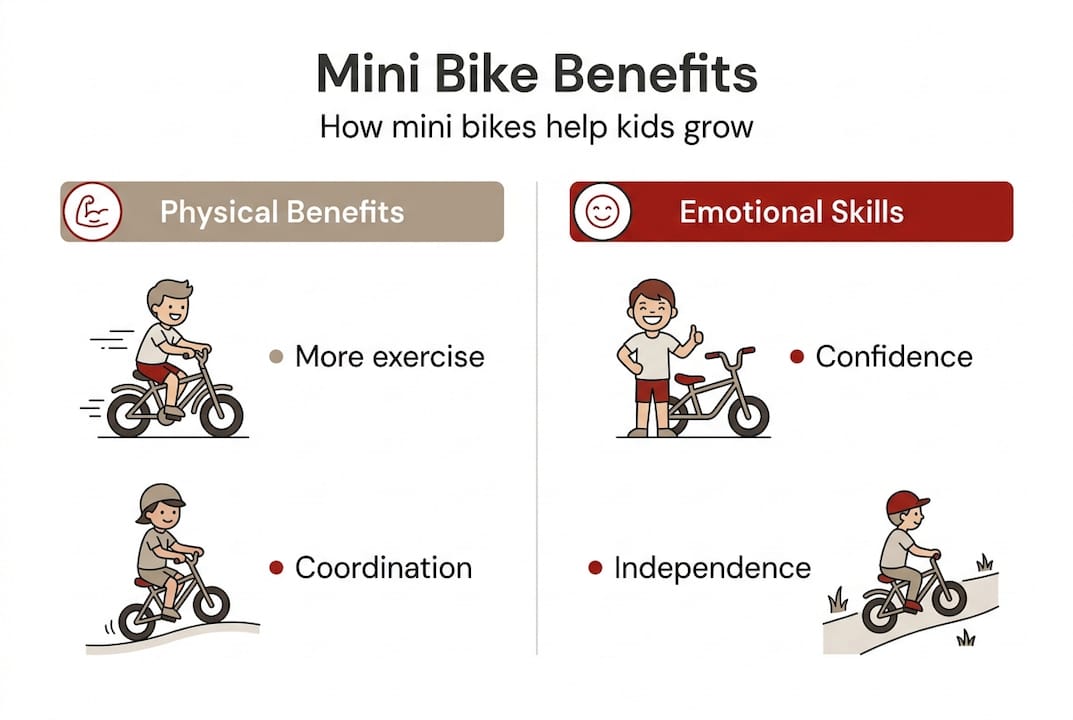
On the physical side, daily outdoor riding increases kids’ moderate-vigorous activity by 27% when they play outside for two or more hours. That is a meaningful jump in a world where screen time competes hard for children’s attention. Riding builds core strength, balance, and coordination in ways that passive play simply cannot match.
The emotional and mental rewards are just as real. Mastering a new skill on two wheels builds genuine confidence. Kids learn to self-advocate when they communicate their comfort level to parents, and they develop resilience every time they practice a tricky turn and finally nail it. These are life skills that transfer far beyond the trail.
Socially, mini bike riding encourages cooperation and rule-following. Kids who ride together negotiate turns, set boundaries, and cheer each other on. That kind of group play is exactly what child development experts point to when they say benefits outweigh risks when kids are ready and ride in safe locations.
| Benefit area | What kids gain | Why it matters |
|---|---|---|
| Physical health | Core strength, balance, coordination | Fights sedentary habits |
| Emotional growth | Confidence, resilience, self-advocacy | Builds lifelong coping skills |
| Social skills | Cooperation, rule-following, teamwork | Prepares kids for group settings |
| Cognitive focus | Spatial awareness, decision-making | Sharpens real-world judgment |
“Risky play, when managed with proper safety measures, is one of the most powerful tools for building resilient, capable children.”
Explore the full picture of mini bike health benefits and see how riding stacks up against other outdoor activities. You can also check out our mini bike vs ATV comparison to understand which vehicle fits your child’s stage of development best.
What safety standards and risks should parents know?
Knowing the benefits, parents must next get clear on risks and how to manage them confidently. Real risks exist, and ignoring them does no one any favors. 70% of injuries with similar vehicles are orthopedic, meaning broken bones and sprains are the most common outcomes of off-road crashes. That statistic is not meant to scare you. It is meant to focus your attention on the right protective gear and riding environments.
Electric mini bikes are often a smarter starting point for young beginners. They run quieter, require less maintenance, and eliminate the complexity of a gas engine that a child might accidentally mishandle. Our mini bike maintenance safety guide breaks down exactly what upkeep looks like for both electric and gas models.
When shopping, look for bikes that meet ASTM F963 toy safety standards and carry clear age and weight labeling. A solid mini bike setup guide will walk you through first-ride preparation step by step. Here is a practical safety checklist to follow before your child ever twists the throttle:
- Assess readiness. Can your child balance on a regular bicycle? Do they follow instructions consistently? Both matter.
- Gear up completely. Certified helmet, gloves, long sleeves, long pants, and closed-toe shoes are non-negotiable.
- Choose the right location. Flat, open private property or a designated off-road area is ideal. Never a public street.
- Set the speed limiter. Start at the lowest setting and increase only as skills improve.
- Stay present. Supervise every session, especially in the first weeks of riding.
The good news is that benefits outweigh risks when readiness, location, and safety are prioritized together.
Pro Tip: Practice in a supervised, open space like a backyard or empty parking lot before moving to trails. Never allow street riding, regardless of how confident your child feels.
How to choose the right mini bike for your child
With a clear understanding of the importance of safety, you’ll want to know how to select the best mini bike for your child. The process is simpler than it looks when you follow a structured approach.
- Assess your child’s readiness. Child readiness, including balance, height, and maturity, should be evaluated before any purchase. A child who can ride a bicycle confidently is generally ready for a mini bike.
- Match power to size. For ages 5 to 7, a 40cc to 50cc engine is plenty. Ages 8 to 12 can typically handle 70cc to 110cc. Always check the manufacturer’s weight limit.
- Prioritize key features. Speed limiters, remote kill switches, and adjustable handlebars are worth every penny. Electric models add the bonus of quieter operation and simpler upkeep.
- Check the fit in person. Your child should be able to place both feet flat on the ground while seated. Handlebars and brake levers must be within comfortable reach without stretching.
- Plan for maintenance. Gas models need regular oil changes and air filter checks. Electric models need battery care. Either way, build a maintenance routine from day one.
Our beginner mini bike guide covers every one of these steps in detail, and our family fun with mini bikes resource shows how riding grows with your child over the years.
Pro Tip: If possible, rent or test-ride a model before committing to a purchase. Letting your child sit on the bike and feel the controls builds confidence and helps you confirm the fit is right.
Mini bikes vs alternatives: What makes them special?
Now that you know how to choose, it is useful to compare mini bikes to other outdoor ride-on vehicles for kids. Each option has its place, but mini bikes occupy a sweet spot that few alternatives can match.
| Vehicle | Age fit | Affordability | Excitement level | Skill building |
|---|---|---|---|---|
| Mini bike | 5 to 12 | High | Very high | Balance, coordination |
| ATV | 6 to 14 | Moderate | High | Steering, terrain reading |
| Go-kart | 5 to 12 | Moderate | High | Speed control, spatial awareness |
| Pedal bike | 3 to 12 | Very high | Moderate | Balance, endurance |
Mini bikes stand out because they combine high engagement with activity and manageable supervision compared to other motorized vehicles. They are lighter than ATVs, more thrilling than pedal bikes, and more portable than most go-karts. For a child aged 5 to 12, that combination is hard to beat.
Where other options shine: ATVs offer four-wheel stability for children who are not yet confident on two wheels. Go-karts, like the TrailMaster Mini XRX, are excellent for kids who love speed but are not ready for the balance demands of a mini bike. Pedal bikes remain the gold standard for very young children building their first motor skills.
Mini bikes win on the combination of freedom, challenge, and genuine skill-building. They grow with your child, reward practice, and deliver the kind of outdoor adventure that kids remember for a lifetime.
Get started: Find the perfect mini bike for your child
You’ve learned what makes mini bikes an exciting and smart choice. Now it’s time to find the right one and get your family rolling safely. At GoKarts USA®, we carry a carefully selected lineup of kids’ mini bikes built with the safety features parents trust most.

The Mini Sport Kids ATV is a parent favorite for its 110cc engine, speed limiter, and sturdy build that handles real outdoor terrain. For families looking for a dedicated mini bike experience, the Storm 200 Minibike delivers reliable performance with the kind of rugged reliability that keeps kids riding season after season. Both models come with detailed specs, color options, and our team’s full support to help you make the right call. Browse our full selection, compare models side by side, and reach out to our team whenever you have questions. We are your pit crew, your trail guides, and your fellow riders every step of the way.
Frequently asked questions
Are mini bikes safe for kids under 10?
Mini bikes can be safe for children under 10 when you assess readiness, use proper safety gear, and choose models that meet ASTM standards. Assessing readiness and choosing appropriate safety features significantly minimizes injury risk.
What gear is needed for safe mini bike riding?
Kids need a certified helmet, gloves, closed-toe shoes, long sleeves, and long pants every single time they ride. No exceptions, regardless of how short or slow the session is.
What’s the best type of mini bike: electric or gas?
Electric mini bikes are often the better choice for young beginners because they are quieter and require less maintenance. Electric over gas is the preferred recommendation for lower upkeep and a gentler learning curve.
Are mini bikes street-legal for kids?
Mini bikes are not street-legal, and children must only ride on private property or designated off-road trails. Street riding creates serious legal and safety risks that no parent should take.
Do mini bikes actually help kids be more active?
Yes. Children who ride mini bikes outdoors are 27% more physically active on a daily basis compared to those who do not. That boost in moderate-vigorous activity is one of the strongest arguments for adding a mini bike to your child’s outdoor routine.