




TL;DR:
- Kids and adult go-karts differ significantly in design, engine performance, safety features, and maintenance needs.
- Proper sizing and safety features are crucial for safe, confident riding tailored to age and skill level.
- Selecting the right go-kart promotes longer enjoyment, builds confidence, and ensures safety for all riders.
A go-kart is a go-kart, right? That’s one of the most common assumptions we hear from parents and new enthusiasts stepping into the powersports world for the first time. The truth is, adult and kids go-karts are built differently, perform differently, and are regulated differently for very good reasons. Choosing the wrong model doesn’t just affect how much fun you have. It can create real safety risks. In this guide, we’ll break down the key differences across design, engine performance, safety features, and maintenance so you can make a confident, informed choice for your family or your own adventure.
Table of Contents
- Design and size differences between adult and kids go-karts
- Engine performance and speed: Matching age and skill
- Safety features and legal standards: Protecting every driver
- Maintenance, upgrade options, and longevity: What to expect
- Why the right go-kart choice sets the stage for lifelong fun
- Discover safe go-karts for every age at GoKarts USA
- Frequently asked questions
Key Takeaways
| Point | Details |
|---|---|
| Size and age matters | Adult and kids go-karts differ in frame, controls, and seat design to match physical needs and safety. |
| Engine and speed limits | Kids models use smaller engines and restrictive governors, while adults enjoy higher speeds and power. |
| Safety is paramount | Safety features are tailored to the driver’s age, with kids’ karts adding roll cages and remote shut-off. |
| Maintenance needs differ | Kids’ go-karts are simpler to care for, while adult models demand more frequent tuning and upgrade options. |
| Choose for lifelong fun | Selecting the right go-kart builds safe habits, confidence, and lasting enjoyment for all ages. |
Design and size differences between adult and kids go-karts
Now that we’ve challenged the misconception, let’s look at how these karts are actually built. This is often the most overlooked factor, yet it shapes everything from comfort to control.
Kids go-karts are substantially smaller in every dimension. The frame is shorter and narrower, the seat is designed to cradle a child’s body securely, and the pedals are positioned much closer to the seat. These aren’t just cosmetic differences. A child sitting in an adult-sized kart won’t be able to reach the pedals properly, which creates a dangerous loss of control. Steering wheels on kids models are also scaled down to fit smaller hands, reducing fatigue and improving reaction time during a ride.
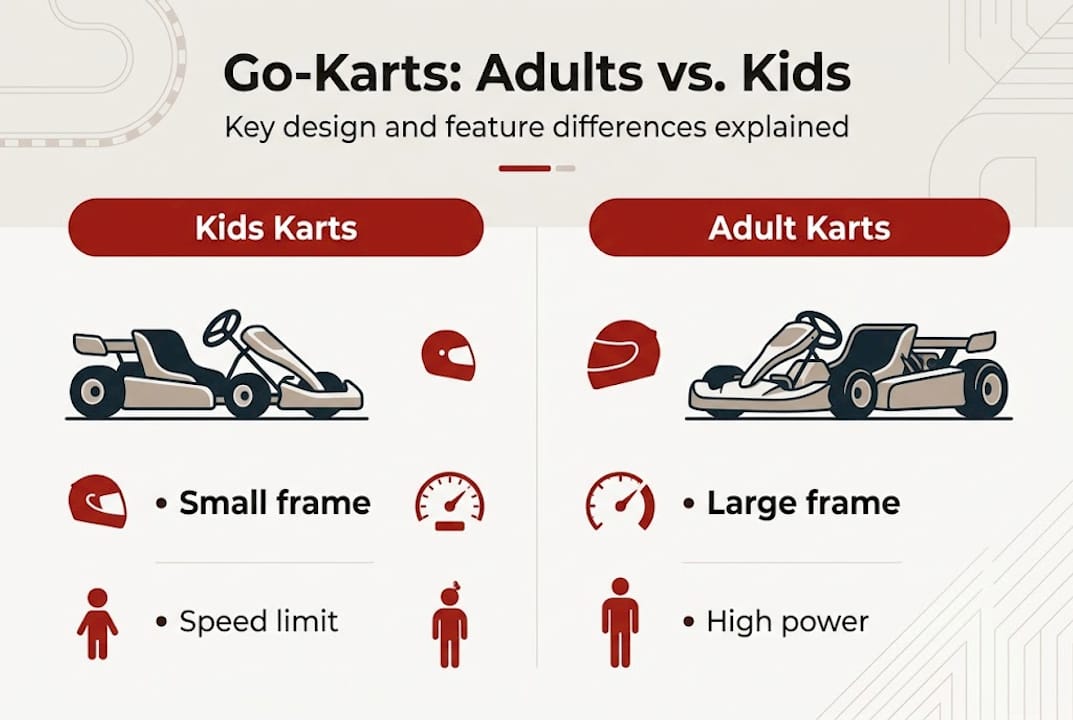
Adult go-karts are engineered for larger body frames and generally include more advanced features like adjustable seating, wider track widths, and heavier-duty suspension components. These features support the demands of adult riders who push the kart harder and longer. Understanding what makes a youth go-kart distinct from an adult model is the first step toward buying the right one.
Comparison table: Key design specs
| Feature | Kids go-kart | Adult go-kart |
|---|---|---|
| Frame length | 50 to 65 inches | 70 to 90 inches |
| Seat width | 10 to 13 inches | 14 to 18 inches |
| Steering wheel diameter | 9 to 11 inches | 12 to 14 inches |
| Weight capacity | Up to 150 lbs | 150 to 400+ lbs |
| Control placement | Compact, close-set | Standard adult spacing |
Here’s what you should look for when evaluating a kart’s physical design:
- Frame material: Steel frames offer durability; look for powder-coated finishes that resist rust
- Seat harness compatibility: Kids models should have integrated harness points, not just lap belts
- Adjustability: Some youth karts offer adjustable pedal positions to extend the usable age range
- Ground clearance: Lower clearance on kids models keeps the center of gravity low and reduces rollover risk
Pro Tip: When sizing a go-kart for a child, have them sit in the seat and check that their knees bend at roughly 90 degrees with feet flat on the pedals. If they’re stretching or cramped, the fit is wrong.
Engine performance and speed: Matching age and skill
Once you understand how go-karts are built, the next critical factor is how they perform and how fast they go. This is where the differences become even more dramatic.
Children’s go-karts typically feature smaller engines and speed governors to keep young drivers safe. Most kids models run engines under 6HP, with top speeds capped between 15 and 25 mph depending on the model and age group. That range feels thrilling to a child but stays within a manageable safety margin.
Adult go-karts are a completely different story. Performance models can exceed 40 mph, with engine displacements ranging from 150cc to over 400cc. Horsepower figures climb well above 10HP on recreational adult models, and performance-tuned karts push even further. The power delivery is also more aggressive, requiring a driver with the reflexes and judgment to handle it responsibly.
Engine and speed comparison by age group
| Age group | Typical engine size | Max horsepower | Top speed |
|---|---|---|---|
| Ages 5 to 8 | 50cc to 70cc | 2 to 3 HP | 10 to 15 mph |
| Ages 9 to 13 | 90cc to 110cc | 4 to 6 HP | 20 to 25 mph |
| Ages 14 to 17 | 110cc to 150cc | 5 to 8 HP | 25 to 35 mph |
| Adults 18+ | 150cc to 400cc+ | 9 to 20+ HP | 35 to 60+ mph |
For families just starting out, exploring entry-level go-karting for kids is a smart first move. It helps you match the right power level to your child’s experience and confidence.
Here’s a quick breakdown of what to confirm before buying:
- Check the manufacturer’s stated age and weight recommendations
- Confirm whether the speed governor is adjustable and at what increments
- Ask whether the engine is carbureted or fuel-injected, as this affects throttle response
- Verify that the engine displacement matches your local regulations for off-road use
Pro Tip: Don’t buy ahead of your child’s current skill level with the intention of “growing into it.” A kart that’s too powerful for a beginner builds bad habits and erodes confidence fast. Start right, then explore go-kart performance upgrades when the time is right.
Safety features and legal standards: Protecting every driver
Speed and power are exciting, but they’re only safe when backed by the right safety features. These differ significantly between kids and adult models, and knowing what to look for could make all the difference.
Kids go-karts include additional safety features like seat belts, roll cages, and remote shut-off mechanisms that parents can trigger if a child loses control. These are not optional extras. They are foundational to responsible youth go-karting. Adult models, by contrast, focus on performance harnesses, stronger roll bars, and quality brake systems, but they lack the child-specific controls that make youth models genuinely safe for young drivers.
Legal standards vary by state, but most jurisdictions require helmets for all go-kart riders, and many mandate parental supervision for children under 12 on any motorized vehicle. Age-specific regulations also govern where kids can legally operate go-karts, with many areas restricting use to private property or designated tracks.
Core safety requirements by age group:
- Ages 5 to 10: Remote shut-off, full roll cage, five-point harness, speed governor set below 15 mph
- Ages 11 to 15: Roll bar, lap belt minimum, speed governor, helmet required
- Ages 16 to 17: Full harness recommended, helmet required, adult supervision encouraged
- Adults 18+: Performance harness, helmet, quality disc brakes, roll protection
“Remote shut-off systems are one of the most important safety innovations in youth go-karting. A parent’s ability to cut the engine instantly from a distance can prevent a minor mistake from becoming a serious injury.”
We always recommend reviewing top go-kart safety features before finalizing any purchase. Understanding why safety matters in go-karts at a fundamental level, and choosing safe go-karts for kids with these features in mind, gives every family a stronger foundation for long-term enjoyment.
Maintenance, upgrade options, and longevity: What to expect
Even after choosing the right go-kart, understanding upkeep and upgrade options shapes your experience and your investment over the long haul.
Kids go-karts are designed with simplicity in mind. Engines are smaller and more straightforward, parts are widely available and affordable, and most basic maintenance tasks can be handled at home with minimal tools. The trade-off is that the upgrade path is shorter. A child will eventually outgrow the frame, and at that point, no amount of tuning changes that reality.
Adult go-karts tend to have more upgrade options and require more regular maintenance. Larger engines need periodic valve adjustments, carburetor cleaning, and oil changes on a set schedule. The reward is that adult models can be rebuilt, tuned, and upgraded almost indefinitely, making them a better long-term investment for serious enthusiasts.
Maintenance tasks by model type:
Kids go-kart maintenance:
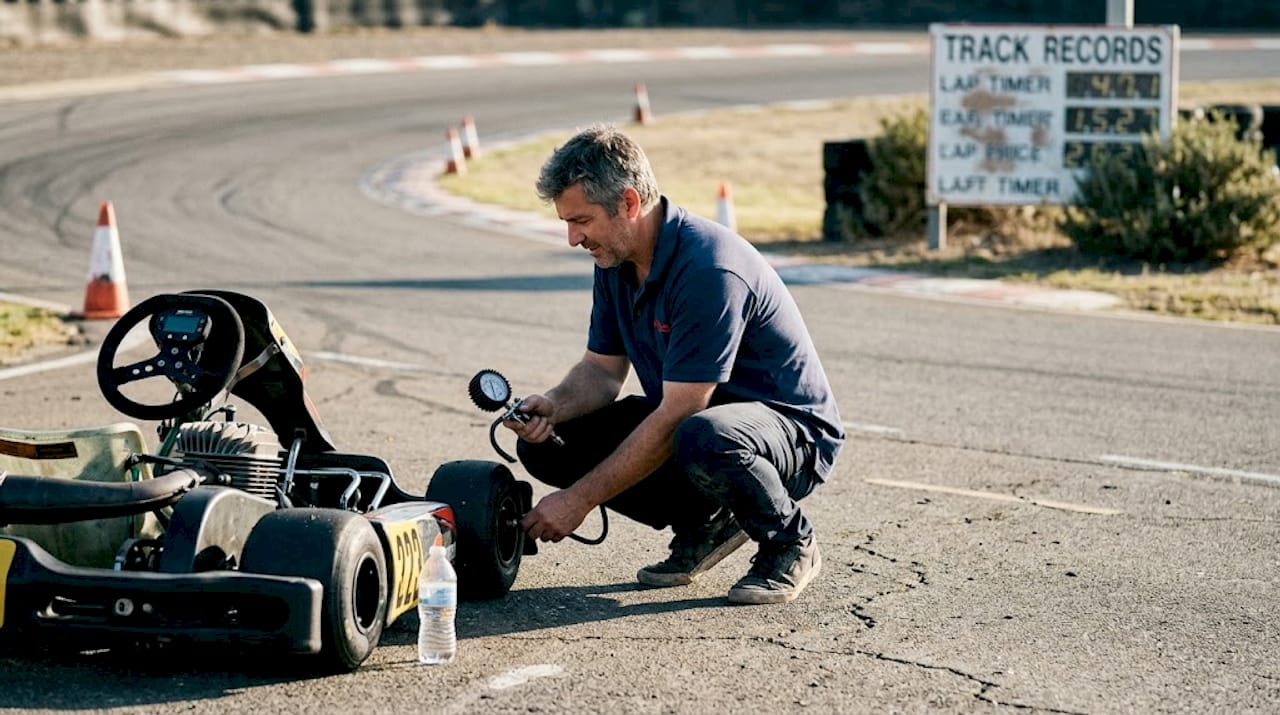
- Check tire pressure before every ride
- Clean the air filter every 10 hours of use
- Inspect the chain or belt for tension and wear monthly
- Check brake pads every season
Adult go-kart maintenance:
- Change the engine oil every 25 hours of operation
- Inspect and adjust the carburetor every 50 hours
- Check and replace spark plugs seasonally
- Inspect the steering rack and tie rods for play every 3 months
For parents navigating common issues, our go-kart troubleshooting guide walks through the most frequent problems step by step. And if you’re still in the research phase, our guide to buying go-karts for kids covers what to prioritize at every price point.
Pro Tip: Keep a simple maintenance log, whether in a notebook or a phone app. Recording oil changes, part replacements, and inspection dates dramatically extends the life of any go-kart and helps you spot patterns before they become expensive problems.
Why the right go-kart choice sets the stage for lifelong fun
With maintenance and upgrades considered, it’s worth reflecting on why these differences matter beyond the specs and the price tag.
We’ve seen it happen more times than we can count. A well-meaning parent buys a go-kart that’s “just a little too big” thinking their child will grow into it. Instead, the child struggles to control it, gets scared, and loses interest entirely. The adventure ends before it really begins. The opposite is equally true for adults who underestimate their own needs and end up frustrated by a kart that can’t keep up with their enthusiasm.
The right go-kart builds genuine confidence. It lets a child feel the thrill of speed at a level they can actually manage, which creates a hunger for more. It lets an adult push their limits without fighting equipment that wasn’t built for them. Starting with entry-level safe fun that matches your actual skill level isn’t settling. It’s the smartest move you can make for long-term enjoyment. The families who get the most out of go-karting are the ones who started with the right fit, not the most powerful machine on the lot.
Discover safe go-karts for every age at GoKarts USA
Whether you’re shopping for a child’s first go-kart or an adult’s high-performance model, we’ve got you covered at GoKarts USA®. Our catalog is built around the belief that every rider deserves a machine that fits their age, size, and skill level without compromise.

For younger riders, explore our kids go-karts with parental controls that include remote shut-off, speed governors, and roll protection built right in. For adult enthusiasts ready to feel the full thrill of the track, check out our adult go-kart models designed for power, reliability, and long-term performance. We’re your pit crew, your trail guides, and your fellow riders. Let’s find the right kart for your adventure.
Frequently asked questions
What safety features should parents look for in kids go-karts?
Kids go-karts include roll cages, seat belts, remote shut-off, and speed governors as core safety features. These are the non-negotiables for any responsible youth go-kart purchase.
Are adult go-karts ever safe for children with supervision?
Adult go-karts are engineered for larger bodies and higher speeds, making them genuinely unsafe for children even with a parent present. The lack of child-specific safety controls is the critical issue.
How fast can kids go-karts go?
Children’s go-karts have smaller engines and speed limits, with most youth models capped under 25 mph. Many include adjustable governors so parents can dial in the right speed for their child’s experience level.
What is the typical maintenance for a kids go-kart?
Kids go-karts have simpler maintenance needs, including tire pressure checks, air filter cleaning, chain inspections, and seasonal brake pad reviews. Most tasks can be handled at home without specialized tools.
Can kids’ go-karts be upgraded as children grow?
Upgrade options for kids’ go-karts are limited compared to adult models. Seat and steering adjustments can extend the useful life, but outgrowing the frame usually means it’s time to move up to a larger model.