




TL;DR:
- Regular maintenance enhances safety, performance, and cost savings for go-kart owners.
- Engine care includes oil changes, air filter cleaning, spark plug checks, and fuel system inspection.
- Daily checks of tires, brakes, and steering components ensure reliability and safe handling.
Most go-kart owners assume their machine will run fine with minimal attention. That belief costs them money, performance, and sometimes safety. A well-maintained go-kart doesn’t just last longer—it corners tighter, accelerates faster, and gives you the confidence to push it harder every time you ride. Whether you’ve got a weekend warrior kart for the kids or a performance machine you take seriously, understanding the fundamentals of routine care changes everything. In this guide, we walk you through the core maintenance essentials: engine care, tire and brake health, and how to build a schedule that actually sticks. Let’s make sure your kart stays track-ready all season long.
Table of Contents
- Understanding the basics: Why maintenance matters
- Essential engine care: Keep your go-kart running strong
- Tires, brakes, and handling: Safety from the ground up
- Regular checks and maintenance schedule
- Why most go-kart owners overlook maintenance—and what works
- Explore the best go-karts and parts for hassle-free maintenance
- Frequently asked questions
Key Takeaways
| Point | Details |
|---|---|
| Routine matters most | Consistent care prevents costly breakdowns and keeps your go-kart performing at its best. |
| Engine and tires first | Prioritize engine checks and tire maintenance for longevity and safe driving. |
| Follow a simple schedule | A regular maintenance timetable boosts confidence and makes upkeep manageable. |
| Small checks, big impact | Inspecting bolts, brakes, and components after each ride dramatically cuts risks. |
Understanding the basics: Why maintenance matters
Here’s a truth most new owners learn the hard way: go-karts are mechanical systems under constant stress. Every ride puts load on the engine, tires, brakes, frame, and fasteners. Skip the upkeep, and small issues compound fast. A loose bolt becomes a wobble. A worn brake pad becomes an inability to stop. Neglecting maintenance creates safety and performance issues that can sideline your kart or, worse, put a rider at risk.
Let’s break down the three biggest reasons regular care pays off:
- Safety first: Faulty brakes, underinflated tires, and loose chassis components are the most common causes of avoidable accidents. Catching these early keeps every ride safe.
- Peak performance: A clean air filter, fresh oil, and properly inflated tires allow your engine and handling to perform exactly as designed. Maintenance isn’t just about preventing failure—it’s about maximizing fun.
- Cost savings: Replacing a worn spark plug costs a few dollars. Rebuilding a seized engine costs hundreds. Consistent upkeep is simply the smarter financial choice.
“A go-kart that’s regularly inspected and serviced doesn’t just run better—it holds its value longer and gives you far more riding hours per dollar spent.”
One of the most overlooked risks is deferred maintenance. Owners often think, “It’s running okay, so I’ll check it next week.” That mindset leads to surprise breakdowns mid-ride. Rubber seals dry out, fuel lines crack, and small oil leaks quietly become major engine damage. The components that fail most expensively are the ones that show gradual, easy-to-ignore symptoms first.
Another underrated benefit is confidence. When you know your kart has been properly maintained, you ride with trust in the machine. That trust translates to better lap times, more enjoyment, and less hesitation on the track. Maintenance isn’t a chore. It’s part of the ownership experience that separates riders who love their karts from those who are constantly frustrated by them.
Essential engine care: Keep your go-kart running strong
The engine is the heart of your go-kart. How you treat it determines how long it lasts and how hard it pulls. Regular engine care is the single biggest factor in reliability and speed. Fortunately, the basics aren’t complicated.
Here’s a straightforward engine care routine to follow:
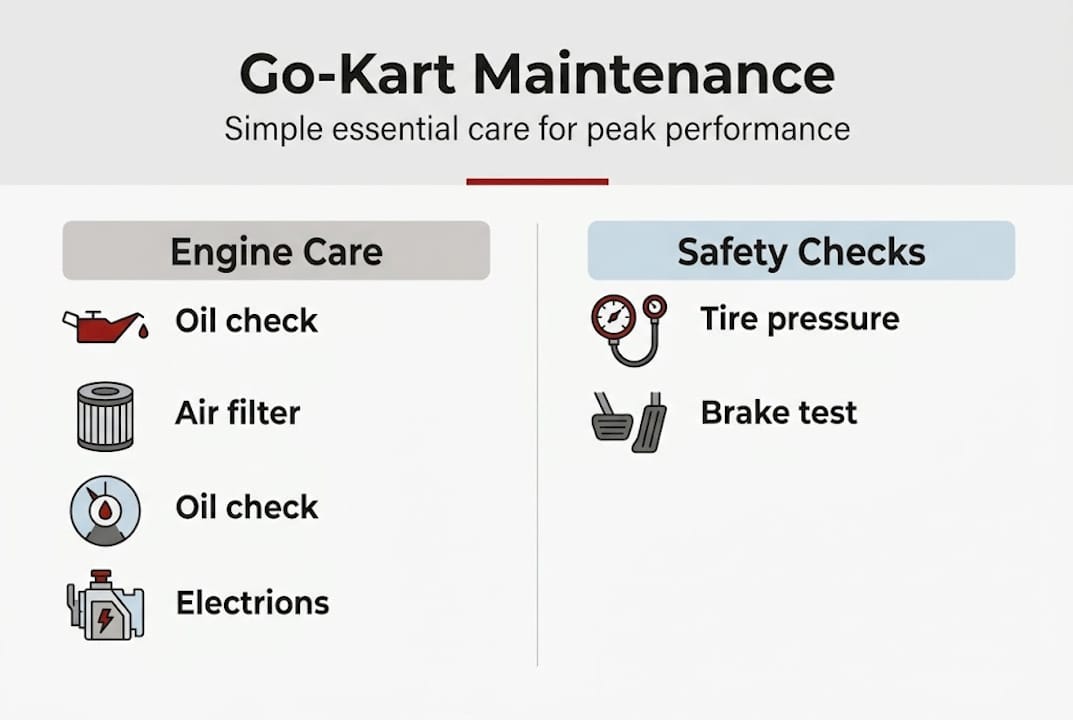
- Check and change the oil. Engine oil degrades with heat and use. Old oil loses its viscosity, meaning it no longer lubricates moving parts effectively. Check your oil level before every ride and change it every 10 to 15 hours of use.
- Inspect the air filter. A clogged air filter restricts airflow and starves the engine of oxygen. Clean foam filters with soap and water, and replace paper filters when visibly dirty. This is a two-minute task that protects your engine’s longevity.
- Check the spark plug. A fouled or worn spark plug causes misfires, hard starts, and sluggish performance. Pull it, inspect the electrode for carbon buildup or wear, and replace it at the start of each season or whenever you notice rough running.
- Monitor the fuel system. Stale fuel is a silent killer. If your kart sits unused for more than a month, drain the tank or use a fuel stabilizer. Inspect fuel lines for cracks or brittleness and replace them if needed.
- Listen for warning signs. Unusual knocking, rattling, or sudden power loss are your engine’s way of asking for help. Catching issues early by troubleshooting go-kart issues before they worsen saves time and money.
Pro Tip: After every oil change, run the engine for five minutes, then recheck the oil level. The new oil will have filled internal passages, and you may need to top it off slightly.
Understanding the go-kart parts maintenance relationship between components helps you spot trouble faster. For example, excessive oil consumption often signals worn piston rings, while a consistently fouled spark plug can point to a rich fuel mixture. These aren’t mysteries. They’re patterns, and knowing them turns you into a confident, capable owner.
Tires, brakes, and handling: Safety from the ground up
Engine maintenance is just one piece of the puzzle. Safe, responsive riding depends equally on what’s touching the ground and what controls your stopping power. Proper tire and brake maintenance ensures you stay in control in every corner and during every stop.
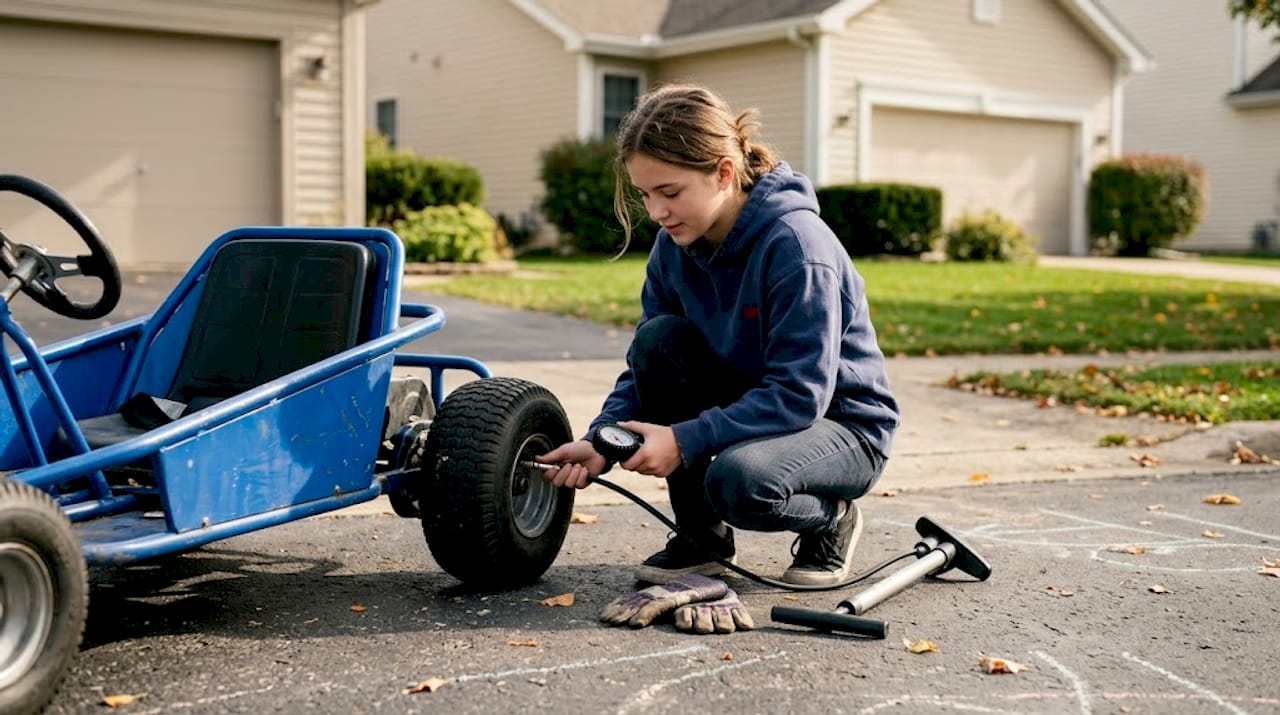
Start with tires. Check pressure before every ride using a quality gauge. Uneven or incorrect pressure causes handling imbalance, unpredictable cornering, and accelerated tread wear. Look for cracks, bulges, or embedded debris during your inspection. Rotate tires periodically to even out wear patterns, and always follow key tire safety guidelines specific to your kart’s model and use.
| Component | Weekly check | Monthly check | Seasonal service |
|---|---|---|---|
| Tires | Pressure and visual | Tread depth and wear | Full replacement if worn |
| Brakes | Pad thickness, feel | Rotor condition | Cable or fluid service |
| Handling | Straight-line test | Steering play check | Full chassis alignment |
Brakes deserve extra attention. A go-kart brake system works hard during every session. Check pad thickness regularly. Thin pads reduce stopping power and can damage rotors if ignored too long. Inspect brake cables or hydraulic lines for wear, kinking, or fluid seepage. Firm, consistent brake feel is what you want. Sponginess or delayed response means something needs attention right away.
Here are two quick handling improvements any owner can make:
- Check and tighten steering components. Loose tie rods or a worn steering column create vague, unpredictable handling. A quick inspection and torque check keeps everything dialed in.
- Inspect wheel bearings. Grab each wheel and rock it side to side. Any play or grinding sensation signals a bearing that needs replacement. Healthy bearings mean smooth, confident handling through every turn.
Pro Tip: Always test your brakes at low speed before any full session. If they feel off, investigate before you ride hard. Your brakes are your most important safety system.
Regular checks and maintenance schedule
Knowing what to maintain is only half the equation. The other half is doing it consistently. A maintenance schedule turns good intentions into reliable habits. Following a regular maintenance schedule greatly reduces risks and boosts long-term reliability across all systems.
Here’s a practical schedule broken down by frequency:
| Timeframe | Task |
|---|---|
| Before every ride | Check tire pressure, brake feel, oil level, fuel level |
| After every ride | Wipe down kart, check for loose bolts, inspect for leaks |
| Every 5 hours of use | Clean air filter, check spark plug, inspect brake pads |
| Every 10-15 hours | Change oil, inspect fuel lines, check wheel bearings |
| Every season | Replace spark plug, service brakes, full chassis inspection |
Building this routine into your ownership experience is easier than it sounds. Keep a small notebook or use your phone to log ride hours and completed tasks. After your first-hour inspection on a new kart, you’ll know which fasteners need the most attention on your specific model.
Here’s how to make the schedule stick:
- Tie maintenance to ride sessions. Instead of thinking in calendar days, track actual hours of use. This keeps your schedule accurate regardless of how often you ride.
- Keep a maintenance kit handy. Store your essential tools, fluids, and spare parts in a dedicated box near where you keep your kart. Accessibility eliminates excuses.
- Involve your riding crew. If you ride with family or friends, share maintenance responsibilities. Making it a group habit builds accountability and keeps everyone safer.
A schedule isn’t just about preventing breakdowns. It’s about knowing your kart intimately enough to spot anything unusual the moment it appears.
Why most go-kart owners overlook maintenance—and what works
We hear it often. “I’ll check it next ride.” “It’s only a go-kart.” “It’s been fine so far.” These are the most expensive phrases in powersports ownership. The honest truth is that most riders skip maintenance not because they don’t care, but because it feels like a separate activity from the fun of actually riding.
That’s the mindset shift that changes everything. Maintenance isn’t separate from the riding experience—it’s part of it. The riders who get the most out of their karts are the ones who treat the pre-ride check as the opening lap, not an obligation before the real thing starts.
Consistency beats intensity every time. A five-minute check before each ride accomplishes more than a three-hour overhaul every six months. When you stay on top of maintaining go-kart parts regularly, you catch wear before it becomes failure, and you never face the frustration of a kart that won’t start when you’re ready to ride. We’ve seen it countless times: the owners who commit to simple, consistent habits enjoy their karts for years longer than those who don’t.
Explore the best go-karts and parts for hassle-free maintenance
You now have the knowledge. The next step is making sure you have the right equipment to apply it. At GoKarts USA®, we carry karts and parts designed with everyday owners in mind, built for reliability and easy upkeep.

Whether you’re shopping for a capable starter ride like the Mini Sport Kids ATV or restocking essential components like Pocket Bike Footpegs, we’ve got you covered. Our full selection of go-karts and parts makes it easy to find exactly what your machine needs. Shop with confidence knowing our team is here as your pit crew, your fellow riders, and your most reliable resource for everything powersports.
Frequently asked questions
How often should I change my go-kart oil?
Change your go-kart oil every 10-15 hours of use or at least once per season. Frequent riders should track hours rather than calendar time for the most accurate intervals.
What are the most important maintenance checks after every ride?
Inspect tires, brakes, and critical bolts after every session. A quick post-ride inspection catches the small issues that become big problems if left unaddressed.
When should go-kart tires be replaced?
Replace tires when tread is visibly worn, cracks appear in the sidewall, or traction feels noticeably reduced. Tire condition directly affects both safety and cornering performance, so don’t delay replacement.
Is it necessary to check the brakes every time?
Yes. A quick brake check before riding is non-negotiable. Brakes are your primary safety system, and even minor issues can escalate quickly under riding conditions.
Recommended
- Parts of a go-kart: maintain and customize with confidence – GoKarts USA®
- Troubleshooting go-kart issues: step-by-step repair guide – GoKarts USA®
- How to improve go-kart performance for faster laps – GoKarts USA®
- How to upgrade your go kart for better performance – GoKarts USA®
- Power Steering Making Noise? Troubleshooting & Repair Tips