




TL;DR:
- Getting into go-karting is an exciting decision, but a solid beginner checklist is essential to ensure safety and enjoyment. Proper gear, early track arrival, and regular maintenance lay the foundation for a positive first experience and fast skill development. Starting with rental sessions offers a risk-free way to learn before investing in personal equipment and a go-kart suited to your goals.
Getting into go-karting is one of the most thrilling decisions you can make as a powersports enthusiast. But without a solid beginner go-kart checklist, that first session can go sideways fast. The wrong gear, a kart that doesn’t fit your skill level, or skipping a basic pre-drive inspection can turn an exciting debut into a frustrating (or dangerous) experience. This guide covers everything you need before you buy, before you drive, and before you think about pushing the limits. Gear up. Adventure starts here.
Table of Contents
- Key takeaways
- 1. Your beginner go-kart checklist: essential equipment to gather first
- 2. Understanding go-karting rules for novices before you hit the track
- 3. Beginner go-kart maintenance essentials to keep your kart safe and reliable
- 4. Safety practices and operational checklist for first-time kart drivers
- 5. How to start go-karting: rental vs. buying your first kart
- 6. Comparing beginner go-kart options: what actually fits your goals
- My honest take on starting go-karting with the right checklist
- Ready to gear up? Gokartsusa has you covered
- FAQ
Key takeaways
| Point | Details |
|---|---|
| Gear before you go | Helmet, gloves, closed-toe shoes, and proper clothing are required before you touch the wheel. |
| Arrive early every time | Plan to arrive at least 30 minutes early for safety briefing, helmet fitting, and track orientation. |
| Maintenance matters immediately | Stock spare parts and basic tools from day one to avoid avoidable downtime. |
| Smooth beats fast | Focus on clean steering and steady throttle before chasing speed. |
| Rental first, buy later | New drivers benefit from rental sessions before committing to kart ownership. |
1. Your beginner go-kart checklist: essential equipment to gather first
Before your first lap, you need the right gear in hand. No exceptions. The good news is that starting out does not require a massive investment if you prioritize correctly.
Here is what belongs on every checklist for new go-kart drivers:
- Helmet: A full-face helmet rated Snell or ECE 22.06 is the non-negotiable starting point. Make sure it fits snugly without pressure points.
- Gloves: Karting gloves protect your hands from blisters and improve grip during long sessions. Thin, fitted gloves work better than bulky motorcycle styles.
- Closed-toe shoes: Flat-soled shoes are universally mandatory at go-kart tracks. Sandals and heels are prohibited without exception.
- Neck brace or collar: Optional at recreational tracks, but worth every penny if you plan to drive regularly.
- Rib protector: Go-karts transfer a lot of vibration and lateral force into your torso. A simple rib vest prevents bruising and fatigue.
- Balaclava or head sock: Worn under your helmet for hygiene and comfort. Experienced riders never skip this.
- Kart suit or fitted clothing: Avoid loose shirts and baggy pants. Form-fitting clothing keeps fabric away from mechanical parts and reduces drag.
Pro Tip: Pack a spare balaclava and an extra pair of gloves in your kit bag. After a sweaty session, fresh gear makes the second run significantly more comfortable and more hygienic.
Choosing your first kart type matters just as much as your gear. Four-stroke engines (like a Honda GX200) are forgiving, easier to maintain, and great for recreational use. Two-stroke engines deliver more power but demand more mechanical attention. If you are still learning, a four-stroke is the smarter starting point.
2. Understanding go-karting rules for novices before you hit the track
Track rules are not optional reading. They are your first real safety system, and understanding them before you arrive separates confident beginners from confused ones.
Most tracks use a standard flag system. Green means go. Yellow means slow down and no overtaking. Red means stop immediately and return to the pit lane. Black flag pointed at you means pull off the track right now, no questions asked.
Arrive at least 30 minutes early for your safety briefing and helmet fitting. That briefing is not just a formality. It covers the specific rules of that venue, hand signals from marshals, and how to behave when there is an incident on track.
Hand signals matter too. If a driver ahead of you raises their hand, they are slowing or there is a hazard. If a marshal waves both arms, something serious is happening. Knowing these signals before your first session keeps everyone safer.
3. Beginner go-kart maintenance essentials to keep your kart safe and reliable
If you own a kart, maintenance starts the moment it leaves the showroom floor. Neglecting it does not just hurt performance. It creates genuine safety risks. Here is the core toolkit every new owner needs:
- Metric and SAE toolset (wrenches, sockets, screwdrivers)
- Tire pressure gauge (kart tires are highly sensitive to pressure changes)
- Chain lubricant and chain breaker tool
- Fuel mixing supplies (for two-stroke engines)
- Floor tarp with an absorbent mat for oil spills and cleanups
- Kart stand or trolley to safely lift and position the kart
On the spare parts side, spark plugs, chains, nuts, and bolts are the items most likely to cause you problems mid-session. Keep at least two of each on hand.
| Maintenance Item | Priority Level | How Often to Check |
|---|---|---|
| Tire pressure | High | Before every session |
| Chain tension and lube | High | Before every session |
| Spark plug condition | Medium | Every 5-10 hours of use |
| Nuts and bolts (full check) | High | Before every session |
| Air filter | Medium | Every 3-5 hours of use |
| Brake pads | High | Before every session |
Pro Tip: Make one setup change at a time and log what you adjusted and what it changed. Random tinkering creates confusion. Systematic notes accelerate learning.
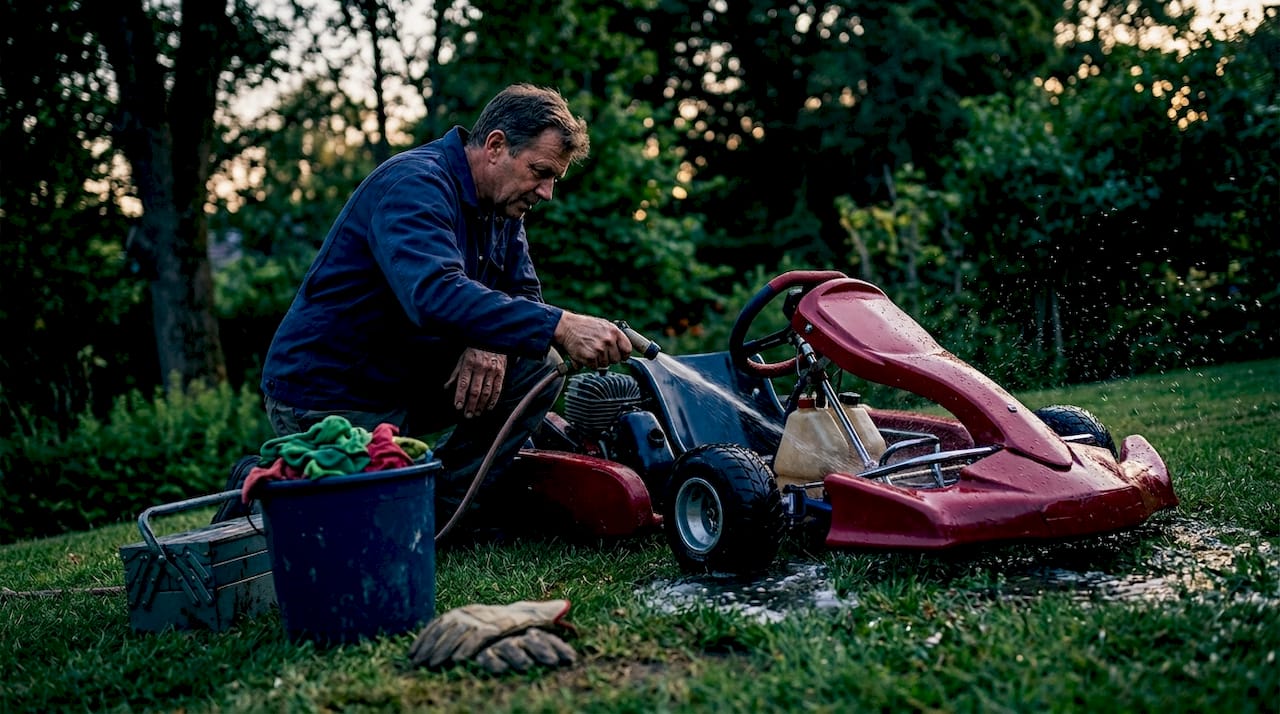
Clean your kart after every outing. Dirt and grime hide cracks, worn fasteners, and fraying cables. A clean kart is one you can actually inspect properly. Refer to a solid go-kart maintenance checklist to build this habit early and protect your investment.
4. Safety practices and operational checklist for first-time kart drivers
This is the section that separates drivers who improve quickly from those who spin out repeatedly and wonder why. A solid operational routine before and during your session builds good habits from the start.
Before you drive:
- Confirm your helmet fits with zero wobble. Shake your head vigorously. The helmet should move with your skull, not on it.
- Check that your gloves are on and fitted. Loose gloves reduce steering feel.
- Sit in the kart and locate both pedals without looking down. Your feet should reach each one naturally with a slight knee bend.
- Test the brake before you move. Press it firmly once while stationary.
- Confirm your mirrors (if any) are adjusted, or know your track’s rules on blind spots.
During your session:
Focus on smooth inputs above everything else. Smooth steering, steady throttle, and a relaxed grip consistently produce better lap times than aggressive inputs. This is not just comfort advice. It is the fastest way to improve. The “smooth is fast” philosophy is the single most reliable truth in beginner karting.
Beginners who over-grip the steering wheel fatigue within minutes and lose control feel in corners. Loosen your hands. Breathe. Let the kart communicate through your palms instead of fighting it.
Pro Tip: Hydrate well before your session. High-G cornering loads your neck and core muscles hard, especially for first-timers. Even a single 7-minute session at a competitive track will leave you more physically tired than you expect.
5. How to start go-karting: rental vs. buying your first kart
New drivers face a real fork in the road early on. Do you pay for rental sessions at a local track, or invest in your own kart? Both paths are valid. They just serve different goals.
Rental karting is the smarter starting point for most beginners. You pay per session, the track handles all maintenance, and you can try different venues and kart styles before committing. Standard sessions run 7 to 10 minutes, and most drivers see clear improvements after just two of those sessions. The feedback loop is fast.
Owning a kart makes sense once you are going out regularly (at least twice a month) or you want to race competitively. The upfront cost is significant. A quality beginner kart runs anywhere from $1,500 to $5,000 depending on engine class and chassis brand. But per-session cost drops dramatically once you own.
| Factor | Rental | Ownership |
|---|---|---|
| Upfront cost | Low (pay per session) | High ($1,500 to $5,000+) |
| Maintenance responsibility | None | Full |
| Equipment customization | None | Full |
| Best for | True beginners | Regular or competitive drivers |
| Skill development speed | Moderate | High (with practice) |
Safety gear packages are worth considering if you go the ownership route. Bundled helmets, rib vests, and gloves sold together are typically 15 to 20 percent cheaper than buying pieces separately, and they are matched for compatibility from the start.
6. Comparing beginner go-kart options: what actually fits your goals
Not every beginner has the same goal. Some want weekend fun with family. Others have eyes on local club racing. The kart type, engine class, and gear level should match where you actually are, not where you hope to be in two years.
For recreational family use, look at four-stroke karts with top speeds in the 40 to 55 mph range. These are forgiving and require minimal tuning. For young drivers just starting out, age-appropriate kart sizes with governor-limited speed controls are the only responsible choice. Analyzing lap data is a surprisingly powerful habit even at the beginner stage. Tracks that offer real-time timing let you focus on beating your own times instead of obsessing over other drivers. That mindset shift accelerates improvement far faster than copying someone else’s lines.
Fine adjustments to tire pressure and chassis stiffness have measurable effects on handling even at beginner speeds. You do not need to understand all of this on day one, but knowing that setup changes are incremental and trackable helps you grow into the sport with confidence. A quality beginner’s guide to go-karting lays this out clearly and is worth bookmarking for your first few months.
My honest take on starting go-karting with the right checklist
I have watched a lot of new drivers show up to their first session absolutely buzzing with excitement. And I have watched that same excitement drain away by lap three because they were exhausted, their hands were cramping, and they had no idea why the kart felt wrong.
The pattern is almost always the same. They skipped the checklist. No balaclava, shoes that barely qualified, no idea what the yellow flag meant. They were not reckless. They were just unprepared.
What I have learned is that preparation is not the boring part of go-karting. It IS the go-karting. The drivers who progress fastest are not the ones with the most natural talent. They are the ones who show up with their gear organized, arrive early, ask questions at the briefing, and drive with intention rather than desperation.
My one piece of advice above all others: do not skip the maintenance habit, even if you only rent. Start logging what you notice about the karts you drive. Which one tracked straight? Which one pulled left? That awareness builds mechanical intuition that pays dividends when you eventually own your own machine.
Patience is not a weakness in this sport. It is a strategy.
— Mario
Ready to gear up? Gokartsusa has you covered

At Gokartsusa, we know that getting started in go-karting should feel exciting, not overwhelming. Whether you are buying your first kart for weekend adventures or getting a young driver started safely, our lineup is built with reliability and fun in mind. The Mini Sport Kids ATV with 110cc gas engine comes with a parental remote start and kill switch, making it one of the most trusted choices for new young drivers. We carry beginner-friendly karts, safety gear, and accessories that match exactly what this checklist calls for. When you are ready to take that first real step, we are your pit crew.
FAQ
What gear do I need for my first go-kart session?
At minimum, you need a fitted full-face helmet, closed-toe flat-soled shoes, and form-fitting clothing. Gloves and a balaclava are strongly recommended for comfort and safety.
How early should I arrive at a go-kart track as a beginner?
Arrive at least 30 minutes before your session. This gives you time for the safety briefing, helmet fitting, and getting comfortable in the kart before your first lap.
Should I rent or buy a go-kart as a beginner?
Start with rental sessions. They are low cost, require no maintenance on your part, and give you real seat time to decide if ownership makes sense for your goals and frequency.
What spare parts should a new kart owner always have?
Keep spare spark plugs, an extra chain, and a small assortment of nuts and bolts in your kit. These are the most common causes of unexpected downtime during sessions.
How do I improve my lap times as a beginner?
Focus on smooth steering and a relaxed grip rather than raw speed. Consistent, clean inputs and understanding the racing line improve lap times far faster than aggressive driving ever will.
Recommended
- Beginner’s Guide Go Karting: Safe Entry-Level Fun for Kids – GoKarts USA®
- Safe go-kart features for kids: 7 must-haves in 2026 – GoKarts USA®
- Go-kart maintenance checklist: essential tips for safe family fun – GoKarts USA®
- Go-kart buying checklist: key steps for safe, fun family rides – GoKarts USA®