




TL;DR:
- Regular pre-ride safety checks on tires, chains, brakes, and engine oil are essential for family go-kart safety. Consistent maintenance of chain tension, brake pads, and engine fluids prevents breakdowns and ensures optimal performance. Routine inspections of the frame, fasteners, and driver gear promote safety and prolong the lifespan of the go-kart.
You love the look on your kid’s face when they hit the throttle and feel the wind. But nothing kills the adventure faster than a broken chain at speed, spongy brakes, or an engine that won’t start because the oil ran dry. A solid go-kart maintenance checklist is how you stay ahead of those moments, protecting both your family and your investment. This guide covers the essential areas every parent and enthusiast needs to watch: engine care, chain and sprockets, brakes, tires, and full safety inspections, so every ride stays thrilling for the right reasons.
Table of Contents
- Pre-ride go-kart maintenance checklist: safety basics before every session
- Engine maintenance basics for 4-stroke and 2-stroke recreational go-karts
- Chain and sprocket care: essential tips to prevent breakdowns and ensure safety
- Brake system checks to keep your family safe on every ride
- Tire care and safety inspections for peak handling and durability
- Thorough safety inspections: frame, fasteners, and driver gear essentials
- Why routine maintenance is your best strategy for family-friendly go-karting
- Find the perfect family go-kart and parts at GoKarts USA®
- Frequently asked questions
Key Takeaways
| Point | Details |
|---|---|
| Daily pre-ride checks | Perform tire pressure, chain, brake, and oil level checks before every kart session to ensure safety and performance. |
| Engine oil care | Change 4-stroke engine oil after initial 5 hours and then every 50 hours or annually for reliable operation. |
| Chain maintenance | Lubricate the chain after every use and inspect sprockets regularly to avoid dangerous failures. |
| Brake inspection | Check brake pads each session and replace when worn past half thickness; flush brake fluid annually. |
| Safety inspections | Regularly inspect frame, fasteners, and safety gear to protect riders and prevent accidents. |
Pre-ride go-kart maintenance checklist: safety basics before every session
Think of this as your kart’s flight check. Pilots run through one before every takeoff, and the logic is the same here. Five minutes before each session can prevent hours of frustration and, more importantly, keep your family safe. These pre-session safety checks cover the basics that every rider should confirm before turning a wheel.
Here’s what to verify before every ride:
- Tire pressure. Low or uneven pressure causes handling to go unpredictable fast, especially for younger drivers. Check it cold, before the kart moves.
- Chain tension and lubrication. A loose or dry chain can snap or jump the sprocket mid-ride. Pull the chain at its midpoint; it should have a small amount of give but not sag.
- Brake operation and fluid level. Squeeze the brake pedal firmly. It should feel solid, not soft. Low fluid is a warning sign.
- All fasteners and safety wires. Vibration loosens bolts over time. Run your hands over critical connection points and check that safety wires are intact on key bolts.
- Engine oil level. For 4-stroke engines especially, a dry crankcase is a fast track to a seized engine. Pull the dipstick and confirm the oil is between the marks.
You can find a deeper breakdown of these go-kart maintenance essentials on our blog, including torque specs and fluid types for common recreational models.
Pro Tip: Write your pre-ride checklist on a laminated card and attach it to your kart’s bumper or storage bag. Habit beats memory every time, especially when kids are excited and ready to ride.
Engine maintenance basics for 4-stroke and 2-stroke recreational go-karts
Every kart engine has a personality. A 4-stroke engine is generally more forgiving, easier to tune, and common in family recreational karts. A 2-stroke engine is lighter and punchier, but demands more attention to cleanliness. Knowing which one you have changes what you do and how often you do it.
For 4-stroke engines, the most critical task is oil changes. The engine oil change schedule calls for the first change after 5 hours of break-in, then every 50 hours or once a year, whichever comes first. In dusty outdoor environments, check the oil level every 8 hours of use because contaminated oil degrades faster. Beyond oil, replace the spark plug and air filter at the intervals listed in your owner’s manual. A fouled plug causes rough starts and poor power. A clogged filter starves the engine of air.
For 2-stroke engines, focus on a clean air box, carburetor, and exhaust since lubrication is handled by premixed fuel rather than a separate oil reservoir. A clogged exhaust port or dirty carb jet will noticeably rob power within a single session.
Here’s how to change oil on a 4-stroke go-kart engine safely:
- Run the engine for two to three minutes to warm the oil so it drains cleanly.
- Place a drain pan under the engine and remove the drain plug.
- Allow all oil to drain completely before replacing the plug and torquing it to spec.
- Remove and inspect the old oil filter, then install a new one if your engine uses one.
- Add the manufacturer-recommended oil type and quantity through the fill port.
- Run the engine briefly, shut it off, and re-check the oil level with the dipstick.
Regular cleaning after each session does double duty. It keeps the engine looking sharp and lets you spot emerging issues, like seeping gaskets or hairline cracks near the exhaust, before they become real problems. These engine maintenance essentials apply whether you run a small recreational kart or something with a bit more displacement.
Chain and sprocket care: essential tips to prevent breakdowns and ensure safety
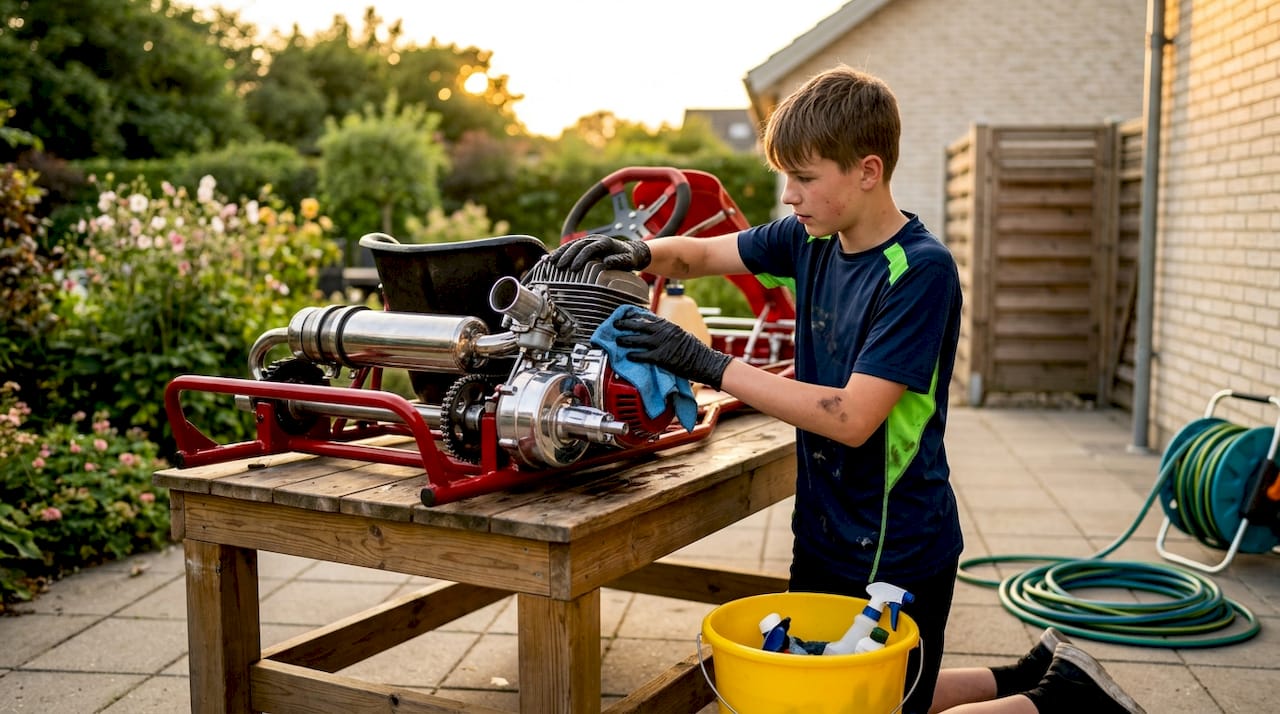
The chain is the most underappreciated part on a recreational go-kart. It transfers every bit of engine power to the rear wheels. And when it fails at speed, the consequences range from a sudden loss of drive to a dangerous jam in the drivetrain. The good news is that chain failures are almost entirely preventable.
Here’s what your chain and sprocket go-kart inspection list should cover:
- Lubricate after every session. Even if the chain looks fine and the kart only ran for 20 minutes, lube the chain after every ride to prevent the micro-abrasion that dust and dirt cause between links. Use sparing amounts to avoid building up a gummy, dirt-attracting layer.
- Inspect sprockets every 10 hours. Chains transfer all power, and worn sprocket teeth have a hooked or shark-fin shape rather than a smooth curve. That shape will eat through a new chain in short order.
- Check chain alignment. A chain that runs at an angle between the engine sprocket and rear axle sprocket wears unevenly and creates side loads that accelerate failure.
- Verify tension. Too tight puts stress on the bearings. Too loose risks derailment. Aim for about a quarter inch of movement at the chain’s slackest point.
Pro Tip: After lubricating, wipe the outside of the chain with a clean rag to remove any excess. This small step keeps your chain protected without turning it into a dirt magnet on dusty outdoor tracks.
Brake system checks to keep your family safe on every ride
Brakes are non-negotiable. Everything else on this list improves performance or extends the kart’s life. Brakes are the line between a great ride and a serious accident. Treat them accordingly.
Your brake go-kart safety checklist should include:
- Inspect brake pads every session. Replace pads when worn beyond 50% thickness and flush brake fluid every 50 to 100 hours or at least annually. Running pads to metal-on-metal contact ruins rotors and destroys braking distance.
- Check brake fluid level. Low fluid often signals pad wear or a slow leak. Top off only with the fluid type specified in your manual.
- Feel the pedal. A spongy or soft pedal means air has entered the brake lines and the system needs to be bled.
- Listen during use. Squealing or grinding during light braking are signs of worn pads or a contaminated rotor.
Here’s how to replace brake pads on your kart safely:
- Lift the rear of the kart and secure it on stands or a kart stand.
- Locate the caliper and remove the retaining pins or bolts holding the old pads in place.
- Slide out the worn pads and inspect the rotor for scoring or warping.
- Push the caliper piston back gently using a flat tool or C-clamp to create space for the thicker new pads.
- Install the new pads, replace the retaining hardware, and check for correct seating.
- Pump the brake pedal several times before moving the kart to seat the pads against the rotor.
You can read more about go-kart brake maintenance including caliper rebuilds and rotor specs on our dedicated safety guide.
Pro Tip: Brake maintenance is the one item on your go-kart maintenance routine that you should never defer. Skipping it once is not worth the risk.
Tire care and safety inspections for peak handling and durability
Tires are the kart’s only contact with the ground, and their condition affects everything: steering response, braking distance, and how forgiving the kart feels when a young driver makes an input error. Good tire habits are straightforward and take only minutes to build into your routine.
Before every ride, verify tire pressure and check for visible wear, cracks, or debris embedded in the tread. For family recreational karts, consistent pressure matters more than chasing the perfect compound. Use a digital gauge for accuracy, and remember that pressure changes as tires warm up, so check them cold.
Here’s a quick comparison of common tire options for family go-karts:
| Tire type | Recommended pressure | Best for | Trade-off |
|---|---|---|---|
| Hard compound | 10-14 PSI | Recreational, long wear | Less grip at low speeds |
| Medium compound | 8-12 PSI | All-around family use | Moderate wear rate |
| Soft compound | 6-10 PSI | High grip, short sessions | Wears quickly on rough surfaces |
| Flat-free foam fill | N/A | Casual use, no puncture risk | Heavier, harsher ride |
Understanding the safe kart tire features on your specific model helps you choose the right replacement when the time comes. Look for tires rated for the kart’s weight capacity and your typical terrain.
Pro Tip: Check tire maintenance tips after the kart has cooled down completely for the most accurate pressure reading. Warm tires read higher and can give you a false sense of security.
Thorough safety inspections: frame, fasteners, and driver gear essentials
A kart can pass every mechanical check and still be unsafe if the frame is cracked or the driver’s helmet doesn’t fit. This final layer of your go-kart inspection list protects against the failures that pure mechanical checks miss.
Your structural and safety gear inspection should cover:
- Frame and chassis tubes. Frame tubes must be free of cracks and the floor pan must be secure with no missing bolts before any rider climbs in. A crack in a main tube can cause sudden collapse.
- Floor pan and nerf bars. Loose nerf bars are a specific hazard for younger drivers because they can shift and catch a foot or leg during a collision. Tighten them every session.
- Safety wires on critical bolts. The vibration from even a small engine is relentless. Safety wire on axle bolts, wheel bolts, and steering components prevents the kind of gradual loosening that goes unnoticed until it becomes catastrophic.
- Driver safety gear. Confirm the helmet is rated appropriately, fits snugly without wobbling, and the chin strap fastens securely. Gloves should allow full grip on the steering wheel. Clothing should cover arms and legs to reduce abrasion risk.
- End-of-day checks. After the final session, walk around the kart and look for anything that wasn’t there at the start: new scrapes on the frame, a bolt that has backed out slightly, or a tire that is softer than the others.
Read our complete go-kart safety guide for parents for a detailed breakdown of helmet certifications and age-appropriate safety gear by kart type.
Pro Tip: Keep a small notebook or use a phone app to log each inspection with a date. When a bolt keeps backing out in the same spot, your log tells you it’s time to use thread-locking compound, not just tighten it again.
Why routine maintenance is your best strategy for family-friendly go-karting
Here’s the uncomfortable truth most people figure out the hard way: the cost of a breakdown is almost always higher than the cost of the maintenance that would have prevented it. Not just in money, though that matters too. In lost riding days, in the frustration of a kid who suited up and couldn’t ride, and sometimes in safety events that should never have happened.
We see this pattern repeatedly. A family buys a quality kart, rides it enthusiastically for a season, skips the chain lube a few times because it looked fine, and then has the chain jump the sprocket mid-ride. It sounds like a minor inconvenience. In practice, a chain that jams at speed can lock the rear wheels instantly. That is not a minor inconvenience.
The counterintuitive insight is this: regular cleaning after every session is not just housekeeping. It is your earliest warning system. When you wipe down the engine and drivetrain after every ride, you notice the oil weep that started at the valve cover, the slight pitting on a sprocket tooth, or the crack forming in a frame weld near the rear axle mount. You catch it when it costs $15 to fix, not $300.
“Reliability in karting is not a product feature. It is a maintenance habit. The families who get the most joy from their karts are the ones who spend ten minutes on it after every ride.” — Senndit karting guide
Routine maintenance also reframes your relationship with the kart. Instead of a black box that either works or doesn’t, you understand it. You know what normal sounds and feels like. And that knowledge makes you a better, more confident owner. Explore our maintenance essentials review anytime you want a refresher on specific intervals and product recommendations.
Find the perfect family go-kart and parts at GoKarts USA®
You have the knowledge. Now let’s make sure you have the right kart and parts to put it to work.

At GoKarts USA®, we carry a full selection of family-friendly gas and electric go-karts built with safety and reliability at the center of every design. Whether you’re shopping for a young rider ready for their first machine or looking for something with a bit more performance, our GoKarts USA homepage has detailed specs, color options, and current offers to help you choose with confidence. We also carry lubricants, brake components, tires, and safety gear so your go-kart maintenance routine never stalls for lack of parts. Our team is here as your pit crew, ready to help with product questions, compatibility checks, and expert guidance. Check out the mini sport kids ATV 110 gas as a great starting point for young adventurers.
Frequently asked questions
How often should I change the engine oil in my recreational go-kart?
For 4-stroke engines, the oil change schedule calls for the first change after 5 hours of break-in use, then every 50 hours or annually to keep your engine running reliably through every season.
What maintenance does a 2-stroke go-kart engine require?
Focus on keeping the air box, carburetor, and exhaust clean since lubrication comes from the premixed fuel itself, and any blockage in those components will quickly rob performance.
How often should I lubricate my go-kart chain?
Lubricate after every session to prevent wear from dust and micro-abrasion, even when the chain looks adequately coated, using a light application and wiping the excess so it doesn’t attract dirt.
When should I replace my go-kart brake pads?
Inspect your pads before every ride and replace at 50% wear to maintain full stopping power, because running them to the backing plate damages your rotor and dramatically extends your stopping distance.
What safety checks should I do beyond engine and brakes?
Inspect the frame for cracks and loose nerf bars, tighten all fasteners, confirm safety wires are in place on critical bolts, and verify that your driver’s helmet fits snugly and the chin strap locks securely before every ride.