



TL;DR:
- In 2026, ATV color choices are driven by trends toward minimal and earth-tone designs, moving away from loud graphics.
- Color impacts visibility, concealment, durability, and resale value, making thoughtful selection essential for riders.
Most riders pick their ATV color the same way they pick a shirt. They grab what looks good and move on. But color options in ATVs explained properly reveal a much deeper story. Your color choice affects how visible you are on the trail, how well your machine blends into hunting terrain, how much extra you pay at checkout, and even how your ATV holds up against the elements over time. This guide walks you through what’s available, what’s trending in 2026, and what you should actually consider before you commit.
Table of Contents
- Key takeaways
- Color options in ATVs explained: what manufacturers actually offer
- Aesthetic trends shaping ATV color choices in 2026
- How ATV color affects function in the field
- How lighting changes the colors you see
- Building a cohesive ATV color scheme
- My honest take on ATV colors after years on the trail
- Find your perfect ride at Gokartsusa
- FAQ
Key takeaways
| Point | Details |
|---|---|
| Standard vs. premium colors | Factory palettes include utility tones; camo packages carry a price premium of $500 to $650 over base MSRP. |
| 2026 trend toward minimal designs | Earth tones and blacked-out frames have replaced the loud graphics that dominated the early 2020s. |
| Color affects function | Bright colors improve trail visibility; camo patterns serve hunters but reduce how quickly others spot you. |
| Lighting changes everything | Viewing colors under daylight conditions (5000K) shows their true vibrancy far better than indoor showroom lighting. |
| Customization is a culture | Coordinated decals, seat covers, and accessories now define rider identity more than factory paint alone. |
Color options in ATVs explained: what manufacturers actually offer
Walk into any powersports dealership in 2026 and you will see a structured color hierarchy. Manufacturers do not just throw random shades at the wall. They build deliberate palettes that separate base trims from premium packages.
Standard utility colors dominate the entry level. Think Hero Red, Black Forest Green, and Matte Gray Metallic. These shades are practical, durable, and designed to work across as many environments as possible without looking out of place. They photograph well in catalogs, appeal broadly, and keep production costs manageable.
Here is a quick breakdown of how color tiers typically stack up:
| Color tier | Common examples | Price impact |
|---|---|---|
| Standard solid colors | Hero Red, Matte Gray Metallic, White | Included in base MSRP |
| Accent or trim colors | Black Forest Green, Pearl Blue | Included or minor upcharge |
| Camo patterns | Realtree, Mossy Oak, Digital Camo | $500 to $650 premium over base |
Premium camo trims carry real cost. Honda’s 2027 FourTrax lineup made this explicit, with camo trim packages priced significantly above their solid-color counterparts. That premium is not just about aesthetics. It reflects licensing fees, specialized coating processes, and the targeted demand from the hunting and backcountry community.
Beyond OEM offerings, what colors are available for ATVs expands dramatically once you factor in aftermarket vinyl wraps and custom graphics kits. Riders are no longer limited to what rolls off the factory floor.
- Hero Red suits riders who prioritize visibility and want a bold trail presence
- Matte Gray Metallic is popular for work-oriented ATVs because it hides dirt and minimizes the appearance of surface scratches
- Black Forest Green appeals to riders who want an outdoorsy, nature-matched look without paying the camo premium
- Camo patterns serve hunters who need genuine concealment and are willing to pay for it
Aesthetic trends shaping ATV color choices in 2026
The early 2020s were loud. Graphics kits screamed neon. Body panels carried aggressive geometric prints that looked more at home on energy drink cans than in the backcountry. By 2026, the cultural reaction has arrived.
The shift toward clean builds with earth tones and blacked-out frames is real and widespread. Riders report feeling that heavy graphics packages age poorly and clash with natural environments they actually ride in. A machine that looks stripped, purposeful, and raw has become more desirable than one that looks like a sponsored race vehicle.
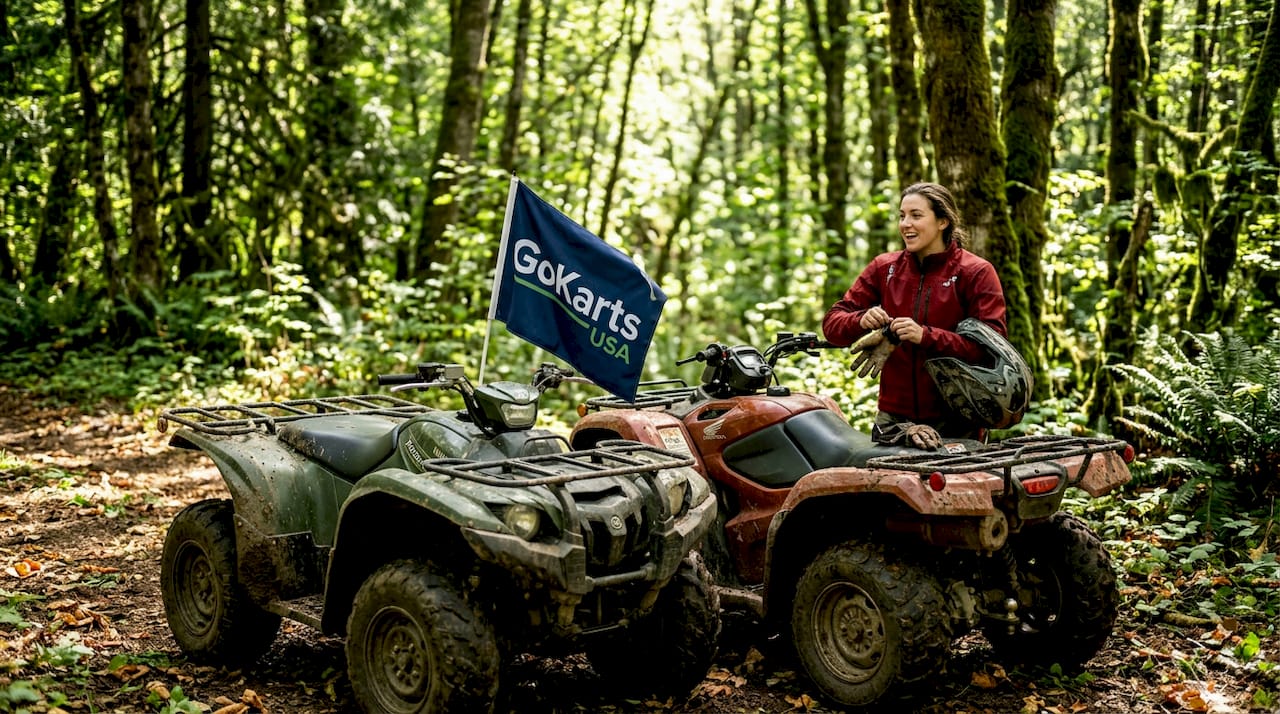
This shift tracks with broader outdoor culture. Hikers moved from bright synthetic gear to muted tones. Overlanders embraced desert tans and olive drabs. ATV riders are following the same instinct.
What does this mean for you practically? It means a matte olive or flat black ATV purchased today will look current far longer than a high-contrast graphic package. Resale value holds better when a machine does not scream a specific era’s design trend.
Pro Tip: If you are torn between a bold graphic package and a solid earth tone, ask yourself how it will look in five years. Trends fade. Clean, simple colors stay relevant.
The trend also connects to rider identity. A minimal build tells a story of intentionality. Riders who choose subdued base colors then layer in deliberate custom accessories are seen as thoughtful enthusiasts rather than impulse buyers. The machine becomes a reflection of how seriously they take the sport.
How ATV color affects function in the field
This is where most buyers leave real money and real safety on the table. Different colors in ATVs serve different functional purposes depending on terrain and use case. Getting this wrong costs you.
Visibility on the trail. Bright colors like red, orange, and yellow make you dramatically easier to spot by other riders, hikers, and emergency responders. If you ride shared trails or heavily wooded terrain where crossing paths with others is common, high-visibility colors can prevent collisions and speed up search-and-rescue efforts if something goes wrong. Check your local trail regulations too, since some areas require blaze orange during hunting season.
Camouflage for hunting applications. Camo wraps and packages genuinely reduce how quickly game animals register your machine. If you use your ATV primarily to access hunting grounds, the functional payoff justifies the premium. Just recognize the tradeoff. What hides you from a deer also hides you from another hunter.
| Riding context | Best color choice | Why it matters |
|---|---|---|
| Trail riding, shared paths | Bright red, orange, yellow | Maximizes visibility to other riders |
| Hunting and backcountry | Camo pattern or earth tones | Reduces animal disturbance and blends with terrain |
| Farm and utility work | Matte gray, black | Hides dirt; scratch marks are less visible |
| Family recreation | Any bright solid color | Easier to track children and new riders |
Durability and scratch visibility. Dark matte finishes hide surface scratches far better than gloss whites or bright reds. A matte gray machine that has been through a brush-covered trail looks used but tough. The same trail on a gloss white ATV looks beat up. This matters if you ride hard or plan to sell eventually.
Vinyl wraps solve the durability problem while expanding your color choices dramatically. High-quality wraps protect plastic body panels from scratches and trail debris, and they can be removed or replaced when worn. The function doubles as fashion.
Pro Tip: If you need both visibility and concealment depending on the season, a removable vinyl wrap gives you both without committing to one factory color permanently.
How lighting changes the colors you see
Here is a truth that catches a lot of buyers off guard. The color you see in a showroom or on a product page is almost never the color you get outside on the trail. Lighting is the biggest source of color confusion in the entire ATV buying process.
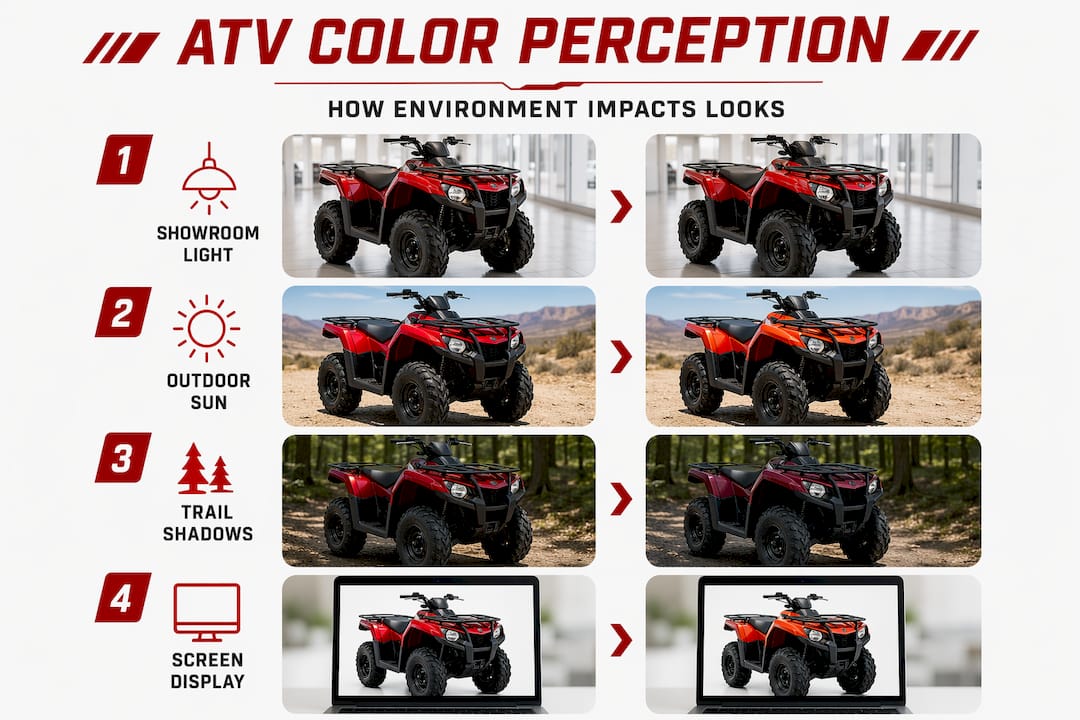
Daylight at 5000K reveals colors at their truest vibrancy. Indoor showroom lighting, which typically runs warmer in the 2700K to 3000K range, makes cool-toned colors like gray and blue appear muddier and dulls the brightness of reds and oranges. You could fall in love with a color indoors and be mildly disappointed the moment you roll the machine into the sun.
This affects camo patterns most severely. The intricate details that make a Mossy Oak or Realtree pattern look sharp and defined under sunlight can look flat and low-contrast under artificial lighting.
- Always view ATV color samples outdoors or under natural light before committing
- Request physical color chips or sample panels from dealers rather than relying on screen images
- Professionals who apply vinyl wraps recommend physical samples because digital renderings consistently misrepresent final results
- Pair your final color evaluation with understanding how lighting affects perception, especially if you plan to add aftermarket lighting accessories
Screen calibration adds another variable. A color that looks vibrant and saturated on a laptop monitor may appear more muted on a phone or tablet. When shopping online for ATV color options, descriptions like “Pearl Blue” or “Matte Olive Green” mean very little without a physical reference point.
Building a cohesive ATV color scheme
Factory paint is your foundation. What you build on top of it determines whether your machine looks like it was assembled with intention or thrown together with spare parts.
Savvy riders in 2026 treat their ATV builds the way designers treat a room. Every element earns its place. Seat cover color, nerf bar finish, bumper trim, skid plate graphics, and even helmet color get considered as a system rather than chosen independently.
Here is a practical approach to planning your color scheme:
- Start with your base color as the anchor. A matte gray base pairs naturally with black hardware and orange or red accent decals. A camo base works best when accessories echo natural tones like tan, brown, or olive.
- Pick one accent color and commit to it. Riders who use three or more accent colors tend to produce builds that feel scattered. One bold contrast color creates visual clarity.
- Match your nerf bars and bumpers first. These are the largest secondary components. Getting them right sets the tone for everything else.
- Source a decal kit that ties the accent color back to the base. Coordinated decal kits are widely available and make the whole machine feel intentional rather than assembled piecemeal.
- Consider your riding gear last. Your helmet, gloves, and jacket do not need to match exactly. But complementing the accent color rather than fighting it makes the whole setup look sharper on the trail and in photos.
You can dig deeper into how color fits into your overall purchase decision with the ATV buying checklist from Gokartsusa, which walks through all the factors worth weighing before you buy.
My honest take on ATV colors after years on the trail
I have talked to a lot of riders who walked away from their color choice feeling vaguely disappointed within a season. Not because the color was bad, but because they chose it purely on impulse. A photo looked cool. A friend had the same shade. The dealer had it in stock that week.
In my experience, the riders who end up the happiest are the ones who thought through both sides of the decision. They asked themselves: where do I actually ride, who else is on that trail with me, and does this color serve me or just please me for thirty seconds in a parking lot?
The earth tone trend I mentioned earlier is not just fashion. It is practical wisdom that the off-road community has circled back to. A machine that blends with its environment puts you at ease. It feels like it belongs where you are taking it.
What I have learned advising riders is this: avoid building around a color that will make you self-conscious the moment it gets scratched or muddy. Because it will get scratched. It will get muddy. That is the point. A color and finish that wears gracefully will keep you loving the machine for years. A high-gloss show finish that shows every mark will start to frustrate you by the end of the first real season.
Plan your scheme before you buy, not after. The customization market makes it easy to change course later, but you will spend less money and make fewer regrets if you enter the purchase with a full picture of where you are headed.
— Mario
Find your perfect ride at Gokartsusa
At Gokartsusa, we know that choosing a machine is as personal as choosing a color for it. That is exactly why we carry options that give riders real flexibility from day one. Whether you are after a bold solid tone or a machine built for backcountry use, our lineup has you covered.
Take the TrailMaster Storm Minibike as an example. Built with adventure in mind, it delivers serious performance in a package that lets you express your style from the jump. Our team is here as your pit crew and trail guides, helping you find the machine that fits your terrain, your budget, and your vision. Explore our full ATV and minibike selection and let the benefits of outdoor riding fuel your next build decision.
FAQ
What colors are standard on most ATVs?
Most manufacturers offer solid utility colors including reds, greens, grays, and blacks at the base trim level. Camo patterns and specialty finishes are typically reserved for premium packages at added cost.
Are camo ATV packages worth the extra cost?
If you use your ATV primarily for hunting or backcountry work, the camo premium of $500 to $650 delivers real functional value in concealment. For general trail riding, a vinyl wrap achieves a similar look at a lower price.
How do I choose the right ATV color for my riding style?
Match your color to your primary use: bright colors for shared trails and family riding, earth tones or camo for hunting and backcountry, and dark matte finishes for utility or farm work where durability and low maintenance matter most.
Can vinyl wraps replace factory paint on ATVs?
Yes. High-quality vinyl wraps change your color or pattern while protecting the body panels from scratches and debris. They can also be removed or replaced, giving you flexibility that factory paint cannot match.
Why does my ATV color look different outdoors than in photos?
Lighting temperature is the primary reason. Indoor and screen lighting consistently misrepresents colors compared to natural daylight at 5000K. Always view physical color samples outside before committing to a final choice.