




TL;DR:
- Teaching children to ride ATVs builds lasting memories and confidence, but safety depends on proper preparation. Selecting appropriately sized machines, wearing essential protective gear, and vigilant supervision are crucial to prevent preventable injuries. Following a structured learning progression and active parental engagement ensures safe skill development and a fun riding experience.
Teaching your child to ride an ATV is one of those unforgettable family adventures, the kind that builds confidence, sharpens focus, and creates memories that last a lifetime. But here’s the reality that every responsible parent needs to face: ATV riding carries genuine risks for young riders, and the difference between a thrilling day on the trails and a trip to the emergency room almost always comes down to preparation. The good news is that the vast majority of ATV injuries involving children are preventable. With the right machine, the right gear, and a structured teaching approach, you can give your child all the freedom and excitement of the trail while keeping safety firmly in the driver’s seat.
Table of Contents
- Essential prerequisites: Choosing the right ATV and safety gear
- Supervision guidelines: Staying within line-of-sight and safety boundaries
- Step-by-step teaching process: Building skills from basics to advanced
- Common mistakes and troubleshooting: Preventing injuries and building confidence
- What most guides miss: The safety equation parents can’t ignore
- Next steps: Find safe youth ATVs and essential gear
- Frequently asked questions
Key Takeaways
| Point | Details |
|---|---|
| Choose youth-sized ATVs | Picking the right engine size and youth model greatly reduces the risk of injury. |
| Use full safety gear | Helmet, goggles, gloves, boots, and long clothing are mandatory for every ride. |
| Supervise actively | Direct line-of-sight supervision and proximity dramatically increase child safety. |
| Progress skills gradually | Start on flat terrain and build up to turns and hills to build confidence safely. |
| Never allow adult ATVs | Over 90% of child injuries happen on adult-sized ATVs—always avoid them. |
Essential prerequisites: Choosing the right ATV and safety gear
Once you understand the risks, the first crucial step is making sure your child is matched with the right ATV and all necessary gear. This isn’t a place to cut corners. The machine your child rides matters just as much as how they ride it.
Start with engine size, because it directly determines whether a machine is manageable for a young rider or dangerously overpowered. According to CPSC guidelines, children under 6 should not ride ATVs at all, kids ages 6 to 11 should only ride ATVs up to 70cc, and ages 12 to 15 can move up to 90cc models with close adult supervision. The American Academy of Pediatrics strongly reinforces this guidance. Learn more about what is ATV for kids to understand why these size thresholds exist.
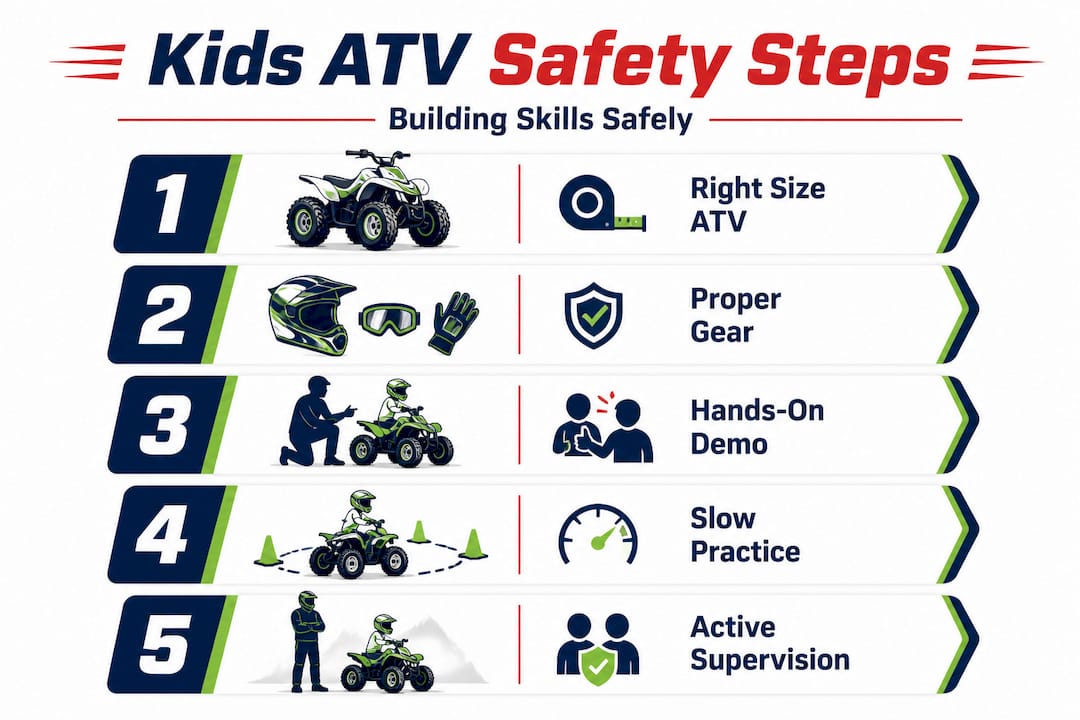
Here’s a quick comparison of youth ATVs versus adult ATVs to help you visualize the differences:
| Feature | Youth ATVs | Adult ATVs |
|---|---|---|
| Engine size | Up to 90cc | 250cc and above |
| Physical size | Smaller frame, lower seat height | Larger, heavier, harder to control |
| Speed range | Limited top speed | High top speed |
| Injury risk for kids | Significantly lower | Dramatically higher |
| Parental controls | Often included (kill switch, throttle limiter) | Rarely included |
| Recommended for under 16 | Yes | No |
The table above makes it visually clear: adult ATVs are a different beast entirely. Many parents assume a bigger machine just means more fun, but in reality it means far less control for a child whose reflexes, strength, and decision-making are still developing. Explore our choosing youth ATVs guide for more detail on matching the right model to your child’s age and size.
Gear is your second line of defense. According to safety experts, essential protective equipment includes a DOT-approved helmet, goggles, gloves, boots that cover the ankle, long pants, and long sleeves. Every single item on this list serves a critical protective purpose. Think of the helmet as non-negotiable and everything else as layers of insurance. Here’s a clear checklist to take shopping:
- DOT-approved helmet (look for the DOT sticker on the back)
- Goggles (not sunglasses, which can shatter)
- Gloves with grip reinforcement
- Over-the-ankle boots with sturdy soles
- Long pants (jeans or purpose-built riding pants)
- Long-sleeve shirt or jacket (ideally with impact padding)
Pro Tip: Prioritize youth ATVs with a parental speed limiter and a remote kill switch. These two features alone give parents an extra layer of control while your child is still learning, and they can be gradually relaxed as skills improve. Browse our safe entry-level ATVs to see which models include these features right out of the box.
Supervision guidelines: Staying within line-of-sight and safety boundaries
With the right equipment in place, smart supervision becomes your strongest safety defense. No amount of gear can replace an attentive, engaged parent watching every move.
The rules here are age-specific and not optional. Children under 10 require direct, line-of-sight supervision at all times. That means you need to be close enough to see every turn, every stop, and every moment of uncertainty. For ages 10 to 15, parents must stay nearby and be ready to intervene quickly if something goes wrong. This isn’t hovering for the sake of it. It’s a statistically grounded approach to keeping your child safe.
Here’s a number that should stay with every parent:
Over 90% of ATV injuries involving children occur on adult-sized ATVs. Youth under 16 account for approximately 27% of all OHV injuries and 13% of fatalities, with rollovers among the most common and dangerous incidents.
That statistic changes everything. It means that the supervision question is inseparable from the equipment question. Putting your child on a properly sized ATV and staying within arm’s reach together form a single, unified safety strategy.
A few key supervision rules to build into every ride:
- No passengers on single-rider ATVs. Ever. Extra weight shifts balance unexpectedly and dramatically increases rollover risk.
- No racing other riders until your child has demonstrated solid foundational skills.
- Establish clear boundaries before each session. Use visible markers if needed so your child knows exactly where the riding zone ends.
- Debrief after every ride. Talk through what went well and what needs more practice. This builds awareness and communication.
Pro Tip: If you’re riding in a larger open space like a field or a large trail system, carry two-way radios or agree on a whistle signal system. This keeps communication open even when your child drifts slightly out of direct earshot, without compromising your ability to reach them quickly. Our beginner ATV safety guide covers supervision frameworks in even greater detail, and our ATV safety tips page offers practical real-world strategies for every session.
Step-by-step teaching process: Building skills from basics to advanced
Now that you know how to supervise, you’re ready to start teaching your child safe ATV skills, step by step. Rushing this process is one of the most common and most dangerous mistakes parents make. Think of it like learning to swim. You start in the shallow end, not the deep end.
Always begin in a flat, open space with no obstacles during daylight hours. Safety experts are clear that no riding on paved roads, no riding at night, and absolutely no involvement of alcohol or drugs applies at any point. This keeps conditions predictable and allows your child to focus entirely on learning.
Here is a proven step-by-step progression:
- Introduction and ground rules. Walk your child around the ATV before they ever sit on it. Name the controls, explain what they do, and set clear expectations about listening and following instructions.
- Mounting and seating posture. Teach proper seating position with feet flat on the footrests, knees slightly bent, and hands on the handlebars. Good posture translates to better control.
- Basic controls at a standstill. Practice operating the throttle, brake, and kill switch without actually moving. Build muscle memory before speed is involved.
- Starting and stopping on flat ground. This is the most critical early skill. Practice slow starts and controlled stops repeatedly until your child can do both smoothly and confidently.
- Straight-line riding. Once starts and stops are solid, practice riding in a straight line. Keep the area wide open and keep speeds very low.
- Gentle turns. Introduce wide, gradual turns in both directions. Lean body weight slightly into the turn rather than fighting against it.
- Progressive terrain. Only after all foundational skills are solid should you introduce gentle inclines. Never start with hills.
Here is a helpful reference table to match skill level to appropriate terrain and supervision intensity:
| Skill stage | Recommended terrain | Supervision level |
|---|---|---|
| Introductory (steps 1-3) | Flat, open, obstacle-free | Direct, hands-on |
| Basic riding (steps 4-5) | Flat, wide-open space | Line-of-sight at all times |
| Turning (step 6) | Flat with space for wide arcs | Close proximity |
| Advanced terrain (step 7) | Gentle, known inclines | Nearby, active coaching |
The progression is intentional. Each step builds a specific skill that the next step depends on. Skipping ahead might feel harmless, but it plants bad habits that can become dangerous later. Check out our entry-level ATV tips for additional guidance on pacing your child’s development.
Common mistakes and troubleshooting: Preventing injuries and building confidence
Even with best efforts, mistakes happen. Here is how to avoid the most damaging ones and keep your child’s confidence high through the learning process.
The single biggest mistake parents make is allowing kids to ride adult-sized ATVs. It seems obvious now, but the temptation is real. Maybe you already own a full-size ATV. Maybe your child begs to ride the “big one.” The data is unambiguous: over 90% of child ATV injuries happen on adult machines. That single decision to put a child on the wrong-sized ATV erases every other safety measure you’ve taken.
Other common mistakes include:
- Rushing skill progression because a child seems eager or naturally coordinated. Eagerness is not readiness.
- Allowing rides on unfamiliar terrain before foundational skills are rock solid. New terrain demands problem-solving that beginners aren’t equipped for.
- Skipping gear for “just a quick ride.” There is no such thing as a quick ride that doesn’t need a helmet.
- Neglecting machine maintenance. Poorly maintained tires and wheels are a major hazard. Proper wheel and tire maintenance is part of the safety equation, not an afterthought.
It is also worth acknowledging a real tension in the world of youth ATV riding. Medical organizations like the AAP have historically called for children under 16 to avoid ATV riding altogether. Industry bodies like ASI and CPSC, on the other hand, support youth riding when proper sizing, training, gear, and supervision are in place. We believe that informed, engaged parents can navigate this debate responsibly by following all recommended safety protocols without exception. More resources on ATV safety for kids can help you stay current with best practices.
Pro Tip: Formal ATV safety courses, such as those offered through the ATV Safety Institute, give young riders structured instruction from certified coaches. Courses teach hazard recognition, body positioning, and emergency response skills that even the most attentive parent may not think to cover. Confidence built in a controlled course setting carries directly onto the trail.
If your child becomes nervous or hesitant during practice sessions, resist the urge to push forward. Go back to flat-ground repetition in a familiar, comfortable space. Celebrate small wins. Positive reinforcement builds genuine confidence rather than bravado, and genuinely confident riders are safer riders.
What most guides miss: The safety equation parents can’t ignore
Most ATV safety guides hand you a checklist and call it a day. Helmet, check. Right-sized ATV, check. Supervision, check. And while those checklists are genuinely important, they can create a false sense of security. Following a list is passive. Real safety is active.
Here’s what the statistics actually show: youth under 16 represent 27% of OHV injuries, and the overwhelming majority of those injuries happen on adult-sized machines. That tells us that the most impactful decision a parent makes isn’t what brand of helmet to buy. It’s what machine their child ever sits on. Everything else is secondary.
We’ve seen it in the community again and again. Parents who invest in every piece of protective gear but then allow a ride on a neighbor’s full-size ATV “just this once.” That “just this once” moment is where the statistics live. Size and supervision are not suggestions. They are the two non-negotiable pillars of the entire safety structure.
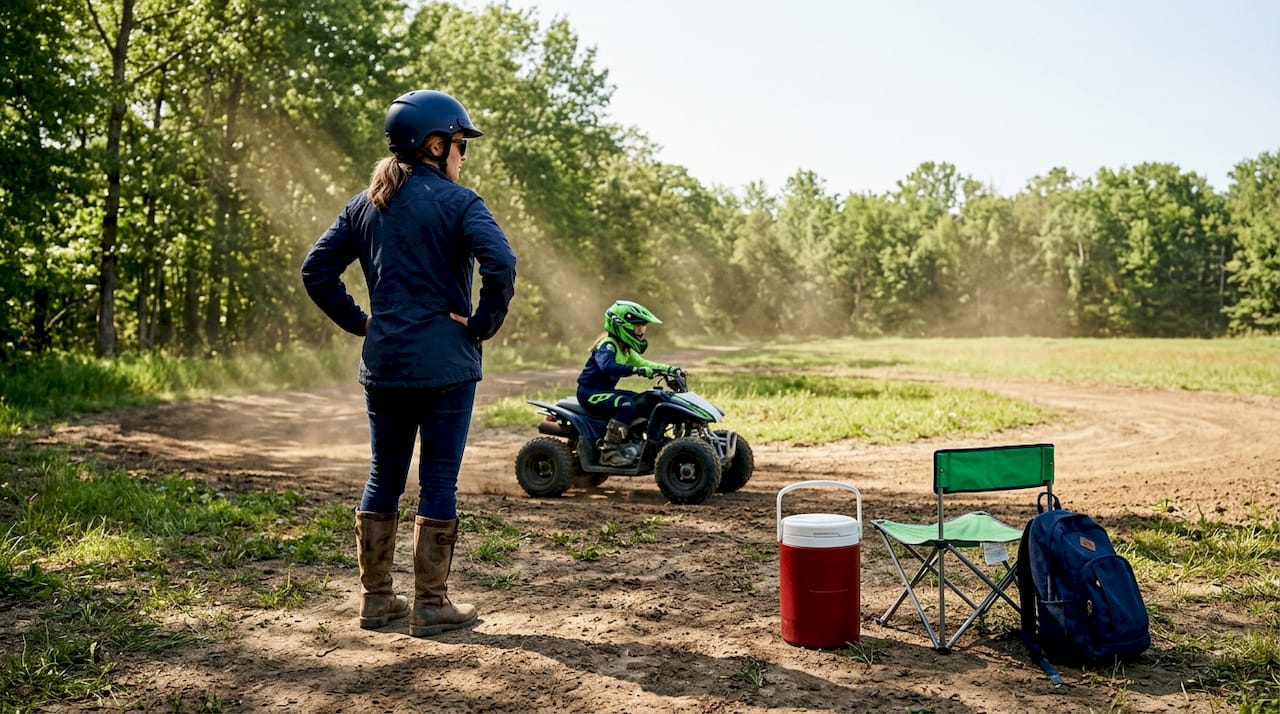
Beyond the equipment, we believe the most undervalued safety tool is parental engagement during every single ride. Not just watching from a lawn chair, but actively coaching, asking questions, debriefing, and reinforcing correct behavior every time. That ongoing conversation between parent and child is what turns a structured teaching session into a lasting foundation for safe riding habits.
Official courses and even youth ATV insurance add valuable layers of protection. But they work best as supplements to your active vigilance, never as replacements for it. The trail ahead is wide open and genuinely thrilling for the whole family. Your engagement is what keeps it that way.
Next steps: Find safe youth ATVs and essential gear
Having learned the essentials, the next step is to choose safe, proven equipment for your child’s ATV journey. At GoKartsUSA.biz®, we take that responsibility seriously, and we’ve built our catalog around the needs of parents exactly like you.

Our Mini Sport Kids ATV is designed specifically for young, developing riders, featuring parental speed controls and a reliable kill switch so you stay in command even as your child builds confidence. If your family adventures extend beyond the trails, check out the TrailMaster 200GX Golf Cart for shared family fun. Browse the full lineup of youth-ready vehicles and safety gear at GoKartsUSA.biz and start your child’s adventure the right way, with reliability, safety features, and the support of a team that rides with you.
Frequently asked questions
What age can kids start riding an ATV?
The CPSC advises no riding under 6, with ATVs up to 70cc for ages 6 to 11 and up to 90cc for ages 12 to 15, always with close adult supervision.
What is the most important safety gear for kids ATV riding?
A DOT-approved helmet, goggles, gloves, over-the-ankle boots, long pants, and long sleeves are all essential, with the helmet being the single most critical item.
What are common mistakes parents make when teaching kids ATV riding?
Allowing kids to ride adult-sized ATVs is the most dangerous mistake, since over 90% of child injuries involve adult machines. Rushing skill progression and skipping supervision are close behind.
Should children take formal ATV safety courses?
Yes, formal courses from certified instructors teach hazard recognition and emergency handling skills that significantly reduce injury risk and build genuine, lasting confidence.
Can kids ride ATVs on paved roads or at night?
No. Kids should never ride on paved roads or at night. Stick to flat, open terrain in full daylight to keep conditions predictable and safe during every session.
Recommended
- Beginner ATV Safety Guide: Essential Steps for Safe Riding – GoKarts USA®
- ATV safety explained: essential tips for smarter riding – GoKarts USA®
- 10 essential ATV tips for safe, fun entry-level riding – GoKarts USA®
- What Is an ATV and Why Safety Matters Most – GoKarts USA®
- Styrk din tryghed bag rattet: Guide til sikre unge bilister
- Kinderfahrrad: Gesundheit, Mobilität und Freude fördern