




TL;DR:
- Proper safety gear, thorough vehicle inspections, and disciplined riding techniques are essential for preventing off-road accidents. Carrying an emergency kit and avoiding impaired riding further enhance rider safety and preparedness. Consistent attention to these safety practices reduces risks and ensures a better experience on powersports vehicles.
Powersports vehicle safety means consistently using proper protective gear, maintaining your vehicle, and riding with full awareness to prevent accidents and injuries. ATVs, UTVs, dirt bikes, and go-karts deliver real freedom and adventure, but they also carry serious risks when riders skip the fundamentals. The ATV Safety Institute and medical experts like Dr. Paul Roumeliotis have long emphasized that formal training is crucial because these machines can exceed 70 mph and weigh hundreds of pounds. Following proven powersports vehicle safety tips is not optional. It is the difference between a great ride and a trip to the emergency room.
What safety gear do you actually need for powersports riding?
The right safety gear for powersports is not just a helmet. It is a full system of protection designed to keep you riding season after season.
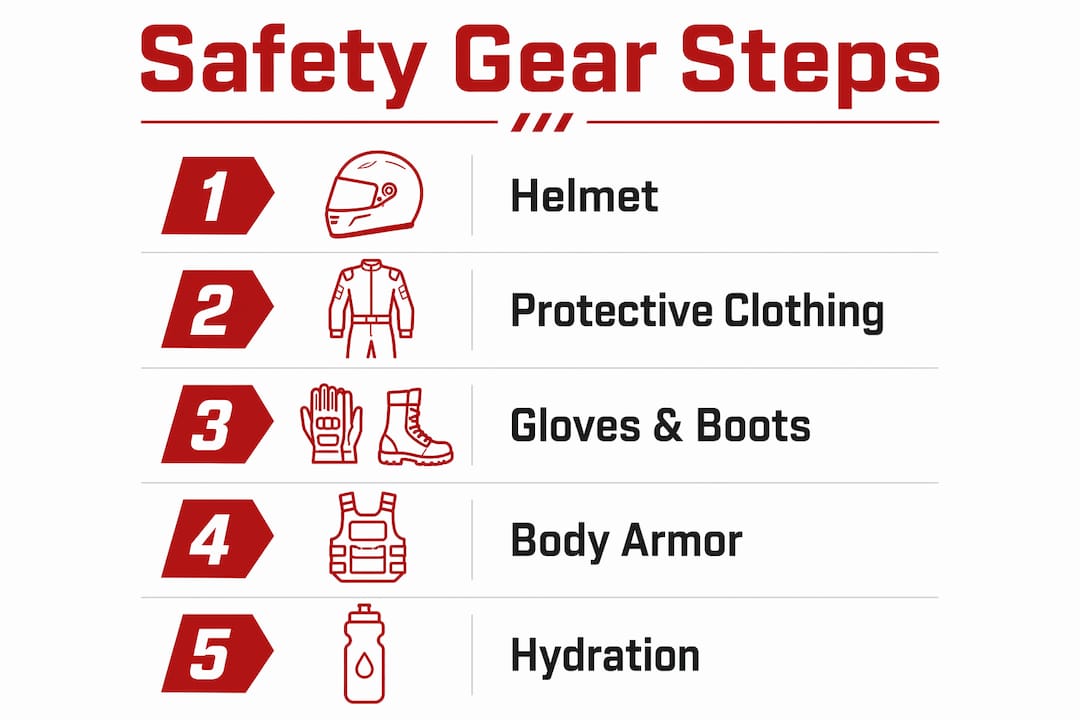
The helmet comes first. A DOT-approved helmet with a proper fit is the single most important piece of safety gear for powersports riders. The helmet should sit level on your head, not rock forward or backward, and the chin strap should hold firm with two fingers of space below your chin. Full-face helmets offer the most protection for off-road and ATV riding, while motocross-style helmets with goggles work well on open trails.
Protective clothing covers the rest of your body. Long sleeves, long pants, gloves, and over-the-ankle boots are the minimum standard for every ride. Leather or reinforced textile gear resists abrasion far better than denim or cotton. Gloves protect your hands from debris, vibration, and impact, and they give you a better grip on the controls.
Heat is not an excuse to strip down. In extreme heat, riders should use mesh, ventilated CE-rated armor and hydration packs instead of shedding protective layers. Ventilated gear keeps air moving across your body while maintaining full coverage. A hydration pack also keeps you drinking water without stopping, which matters on long trail rides in summer.
Additional protection worth wearing includes knee and shin guards, chest protectors, and elbow pads. These are standard for motocross and increasingly common among ATV and UTV riders. For a detailed breakdown of race-ready gear standards, the powersports gear guide from IPD Racing covers armor ratings and fit requirements across disciplines.
Pro Tip: Buy your helmet in person whenever possible. Sizing varies significantly between brands like Bell, Fox Racing, and Fly Racing. A helmet that fits correctly should feel snug but never painful after five minutes of wear.
How do you perform a pre-ride safety inspection?
A thorough pre-ride inspection takes less than ten minutes and prevents the majority of mechanical failures on the trail. The industry standard framework is the T-CLOC checklist, used by professional riders and safety instructors nationwide.
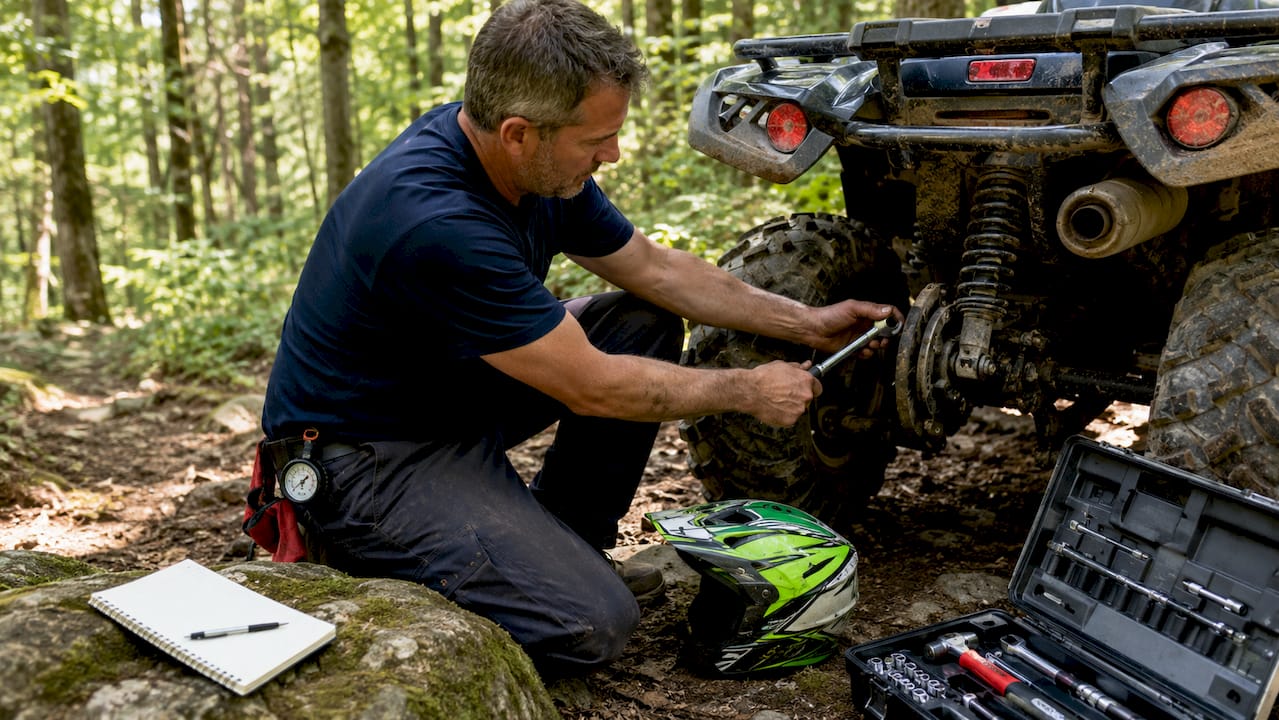
T-CLOC stands for Tires, Controls, Lights, Oil/Fluids, and Chassis. Work through each category in order before every single ride. Skipping this step is how riders end up stranded miles from the trailhead or, worse, losing control at speed.
Here is how to run through each category:
- Tires: Check for cuts, bulges, and embedded debris. UTV tires should be inflated between 8 and 18 PSI depending on terrain. Use a low-pressure tire gauge because standard car gauges are not accurate at these low ranges. Consistent pressure across all four tires is critical for stable handling.
- Controls: Test the throttle for smooth return, check brake lever and pedal feel, and confirm the kill switch works. A sticky throttle on a trail is a serious hazard.
- Lights: Verify headlights, taillights, and brake lights function. Even daytime riders need working lights for low-visibility terrain like dense forest or canyon shadows.
- Oil and Fluids: Check engine oil, coolant, and brake fluid levels. Look under the vehicle for any fresh drips or puddles that signal a leak.
- Chassis: Inspect the frame for cracks, check all bolts for tightness, and look at the exhaust and spark arrester for damage or blockage.
The CVT drive belt is the most vulnerable mechanical component on most UTVs. Signs of wear include glazing, visible cracks, fraying edges, or a squealing noise during acceleration. A failed drive belt leaves you completely immobile, so replace it at the first sign of trouble.
| Inspection Point | ATV | UTV |
|---|---|---|
| Tire Pressure Range | 4–8 PSI (varies by model) | 8–18 PSI |
| Drive Belt Check | Less critical | High priority every ride |
| Passenger Restraints | N/A | Check harness buckles and belts |
| Cargo/Bed Secure | N/A | Verify tie-downs before loading |
| Brake Type | Drum or disc | Hydraulic disc, check fluid |
Pro Tip: Keep a printed T-CLOC card in your gear bag. The ATV safety checklist from Gokartsusa is a solid reference you can laminate and carry on every ride.
What riding techniques prevent off-road vehicle accidents?
Safe riding technique is the skill set that separates riders who stay out of trouble from those who do not. Gear and inspections protect you when things go wrong. Technique prevents things from going wrong in the first place.
Ride within your limits, not your vehicle’s limits. ATVs are often misunderstood as toys, but their weight and speed demand formal training rather than informal learning. A machine capable of 70 mph does not care that you have only been riding for two seasons. Take a certified safety course through the ATV Safety Institute or the Motorcycle Safety Foundation before pushing your skill ceiling.
Situational awareness is your primary defense. Defensive riding means you ride to what you can see, not to what you remember from last weekend’s trail run. Conditions change. A dry trail in April becomes a muddy, rutted obstacle course after rain. Scan constantly and adjust your speed to match what is actually in front of you.
Key riding practices that reduce accident risk:
- Scan 8–12 seconds ahead on corners. Experienced riders use the 8 to 12-second rule to spot debris, drop-offs, and other hazards before they become emergencies. Enter corners wide to maximize your field of view.
- Watch intersections closely. Nearly 40% of powersports crashes involve another vehicle turning left directly in front of the rider. Slow down and cover your brakes at every intersection, even on trails with low traffic.
- Never carry a passenger on a single-rider ATV. The weight distribution and handling dynamics change completely. This is one of the most common causes of ATV rollovers.
- Avoid riding impaired. Alcohol and drugs are involved in a staggering share of powersports fatalities. Stay sober every time you ride.
- Stick to designated trails. Riding on unfamiliar or unauthorized terrain multiplies your exposure to hidden hazards like drop-offs, fencing, and unstable ground.
“Ride to what you can see, not to what you expect to see. Trails change, conditions change, and the rider who assumes nothing is the rider who gets home safe.”
Pro Tip: Ride with a buddy whenever possible. If you ride alone, tell someone your planned route and expected return time. A missed check-in is a signal to send help.
How should you prepare for emergencies on the trail?
Emergency readiness is the part of off-road vehicle safety that most riders skip until they need it. By then, it is too late to prepare.
Carry a compact emergency kit on every ride. The contents do not need to be heavy or expensive. Many riders neglect to carry the basics that make the difference between a minor inconvenience and a serious situation.
A solid trail emergency kit includes:
- Tire plug kit and a portable inflator
- Zip ties and duct tape for quick field repairs
- A small fire extinguisher rated for vehicle fires
- A fully charged cell phone with offline maps downloaded
- Basic first aid supplies including bandages, antiseptic, and a space blanket
- Water and a high-calorie snack for extended rides
Know what to do immediately after a crash. The steps below apply whether you are riding an ATV, UTV, or dirt bike:
- Stop the vehicle and turn off the engine.
- Check yourself and any passengers for injuries before moving.
- Move away from the vehicle if there is any sign of fuel leakage or fire.
- Call 911 or emergency services if there are injuries. Give your GPS coordinates or trail name.
- Do not move anyone who may have a spinal injury. Wait for trained responders.
- Contact your riding buddy or the person who knows your route.
Impaired riding is the leading behavioral cause of fatal accidents. 50% of ATV deaths are linked to impairment. That number alone makes the case for a strict no-alcohol policy before and during any ride. For families introducing younger riders to the sport, the beginner ATV safety guide from Gokartsusa covers age-appropriate training steps and supervision strategies.
Key takeaways
Safe powersports riding requires the right gear, a thorough pre-ride inspection, disciplined technique, and emergency readiness working together on every single outing.
| Point | Details |
|---|---|
| Gear is non-negotiable | Wear a DOT-approved helmet, CE-rated armor, gloves, and boots on every ride, regardless of distance. |
| Use T-CLOC before every ride | Check tires, controls, lights, oil, and chassis before starting the engine, with special attention to the CVT drive belt on UTVs. |
| Ride to what you see | Scan 8–12 seconds ahead, slow at intersections, and adjust speed to actual trail conditions rather than memory. |
| Carry an emergency kit | Pack tire plugs, zip ties, a fire extinguisher, offline maps, and first aid supplies on every off-road outing. |
| Impairment kills | 50% of ATV fatalities involve impaired riding. A strict no-alcohol policy before every ride is the single most preventable safety measure. |
What i have learned after years of watching riders get it wrong
I have spent a long time around powersports riders, and the pattern I see most often is not recklessness. It is overconfidence built on familiarity. Riders who have done the same trail fifty times start skipping the pre-ride check. They leave the chest protector at home because it is “just a short ride.” They figure they know every corner well enough to skip the scan.
That familiarity is exactly when accidents happen. The trail you know best is the one where your guard drops lowest.
The other thing I have noticed is a real shift in how families approach gear for kids. Parents who would never let their child ride without a helmet are now asking about full protective systems, parental remote controls, and age-appropriate training programs. That is a genuine cultural change, and it is the right one. Getting kids started with proper habits from their first ride is far easier than correcting bad ones later.
My honest advice: treat every ride like your first one. Run the checklist. Wear the gear. Scan the trail. The adventure does not get less exciting because you are prepared. It gets better, because you come home.
— Mario
Ride safe and start right with Gokartsusa

At Gokartsusa, we believe the best rides start with the right machine and the right mindset. For families ready to introduce younger riders to the sport safely, the Mini Sport Kids ATV 110cc is built with parental peace of mind at its core. It features a remote start and kill switch that lets parents manage the ride from a distance, so your child builds confidence while you stay in control. Explore our full lineup of family-friendly ATVs and find the right fit for your crew at Gokartsusa.
FAQ
What is the most important piece of safety gear for powersports?
A DOT-approved helmet with a proper fit is the most critical piece of protective equipment for any powersports rider. No other gear compensates for a missing or ill-fitting helmet.
How often should you inspect your ATV or UTV before riding?
Run a full T-CLOC inspection before every single ride, not just after long storage periods. Mechanical conditions change between outings, and a ten-minute check prevents most trail breakdowns.
Can you ride an ATV with a passenger if it is a single-rider model?
No. Carrying a passenger on a single-rider ATV changes the weight distribution and handling in ways the vehicle is not designed to manage, making rollovers significantly more likely.
What should a trail emergency kit include?
A solid kit includes tire plugs, zip ties, a fire extinguisher, a charged phone with offline maps, basic first aid supplies, and water. These items cover the most common off-road emergencies riders face.
How does impaired riding affect ATV accident rates?
50% of ATV deaths are linked to impaired driving. Riding sober is the single most effective behavioral change any rider can make to reduce their risk of a fatal accident.