




TL;DR:
- The 2026 powersports market is experiencing selective recovery, with entry-level and utility segments leading growth. Electric innovations and industry events like SEMA are shaping future trends, emphasizing adaptability and lifestyle integration. Stakeholders who embrace electric, targeted promotions, and cross-category marketing will lead the market foundation year.
The 2026 powersports trends story is one of selective recovery: the market has stabilized after 2025 softness, with entry-level and utility segments leading growth while discretionary categories face continued pressure. Scooters, ATVs, and utility UTVs are gaining ground, while watercraft and jet boats pull back. Electric vehicle breakthroughs from brands like Radian and Stark Future are reshaping what performance means off-road. Meanwhile, industry events like SEMA 2026 and economic catalysts like tax refund season are giving dealers and enthusiasts real momentum. If you want to understand where powersports is headed and how to ride that wave, this is your guide.
How have 2026 powersports market segments performed?
The powersports market in early 2026 is not rising uniformly. It is rising selectively, and that distinction matters enormously for anyone buying, selling, or investing in this space.
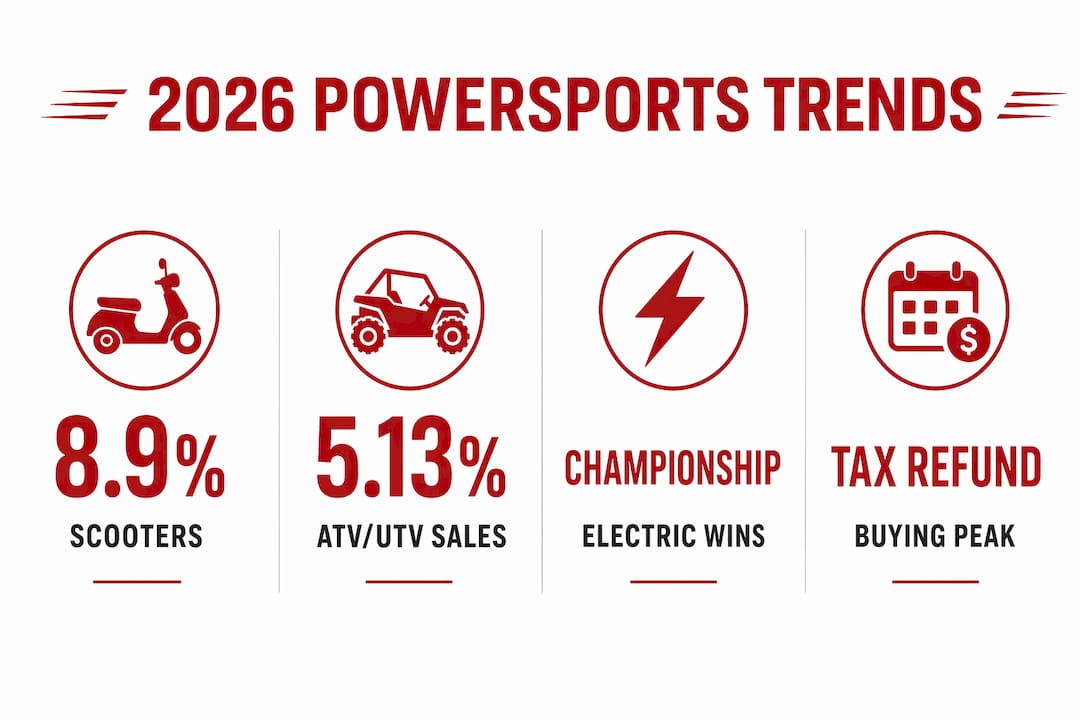
New unit sales rose 4.43% year over year in January 2026, reversing the declines that defined much of 2025. That reversal was not broad-based. ATV and UTV categories led with a 5.13% gain, sport bikes climbed 3.23%, and dirt bikes added 2.71%. Traditional and dual-sport categories declined. The data tells a clear story: consumers are spending, but they are spending with purpose.
The Q2 picture reinforces that pattern. Scooters gained 8.9%, snowmobiles rose 2.7%, and ATVs added 1.4%. Watercraft dropped 6.2% and jet boats fell 5.5%. Entry-level and utility vehicles attract buyers who see practical value. Discretionary, high-ticket recreational products face a consumer base that is still cautious about large, non-essential purchases.
RideNow Group’s financial results confirm the strength at the top of the market. Q1 2026 revenue reached $260.4 million, up 6.4% year over year, with unit sales climbing 16.3%. Gross profit hit $71.6 million. Those numbers reflect a dealer network that adapted its inventory and pricing strategy to match where demand actually lives.
| Segment | YoY Change |
|---|---|
| Scooters | +8.9% |
| ATVs | +1.4% |
| ATV/UTV (Jan 2026) | +5.13% |
| Watercraft | -6.2% |
| Jet Boats | -5.5% |
Pricing behavior is shifting alongside sales patterns. Dealers who prioritize inventory turns and anticipate faster pricing adjustments are outperforming those holding onto pre-2025 pricing models. The market rewards agility right now, not stubbornness.
Pro Tip: If you are shopping for a powersports vehicle in 2026, focus on the entry-level and utility segments. That is where dealer inventory is deepest, pricing is most competitive, and trade-in values are holding strongest. Check out Gokartsusa’s guide on recreational powersports in 2026 for a clear breakdown of what fits your riding goals.
What technological innovations are defining powersports in 2026?
Electric powertrains are no longer a curiosity in powersports. They are winning championships and solving real engineering problems that once made riders skeptical.
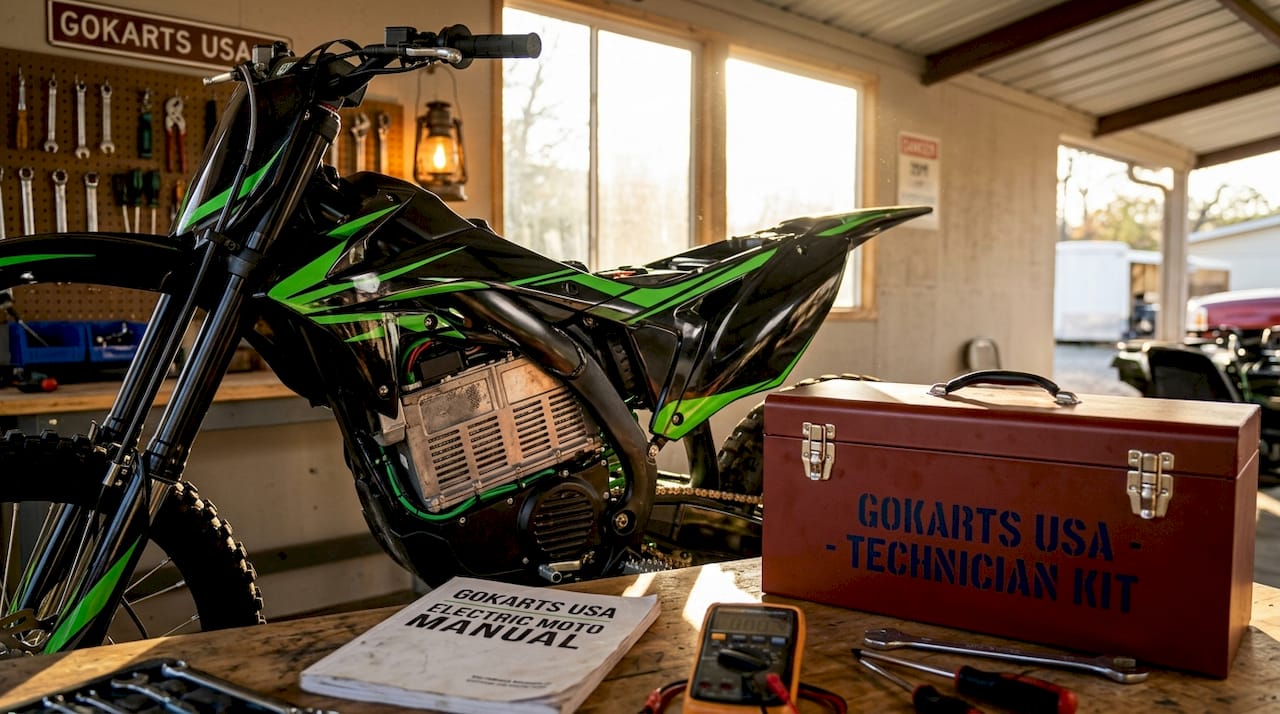
Stark Future became the first electric motorcycle to win the 2026 FIM SuperEnduro World Championship in March. That win is not a marketing milestone. It is proof that electric powersports vehicles can compete at the highest level of off-road racing, where terrain, endurance, and raw power are the only metrics that matter.
On the engineering side, Radian’s EXR electric enduro motorcycle takes a different approach to the range anxiety problem. Its patent-pending battery swap system allows tool-free pack changes in under 30 seconds. The 8.6 kWh battery delivers 60 to 115 kilometers of race-pace range. Deliveries begin in Q4 2027, but the design signals where the entire off-road electric category is heading. Recharge downtime has been the single biggest barrier to electric adoption in competition. Radian’s approach removes it entirely.
Beyond electric powertrains, connectivity and advanced rider assistance systems (ARAS) are becoming standard expectations rather than premium add-ons. Features like traction control, lean-sensitive ABS, and ride-mode customization are appearing across mid-range models from multiple manufacturers. Riders who once had to spend at the top of a product line to access these systems now find them on accessible, entry-level platforms.
| Technology | Current Status | Impact |
|---|---|---|
| Electric powertrains | Championship-proven (Stark Future, 2026) | Validates performance credibility |
| Battery swapping (Radian EXR) | Deliveries Q4 2027 | Eliminates recharge downtime in competition |
| ARAS (traction control, ABS) | Expanding to mid-range models | Raises safety floor across categories |
| Sustainable materials | Growing adoption | Reduces lifecycle environmental cost |
Sustainable materials are also gaining traction across the industry. Manufacturers are integrating recycled composites and bio-based plastics into body panels and structural components. This shift responds to both regulatory pressure and a younger buyer demographic that factors environmental impact into purchase decisions.
Pro Tip: When evaluating electric powersports options, look beyond range figures. Battery swap capability and charging infrastructure compatibility are the specs that determine real-world usability on the trail or at the track.
How are industry events and market catalysts shaping demand?
Two forces are driving powersports demand in 2026 beyond the product itself: strategic industry events and economic timing. Both reward riders and dealers who pay attention.
SEMA 2026 expanded to include a dedicated Powersports/SxS/Lifestyle section, running November 3 through 6. This is a significant structural change. SEMA has historically been an automotive aftermarket show. Adding a centralized hub for motorcycles, UTVs, and adventure gear signals that the buyer journey now spans automotive, adventure, and powersports categories in a single decision arc. For brands and retailers, event-driven product visibility at SEMA accelerates discovery and opens cross-category sales opportunities that a standalone powersports show cannot replicate.
The tax refund season between February and April functions as one of the most reliable demand catalysts in the powersports calendar. Purchases in the $8,000 to $20,000 range align almost perfectly with average refund amounts, and dealers who build targeted promotions around that window report measurably better conversion rates. The implication is straightforward: timing a purchase or a promotion to the refund cycle is not just smart marketing. It is data-backed strategy.
Fuel prices added another layer to the 2026 demand picture. The April 2026 fuel price surge drove stronger showroom traffic for on-road motorcycles, as commuters and recreational riders alike reconsidered fuel-efficient two-wheelers. This is the on-road segment’s version of a tailwind, and dealers stocked accordingly.
Pro Tip: If you are a dealer or a buyer planning a major powersports purchase, mark February through April on your calendar. That window combines tax refund availability, spring riding anticipation, and dealer motivation to move inventory. It is the single best buying window of the year.
What do 2026 trends mean for enthusiasts and industry stakeholders?
Understanding the trends is one thing. Knowing how to act on them is what separates riders and dealers who thrive from those who simply watch the market move.
For enthusiasts shopping in 2026, the segment divergence data points directly toward the best value. Entry-level ATVs, utility UTVs, and scooters carry the strongest inventory depth and the most competitive pricing right now. Discretionary categories like watercraft are softer on demand, which means dealers in those segments may negotiate more aggressively. Knowing which side of the market you are on changes your leverage at the dealership. Gokartsusa’s resource on entry-level ATVs for kids is a strong starting point for families entering the ATV segment.
For industry stakeholders, the electric and connectivity trends require a forward-looking inventory strategy. Stocking only traditional combustion models while ignoring the electric category means missing a growing segment of buyers who are actively researching electric options. Stark Future’s championship win and Radian’s engineering announcements are creating real consumer curiosity, even among riders who have never considered electric before.
Promotional timing is no longer optional for dealers. The tax refund cycle is a proven demand driver, and dealers who build campaigns around it outperform those running generic year-round promotions. Pairing that timing with the right inventory mix, specifically entry-level and utility vehicles priced within refund range, creates a conversion environment that practically sells itself.
Finally, the SEMA expansion signals that powersports is becoming part of a broader lifestyle conversation. Brands and retailers who show up at cross-category events, connect with automotive and adventure audiences, and position their products within that wider context will build awareness that pure powersports channels cannot reach alone. The family outdoor fun angle is one of the most effective entry points for new riders discovering the sport through lifestyle channels.
Pro Tip: For the best combination of value and availability in 2026, focus your search on ATV and utility UTV categories. These segments have the strongest sales momentum and the widest selection at competitive price points.
Key takeaways
The 2026 powersports market rewards riders and dealers who read segment divergence correctly, time their moves to economic catalysts, and stay ahead of electric and connectivity innovations.
| Point | Details |
|---|---|
| Segment divergence defines 2026 | Entry-level and utility categories are growing; discretionary segments like watercraft are declining. |
| Electric is competition-proven | Stark Future’s 2026 FIM SuperEnduro win confirms electric motorcycles perform at the highest level. |
| Tax refund season drives sales | Purchases between $8,000 and $20,000 align with refund amounts; targeted promotions in Feb-April convert best. |
| SEMA expands powersports reach | The new Powersports/SxS/Lifestyle section connects brands to automotive and adventure audiences simultaneously. |
| Inventory agility is critical | Dealers who adjust pricing and stock to match seasonal demand outperform those holding static strategies. |
My read on where powersports is actually headed
The numbers tell a stabilization story, but what they do not fully capture is the shift in who is entering powersports right now. The entry-level surge is not just about price sensitivity. It reflects a new wave of riders, families, younger adults, and first-time buyers who discovered outdoor recreation during the pandemic years and are now ready to commit to a vehicle. That demographic does not want a compromise. They want reliability, safety features, and a product that grows with them.
The electric category is the one I watch most closely. Stark Future’s championship win matters not because it proves electric is better than combustion, but because it removes the last credible objection: that electric cannot perform under real race conditions. That objection is gone now. What remains is the infrastructure and pricing question, and both are improving faster than most industry observers expected.
The SEMA expansion is underappreciated. Powersports has historically marketed to itself. Putting UTVs and motorcycles in front of the automotive aftermarket crowd at SEMA introduces the category to a buyer who already spends heavily on vehicles and accessories. That cross-pollination will show up in sales data within two years.
My honest take: 2026 is not a boom year. It is a foundation year. The brands and dealers who build the right habits now, around electric readiness, targeted promotions, and lifestyle marketing, will be the ones leading when the next growth cycle arrives.
— Mario
Explore powersports vehicles at Gokartsusa
The entry-level ATV segment is one of the strongest performers in 2026, and Gokartsusa has exactly the kind of vehicle that matches this moment. The Mini Sport Kids ATV 110cc features a gas-powered 110cc engine, parental remote start and kill switch, and a design built for young riders entering the sport safely. It sits squarely in the price range that makes sense for families acting on tax refund season deals. Whether you are introducing a child to off-road riding or looking for a reliable backyard adventure machine, this ATV delivers the thrill and the peace of mind that every family deserves. Gokartsusa ships nationwide and backs every purchase with dedicated customer support.
FAQ
What are the fastest-growing powersports segments in 2026?
Scooters, ATVs, and utility UTVs are the top performers in early 2026, with scooters up 8.9% and ATV/UTV unit sales rising 5.13% year over year in January. Entry-level and utility categories are outpacing discretionary segments like watercraft and jet boats.
Has electric technology proven itself in powersports competition?
Yes. Stark Future became the first electric motorcycle manufacturer to win the FIM SuperEnduro World Championship in March 2026, confirming that electric powertrains can compete at the highest level of off-road racing.
When is the best time to buy a powersports vehicle in 2026?
February through April is the strongest buying window, driven by tax refund season. Purchases in the $8,000 to $20,000 range align with average refund amounts, and dealers run targeted promotions during this period that improve both selection and pricing.
What is SEMA’s role in 2026 powersports trends?
SEMA 2026 added a dedicated Powersports/SxS/Lifestyle section running November 3 through 6, creating a centralized hub for motorcycles, UTVs, and aftermarket gear alongside the traditional automotive audience. This cross-category format accelerates product discovery for both brands and buyers.
How does Radian’s EXR address electric powersports adoption barriers?
Radian’s EXR features a tool-free battery swap system that replaces a depleted pack in under 30 seconds, directly eliminating recharge downtime as a barrier to electric use in off-road competition. Deliveries are scheduled to begin in Q4 2027.