



TL;DR:
- Powersports includes land, water, and snow motorized recreational activities for families.
- Choosing the right vehicle involves matching size, terrain, and safety features to the rider.
- Safety, maintenance, and informed purchasing foster family bonding and lifelong skills through powersports.
Powersports vehicles aren’t just for adrenaline junkies tearing through mud tracks on a Saturday afternoon. Millions of American families are discovering that motorized recreation spans everything from gentle backyard go-kart sessions to weekend trail rides on youth ATVs, making it one of the most versatile and rewarding ways to spend time together outdoors. Whether you’re a parent researching your child’s first ride or an adult looking to join the fun, this guide covers everything you need to know about powersports: what it means, how to choose the right vehicle, how to stay safe, and how to keep costs manageable without cutting corners.
Table of Contents
- What is powersports? Definitions and main categories
- Choosing the right powersports vehicle for your family
- Essential safety tips for kids and adults
- Budgeting and maintenance for powersports
- A fresh perspective: Powersports for family bonding and lifelong skills
- Find your next powersports adventure with GoKarts USA®
- Frequently asked questions
Key Takeaways
| Point | Details |
|---|---|
| Powersports defined | Powersports refer to motorized recreational vehicles used across land, water, or snow for both family fun and thrill seeking. |
| Family-friendly options | Many powersports vehicles are designed for families—just ensure proper size, supervision, and terrain match. |
| Safety first | Safety gear and strict supervision are essential, particularly for children and entry-level riders. |
| Smart budgeting | Choose affordable vehicles and follow regular maintenance to maximize value and minimize unexpected costs. |
| Lifelong benefits | Powersports build family bonds and practical skills with teamwork, responsibility, and hands-on learning. |
What is powersports? Definitions and main categories
Now that you know powersports aren’t just for daredevils, let’s break down what the term actually covers.
“Powersports” is a broad umbrella label that brings together any recreational or competitive activity involving motorized vehicles. According to industry research, powersports broadly covers high-performance, thrilling experiences across land, water, and snow. That’s a wide net, and it’s intentional. The term exists to group together a diverse collection of vehicles and activities that share one common thread: an engine powering your adventure.
The main categories break down like this:
- Land-based vehicles: ATVs (all-terrain vehicles), UTVs (utility task vehicles, also called side-by-sides), go-karts, dirt bikes, mini bikes, and off-road buggies
- Snow-based vehicles: Snowmobiles and snow bikes, popular in northern states and mountain regions
- Water-based vehicles: Personal watercraft like Jet Skis, which deliver thrills on lakes and open water
For most families shopping for recreational fun, the land-based category is where the action is. Go-karts and youth ATVs are especially popular because they’re accessible, affordable, and available in sizes and power levels designed specifically for younger riders. Understanding the key differences between adult and kids go-karts is a great starting point when you’re trying to match the right vehicle to the right rider.
Here’s a quick comparison of the most popular family-friendly powersports vehicles:
| Vehicle type | Best for | Terrain | Typical engine size |
|---|---|---|---|
| Youth ATV | Kids ages 6 to 15 | Trails, open fields | 50cc to 125cc |
| Go-kart | Kids and adults | Flat tracks, yards | 50cc to 250cc |
| Mini bike | Kids and teens | Flat terrain, light trails | 40cc to 125cc |
| UTV/Side-by-side | Families, adults | Varied off-road terrain | 400cc to 1000cc+ |
| Dirt bike | Teens and adults | Trails, motocross | 50cc to 450cc |
“Powersports is more than a market category. It’s a lifestyle that connects families, builds community, and creates memories that last a lifetime.”
One thing worth noting is that “powersports” functions both as an industry term and a consumer label. You’ll hear it used by retailers, manufacturers, and enthusiasts alike. In practice, it sits alongside more specific vehicle classes. When you’re shopping, you might search for an ATV, a go-kart, or a mini bike, but they all live under the powersports umbrella. Knowing this helps you shop smarter and compare options across categories. If you’re weighing two popular entry-level options, a helpful resource is this ATV vs. mini bike comparison that breaks down which is the safer choice for family fun.
Choosing the right powersports vehicle for your family
Once you understand what powersports vehicles are, the next step is learning how to choose one that’s right for your family.
Picking the wrong vehicle is one of the most common mistakes new buyers make. It’s not about buying the cheapest option or the most powerful one. It’s about matching the machine to the rider. Research focused on youth off-road vehicle safety consistently shows that the biggest risk factors for families aren’t powersports in general. Instead, mismatch problems are the real concern: wrong-size machine, inadequate supervision, or riding on the wrong terrain or conditions.
Here’s a numbered guide to making a smart vehicle choice:
- Match engine size to age and experience. A 6-year-old should not be on a 125cc ATV. Youth ATVs in the 50cc to 90cc range are designed for younger beginners. Teens with experience can graduate to 110cc to 125cc models.
- Consider your terrain. If your property is flat and grassy, a go-kart or mini bike is a natural fit. If you have trails, hills, or varied ground, an ATV with proper suspension is the better call.
- Think about supervision capacity. Younger riders need a parent or responsible adult nearby at all times. Choose vehicles where you can physically keep pace with your child, either on foot or on your own ride.
- Factor in growth. Kids grow fast. A vehicle that fits perfectly at age 8 may feel cramped at age 11. Look for adjustable features like seat position and throttle limiters that extend the useful life of the machine.
- Prioritize safety features. Remote kill switches, speed limiters, and automatic braking systems aren’t just nice extras. For young riders, they’re essential tools that give parents real control.
Pro Tip: Many youth ATVs and go-karts come with a parent-controlled speed limiter. This feature lets you cap the top speed at a safe level for beginners, then gradually increase it as your child builds confidence and skill. It’s one of the smartest features you can look for when buying for a young rider.
The ATV buying checklist for 2026 is a practical resource that walks you through every factor to evaluate before you commit to a purchase. It covers engine specs, safety features, brand reliability, and more.
Essential safety tips for kids and adults
After choosing the right vehicle, safety becomes the top priority for everyone, especially families.
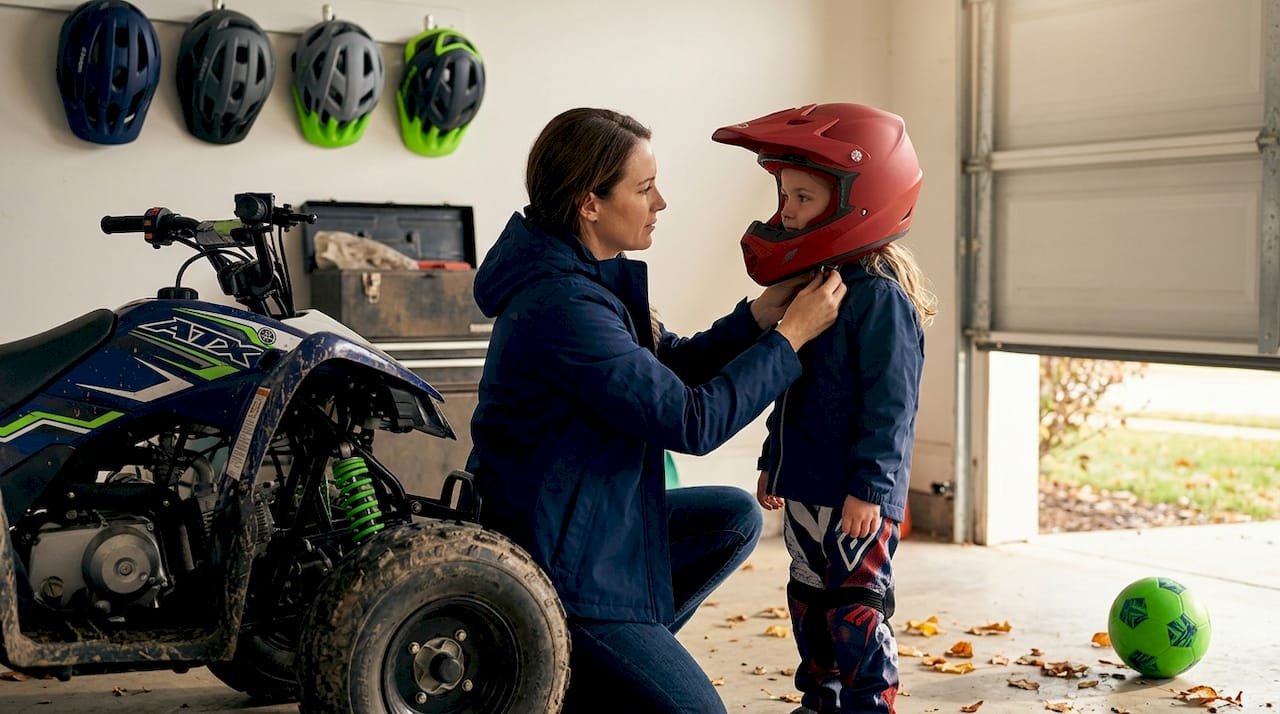
Safety in powersports isn’t complicated, but it does require consistency. The habits you build from day one set the tone for every ride that follows. Off-road vehicle safety guidance from health and safety experts consistently emphasizes protective gear, staying within appropriate limits, and never exceeding passenger limits or age and supervision recommendations.
Here’s what every rider, young or old, should follow:
- Helmets are non-negotiable. A properly fitted, DOT-certified helmet is the single most important piece of gear for any powersports rider. It should fit snugly without wobbling and be replaced after any significant impact.
- Protective clothing matters. Long sleeves, long pants, gloves, and over-the-ankle boots protect against scrapes, burns, and debris. Goggles or a face shield protect eyes from dust and branches.
- Chest and knee protection add another layer. For younger riders especially, chest protectors and knee guards are worth the investment. They absorb impact and reduce injury severity in falls.
- Never ride alone. Kids should always have adult supervision. Even experienced adult riders benefit from riding with a buddy in case of mechanical trouble or an unexpected fall.
- Stay on appropriate terrain. A youth ATV designed for flat trails should not be taken on steep hills or rocky terrain. Matching the vehicle’s capability to the terrain prevents accidents before they happen.
“The right gear doesn’t just protect your body. It builds a safety mindset that riders carry with them for life.”
For a deeper look at how to ride smarter and reduce risk, our ATV safety tips guide is packed with practical advice for riders of all experience levels. If you’re introducing a younger family member to mini bikes, the mini bike maintenance and safety steps article covers both mechanical upkeep and riding safety in one place.
Pro Tip: Before every single ride, do a five-minute pre-ride check. Look at tire pressure, brake function, throttle response, and fuel level. This quick habit catches small problems before they become dangerous ones. It’s also a great routine to teach kids early, turning safety into a natural part of the riding ritual.
For anyone just getting started, the entry-level ATV tips resource is a fantastic starting point that covers the fundamentals of safe and enjoyable riding.
Budgeting and maintenance for powersports
Having covered safety, the next practical concern is how to budget for powersports and keep your vehicle running reliably.
The initial purchase price is just one part of the total cost of owning a powersports vehicle. Gear, accessories, fuel, and maintenance all factor into the real number. Here’s a realistic breakdown of what to expect:
Initial costs:
- Youth ATV or go-kart: $500 to $2,500 depending on engine size and features
- Safety gear (helmet, gloves, boots, pads): $100 to $300 per rider
- Accessories (storage, covers, stands): $50 to $200
Ongoing annual costs:
- Fuel: $50 to $200 depending on frequency of use
- Oil changes and filters: $30 to $80 per year
- Tires and brake pads: $50 to $150 as needed
- General parts and repairs: Variable, but budgeting $100 to $200 per year is wise
The good news is that powersports vehicles span a wide range of price points, from entry-level youth models to high-performance adult machines, so there’s genuinely something for every budget. Buying at the right level for your needs prevents overspending on power or features you won’t use.
Maintenance is where many new owners fall short, and it’s also where safety risks quietly build up. Here’s a numbered maintenance routine that keeps any go-kart or ATV in top shape:
- Change the oil every 25 to 50 hours of use. Fresh oil protects the engine and extends its life significantly. This is the single most impactful maintenance task you can do.
- Check and clean the air filter regularly. A clogged air filter reduces performance and strains the engine. Clean it after every few rides in dusty conditions.
- Inspect the brakes before and after every ride. Brake pads wear down over time. Catching wear early prevents costly rotor damage and, more importantly, keeps riders safe.
- Lubricate the chain or drive components. A dry chain wears faster and can snap unexpectedly. A few minutes with a proper lubricant saves you from a much bigger repair bill.
- Store properly during off-season. Drain the fuel or use a fuel stabilizer, charge the battery, and cover the vehicle. Proper storage prevents corrosion and keeps seals from drying out.
Pro Tip: Keep a simple logbook for your vehicle. Write down every oil change, filter clean, and part replacement with the date and mileage. This habit helps you stay on schedule, catch patterns in wear, and adds real value if you ever decide to sell.
Our go-kart maintenance essentials guide walks through every routine task in detail, and the go-kart parts and maintenance resource is perfect if you want to understand your machine well enough to handle basic repairs yourself.
A fresh perspective: Powersports for family bonding and lifelong skills
Beyond budgeting and maintenance, let’s look at what powersports really mean for families long-term.
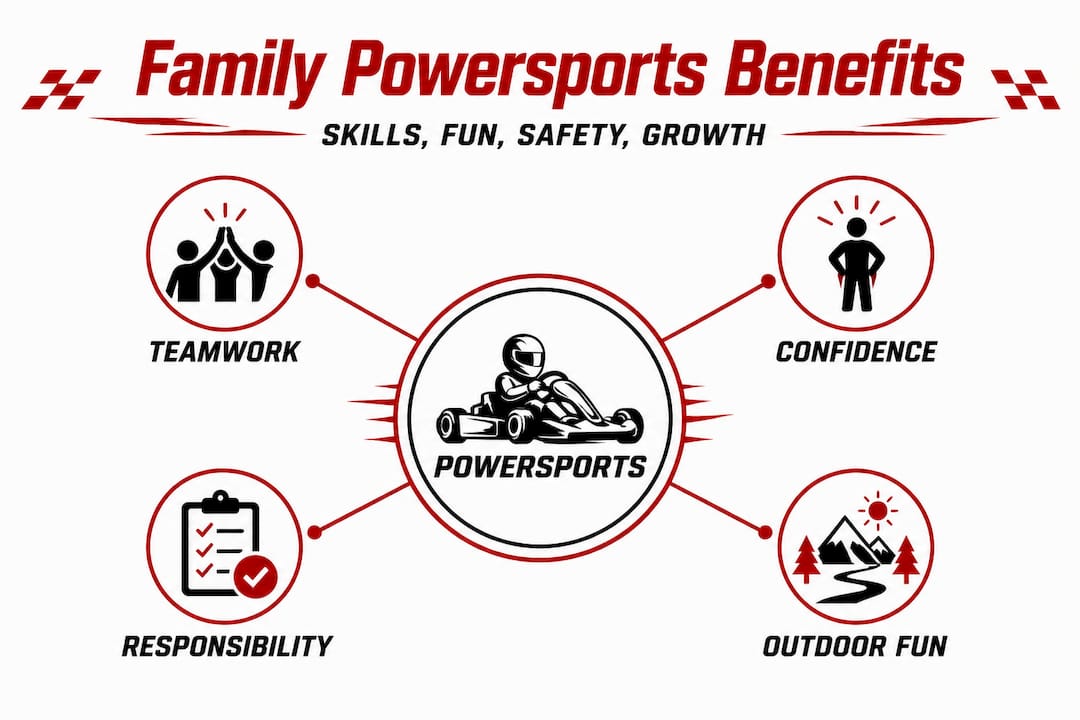
We’ve seen a pattern over and over again in the powersports community: families who ride together don’t just have more fun. They communicate better, trust each other more, and build a shared identity around something real and tangible. That’s not a marketing claim. It’s what happens when you hand a 10-year-old the responsibility of caring for a machine, teach them to check their own brakes, and then watch them ride with genuine confidence they earned themselves.
The misconception that powersports are inherently dangerous misses the bigger picture. Yes, there are risks, and we’ve covered those honestly throughout this guide. But the data consistently shows that the danger isn’t in the activity itself. It’s in mismatched equipment, absent supervision, and skipped safety steps. When families approach powersports with the right mindset, the experience becomes something entirely different: a structured environment where kids learn mechanical thinking, spatial awareness, risk assessment, and personal responsibility.
Think about what a child learns from maintaining their own go-kart. They discover that machines need care to perform. They learn that shortcuts have consequences. They experience the direct reward of effort when a well-maintained kart runs smoothly. These are life skills dressed up as Saturday afternoon fun. And for parents, riding alongside your kids or coaching them from the sidelines creates a quality of connection that’s genuinely hard to replicate anywhere else.
We also believe that safer family powersports experiences start with informed choices, not fear. The families who get the most out of powersports are the ones who invest time in learning before they invest money in hardware. They read the guides, ask the questions, choose the right vehicle, and build the habits that make every ride a good one. That’s the culture we’re proud to be part of, and it’s the spirit behind everything we do at GoKarts USA®.
Find your next powersports adventure with GoKarts USA®
If you’re ready to start your own powersports journey, here’s how GoKarts USA® can help.
We’ve built our catalog around one idea: every family deserves access to reliable, safe, and genuinely fun powersports vehicles without breaking the bank. Whether you’re shopping for a first-time young rider or looking for something the whole family can enjoy together, we have options that match your needs, your terrain, and your budget.
The Mini Sport Kids ATV with a 110cc gas engine is one of our most popular choices for parents introducing younger riders to off-road adventure. It features a speed limiter, automatic transmission, and a sturdy build that handles real-world trail conditions with confidence. For families looking for something more versatile and social, the Trailmaster Taurus 200GX golf cart delivers comfort, reliability, and the kind of shared riding experience that brings everyone together. Browse our full lineup, take advantage of free shipping offers, and reach out to our team whenever you need guidance. We’re your pit crew, your trail guides, and your fellow riders every step of the way.
Frequently asked questions
What types of vehicles are included in powersports?
Powersports vehicles include ATVs, UTVs, dirt bikes, go-karts, snowmobiles, and personal watercraft, spanning land, snow, and water-based recreation.
Is it safe for kids to ride ATVs or go-karts?
Yes, with the right vehicle size, proper safety gear, and consistent adult supervision. Off-road safety guidance stresses that protective gear and age-appropriate machines are essential for all youth riders.
What maintenance is required for powersports vehicles?
Routine tasks like oil changes, air filter cleaning, brake inspections, and proper off-season storage keep powersports vehicles safe, reliable, and running longer between major repairs.
How can families choose the right powersports vehicle?
Match vehicle size and engine power to the rider’s age and skill level, choose terrain-appropriate models, and ensure adult supervision is always present. Research confirms that mismatch problems like wrong-size machines or inadequate supervision are the leading causes of youth powersports incidents.
Recommended
- Go-Kart Buying Workflow: How Families Find Safe & Fun Rides – GoKarts USA®
- 10 essential ATV tips for safe, fun entry-level riding – GoKarts USA®
- Why parents buy electric go-karts: safety, fun, value – GoKarts USA®
- Top benefits of ATVs for outdoor fun and family recreation – GoKarts USA®
- 7 Safest Cars for Families: A Smart Buying Guide | ReVroom