




TL;DR:
- Choosing certified, full protective gear for young riders ensures safety and confidence on every ride.
- Practical, adjustable accessories like gloves, goggles, and kill switches help promote consistent use and peace of mind.
Choosing the right powersports accessories can mean the difference between a thrilling, worry-free family outing and a trip cut short by avoidable injury. The accessory market is crowded, and for parents who are prioritizing their kids’ safety without breaking the bank, that noise can be overwhelming. We’ve put together this guide to cut through the clutter, giving you expert-backed safety criteria, a breakdown of every essential gear category, side-by-side comparisons, and buying tips that keep your whole crew protected and confident on every ride.
Table of Contents
- How to choose powersports accessories: Safety criteria that matter
- Essential helmet types: What to look for and why certification matters
- Torso, rib, and joint protection: Body protectors for young riders
- Gloves, eye, and face protection: The often-overlooked essentials
- Top accessory picks for family powersports adventures
- What families really need in powersports accessories (that most lists ignore)
- Gear up for safe and fun family rides
- Frequently asked questions
Key Takeaways
| Point | Details |
|---|---|
| Certification is key | Always verify safety marks like Snell, ECE, or FIA on helmets and body protectors for youth. |
| Fit and comfort matter | Well-fitted gloves, goggles, and protectors are crucial for both protection and confidence, especially for growing kids. |
| Bundle your gear | Purchasing a set with helmet, gloves, and eye/face protection often saves money and boosts overall safety. |
| Accessories for all | Look for items that are adjustable or can be shared among siblings to maximize value as your family grows. |
| Prioritize smart add-ons | Remote kill switches, tool kits, and other simple accessories can dramatically increase safety and peace of mind. |
How to choose powersports accessories: Safety criteria that matter
The foundation of any smart accessory purchase starts with knowing what standards actually protect your rider — and which labels are just marketing. This is especially true for families shopping for younger or first-time riders who may not yet have the reflexes or experience to compensate for poor gear.
When evaluating any accessory, start with certification. For helmets, that means DOT (U.S. Department of Transportation), Snell, or ECE (Economic Commission for Europe) markings. The Snell K2025 and KM2025 karting helmet standards are the gold standard for karting disciplines, and prioritizing these certifications over cheaper alternatives is a key safety benchmark. A sticker that says “DOT approved” printed by the manufacturer is not the same as genuine third-party testing.
Next, think in terms of a full protective set. A helmet alone doesn’t protect a young rider who falls off a go-kart or ATV. The complete picture includes:
- A certified, discipline-appropriate helmet
- Impact-resistant gloves sized for small hands
- Eye or face shield to block debris, dust, and UV exposure
- Chest, rib, and back protectors for torso coverage
- Knee and elbow pads for joint protection
Finally, consider value against certification. Budget gear can be tempting, but cutting corners on certified protection is never worth it. There are genuinely affordable options that meet rigorous standards — you just need to know where to look. Our go-karting safety for families guide goes deeper on how to evaluate safety-first purchases, and our safe entry-level go-karting resource is a great companion read for brand-new riders.
Pro Tip: Always verify that a helmet’s certification mark includes a date stamp. Certifications are updated regularly, and an older helmet may not meet current karting or motorsport standards, even if it carries a recognized label.
“The right accessories don’t just meet a checklist — they give your child the freedom to learn and grow behind the wheel with real, proven protection.”
Essential helmet types: What to look for and why certification matters
With safety criteria in mind, let’s begin with the most critical item: the right helmet for your rider’s needs.
Helmets come in several distinct styles, each built for specific riding environments. Choosing the wrong type is a surprisingly common mistake for first-time buyers. Here are the main categories:
- Full-face helmets — These cover the entire head and chin, offering the highest level of protection. They are ideal for go-karting, quad riding, and any application where the rider may be close to the ground or other vehicles.
- Open-face (3/4) helmets — These leave the chin and face exposed. They offer less protection than full-face models and are generally not recommended for motorsport use with younger riders.
- Motocross/off-road helmets — Designed with a peaked visor and open chin bar, these pair with separate goggles for off-road ATV and dirt track riding. They provide excellent ventilation and are built to handle debris and roost from the trail.
The table below gives you a quick comparison for family buyers:
| Helmet style | Best for | Certification needed | Visor/goggle type | Youth sizing |
|---|---|---|---|---|
| Full-face | Karting, recreational go-karts | Snell K2025, ECE 22.06 | Integrated visor | Yes |
| Open-face | Casual low-speed rides | DOT minimum | Add-on face shield | Yes |
| Motocross/off-road | ATV, trail riding | DOT, Snell M2025 | Separate goggles | Yes |
Look for helmets with removable, washable padding — this is a must for growing kids, since you’ll be cleaning gear regularly. Ventilation channels matter too, especially during summer rides. A hot, uncomfortable helmet is one a child will resist wearing.
According to industry safety research, helmets reduce head injuries by more than 60% in motorsport accidents when properly certified and fitted. That number alone makes the investment straightforward. A helmet with a snug, certified fit is non-negotiable gear. You can also explore top go-kart safety features to see how vehicle-side protection pairs with personal gear.
Always replace a helmet after any significant impact, even if the exterior looks fine. The internal foam that absorbs energy compresses during a crash and cannot return to full effectiveness. Plan to replace helmets every three to five years under normal use, or sooner if your child grows out of a snug fit. You can explore helmet types for powersports for additional guidance on style selection.
Torso, rib, and joint protection: Body protectors for young riders
With head protection addressed, the next priority is keeping torsos and joints safe from impacts and abrasions.
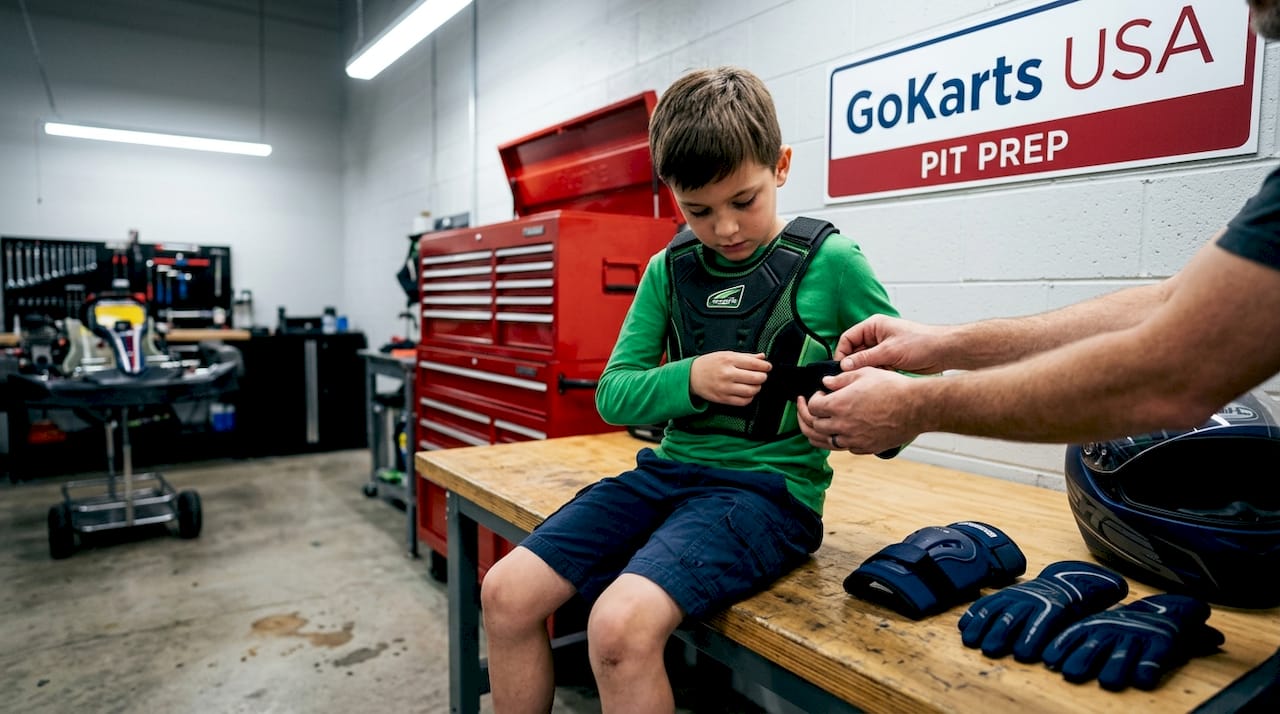
Body protectors take several forms, and for youth riders, fit and flexibility are just as important as impact rating. A stiff, bulky protector that limits movement will discourage a child from wearing it consistently, which defeats the purpose entirely.
Key features to look for in youth body protectors include:
- Chest and back coverage — Look for hard-shell panels over soft foam backing. Back protection is often overlooked but critical for ATV riders who may be thrown backward.
- Rib protectors — Ribs are among the most commonly injured areas in junior karting and ATV falls. Dedicated rib protection is a worthy standalone addition.
- FIA 8870-2018 homologation — For karting specifically, this is the certification standard to prioritize. Products that carry this marking have been tested and approved for motorsport use. The Alpinestars youth kart body protector (FIA standard 8870-2018) is one example of an affordable, certified option that sets a solid benchmark.
- Lightweight, breathable construction — Kids overheat easily. A breathable back panel or mesh lining keeps them comfortable enough to wear the protector for the full session.
Here’s a quick data reference for common youth body protector options:
| Protector type | Standard | Best use | Approx. price range | Adjustable fit |
|---|---|---|---|---|
| Full body/chest+back | FIA 8870-2018 | Karting, go-kart racing | $60 to $150 | Yes |
| Rib protector only | CE Level 1/2 | ATV, off-road riding | $20 to $60 | Yes |
| Elbow/knee pad kit | CE Level 1 | Entry ATV, casual riding | $15 to $40 | Yes |
| Combined jacket/vest | CE Level 1/2 | Trail, dual-sport riding | $50 to $120 | Sometimes |
For joint protection, elbow and knee pad kits are one of the most cost-effective additions for any new rider. Falls at low speed still put enormous stress on exposed joints, and a $25 pad kit can prevent injuries that sideline a young rider for weeks. Check out our guide on beginner go-kart features for more on pairing vehicle features with the right protective accessories. You can also find supplemental options like frame guards for youth karting that add another layer of coverage for the kart itself.
Pro Tip: Always try on body protectors while wearing the same clothing your child would wear during a ride. A protector that fits great over a t-shirt may bind or shift uncomfortably when worn over a riding jersey, changing the coverage it provides.
Gloves, eye, and face protection: The often-overlooked essentials
With main impact protectors in place, make sure you cover the rest of the body with practical comfort and visibility upgrades.
Gloves and eye protection are frequently the last items parents add to a gear list, but they are among the first lines of defense in the most common types of minor accidents. Blisters and hand fatigue from gripping a go-kart or ATV wheel can distract even experienced riders. For young or beginner riders, that distraction compounds quickly.
Here’s what to look for in youth gloves:
- Short-cuff designs that allow free wrist movement
- Reinforced palm panels for grip and abrasion resistance
- Breathable mesh backs to reduce sweating
- Velcro or snap closures that kids can manage independently
For eye and face protection, the choices come down to integrated visors (in full-face helmets), bolt-on face shields, or stand-alone goggles for motocross-style helmets. Each has its place.
“Proper gloves and goggles are just as important as helmets for beginners — they’re the gear items that protect the contact points kids use most.”
Anti-fog goggle lenses are worth the slight premium, especially for morning rides when temperature differences cause rapid fogging. Vented frames help airflow, while adjustable head straps ensure a secure fit on smaller heads. Loose goggles that slip during a ride create a blind moment right when focus matters most. According to gear recommendations for kids’ powersports, helmet, gloves, and eye or face protection are the core trio that make up a complete protective set for new and youth riders. Our resource on must-have go-kart accessories covers even more gear essentials worth adding to your kit. For additional safety-forward upgrades, explore brake kit options designed for entry-level safety.
Top accessory picks for family powersports adventures
All individual protections considered, it’s time to build out your full kit — here are our top accessory picks for family rides.
A well-rounded family kit goes beyond just helmets and pads. Think about the full experience: what keeps a parent confident, what keeps a child safe, and what keeps the machine running. Here are the categories every family should cover:
- Certified helmet (full-face or motocross, discipline-appropriate)
- Body and rib protector (FIA-certified for karting, CE-rated for ATV)
- Youth gloves (breathable, reinforced palm)
- Goggles or face shield (anti-fog, adjustable strap)
- Remote engine kill switch (a must-have for parents of young riders)
- Basic tool and tire repair kit (patch kits, mini-pump, hex key set)
Here’s how these accessories break down by vehicle type:
| Accessory | Go-kart use | ATV use | Universal |
|---|---|---|---|
| Full-face helmet | Yes | Possible | No |
| Motocross helmet + goggles | Possible | Yes | No |
| Rib/body protector | Yes | Yes | Yes |
| Youth gloves | Yes | Yes | Yes |
| Remote kill switch | Yes | Yes | Yes |
| Tire repair kit | No | Yes | Partial |
The complete protective gear grouping of helmet, gloves, and eye protection represents the minimum standard every new rider should meet before their first session. Small investments in quality accessories bring outsized peace of mind, especially when you’re watching a child navigate a course or trail for the first time. Our curated go-kart accessories for family rides list and our broader family guide to powersports are excellent next reads. For off-road setups, check out these off-road accessory tips that cover practical vehicle enhancements too.
What families really need in powersports accessories (that most lists ignore)
After reviewing top picks and comparison tables, it’s worth sharing some hard-won wisdom on what matters most for real families in the powersports world.
Most accessory guides tell you what to buy. Few tell you how to make sure it actually gets used. Here’s where we think the conventional advice falls short.
The biggest gap is real-world fit testing. Buying a helmet that fits on the store shelf — or worse, ordering purely by size chart — is not the same as watching your child sit in their kart or on their ATV with that helmet buckled, goggles on, and gloves secured. Movement changes fit. Excitement changes how gear sits. Take the time to do a seated, buckled-up fit check in real riding position before you commit to any purchase.
The second overlooked factor is ease of use for kids. If a piece of gear takes a parent five minutes of wrestling to put on, a child will resist wearing it. Gear with straightforward Velcro closures, color-coded size adjustments, and intuitive pull systems dramatically increases the chances that your child puts it on willingly and wears it correctly every time.
Think also about sibling shareability. Many families have kids of similar sizes, and smart accessory planning means choosing gear with enough adjustment range to pass down or share between siblings safely. Helmets should never be shared if fit is not confirmed individually, but gloves, knee pads, and rib protectors with wide adjustment ranges can often serve more than one child in a household.
Budget realistically for replacement gear as your kids grow. A child who is eight years old today will likely outgrow their current helmet within two riding seasons. Plan for that replacement cost rather than over-investing in a single season’s setup. Sometimes, a well-priced, fully certified accessory from a quality brand delivers more real-world safety than an expensive lifestyle brand item that skipped independent certification. Our parent’s guide to go-kart safety covers many of these real-world scenarios from a parent’s perspective, not just a product list view.
Gear up for safe and fun family rides
You now have the criteria, the categories, and the comparison tools to make confident, safety-first accessory decisions for your family. The adventure is calling, and we want to make sure every rider is equipped for it.
At GoKarts USA, we’re your pit crew, trail guides, and fellow riders rolled into one. We carry a trusted selection of family-focused powersports vehicles and accessories, from beginner-friendly go-karts to feature-rich ATVs with parental controls built right in. If you’re shopping for a young rider just getting started, explore our kids’ ATV with parental controls — a favorite choice for parents who want speed management and remote kill switches built into the machine from day one. Browse our full lineup and safety-focused accessories at GoKarts USA, where family adventure and proven reliability ride together.
Frequently asked questions
Are DOT helmets enough for junior karting and ATV riding?
DOT helmets are a starting point, but for motorsport or karting use, you should look for Snell or ECE certification, as DOT alone does not always meet the discipline’s required safety standard — always verify the specific marking required for your event or track.
What is the best protective gear set for first-time family riders?
Start with a certified helmet, rib or body protector, gloves, and proper eye or face protection, since these form the essential complete protective gear set that covers the highest-risk areas for new and youth-level riders.
Is it worth investing in an FIA-homologated body protector for kids?
Absolutely — FIA-homologated youth protectors are affordable and have been independently tested to meet karting safety benchmarks, making them a smarter choice than generic padded vests that carry no verified standard.
How do I know if gloves or goggles are the right size for my child?
The fit should be snug but not restrictive, without slipping or pinching during movement; prioritize adjustable closures and anti-fog goggle lenses for the best combination of safety and day-long comfort.
What extra accessory gives most peace of mind for parents?
A remote engine kill switch is one of the simplest and most powerful additions for any parent, giving you the ability to stop the vehicle instantly from a safe distance during any emergency situation.