




TL;DR:
- Reliable brakes are essential for mini bike safety because they enable quick speed control on varied terrains. Proper braking techniques and routine maintenance boost rider confidence and prevent accidents. Braking hardware varies from drum to hydraulic disc systems, impacting stopping power, responsiveness, and upkeep requirements.
Many new riders and parents assume that a smaller bike means less stopping power is needed. That thinking is one of the most common mistakes in mini bike safety. The truth is, brakes provide the primary safety function for speed control on any two-wheeled machine, and on a mini bike traveling across uneven backyard terrain or an open lot, reliable stopping power is everything. This guide walks you through the types of brakes on mini bikes, how they shape safety, proper braking technique for young and new riders, and how to keep your brake system trustworthy ride after ride.
Table of Contents
- Why brakes matter: Beyond speed control
- Types of brakes on mini bikes: How hardware shapes safety
- Braking technique: Skills that maximize safety and control
- Maintaining mini bike brakes: Keeping performance and safety high
- Brakeless riding: Is it ever safe for mini bikes?
- The real reason brakes decide every mini bike ride
- Find safe, reliable mini bikes and gear for your next adventure
- Frequently asked questions
Key Takeaways
| Point | Details |
|---|---|
| Brakes are vital | Mini bike brakes are the top safety feature for controlling speed and preventing accidents. |
| Know your brakes | Different systems like disc or drum offer unique benefits, so riders and parents should understand their bike’s setup. |
| Technique counts | Smooth, progressive braking builds control, especially for beginners. |
| Regular checks | Plan routine inspections and learn basic fixes to keep brakes safe and effective on every ride. |
| No brakeless riding | Brakeless mini bikes pose real risks and are not advisable for most riders, especially kids. |
Why brakes matter: Beyond speed control
Brakes aren’t just a feature tucked onto a mini bike as an afterthought. They are the single most important layer of control a rider has. When speed builds unexpectedly on a downhill slope, when a dog runs across the path, or when a young rider misjudges a turn, brakes are what stands between a smooth stop and a crash.
“Brakes provide the primary safety function for speed control, letting riders stop quickly and manage speed in unpredictable riding spaces.” That’s not just theory. It’s the lived reality of every parent who’s watched a child ride for the first time.
Without working brakes, riders are forced into desperate alternatives: dragging a foot along the ground, leaning hard into a turn, or dumping the bike deliberately. None of those options are safe. None of them give a young rider the confidence they need to actually enjoy riding. For anyone learning mini bike riding safely, dependable brakes are non-negotiable from the very first session.
Parents often focus on protective gear and engine size when evaluating a mini bike. That’s understandable. But reliable brakes deserve equal attention. Here’s what properly functioning brakes prevent:
- Runaway acceleration on downhill terrain or when the throttle sticks
- Collisions with obstacles, other riders, or property
- Skids caused by sudden speed changes on loose or uneven surfaces
- Panic reactions that lead to falls from overcorrection
You’ll also want to review hobbyist mini bike safety tips before your first ride to build a complete safety picture.
Pro Tip: Teach new riders to squeeze the brake lever gradually rather than grabbing it hard. Smooth, progressive pressure keeps the tires on the ground and reduces the risk of a front-end skid or tuck.
Now that you understand why brakes aren’t optional, let’s break down the different systems you might find on mini bikes.
Types of brakes on mini bikes: How hardware shapes safety
Not all brakes are built the same. The hardware on your mini bike directly affects how quickly you stop, how much maintenance you’ll do, and how safe the ride feels in real-world conditions. Common mini-bike brake hardware falls into disc versus drum categories, and within disc brakes, you’ll find either hydraulic or cable-actuated systems. Each configuration changes stopping power, maintenance needs, and the feel of modulation under your fingers.
Here’s a side-by-side look at the three main brake configurations:
| Feature | Disc (cable) | Disc (hydraulic) | Drum |
|---|---|---|---|
| Stopping power | Good | Excellent | Moderate |
| Responsiveness | Moderate | High | Low to moderate |
| Wet performance | Good | Excellent | Poor |
| Maintenance effort | Low to moderate | Moderate | Low |
| Cost | Moderate | Higher | Low |
| Best for | Casual riders | Performance/off-road | Light recreational use |
Disc brakes (whether cable or hydraulic) clamp a rotor attached to the wheel hub. They offer stronger stopping power and better performance in wet or muddy conditions. Hydraulic disc brakes are self-adjusting and deliver a consistent feel, which is why they’re common on higher-performance mini bikes and electric models. Cable-actuated disc brakes work well too and are easier to work on at home.
Drum brakes enclose brake shoes inside a metal drum attached to the wheel. They’re sealed from dirt and require very little upkeep. The tradeoff is less stopping force and poor performance in wet conditions. For a child riding on flat, dry pavement at low speed, drum brakes may be perfectly adequate. For off-road or faster riding, they fall short.
Some advanced mini bike models also incorporate electronic or combined braking systems, where braking is partially managed by motor resistance. These are more common on electric mini bikes and add another layer of stopping confidence.
Here are the key pros and cons riders and parents should know:
- Drum brakes: Low cost, sealed design, minimal maintenance. Downsides include weaker stopping force and poor wet-weather performance.
- Cable disc brakes: Good stopping power, easy to adjust, widely available replacement parts. Cables can stretch over time and need periodic tension checks.
- Hydraulic disc brakes: Best modulation, strongest stopping, consistent feel. Require bleeding when air enters the line, and fluid changes every season.
- Electronic/regenerative braking: Smooth and low-maintenance. Depends on motor health and battery state, so hardware checks remain important.
You can dive deeper into regular upkeep routines with these mini bike maintenance steps to stay ahead of any brake wear. For riders looking to upgrade stopping power, upgrade brake kits are available for popular models.
Pro Tip: If your hydraulic disc brake lever feels spongy or gradually sinks toward the handlebar, air has entered the fluid line. Bleeding the brakes restores firm, reliable stopping feel. Don’t ride on spongy hydraulics.
Understanding the braking hardware is only half the story. How you use those brakes matters just as much.
Braking technique: Skills that maximize safety and control
The best brake system in the world won’t save a rider who panics and grabs the lever hard. Technique is the bridge between hardware and actual safety. This is especially critical for kids and new riders who are still building their instincts on the bike.
“Beginners should avoid abrupt ‘slam’ braking because it can upset balance or cause skids; smooth, progressive braking is safer while learning.” — How to ride a mini bike
That guidance carries real weight. A front wheel that locks up on a dirt path will cause the rider to go over the handlebars. A rear wheel that locks up causes a skid that’s difficult to recover from at even moderate speeds. Neither outcome is acceptable when you’re talking about young riders.
Here’s a step-by-step approach to proper mini bike braking that we recommend to every new rider and the parents coaching them:
- Anticipate the stop. Always look ahead. Identify where you need to stop before you get there. Early awareness gives you time to brake gradually instead of reacting in a panic.
- Ease off the throttle first. Release the gas before touching the brakes. This engine braking effect slows the bike naturally before the brakes even engage, reducing the stopping load.
- Apply rear brake first, then add front. On most mini bikes, the rear brake is safer to engage first because it slows the bike without risking a front-end flip. Gradually add front brake pressure as the bike decelerates.
- Squeeze progressively, not all at once. Think of squeezing a stress ball rather than slamming a door. Steady, building pressure gives you control through the stop.
- Keep both feet ready. New riders should prepare to put a foot down as the bike comes to a stop, especially on uneven terrain. Balance and braking work together.
- Practice low-speed stops repeatedly. Build the muscle memory at low speed before adding distance or terrain difficulty. That habit pays off in high-stress moments.
For a complete learning roadmap, the beginner mini bike riding guide covers everything from throttle control to turning safely.
Even with the best braking technique, you need your hardware in top shape. Next, let’s focus on keeping those brake systems reliable.
Maintaining mini bike brakes: Keeping performance and safety high
Even a premium brake system will fail you if it isn’t maintained. Brake pads wear down. Cables stretch. Hydraulic fluid absorbs moisture over time. And on electric mini bikes, brakes function as a performance and safety platform that must be actively checked because the instant torque delivery of electric motors makes braking even more critical.
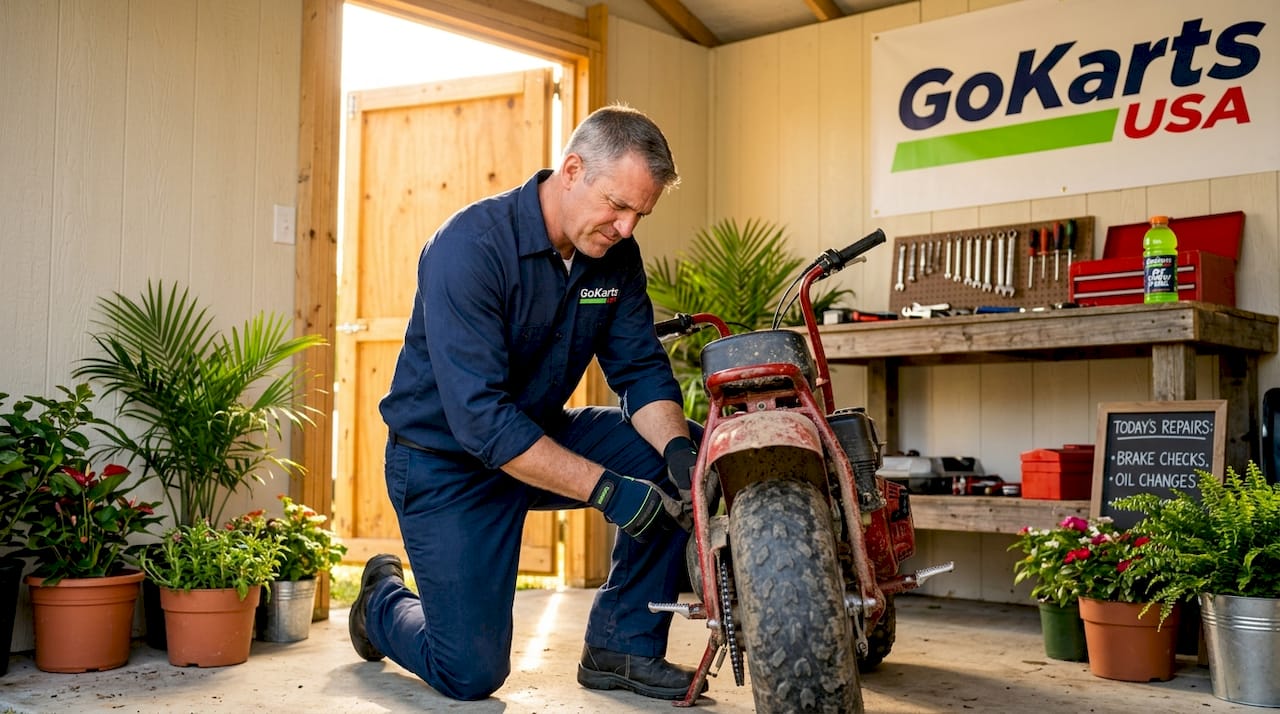
For brake performance checks on electric and higher-performance models, the stakes are higher because motor response can accelerate the bike faster than a new rider expects. Reliable braking becomes the difference between managing that power safely and losing control.
Here are the signs your mini bike brakes need attention:
- Squealing or grinding noises when the brakes engage
- Soft or spongy lever feel on hydraulic systems
- Extended stopping distance compared to normal performance
- Lever pulling too close to the handlebar before brakes engage
- Vibration or pulsing through the lever during braking
- Visible wear on brake pads (thin pads below 2mm need replacement)
Here’s a quick reference table for the most common brake issues and what to do:
| Symptom | Likely cause | Fix |
|---|---|---|
| Squealing | Dirty or glazed pads | Clean or replace pads |
| Soft lever (hydraulic) | Air in the fluid line | Bleed the brake line |
| Long stopping distance | Worn pads or loose cable | Replace pads, adjust cable tension |
| Lever pulls to bar | Cable stretch or low fluid | Adjust cable or top off fluid |
| Grinding noise | Metal-on-metal contact | Replace pads immediately |
| Vibration on braking | Warped rotor | Replace or true the rotor |
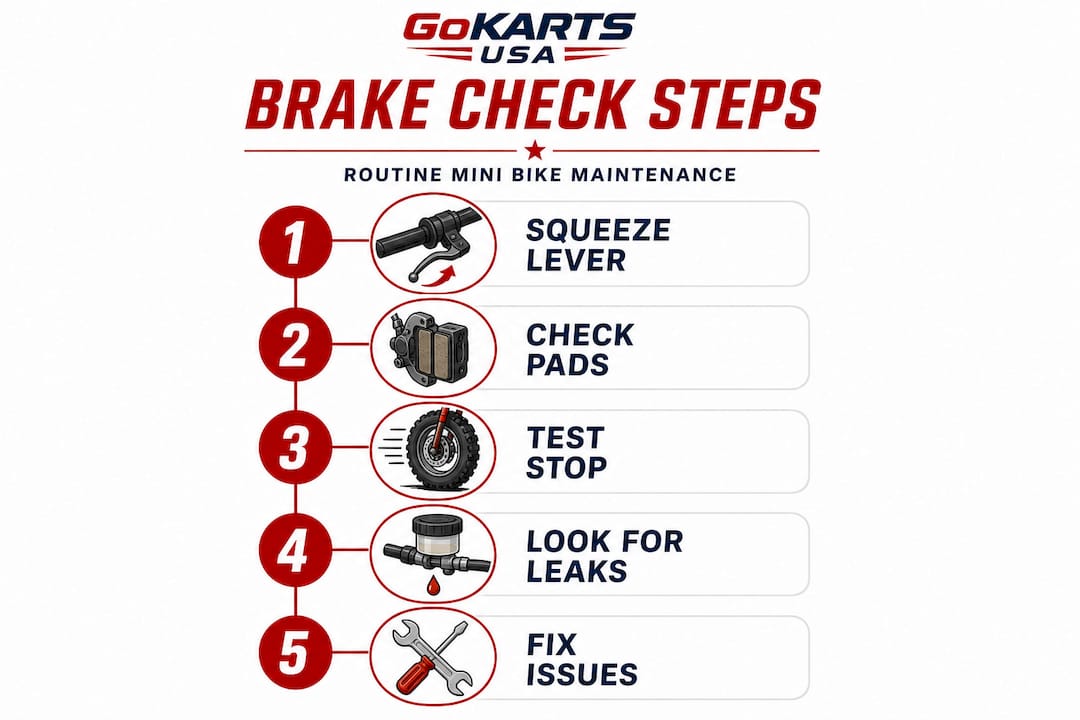
We recommend completing a full mini bike brake maintenance check before any ride in rough conditions, after any fall, and at regular seasonal intervals. Pair that with a complete mini bike setup for safety review at the start of each riding season.
Pro Tip: After every five rides, squeeze each brake lever firmly and hold it for a few seconds. If the lever slowly creeps toward the bar, you likely have a hydraulic leak or air in the line. Catch it early before it becomes a problem mid-ride.
Brakeless riding: Is it ever safe for mini bikes?
This topic comes up in online riding communities, and the answer for most mini bike riders is clear: riding without brakes is not a safe choice, especially for beginners or young riders.
The case for keeping brakes on mini bikes is straightforward. Brakes support early speed-control confidence in learning riders, while brakeless setups require far greater rider awareness and significantly increase stopping risk. There’s no gray area there for children or beginners.
“Brakeless riding shifts the burden of speed management entirely to awareness and physical risk. For riders still developing instinct and reaction time, that burden is simply too great.”
For competitive BMX trick riders or experienced stunt performers, brakeless setups serve a specific purpose. The absence of brake cables and levers simplifies handlebar spins and certain tricks. But even experienced riders accept real risk when they remove that system. For the vast majority of mini bike riders and every child on a recreational bike, that tradeoff makes no sense.
Here are the rare contexts where brakeless setups might appear:
- Advanced freestyle BMX competition, where tricks require full handlebar rotation
- Experienced adult riders on closed courses with controlled speeds
- Stunt and exhibition riding with professional supervision
None of those contexts describe a child or beginner learning on a backyard mini bike. For guidance on smart defaults for new riders, the brake safety for new riders resource lays out everything clearly.
The real reason brakes decide every mini bike ride
Here’s the perspective we’ve developed from being deep in the powersports community for years: brakes aren’t just about avoiding crashes. They’re what give riders permission to push further.
A rider who trusts their brakes will try the steeper trail. They’ll lean harder into the corner. They’ll ride with relaxed hands and a clear head instead of gripping out of fear. That confidence is what transforms mini bike riding from a nervous experience into genuine freedom. We’ve seen it happen with young riders who start hesitant and, after a few sessions with well-maintained brakes and solid technique, begin riding with real joy and skill.
The opposite is also true. A rider who isn’t sure their brakes will perform will hold back constantly, never fully enjoying the bike. Worse, they may compensate with poor habits like releasing the throttle abruptly or overcorrecting through turns. Those habits actually create more risk than they prevent.
We also think the mini bike vs go-kart safety comparison is worth reading for any family deciding between vehicle types, because braking dynamics differ significantly between the two. Understanding those differences helps families choose the right machine for their rider’s skill level.
Reliable brakes don’t limit the adventure. They expand it. That’s the truth the powersports community doesn’t always say loudly enough, and we believe it deserves to be front and center every time someone puts a young rider on a mini bike.
Find safe, reliable mini bikes and gear for your next adventure
Every ride your family takes deserves the protection of well-built, properly maintained brakes. That’s a principle we hold at the core of everything we stock and recommend.

At GokartsUSA.biz, we carry a wide selection of beginner-friendly and youth-focused powersports vehicles built with reliable braking systems from the factory. If you’re shopping for a younger rider, our safe kids ATVs are a great place to start, with age-appropriate speed limits and dependable stopping systems. For parts, replacement brake components, and ongoing maintenance support, explore everything available through mini bike parts and maintenance. We’re your pit crew, your trail guides, and your fellow riders in this adventure.
Frequently asked questions
How do I check if my mini bike’s brakes are working properly?
Test both levers or pedals for firmness before every ride. If they feel soft or the bike takes longer than usual to stop, inspect the pads and cables, or bleed hydraulic lines if the system feels spongy.
What’s the difference between disc and drum brakes on mini bikes?
Disc brakes deliver better stopping power and consistent performance in wet conditions, while drum brakes require less maintenance but offer less modulation and power in demanding riding scenarios.
Is it safe for kids or beginners to ride a mini bike without brakes?
No. Removing brakes significantly increases stopping risk and demands a level of rider awareness that beginners haven’t developed yet. Brakeless setups require greater awareness and are appropriate only for experienced, supervised riders in specific contexts.
How often should mini bike brakes be checked?
Check brakes before every ride, paying special attention after rough terrain sessions or any fall. For electric models with higher torque, routine brake checks are especially critical because motor power amplifies the consequences of brake failure.