




TL;DR:
- Proper safety measures make go-karting safer and less injury-prone than many team sports.
- Certified tracks, quality gear, and supervision are essential for minimizing risks.
- Behavior and adherence to safety protocols are the main factors in preventing accidents.
Many parents hear “go-kart” and picture dangerous speeds, flimsy vehicles, and scraped-up kids. But the evidence tells a very different story. Fewer severe injuries come from go-karting than from many team sports when proper safety measures are in place. The key phrase is “proper measures.” Certified tracks, approved gear, and smart supervision turn go-karting into one of the most controlled and enjoyable family activities you can find. In this guide, we walk you through everything: the real risks, the right gear, what makes a track trustworthy, and how to protect your youngest drivers.
Table of Contents
- Why go-karting safety matters: Risks, misconceptions, and realities
- Essential safety gear: What every go-karter needs
- Track and operator standards: What separates safe venues from risky ones
- Safety for young drivers: Age, supervision, and specialized karts
- Going beyond the basics: What most guides miss about go-karting safety
- Safer family go-karting starts with the right gear and choices
- Frequently asked questions
Key Takeaways
| Point | Details |
|---|---|
| Certified facilities matter | Choosing regulated tracks with certified staff and safety policies significantly lowers injury risk. |
| Proper gear protects | Snell/FIA-certified helmets, suits, and accessories make the biggest difference for all ages. |
| Supervision is critical | Active adult oversight and following age rules are non-negotiable for child safety. |
| Educate, then participate | Learning about risks and best practices means more confident and enjoyable family go-karting experiences. |
Why go-karting safety matters: Risks, misconceptions, and realities
To understand why safety practices are critical, let’s clarify the real risks versus myths around go-karting. The most common fear is that go-karts are speed machines waiting to cause serious harm. In reality, most injuries from go-karting are minor, and they happen far less often than people assume.
According to US NEISS data, go-karting causes roughly 2,300 emergency room visits per year between 2018 and 2022. To put that in perspective, millions of Americans go-kart each year. That number is remarkably low. And when you compare go-karting directly to popular sports like cycling or basketball, injury risk per hour is actually lower for go-karting when facilities are properly supervised.
So what actually causes accidents? The answer is almost never a mechanical failure. Behavioral factors dominate: drivers ignoring track rules, improper gear, or facilities cutting corners on safety checks. This matters because it means most accidents are entirely preventable.
“The track is only as safe as the standards enforced on it. A certified venue with consistent rules changes everything about the risk equation.”
Some age groups face greater exposure. Children under 10 who use adult-sized karts or ride without proper supervision carry higher risk. Adults who ignore briefings or remove safety gear mid-session are also disproportionately represented in incident reports. The data points to one consistent truth: the risk is in the behavior, not the machine.
Key factors that increase go-kart injury risk:
- Riding without a certified helmet or full protective suit
- Skipping the pre-ride safety briefing
- Driving on unregulated or backyard tracks without barriers
- Children using karts sized or powered for adults
- Lack of adult supervision during youth sessions
For parents who want a full breakdown of how to approach this sport responsibly, our parent’s go-kart safety guide is a great starting point. The goal isn’t to scare anyone away from go-karting. It’s to show that with the right habits, this sport is genuinely safe and wildly fun.
Essential safety gear: What every go-karter needs
Knowing the risks, the next step is making sure every driver is equipped with proven safety essentials. Gear is your first line of defense, and no certified track should let you on without it.
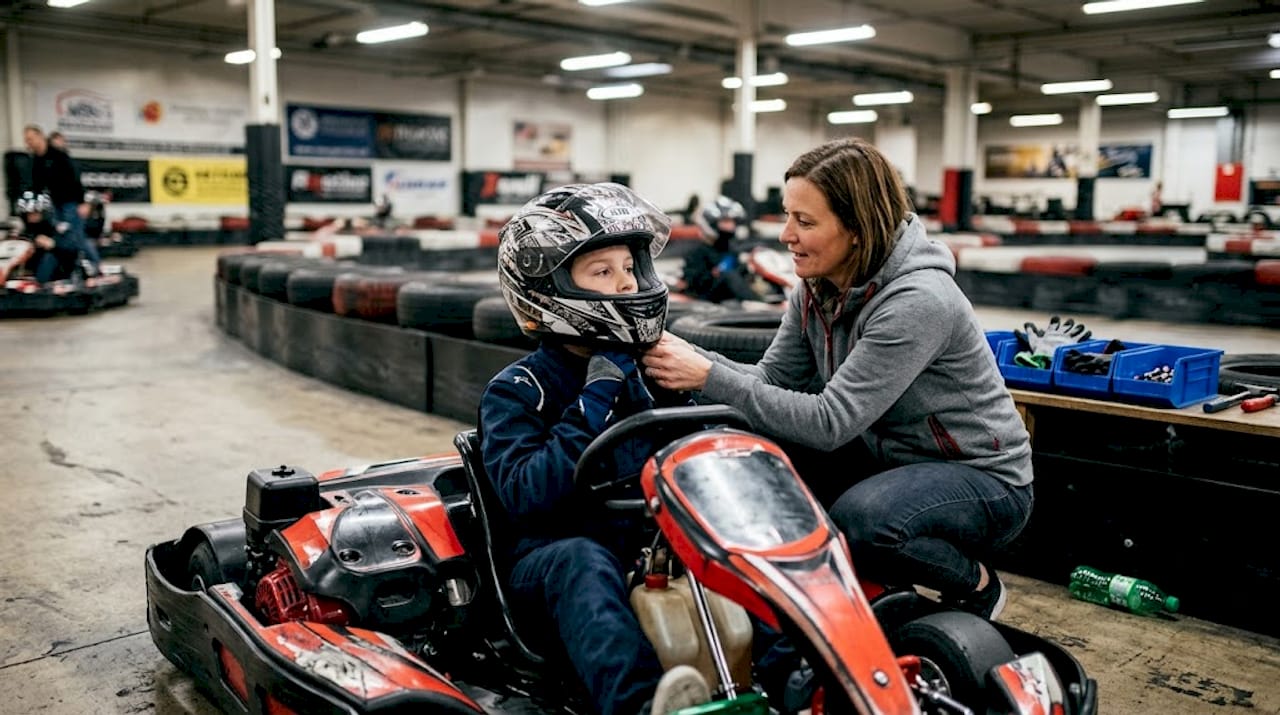
Full-face helmets are non-negotiable. Open-face helmets leave the chin and jaw exposed, which are common contact points during a spin or collision. Look for helmets that carry Snell K, SA, or M certification, as these are tested specifically for the forces involved in karting. FIA-rated helmets are also accepted at most competitive facilities.
Abrasion-resistant suits protect skin from track burns if a driver exits the kart unexpectedly. The gold standard for suits is CIK-FIA Level 1 or 2 homologation, meaning they’ve been independently tested and approved for karting use. Avoid thin cotton clothing or loose layers, which can catch on kart components.
Beyond helmets and suits, drivers need:
- Gloves: karting-specific gloves improve grip and protect hands from vibration and abrasion
- Closed-toe shoes: sneakers or dedicated karting shoes protect feet and maintain pedal control
- Rib protectors: these padded vests absorb side-impact forces, which are surprisingly common in karting corners
| Gear item | Youth riders | Adult riders |
|---|---|---|
| Full-face helmet (Snell/FIA) | Required | Required |
| Karting suit (CIK-FIA rated) | Strongly recommended | Strongly recommended |
| Gloves | Recommended | Recommended |
| Closed-toe shoes | Required | Required |
| Rib protector | Strongly recommended | Optional but advised |
Pro Tip: For children, fit matters more than brand. A helmet that slides around or a suit that bunches up at the knees will not protect effectively. Always try gear on your child before purchasing, and replace any helmet that has taken a hard impact.
For a deeper look at gear selection and other protective considerations, check out our guide on safety features for family go-karting and our list of must-have go-kart accessories. Getting the gear right is one of the most impactful investments you can make before anyone hits the track.
Track and operator standards: What separates safe venues from risky ones
Proper gear keeps drivers safe, but the venue’s standards are just as crucial for minimizing risk. You can show up in a certified helmet and a full suit, but if the track itself is poorly managed, your risk goes up significantly.
Certified tracks operate under a strict framework. According to karting industry rules, certified tracks perform daily kart inspections, use energy-absorbing barriers, maintain clear track boundaries, and require driver briefings before every session. These aren’t suggestions. They’re enforceable standards.
The difference in outcomes between certified and unregulated tracks is striking. IKF-certified tracks report 4.2 times fewer injuries than non-certified facilities. That statistic alone should guide every family’s venue decision.
What should a trustworthy facility look like in practice? Here’s what to check:
- Visible safety barriers around the entire track perimeter
- Staff conducting pre-session driver briefings (not just handing you a waiver)
- Speed-governed karts for youth sessions
- A posted maximum occupancy and supervision ratio for children
- Clean, well-maintained karts with functioning brakes and seat belts
- Staff actively monitoring the track during sessions, not just at the start line
Backyard and unregulated tracks skip most of these steps. They might feel casual and convenient, but the absence of standards is exactly where preventable accidents happen.
Pro Tip: Before you book, call the facility and ask two direct questions: “Are you certified by a recognized karting body?” and “What is your staff-to-driver ratio for children’s sessions?” A confident, specific answer is a green flag. Vague responses are a warning sign.
Our confident driving safety guide has additional questions to ask facilities before you commit to a visit.
Safety for young drivers: Age, supervision, and specialized karts
For families, the biggest questions often center on how to ensure children are truly protected. Go-karting is genuinely accessible for kids, but it requires specific accommodations that are different from what adult riders need.
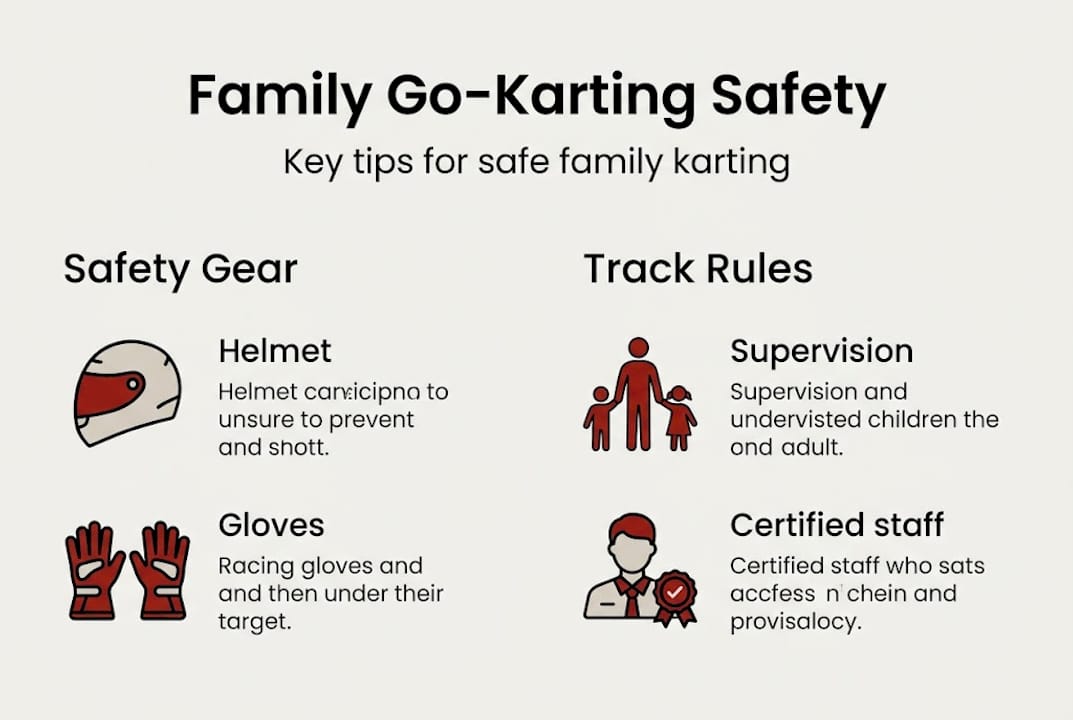
Most reputable tracks set a minimum age of 5 to 8 years old and a minimum height of 48 inches for youth karts. These thresholds exist because younger or smaller children cannot reliably reach pedals, manage steering, or respond to track situations. Age-appropriate karts designed specifically for children include features like remote shut-off switches, lower speed governors, reinforced roll bars, and full seat belts. These aren’t luxury add-ons. They’re safety essentials.
Parents’ must-dos for junior sessions:
- Confirm the kart your child will use is speed-governed and sized correctly for their height and weight
- Check that seat belts are present and in working condition before the session starts
- Ensure an adult is trackside throughout the entire session, not just at the beginning
- Teach basic track etiquette before the first lap: no bumping, stay in your lane, raise a hand if you stall
- Check for loose clothing, dangling laces, or jewelry that could catch on kart components
One of the most overlooked safety factors in youth karting is seat belt use. Research on youth karting incidents consistently shows low seat belt compliance is a contributing factor in injuries that could have been avoided. Make it a non-negotiable habit from day one.
Pro Tip: Never allow children to ride without active adult supervision on the track. A 1-to-5 or 1-to-6 adult-to-child ratio is the industry standard for supervised youth sessions. If a facility allows more children per adult, push back or choose a different venue.
For more guidance on picking the right vehicle for your child, our guides on go-kart safety for kids and choosing a safe kids’ go-kart break down what to look for in both features and performance ratings.
Going beyond the basics: What most guides miss about go-karting safety
Standard safety checklists are useful, but they only take you so far. The families who consistently have the safest and most enjoyable go-karting experiences are the ones who treat safety as a culture, not a checklist.
Consider this: 89% of preventable injuries come from behavioral and oversight failures, not equipment or mechanical issues. That means reading the rules, wearing the right gear, and visiting a certified track is not enough if the attitude on the track is careless.
Shortcuts are where things go wrong. Skipping a pre-ride briefing because it “seems like basic stuff.” Rushing the equipment check because the session is about to start. Letting a child onto the track without confirming the seat belt is buckled. Each of these feels minor in the moment. Collectively, they account for most incidents.
We believe parents have a responsibility that goes beyond supervision ratios. Model the right attitude. Ask your facility hard questions about staff training, recent inspections, and certification status. If the answers are vague, take your family’s business somewhere more transparent. Just as vehicle detailing contributes to ongoing safety through consistent maintenance checks, so does regular review of your karting habits and gear condition.
For a broader look at how safety needs differ depending on the driver, our breakdown of differences in kids’ vs. adult go-kart safety offers perspective that goes well beyond the basics.
Safer family go-karting starts with the right gear and choices
Now that you’re informed, here’s how you can take the next steps for your family’s safety and fun. Understanding safety standards is powerful, but it only pays off when you put that knowledge into action with the right equipment and vehicles.

At GoKarts USA, we curate a selection built around safety, reliability, and family-ready performance. Whether you’re looking for youth-sized go-karts with age-appropriate speed limits and protective features, or need to outfit your rider with quality pocket bike accessories and protective add-ons, we have options that match both your safety standards and your budget. Every family deserves gear they can trust. Browse our full catalog and find the right fit for your next adventure.
Frequently asked questions
What is the minimum age for safe go-karting?
Most tracks require children to be at least 5 to 8 years old and 48 inches tall to drive age-appropriate karts. These thresholds ensure young drivers can safely reach controls and respond to track conditions.
What safety gear is required for go-karting?
Full-face helmets, abrasion-resistant suits, gloves, closed-toe shoes, and rib protectors are strongly recommended for all drivers. Snell and FIA-certified helmets are the primary defense and should be the first item on your gear checklist.
Are certified go-kart tracks really safer than backyard tracks?
Yes, the difference is significant. IKF-certified tracks report 4.2 times fewer injuries than unregulated or home setups, primarily because of professional oversight, daily kart checks, and enforced safety rules.
Can my child ride alone in a go-kart?
Children should never ride alone on a track. Adult supervision at a 1-to-5 or 1-to-6 ratio is the recognized standard for youth sessions, and following track rules throughout is essential.
Is go-karting more dangerous than other sports?
Actually, it is statistically safer than many popular activities. Go-karting carries lower risk per hour than cycling or basketball when certified facility standards and proper protective gear are consistently used.
Recommended
- Go-Kart Safety Explained: A Parent’s Guide to Confident Driving – GoKarts USA®
- Top Go-Kart Safety Features for Worry-Free Family Fun – GoKarts USA®
- Safe go-kart features for kids: 7 must-haves in 2026 – GoKarts USA®
- Go-Kart Buying Workflow: How Families Find Safe & Fun Rides – GoKarts USA®
- Go-Kart Erlebnis für Kinder und Teens in Hessen buchen
- Essential Family Event Safety Tips for Kid-Friendly Fun