




TL;DR:
- Safe ATV riding depends on choosing the right machine size, wearing full protective gear, and staying sober. Proper technique, controlled speed, and pre-ride checks are essential to prevent accidents and injuries. Training and riding in designated areas further enhance safety for all riders.
Safe ATV riding is defined by three non-negotiable pillars: the right machine for your size, properly secured protective gear, and full sobriety behind the handlebars. These top ATV safety tips are not suggestions. They are the difference between a great day on the trail and a trip to the emergency room. Whether you are a first-time rider, a seasoned enthusiast, or a parent putting your kid on a quad for the first time, the guidelines below reflect current 2026 safety standards and expert-backed ATV riding safety guidelines that every rider should know cold.
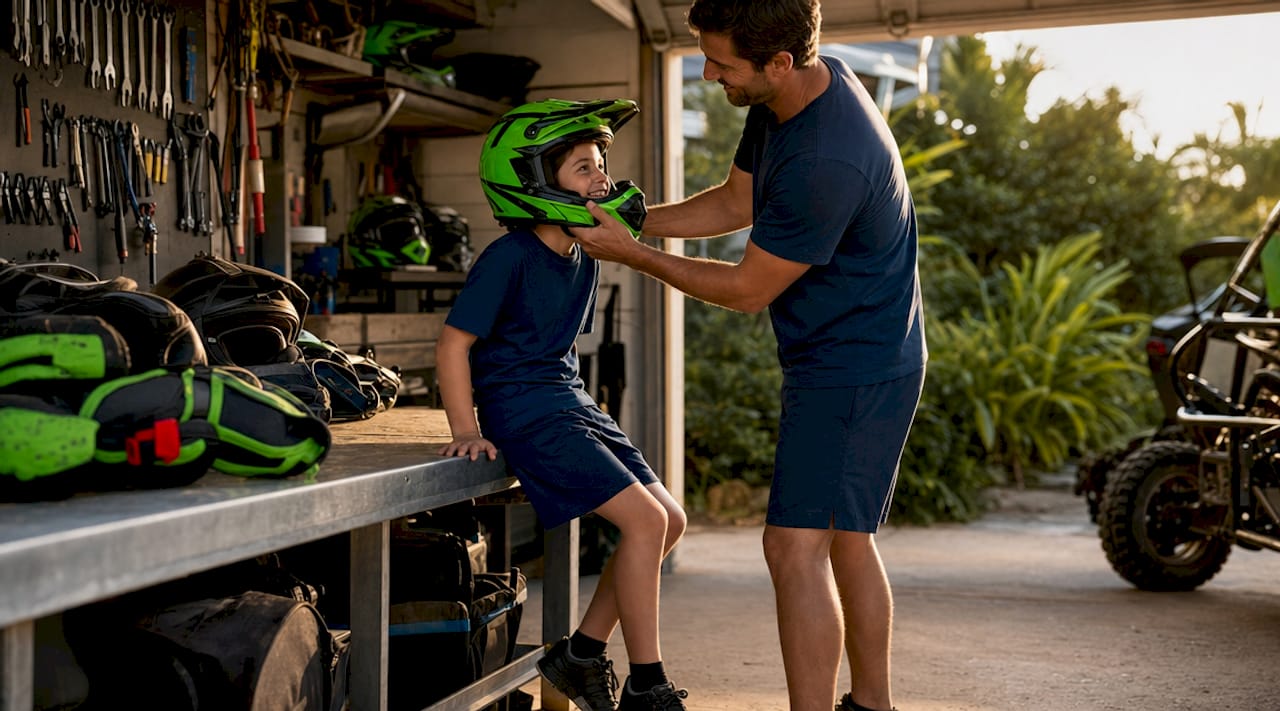
1. Top ATV safety tips start with the right helmet
A helmet is your single most important piece of protective equipment, but only when worn correctly. The chin strap must be fastened every single time. An unsecured helmet offers almost no protection in a crash. That strap check takes ten seconds and could save your life.
Choose a helmet that carries DOT or SAH4000 certification. These standards confirm the helmet has passed rigorous impact testing. A helmet that fits snugly without pressure points is the goal. If it wobbles when you shake your head, it is too loose.
Pro Tip: Buy your helmet before your ATV. Fit it in person at a powersports retailer rather than guessing at a size online. A certified helmet that fits perfectly is worth far more than a cheap one that shifts on impact.
2. Wear full protective gear on every ride
A helmet alone is not enough. ATV riding safety guidelines from health and safety experts consistently call for goggles or a visor to protect eyes from debris, dust, and branches. Gloves protect your hands from blisters and abrasions while improving your grip on the handlebars.
Long sleeves and long pants are non-negotiable. They protect against brush, rocks, and road rash if you go down. Over-the-ankle boots are equally critical. Closed-toe boots protect your feet and maintain grip on the footrests throughout the ride. Flip-flops and sandals are a serious injury risk on any terrain.
For riders tackling technical trails or higher speeds, knee and elbow pads plus a chest protector add meaningful protection. Think of this gear as your personal roll cage. The more you wear, the more margin you have when things go sideways.
3. Choose the right ATV size for your age and experience
Riding an ATV that is too large is one of the most common and preventable causes of youth injuries. Children under 16 are twice as likely to be injured on adult-sized ATVs than on youth-appropriate machines. That statistic reflects a simple physical reality: a smaller rider cannot control a machine built for a larger one.
Industry guidelines are clear on age-appropriate engine sizes. Here is a quick reference:
| Age Group | Recommended Engine Size | Notes |
|---|---|---|
| Under 6 | No ATV | Too young for any ATV |
| Ages 6 to 11 | Under 70cc | Supervised riding only |
| Ages 12 to 15 | 70cc to 90cc | Adult supervision recommended |
| Ages 16 and up | Larger engines permitted | Training still strongly advised |
Beginners of any age benefit from automatic transmission models. They remove the cognitive load of gear shifting so you can focus entirely on balance, throttle, and terrain. For families weighing ATVs against UTVs, note that UTVs include roll bars, seat belts, and speed governors, making them a structurally safer option for farm work and lower-speed recreational use. ATVs demand active body control that UTVs do not, which makes proper sizing and training even more critical for quad riders. You can explore more about youth ATV sizing to make a confident, informed choice.
4. Master essential ATV riding techniques before hitting the trails
Most ATV accidents involve rollovers or ejections, which means balance and body control are your primary defenses. ATVs have a high center of gravity compared to motorcycles or cars. That design demands active rider involvement on every turn, hill, and uneven patch of ground.
Here are the core techniques every rider must practice:
- Body positioning in turns: Lean your body into the turn and shift your weight to the inside footrest. This keeps the ATV planted and reduces rollover risk.
- Throttle control: Apply the throttle smoothly and progressively. Sudden acceleration on loose or uneven terrain is a leading cause of loss of control.
- Correct braking sequence: Start with the rear brake, then gently apply the front brake. Grabbing both brakes hard simultaneously causes instability, especially on rough ground.
- Hill navigation: Lean forward going uphill to keep weight over the front wheels. Going downhill, shift back and use engine braking rather than hard brake application.
- Obstacle avoidance: Slow down before reaching obstacles, not during. Speed entering a rough section dramatically increases the chance of a tip.
Pro Tip: Practice these techniques on flat, open ground before you ever approach a trail. Muscle memory built in a safe environment transfers directly to instinctive responses when terrain gets unpredictable.
5. Control your speed at all times
Speed is the primary factor in ATV rollovers. Slower speeds greatly reduce rollover risk on uneven, tree-covered, or technically demanding terrain. Health officials globally emphasize this point above almost every other ATV riding safety guideline. The thrill of speed is real, but so is the physics of a 600-pound machine tipping at 35 miles per hour.
Adjust your speed to match the terrain, visibility, and your skill level. A trail that feels manageable at 15 mph becomes genuinely dangerous at 30 mph when a hidden rut or sharp turn appears. Ride at a pace where you can stop or steer within the distance you can see clearly ahead of you.
“Slower speeds are the single most effective measure riders can take to prevent ATV fatalities. The machine’s design makes high-speed recovery from a tip nearly impossible.” — Eastern Ontario Medical Officer of Health
6. Never ride impaired
Riding under the influence of alcohol or drugs is not a gray area. Approximately 50% of ATV-related deaths involve impaired driving. That figure represents a preventable tragedy every single time. Impairment slows reaction time, distorts depth perception, and reduces the split-second decision-making that ATV riding demands constantly.
This applies to prescription medications as well. Any substance that affects your coordination or alertness has no place in an ATV ride. The trail will still be there tomorrow. Sober, focused riding is one of the best practices for ATV safety that requires zero equipment and zero cost.
7. Inspect your ATV before every ride
A pre-ride inspection takes five minutes and catches problems before they become emergencies. Check tire pressure and look for visible damage or wear. Test your brakes for responsiveness. Confirm that all lights and signals function. Verify that the throttle moves freely and returns to idle when released.
Check fluid levels including oil and coolant. Look under the machine for any signs of leaks. A well-maintained ATV performs predictably, and predictability is the foundation of safe riding. Gokartsusa recommends treating your pre-ride check the same way a pilot treats a preflight checklist. You do it every time, without exception. For a thorough reference, the ATV safety checklist from Gokartsusa covers every inspection point in detail.
8. Choose the right riding environment
Designated ATV trails exist for a reason. They are designed for off-road vehicles, maintained for predictable hazards, and kept away from pedestrian and vehicle traffic. Riding on paved roads dramatically increases accident risk because ATV tires are not designed for asphalt traction at road speeds.
Avoid riding in areas with poor visibility, unstable ground, or unknown obstacles. Water crossings deserve special caution. Even shallow water can hide rocks, drop-offs, or slippery surfaces that cause sudden loss of control. Start every session on open, obstacle-free terrain to warm up your skills before advancing to technical sections. This practice builds the muscle memory and situational awareness that protect you when conditions get challenging.
9. Never ride alone and always have a communication plan
Riding solo means that if something goes wrong, help may not arrive for hours. Always ride with at least one other person who knows where you are going and when you expect to return. Share your route with someone who is not on the ride.
Carry a fully charged phone and know whether your riding area has cell coverage. In remote areas, a two-way radio or personal locator beacon adds a critical safety layer. Check weather conditions before you leave. Sudden rain turns dry trails into slick hazards and reduces visibility significantly. Preparation before the ride is as important as technique during it.
10. Take a certified ATV safety course
Training before riding on complex terrain significantly lowers crash risk and builds lasting safe riding habits. The ATV Safety Institute (ASI) offers hands-on training courses for riders of all ages and experience levels across the United States. These courses cover everything from basic controls to advanced terrain navigation.
Parents should consider completing a course alongside their children. It models the right attitude toward safety and gives you direct insight into your child’s skill level and readiness for more challenging rides. A certified course is not a one-time box to check. It is the foundation of a lifetime of confident, responsible riding. The beginner ATV safety guide from Gokartsusa pairs well with formal training as a reference you can return to anytime.
Key takeaways
Safe ATV riding requires the right machine size, properly secured protective gear, controlled speed, full sobriety, and consistent pre-ride preparation every single time you ride.
| Point | Details |
|---|---|
| Helmet must be secured | A chin strap left unfastened makes even a certified helmet nearly useless in a crash. |
| Match ATV size to rider age | Children under 16 on adult ATVs face twice the injury risk of those on youth-appropriate machines. |
| Speed is the top rollover factor | Reducing speed on uneven terrain is the single most effective way to prevent ATV fatalities. |
| Impairment causes half of ATV deaths | Approximately 50% of ATV-related fatalities involve alcohol or drug impairment. |
| Train before you trail ride | Practicing fundamentals on open terrain and completing an ASI course builds the skills that protect you. |
Why these tips matter more than most riders realize
I have seen firsthand how quickly a fun afternoon on the trails can turn serious. The riders who get hurt are rarely reckless thrill-seekers. More often, they are people who skipped one step: the chin strap, the pre-ride check, or the decision to slow down before a blind corner.
The tip that changed my own riding most was braking technique. I spent years instinctively grabbing both brakes hard when I got nervous. Learning to lead with the rear brake and ease into the front completely changed how stable my ATV felt on rough ground. That one adjustment, backed by real technique rather than instinct, is the kind of thing a safety course teaches you in an afternoon.
For parents, the size matching guidance is the most underestimated point in this entire list. A child on an oversized ATV is not just uncomfortable. They genuinely cannot control the machine in an emergency. The engine size guidelines exist because the data behind them is sobering. Respect them the same way you respect a car seat weight limit.
The riders I trust most on the trail are not the fastest ones. They are the ones who check their gear before every ride, know their limits, and treat the machine with the respect it demands. That mindset is what keeps the adventure going for years.
— Mario
Ride safe with Gokartsusa

At Gokartsusa, we believe every rider deserves a machine built with safety and fun in mind from the start. The Mini Sport Kids ATV 110cc is built specifically for young riders, featuring a parental remote start and kill switch that gives parents real control while kids build confidence on the trail. It pairs perfectly with the age-appropriate guidelines covered in this article. Our catalog is stocked with youth and adult ATVs that meet current safety standards, backed by a team that rides and lives the powersports lifestyle. Shop with confidence knowing Gokartsusa is your pit crew, your trail guide, and your fellow rider every step of the way.
FAQ
What gear do I need before riding an ATV?
A DOT or SAH4000 certified helmet with a fastened chin strap is the minimum. Add goggles, gloves, long sleeves, long pants, and over-the-ankle boots for full protection on any terrain.
What ATV size is safe for a 10-year-old?
Children ages 6 to 11 should ride ATVs with engines under 70cc, with adult supervision at all times. Placing a child on an adult-sized ATV doubles their injury risk.
How does speed affect ATV safety?
Higher speeds are the primary cause of ATV rollovers. Riding at a pace where you can stop within your visible distance ahead is the most reliable way to stay in control on any terrain.
Is it safe to ride an ATV alone?
Riding alone is strongly discouraged. Always ride with at least one other person, share your route with someone off the trail, and carry a charged phone or communication device in case of emergency.
Do I need ATV training if I have ridden before?
Yes. A certified ATV Safety Institute course teaches correct braking, body positioning, and terrain techniques that most self-taught riders never develop. Training reduces crash risk regardless of prior experience.